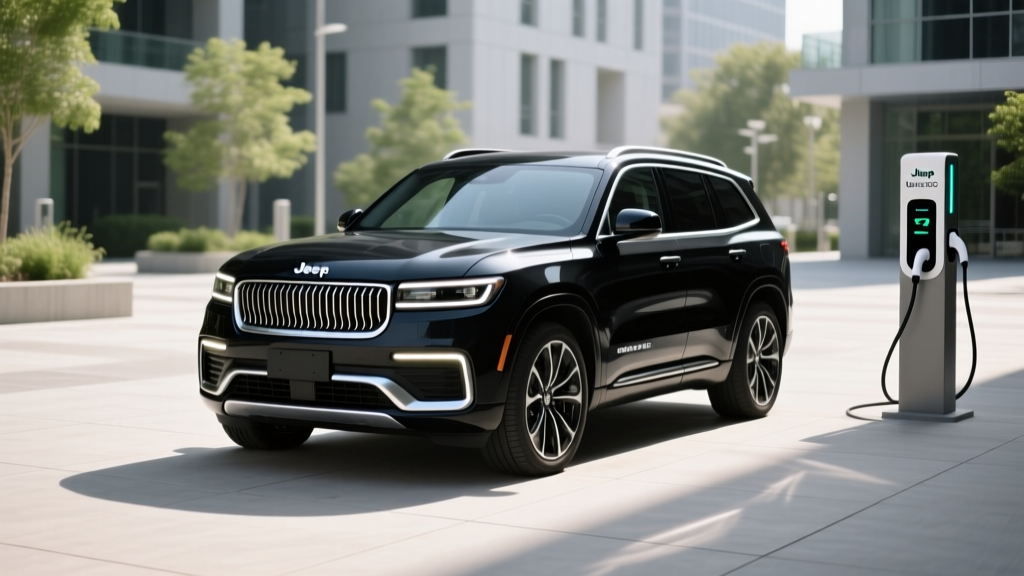
Jeep's first global battery-electric vehicle, the Wagoneer S, enters the 2026 model year carrying a heavy burden: it must prove that a premium electric SUV wearing the seven-slot grille can stand shoulder-to-shoulder with the BMW iX, Audi Q8 e-tron, and Tesla Model X. For shoppers circling a Jeep Wagoneer S lease deal, the math is more complex than a simple monthly payment. You're weighing a 100 kWh NMC battery against real-world range, a 600-horsepower dual-motor powertrain against efficiency, and a $65,995 starting price against a shifting federal tax credit landscape.
We've compiled everything current and prospective lessees need to know—from the exact charge curve at a 350 kW DC fast charger to whether the §30D credit actually applies to your household income. Here's the full technical and financial picture.
2026 Jeep Wagoneer S at a Glance
| Spec | Detail |
|---|---|
| EPA Range | 300 miles (est.) |
| Battery (Usable) | ~100 kWh, NMC lithium-ion |
| Drivetrain | Dual-motor AWD |
| Horsepower / Torque | 600 hp / 617 lb-ft |
| 0–60 mph | 3.4 seconds |
| Peak DC Fast Charge | ~200 kW (est.) |
| 10–80% DC Charge Time | ~23 minutes (est.) |
| Level 2 Home Charge Rate | 11.5 kW (~33 mi/hr) |
| MPGe (Combined) | ~85 MPGe (est.) |
| Base MSRP (Launch Edition) | $65,995 |
| Battery Warranty | 8 years / 100,000 miles |
Range & Efficiency: EPA Sticker vs. the Real World
EPA Estimate: 300 miles
Expect in practice: ~240–270 miles at sustained highway speeds (70–80 mph); ~200–230 miles in sub-30°F winter conditions with cabin heating. City driving with regen braking recovers closer to the EPA sticker.
The Wagoneer S rides on Stellantis' STLA Large platform, and its estimated 100 kWh usable battery pack uses NMC (nickel manganese cobalt) chemistry. NMC delivers higher energy density than LFP (lithium iron phosphate), which is why Jeep can package over 300 miles of range into a vehicle with this footprint. The trade-off: NMC batteries degrade slightly faster over thousands of cycles and prefer not to sit at 100% state of charge for extended periods—something to factor into your daily charging habits.
Efficiency lands in the estimated 85 MPGe combined range, translating roughly to 39–41 kWh per 100 miles. That puts the Wagoneer S behind the BMW iX xDrive50 (which achieves closer to 87–89 MPGe thanks to superior aerodynamics) but ahead of the GMC Hummer EV, which sacrifices efficiency for mass. The Wagoneer S's boxy silhouette and upright windshield work against it on the highway, where aerodynamic drag dominates energy consumption. If your commute is mostly stop-and-go urban driving, you'll see numbers closer to the EPA sticker. If you regularly cruise at 80 mph on interstates, plan your charging stops around 240 miles of usable range.
Charging Speed: DC Fast, Level 2, and the Curve Reality
Charging speed is where lease buyers often get surprised. The number on the spec sheet—peak kW—is not what you'll sustain for an entire session. Here's the breakdown by charging level:
| Charging Level | Power / Rate | Speed (Approx.) | Use Case |
|---|---|---|---|
| Level 1 (120V household) | ~1.4 kW | ~4 mi/hr | Emergency / trickle only |
| Level 2 (240V home) | 11.5 kW | ~33 mi/hr | Daily home charging; full charge in ~9 hrs |
| DC Fast Charge | Peak ~200 kW | 10–80% in ~23 min | Road trips; taper above 80% SoC |
The Wagoneer S uses the CCS1 connector standard, though Stellantis has indicated future models will transition to NACS (the Tesla-standard connector now adopted industry-wide). For 2026, CCS1 means access to Electrify America, EVgo, and ChargePoint DC fast-charging networks. At a 350 kW-capable station, the Wagoneer S will peak near 200 kW—but only between roughly 10% and 40% state of charge. Above 60% SoC, the battery management system tapers charge rate to protect cell longevity, dropping to ~80 kW by 75% and ~40 kW approaching 90%.
For home charging, the onboard 11.5 kW AC charger is competitive. A full 0–100% charge takes approximately 9 hours on a hardwired Level 2 wallbox (48-amp circuit recommended). If your home electrical panel is a 100-amp legacy unit, budget $1,500–$3,000 for a panel upgrade before installing a Level 2 charger—a cost that catches many first-time EV lessees off guard. Always have a licensed electrician assess your panel capacity before signing a lease.
Performance, Drivetrain & Ride Dynamics
The Wagoneer S Launch Edition comes with a dual-motor all-wheel-drive system producing a combined 600 horsepower and 617 lb-ft of torque. Jeep quotes a 3.4-second 0–60 mph time, placing it firmly in performance-SUV territory—quicker than a base BMW iX xDrive50 (4.6 sec) and roughly on par with the Tesla Model X Dual Motor (3.8 sec). The instant torque delivery from both axles gives the Wagoneer S a responsive, planted feel in urban merging and passing situations.
The STLA Large platform supports an air suspension system (availability depends on trim and package), which aids both ride comfort and efficiency by lowering the vehicle at highway speeds. Regenerative braking offers multiple levels, though the Wagoneer S does not offer true one-pedal driving to a complete stop in all modes—a feature Tesla and Hyundai/Kia owners may miss. The steering is weighted appropriately for a 5,500-pound vehicle, and body roll is managed well given the ride height, though this is a grand-touring cruiser, not a corner-carving sports SUV.
Interior Space, Cargo & Technology
The Wagoneer S is a two-row, five-passenger SUV. Interior dimensions position it between compact luxury EVs and full-size three-row haulers:
- Front legroom: ~41.0 inches
- Rear legroom: ~39.5 inches
- Cargo behind rear seats: ~30 cu ft
- Cargo with rear seats folded: ~62 cu ft
- Front trunk (frunk): ~2.5 cu ft (small, fits a charging cable bag)
For families needing three rows, the Wagoneer S is not the answer—look to the Kia EV9 or the upcoming electric Grand Cherokee. But for couples, small families, or executive commuters, the cabin is well-finished with Stellantis' Uconnect 5 infotainment system spanning a 12.3-inch driver display, a 12.3-inch center touchscreen, and a 10.25-inch passenger screen. The McIntosh audio system (19 speakers) is a standout for audiophile lessees.
Driver-assistance features include adaptive cruise control with stop-and-go, lane-centering assist, and automated emergency braking. This is a SAE Level 2 driver-assist system, meaning you must keep your hands on the wheel and eyes on the road at all times. It is not autonomous driving. Jeep has not announced a hands-free highway system comparable to GM's Super Cruise or Ford's BlueCruise for the 2026 Wagoneer S, which is a notable gap at this price point.
Pricing, Lease Deals & Federal Tax Credit Eligibility
The 2026 Wagoneer S Launch Edition carries a base MSRP of $65,995 (including destination). With options—premium paint, advanced driver-assist packages, larger wheels—the as-tested price can reach $70,000–$72,000. Additional trims are expected to follow, potentially including a lower-priced base model.
| Item | Amount |
|---|---|
| Base MSRP (Launch Edition) | $65,995 |
| Typical As-Tested (with options) | $69,000–$72,000 |
| Est. Monthly Lease (36 mo, $5K down, good credit) | $750–$900 |
| Federal §30D Tax Credit (purchase only) | Up to $7,500 (see eligibility below) |
| Commercial Clean Vehicle Credit (§45W, lease) | Up to $7,500 passed through by lessor |
- MSRP Cap: SUVs/vans/pickups must be under $80,000 — the Wagoneer S qualifies.
- Buyer Income Cap: Modified AGI ≤ $150K (single), $225K (head of household), $300K (joint). Exceed these and you cannot claim §30D on a purchase.
- Battery Sourcing: Critical minerals and battery components must meet phased-in domestic/free-trade-partner thresholds. Stellantis has not publicly confirmed full §30D compliance for the 2026 Wagoneer S — verify the VIN on fueleconomy.gov before signing.
- Point-of-Sale Transfer: If eligible, you can transfer the credit to the dealer at purchase, reducing your out-of-pocket cost immediately.
- Lease Loophole (§45W): Leased EVs qualify under the Commercial Clean Vehicle Credit. The leasing company (lessor) claims the $7,500 credit and may pass savings to you via a lower monthly payment or capitalized cost reduction — but this is not guaranteed. Always ask the dealer whether the lease quote already reflects the credit.
Consult a tax professional and check the latest IRS guidance on clean vehicle credits before committing.
For lease deal hunters, the §45W commercial credit pathway is the most relevant. Many luxury EV leases in 2025–2026 have used this credit to reduce capitalized cost by $7,500, effectively lowering monthly payments by roughly $100–$130/month on a 36-month term. Whether Jeep's captive finance arm (Stellantis Financial Services) applies this to Wagoneer S leases will vary by dealer and region. Always request a lease breakdown showing the money factor, residual value, and whether any federal credit has been applied to the cap cost.
How the Wagoneer S Compares to Key Rivals
Before committing to a Wagoneer S lease, consider how it stacks up against the electric SUVs it will cross-shop with:
| Vehicle | EPA Range | 0–60 | Base MSRP | Max DC kW |
|---|---|---|---|---|
| Jeep Wagoneer S Launch Ed. | 300 mi | 3.4s | $65,995 | ~200 kW |
| BMW iX xDrive50 | 324 mi | 4.6s | $73,900 | 195 kW |
| Audi Q8 e-tron Premium Plus | 285 mi | 5.1s | $74,400 | 170 kW |
| Tesla Model X Dual Motor | 335 mi | 3.8s | $79,990 | 250 kW |
| Cadillac Lyriq AWD | 307 mi | 5.0s | $61,295 | 190 kW |
The Wagoneer S's strongest argument is its powertrain: 600 hp and a 3.4-second sprint undercut nearly every rival on price-per-horsepower. Its weakest argument is charging speed—200 kW peak is a generation behind Tesla's 250+ kW capability and the 800-volt architectures now appearing in Hyundai/Kia/Genesis products. Range is competitive but not class-leading. The interior quality and McIntosh audio are genuine differentiators; the lack of a hands-free driving system is a genuine liability at this price.
- 600 hp / 3.4s 0–60 is the quickest in its price class
- Premium McIntosh 19-speaker audio
- Triple-screen Uconnect 5 dashboard
- Competitive 300-mile EPA range
- Under $80K MSRP = §30D eligible
- Distinctive Jeep design language
- ~200 kW peak DC charging trails rivals
- No hands-free highway driving assist
- Two rows only — no three-row option
- Small frunk (2.5 cu ft)
- CCS1 connector as industry shifts to NACS
- Brand-new EV platform — unproven long-term reliability
Who Should Lease the Wagoneer S?
The Wagoneer S lease makes the most sense for:
- Performance-oriented commuters who want sports-sedan acceleration in an SUV body and have reliable Level 2 home charging.
- Jeep loyalists ready to transition from a Grand Cherokee or Wrangler 4xe to a full BEV without switching brands.
- Two-row households (couples, families with 1–2 children) who don't need the third-row utility of a Kia EV9 or Rivian R1S.
- Lease deal seekers who can benefit from the §45W commercial credit to offset the $66K starting price.
It's a harder recommendation for road-trip-heavy drivers (the ~200 kW charging speed means longer stops), three-row families, and buyers who prioritize cutting-edge driver-assistance technology over raw power.
Frequently Asked Questions
What is the real-world range of the Jeep Wagoneer S?
The EPA estimates 300 miles. In real-world highway driving at 70–80 mph, expect 240–270 miles. In cold weather (below 30°F) with cabin heat, that can drop to 200–230 miles. Urban driving with regenerative braking returns the closest results to the EPA sticker.
How fast does the Wagoneer S charge?
On a DC fast charger, it peaks at approximately 200 kW, reaching 10–80% in about 23 minutes. At home on a Level 2 (240V, 48-amp) charger, the 11.5 kW onboard charger adds roughly 33 miles per hour, completing a full charge in about 9 hours.
Does the Jeep Wagoneer S qualify for the federal EV tax credit?
The Wagoneer S is under the $80,000 SUV MSRP cap for §30D eligibility. However, buyer income limits ($300K joint / $150K single) and battery-sourcing requirements apply. For leases, the §45W commercial credit may apply, potentially reducing your monthly payment by $100–$130/month. Always verify with the dealer and consult IRS.gov for current rules.
Is the Wagoneer S worth leasing over the BMW iX or Tesla Model X?
If you prioritize acceleration-per-dollar and distinctive American design, yes. If you need faster DC charging, a more mature Supercharger network (Tesla), or hands-free driving assist (BMW offers Highway Assistant in some markets), you may prefer a rival. Test-drive all three before signing.
What is the battery warranty on the Wagoneer S?
Stellantis provides an 8-year / 100,000-mile battery and powertrain warranty, which is standard for the EV industry and aligns with federal requirements for battery capacity retention.
Can I tow with the Wagoneer S?
Jeep has not published a final towing rating for the 2026 Wagoneer S at time of writing. The STLA Large platform is engineered for towing capability, but any significant trailer load will reduce range by 30–50%. We'll update this review when official figures are released.