The Tesla Model S in 2026: Still the Benchmark, or Showing Its Age?
The Tesla Model S has been the default luxury electric sedan since 2012, and the current-generation refresh (introduced for 2021 and carried into 2026) remains one of the quickest, longest-range production cars on the road. But as competitors like the Lucid Air, Porsche Taycan, and Mercedes EQS close the gap, buyers are scrutinizing every detail — right down to cabin air quality and the much-discussed Tesla Model S air filter system.
This review covers the full ownership picture: real-world range, charging speed, the Bioweapon Defense Mode HEPA filtration system, pricing after federal tax credits, and whether the Model S still earns its $75,000+ starting price in a crowded luxury EV segment.
Tesla Model S Air Filter and Bioweapon Defense Mode Explained
The search for "Tesla Model S air filter" usually points to one standout feature: Bioweapon Defense Mode. This isn't marketing fluff — it's an engineering-first approach to cabin air quality that Tesla introduced in 2016 and has carried forward into every Model S and Model X since.
How the HEPA Filtration System Works
The Model S uses a medical-grade HEPA (High-Efficiency Particulate Air) filter that is roughly 10 times larger than a standard automotive cabin air filter. Tesla claims it removes at least 99.97% of particulate exhaust pollution, allergens, bacteria, pollen, and airborne particles down to 0.3 microns. When you activate Bioweapon Defense Mode from the climate controls, the system pressurizes the cabin slightly, forcing all incoming air through the HEPA filter and preventing unfiltered air from seeping in through gaps.
Filter Replacement and Maintenance
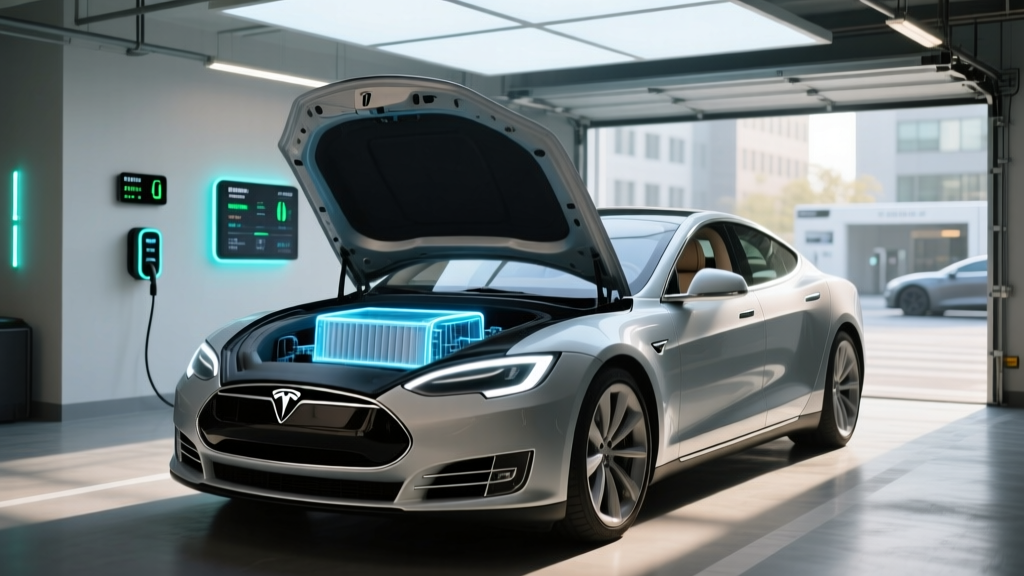
The HEPA air filter in the Model S is not a lifetime component. Tesla recommends replacing the cabin HEPA filter approximately every 2 years (or sooner if you frequently drive in areas with heavy pollution, wildfire smoke, or dust). Replacement filters cost roughly $50–$90 through Tesla's parts channel, and the swap can be done at a service center or by a DIY-inclined owner — the filter housing is accessible behind the frunk area, though it does require some panel removal.
For owners in wildfire-prone regions like California or the Pacific Northwest, the Model S HEPA system is a genuine differentiator. Independent testing by organizations including Tesla's own published data has demonstrated cabin particulate levels dropping to near-zero within minutes of activation — a meaningful health benefit that most competitors simply don't offer at this level.
Range, Battery, and Real-World Efficiency
| EPA Range (Long Range) | 405 miles |
| EPA Range (Plaid) | 396 miles |
| Battery Capacity | ~100 kWh (usable, NMC chemistry) |
| Efficiency (Long Range) | 124 MPGe combined / 27 kWh/100 mi |
| Max DC Fast Charge | 250 kW (V3 Supercharger) |
| 10–80% DC Charge Time | ~27 minutes |
| Level 2 Home Charge | 11.5 kW / ~44 miles per hour |
| 0–60 mph (Long Range) | 3.1 seconds |
| 0–60 mph (Plaid) | 1.99 seconds |
| Horsepower (Long Range) | 670 hp (dual motor AWD) |
| Horsepower (Plaid) | 1,020 hp (tri-motor AWD) |
| Drivetrain | AWD (Dual Motor LR / Tri-Motor Plaid) |
| Cargo Volume | 28.0 cu ft (rear) + 3.1 cu ft (frunk) |
| Rear Legroom | 35.4 inches |
| Battery/Powertrain Warranty | 8 years / 150,000 miles |
| Basic Warranty | 4 years / 50,000 miles |
According to fueleconomy.gov, the Model S Long Range achieves 124 MPGe combined, which translates to roughly 27 kWh per 100 miles. That's competitive with the Lucid Air Pure (131 MPGe) but trails the BMW i5 eDrive40 (129 MPGe combined in a lighter package). The Model S's ~100 kWh NMC (nickel manganese cobalt) battery pack prioritizes energy density and performance over the cycle longevity of LFP chemistry — a deliberate trade-off for a luxury performance sedan.
Charging Speed: DC Fast Charging and Home Level 2
The Model S charges via Tesla's proprietary NACS connector (now the North American Charging Standard adopted industry-wide). Here's what charging looks like across all three levels:
| Charging Level | Power | Speed | Notes |
|---|---|---|---|
| Level 1 (120V) | ~1.4 kW | ~5 miles/hour | Emergency/top-up only |
| Level 2 (240V, 48A) | 11.5 kW | ~44 miles/hour | Full charge in ~9 hours |
| DC Fast (V3 Supercharger) | 250 kW peak | 10–80% in ~27 min | Tapers significantly above 80% |
| DC Fast (V4 Supercharger) | Up to 250 kW | Similar to V3 | Newer stalls; same vehicle-side limit |
The Model S peaks at 250 kW on V3 Superchargers, but like all EVs, it does not sustain that rate. The charge curve is aggressive from roughly 5–40% State of Charge (SoC), then tapers progressively. A 10–80% session takes approximately 27 minutes under ideal conditions (battery preconditioned via navigation routing to a Supercharger). Without preconditioning — for instance, arriving at a charger without the car having warmed the battery — expect that session to stretch to 35–40 minutes, especially in cooler weather.
For home charging, a Tesla Wall Connector on a 60-amp circuit delivers the full 11.5 kW (48 amps continuous). That adds roughly 44 miles of range per hour, meaning an overnight session from 20% to 80% takes about 5–6 hours. Installation costs for a Level 2 home setup typically range from $500 to $2,000 depending on panel capacity and conduit run length — budget for a licensed electrician to assess whether your panel needs a 200-amp upgrade.
Pricing, Trims, and Federal Tax Credit Eligibility
| Trim | Base MSRP | Federal §30D Credit | Effective Price |
|---|---|---|---|
| Long Range | $74,990 | $0 (exceeds MSRP cap) | $74,990 |
| Plaid | $89,990 | $0 (exceeds MSRP cap) | $89,990 |
The 2026 Tesla Model S Long Range starts at $74,990 (plus a $1,390 destination fee), while the tri-motor Plaid begins at $89,990. Both trims exceed the IRS §30D federal tax credit MSRP cap of $55,000 for sedans, meaning neither the Model S Long Range nor the Plaid qualifies for the $7,500 federal EV tax credit. This is a significant consideration for buyers cross-shopping with the Lucid Air Pure ($69,900, also over the cap) or the BMW i5 eDrive40 ($66,800, also over the cap).
Per IRS §30D rules, the credit also carries buyer income limits ($150,000 single / $300,000 joint modified AGI) and battery critical-mineral sourcing requirements. Even if the MSRP cap were met, all conditions must be satisfied. For luxury sedan buyers in this price bracket, the tax credit is often a secondary factor — but it's worth knowing it's off the table before you shop.
Options that push the as-tested price higher include $2,500 for Ultra Red or Midnight Silver Metallic paint, $4,500 for 21-inch Arachnid wheels, $1,500 for a cream or black-and-white interior, and $8,000 for Full Self-Driving (Supervised) capability. A fully loaded Model S Plaid can exceed $105,000 before taxes and fees.
Interior, Tech, and Driver Assistance
The Model S interior centers on a 17-inch landscape-oriented touchscreen running Tesla's proprietary infotainment OS — still one of the most responsive and feature-rich systems in any vehicle, EV or otherwise. The 2021 refresh added a yoke steering option (controversial; a round wheel remains available), a rear-seat 8-inch touchscreen for passengers, and a 22-speaker, 960-watt audio system.
Standout Tech Features
- 17-inch central touchscreen with Netflix, YouTube, and gaming (including Cyberpunk 2077 at full quality while charging)
- Over-the-air (OTA) updates that add features and improve performance post-purchase
- Autopilot standard (adaptive cruise + lane centering); FSD (Supervised) available for $8,000 or $99/month
- Sentry Mode dashcam surveillance while parked
- Bioweapon Defense Mode HEPA cabin pressurization
- Phone-as-key with Bluetooth proximity unlock
Notable Drawbacks
- No Apple CarPlay or Android Auto — a persistent omission that frustrates many luxury buyers
- Yoke steering is polarizing; hand-over-hand maneuvers at low speed require adaptation
- No heat pump — cold-weather range loss is steeper than in Model Y or competitors like the BMW i5
- Rear seat space is merely adequate for the segment — 35.4 inches of legroom trails the Lucid Air (37.3 in) and Mercedes EQS (41.3 in)
- Build quality has improved since the 2021 refresh but still draws occasional panel-gap complaints
How Does the Model S Compare to Key Competitors?
At $75,000–$105,000, the Model S competes with a growing class of luxury electric sedans. Here's how it stacks up on the metrics that matter:
| Metric | Tesla Model S LR | Lucid Air Pure | Porsche Taycan 4S | BMW i5 eDrive40 |
|---|---|---|---|---|
| EPA Range | 405 mi | 419 mi | 288 mi | 295 mi |
| 0–60 mph | 3.1 sec | 3.5 sec | 3.8 sec | 5.7 sec |
| Max DC Charge | 250 kW | 200+ kW | 270 kW | 205 kW |
| Base MSRP | $74,990 | $69,900 | $99,400 | $66,800 |
| HEPA Cabin Air | ✓ (Bioweapon) | Standard HEPA | Optional | Standard |
| CarPlay/Android Auto | ✗ | ✗ | ✓ | ✓ |
- You want the longest range in a performance sedan with Supercharger network access
- Bioweapon Defense Mode HEPA filtration is a priority (wildfire smoke, urban pollution)
- You value OTA updates and Tesla's software ecosystem
- Straight-line acceleration matters (3.1 sec or 1.99 sec 0–60)
- You need Apple CarPlay (Porsche Taycan, BMW i5)
- Rear-seat luxury and legroom are paramount (Lucid Air, Mercedes EQS)
- Build quality and dealer service infrastructure matter more than a software-first approach (Porsche, BMW)
- You want to stay under the $55,000 MSRP cap for the federal tax credit (look at Model 3, Hyundai Ioniq 6)
Pros and Cons at a Glance
- 405-mile EPA range (class-leading for performance sedans)
- Supercharger network: most reliable DC charging in North America
- Bioweapon Defense Mode HEPA air filter — best-in-class cabin filtration
- Blistering acceleration (3.1s Long Range / 1.99s Plaid)
- OTA updates keep the car improving post-purchase
- Strong resale value relative to most EVs
- 8-year/150,000-mile battery warranty
- No federal tax credit (MSRP exceeds §30D sedan cap)
- No Apple CarPlay or Android Auto
- No heat pump — cold-weather range loss is significant
- Rear legroom is tight for the luxury sedan segment
- Yoke steering is divisive; not ideal for all drivers
- Interior materials don't match Porsche or Mercedes at this price
- Plaid trim approaches $105K as-tested
Who Is the Tesla Model S Best For?
The Model S is best suited for tech-forward commuters and road-trippers who prioritize range, acceleration, and Tesla's Supercharger infrastructure over traditional luxury sedan amenities. If you drive 40+ miles daily, take regular 200–300 mile road trips, and value having the best cabin air filtration on the market, the Model S delivers a combination that's still hard to match in 2026.
It's less ideal for buyers who prioritize rear-seat comfort for adult passengers, want Apple CarPlay integration, or need the absolute best build quality and dealer service experience — in those cases, the BMW i5, Porsche Taycan, or Mercedes EQS may be stronger fits.
Frequently Asked Questions
What is the real-world range of the Tesla Model S?
The Model S Long Range carries an EPA estimate of 405 miles. In real-world highway driving at 70–75 mph, expect 320–350 miles. In sub-freezing temperatures, range can drop to 270–310 miles. City driving with regenerative braking can approach the EPA figure in mild weather.
How fast does the Tesla Model S charge?
On a V3 Supercharger, the Model S peaks at 250 kW and charges from 10–80% in approximately 27 minutes (with battery preconditioning). On a home Level 2 charger at 11.5 kW, it adds about 44 miles per hour, fully recharging overnight in roughly 9 hours.
Does the Tesla Model S qualify for the federal EV tax credit?
No. The Model S starts at $74,990, which exceeds the IRS §30D MSRP cap of $55,000 for sedans. Neither the Long Range nor the Plaid trim qualifies for the $7,500 federal credit, regardless of buyer income or battery sourcing. See IRS clean vehicle credit rules for full details.
How often should I replace the Tesla Model S air filter?
Tesla recommends replacing the HEPA cabin air filter every 2 years, or more frequently in areas with heavy pollution, wildfire smoke, or dust. Replacement filters cost roughly $50–$90 and can be installed at a Tesla service center or by a capable DIY owner.
Is the Tesla Model S worth buying vs. the Lucid Air or Porsche Taycan?
The Model S wins on range-per-dollar (405 miles at $74,990) and Supercharger access. The Lucid Air Pure offers more range (419 mi) and rear-seat space at a lower starting price ($69,900). The Porsche Taycan delivers superior build quality and driving dynamics but sacrifices range (288 mi) and costs more ($99,400+). Your choice depends on which trade-off matters most.
What is Bioweapon Defense Mode?
Bioweapon Defense Mode is Tesla's name for the Model S's HEPA cabin pressurization system. When activated, it forces all incoming air through the oversized HEPA filter and slightly pressurizes the cabin to prevent unfiltered air intrusion. It removes 99.97% of particulates including pollen, bacteria, and exhaust pollution.
Does the Model S have a heat pump?
No. The current Model S does not include a heat pump, unlike the Model 3 and Model Y. This means cold-weather efficiency suffers more than in Tesla's smaller vehicles, as the car relies on resistive heating, which draws more energy from the battery.