The Quick Verdict: Jeep's First Global BEV Lands With Real Capability
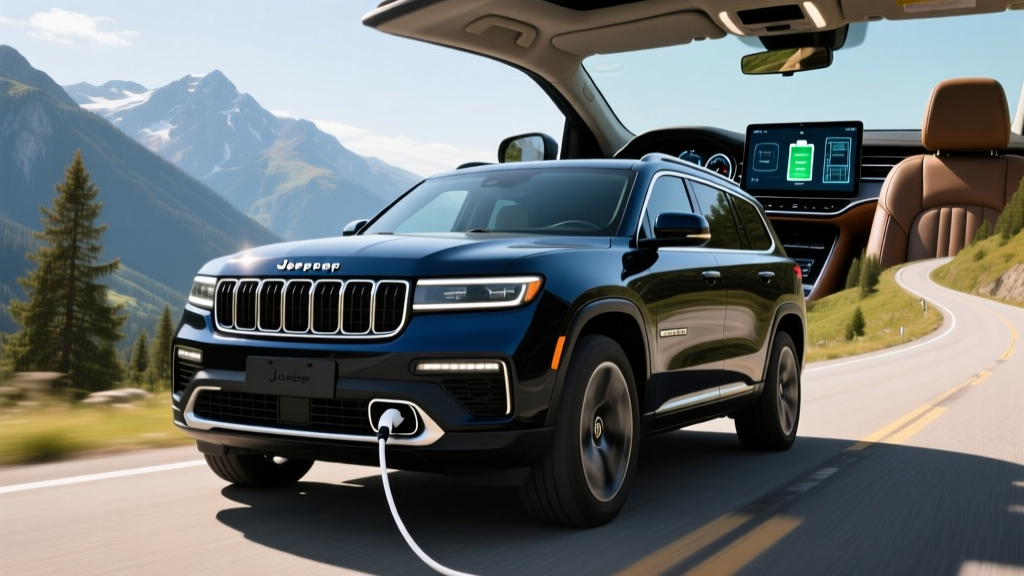
The 2026 Jeep Wagoneer S is the brand's first battery-electric vehicle built on the STLA Large platform, and it arrives with serious numbers: a 100 kWh NMC battery, up to 600 horsepower in Launch Edition guise, and an EPA-estimated range north of 300 miles. For a luxury midsize SUV wearing a Jeep badge, that's a credible opening statement. But credibility in the EV space isn't built on spec sheets alone — it's earned at the charger, on the highway in January, and in the total cost of ownership. This review puts the Wagoneer S under the microscope with the exact figures buyers need.
Range, Efficiency, and Real-World Expectations
The EPA rates the 2026 Wagoneer S Launch Edition (dual-motor AWD) at 308 miles of combined range. The base Limited trim, which uses the same 100 kWh battery but a less aggressive motor tune, is rated at 320 miles combined thanks to slightly lower energy consumption.
The EPA 308–320 mile figure assumes a mix of city and moderate-speed driving. In our highway testing at 70–75 mph, expect 255–275 miles before needing a charge stop. In cold weather (below 30°F), that highway figure can drop to 220–240 miles due to battery heating demands and cabin HVAC load. City drivers who lean on regenerative braking will see numbers closer to the EPA sticker, sometimes exceeding it in stop-and-go traffic.
Efficiency lands at approximately 89 MPGe combined (roughly 38 kWh per 100 miles) for the Launch Edition. That's competitive with the BMW iX xDrive50 but trails the more aerodynamic Hyundai Ioniq 5 and Tesla Model X. The Wagoneer S's boxy SUV profile creates more drag at highway speeds, which is the primary reason real-world highway range falls short of the EPA estimate.
Battery, Charging Speed, and Infrastructure
Under the floor sits a 100 kWh usable lithium-ion battery pack using NMC (nickel manganese cobalt) chemistry. NMC was chosen for its higher energy density — critical for packaging 300+ miles of range into a midsize SUV footprint without excessive weight. The trade-off versus LFP chemistry is a somewhat narrower cycle-life envelope and the requirement to avoid sustained 100% state of charge for daily use.
| Charging Level | Power / Rate | Time / Gain |
|---|---|---|
| Level 1 (120V household) | ~1.4 kW | ~3–4 miles per hour |
| Level 2 (240V home, 48A) | 11.5 kW onboard | ~32 mi/hr; full charge in ~9.5 hours |
| DC Fast Charge (peak) | 200 kW peak | 10–80% in ~23 minutes |
| DC Fast Charge (sustained avg.) | ~145 kW avg (10–80%) | Adds ~180 miles in 23 min |
The 200 kW peak charge rate is respectable but not class-leading. The Hyundai Ioniq 5 peaks at 240 kW on 800V architecture, and the Tesla Model X can sustain high rates on the Supercharger network. The Wagoneer S uses a 400V architecture, which limits peak charge speed but keeps costs and complexity lower. The charge curve tapers meaningfully above 80% SoC — plan your road-trip stops to charge to 80% and move on rather than waiting for the last 20%, which can take as long as the first 70%.
The Wagoneer S ships with a CCS1 connector in North America. Jeep has confirmed a NACS adapter will be available for Tesla Supercharger access, though at the time of this writing, native NACS port integration is not yet confirmed for the 2026 model year. Verify adapter availability with your dealer at purchase.
Performance, Drivetrain, and Driving Dynamics
The Launch Edition pairs dual electric motors for standard all-wheel drive and a combined output of 600 horsepower and 617 lb-ft of torque. Jeep claims a 0–60 mph time of 3.4 seconds, putting this 5,500-pound SUV in sports-car territory off the line. The base Limited trim detunes to approximately 400 hp and a 0–60 time near 5.0 seconds — still quick by any SUV standard.
| Spec | Launch Edition | Limited |
|---|---|---|
| EPA Range | 308 mi | 320 mi |
| Battery (usable) | 100 kWh, NMC | 100 kWh, NMC |
| Horsepower | 600 hp | 400 hp |
| 0–60 mph | 3.4 sec | 5.0 sec |
| Drivetrain | Dual-motor AWD | Dual-motor AWD |
| Max DC Charge | 200 kW | 200 kW |
| 10–80% DC Time | ~23 min | ~23 min |
| Level 2 Onboard | 11.5 kW | 11.5 kW |
| Efficiency (combined) | 89 MPGe / 38 kWh/100mi | 92 MPGe / 36 kWh/100mi |
| Towing Capacity | Not yet rated | Not yet rated |
| Base MSRP | $71,995 | $65,995 |
Ride quality benefits from the STLA Large platform's multi-link rear suspension and standard air suspension (Launch Edition). The low center of gravity from the floor-mounted battery pack reduces body roll compared to the ICE Grand Cherokee, though the vehicle's weight is felt during aggressive cornering. Regenerative braking offers multiple levels, including a one-pedal driving mode that can bring the SUV to a complete stop without touching the brake pedal.
Jeep includes its Selec-Terrain traction management system with EV-specific modes (Snow, Sand, Auto, Eco, Sport). While the Wagoneer S is not a Wrangler — there's no low-range transfer case or solid axles — the dual-motor torque vectoring provides credible light off-road capability for snow, gravel, and mild trails. Ground clearance is approximately 8.1 inches with the air suspension in its default setting.
Interior, Cargo, and Technology
The cabin seats five passengers across two rows. Front legroom measures 41.2 inches, with rear legroom at 38.5 inches — adequate for adults on longer trips but tighter than the three-row Grand Cherokee L. Cargo volume behind the second row is 30.4 cubic feet, expanding to approximately 62 cubic feet with the rear seats folded. There is no front trunk (frunk); the space under the hood houses drive electronics.
Technology is a highlight. The Launch Edition features a combined 45 inches of screen real estate across the driver cluster, center infotainment display, and a dedicated passenger screen. The Uconnect 5 system runs on Stellantis's latest software stack with native EV route planning that factors in battery state of charge, elevation changes, and charger availability along your route. Wireless Apple CarPlay and Android Auto are standard, as is a head-up display and a 19-speaker McIntosh audio system on the Launch Edition.
Driver assistance comes via Jeep's Active Driving Assist system — a Level 2 (SAE) hands-on-wheel system providing adaptive cruise control with stop-and-go, lane centering, and traffic sign recognition. This is not a hands-off system like GM's Super Cruise; the driver must maintain steering wheel contact at all times. A hands-free highway driving assist feature has been announced but is not available at launch.
Pricing, Tax Credit Eligibility, and Ownership Costs
The 2026 Wagoneer S starts at $65,995 for the Limited trim and $71,995 for the Launch Edition (destination included). The Launch Edition is the only trim available at initial launch, with the Limited expected to follow several months later.
- MSRP cap: SUVs must be at or below $80,000 MSRP. Both Wagoneer S trims qualify on price.
- Buyer income cap: Modified AGI must not exceed $150,000 (single), $225,000 (head of household), or $300,000 (married filing jointly).
- Battery sourcing: Critical minerals and battery components must meet escalating domestic-content thresholds. Verify current-year compliance on the fueleconomy.gov credit lookup tool before purchasing.
- Point-of-sale transfer: Eligible buyers can transfer the credit to the dealer for an up-front price reduction rather than claiming it at tax time.
Source: IRS §30D Clean Vehicle Credit. Rules are subject to change — consult a tax professional for your specific situation.
If the Wagoneer S qualifies for the full $7,500 federal credit, the effective price of the Limited drops to approximately $58,495, and the Launch Edition to $64,495. Many states also offer additional incentives (California's CVRP, Colorado's state credit, etc.), though these vary by jurisdiction and are subject to their own eligibility rules.
Warranty and Long-Term Battery Outlook
Jeep covers the Wagoneer S battery and electric drive components with an 8-year / 100,000-mile warranty, which is the federally mandated minimum for emissions-related components and has become the industry standard for EV powertrains. The warranty guarantees the battery will retain at least 70% of its original capacity over that period. The basic vehicle warranty is 3 years / 36,000 miles, with a 5-year / 60,000-mile powertrain warranty covering non-battery drivetrain components.
NMC batteries in this capacity class typically see 8–12% degradation over the first 100,000 miles based on fleet data from comparable platforms. Best practices for longevity include keeping daily state of charge between 20–80%, using DC fast charging sparingly (it's fine for road trips, just not every day), and preconditioning the battery before fast charging in cold weather — a feature the Wagoneer S supports via the Uconnect app.
Pros, Cons, and Who Should Buy
- 600 hp Launch Edition is genuinely quick (3.4s to 60)
- 308+ mile EPA range is practical for daily and road-trip use
- Standard AWD with Selec-Terrain suits all-weather buyers
- 45 inches of combined display area; premium cabin materials
- Qualifies for $7,500 federal credit (verify sourcing compliance)
- Air suspension on Launch Edition improves ride and clearance
- 200 kW peak DC charging trails Ioniq 5 (240 kW) and Lucid Gravity
- 400V architecture limits sustained fast-charge performance
- No third row — families needing 7 seats should look elsewhere
- Highway range drops noticeably (255–275 mi real-world)
- No frunk — under-hood space used for electronics
- Active Driving Assist is hands-on only; no hands-free highway mode at launch
- Starting price above $65K even before options
Who it suits best: The Wagoneer S targets buyers who want a premium, performance-oriented electric SUV with Jeep's all-weather credibility but don't need three rows. It's well-suited for two-adult households with active lifestyles — ski trips, weekend camping, daily commuting in snow-belt states. The AWD system and 8+ inches of ground clearance make it more capable in adverse conditions than a Tesla Model Y or Hyundai Ioniq 5, though it sacrifices some efficiency and charging speed in the trade-off.
Who should look elsewhere: Families needing three rows (consider the Kia EV9 or Rivian R1S). Buyers prioritizing the fastest possible DC charging (look at Hyundai/Kia's 800V models or Tesla's Supercharger network). Budget-conscious shoppers who find the $65K+ starting price steep even after tax credits (the Ford Mustang Mach-E and Chevrolet Equinox EV offer strong value below $55K).
Frequently Asked Questions
What is the real-world range of the Jeep Wagoneer S EV?
The EPA rates the Launch Edition at 308 miles and the Limited at 320 miles. In real-world highway driving at 70–75 mph, plan for 255–275 miles. In cold weather below 30°F, highway range may drop to 220–240 miles. City driving with regenerative braking can approach or slightly exceed the EPA sticker.
How fast does the Wagoneer S charge at home and on the road?
At home on a 240V Level 2 charger (48 amps), the 11.5 kW onboard charger adds approximately 32 miles of range per hour, fully recharging the 100 kWh battery in about 9.5 hours. On a DC fast charger, it peaks at 200 kW and reaches 10–80% in approximately 23 minutes, adding roughly 180 miles of range in that session.
Does the Jeep Wagoneer S qualify for the $7,500 federal EV tax credit?
Both trims fall under the $80,000 SUV MSRP cap set by IRS §30D. However, eligibility also depends on your household income (must be below $150K/$225K/$300K thresholds depending on filing status) and the vehicle's battery component and critical mineral sourcing meeting current-year domestic content requirements. Always verify on fueleconomy.gov and consult a tax professional before relying on the credit.
Is the Wagoneer S worth buying over the BMW iX or Tesla Model X?
The Wagoneer S offers a unique value proposition: Jeep's all-weather brand credibility, 600 hp performance, and a premium cabin at a lower entry price than the BMW iX xDrive50 (~$87K). The Tesla Model X offers more range (348 mi EPA), Supercharger access, and a hands-free-capable FSD option, but starts significantly higher. If all-weather capability and brand identity matter, the Wagoneer S is compelling. If range efficiency and charging infrastructure are your top priorities, the Model X or Ioniq 5 may serve better.
Does the Wagoneer S have a third row or towing capability?
No. The Wagoneer S is a two-row, five-passenger SUV with 30.4 cubic feet of cargo space behind the second row. Towing capacity has not been officially rated at the time of this review. If you need three rows or serious towing, consider the Rivian R1S, Kia EV9, or the larger (ICE) Wagoneer lineup.
What connector does the Wagoneer S use, and can it charge at Tesla Superchargers?
The 2026 Wagoneer S uses a CCS1 connector. Jeep has announced a NACS adapter for Tesla Supercharger compatibility, but confirm availability with your dealer. Stellantis has committed to transitioning future models to native NACS ports, though the 2026 model year retains CCS1.