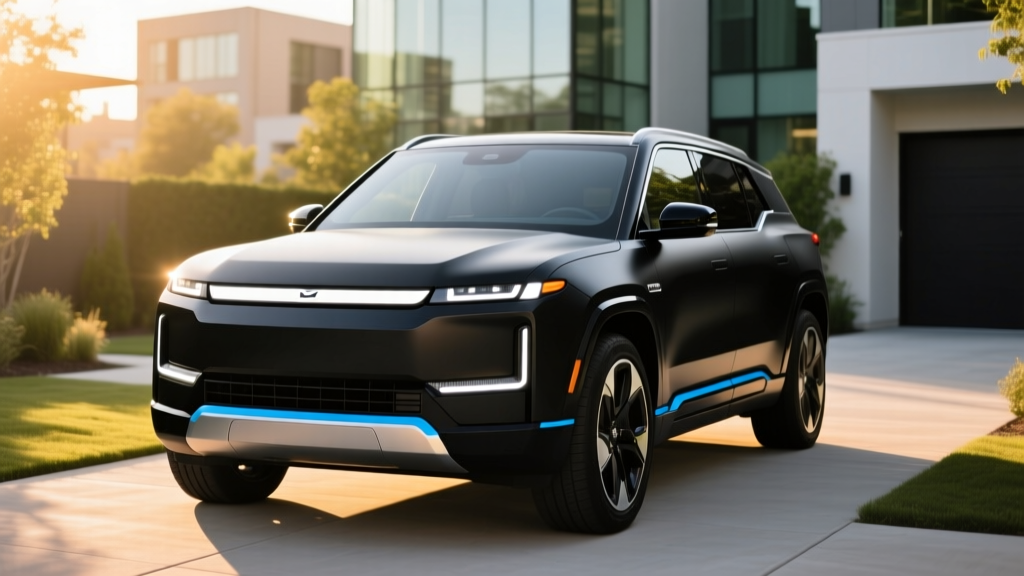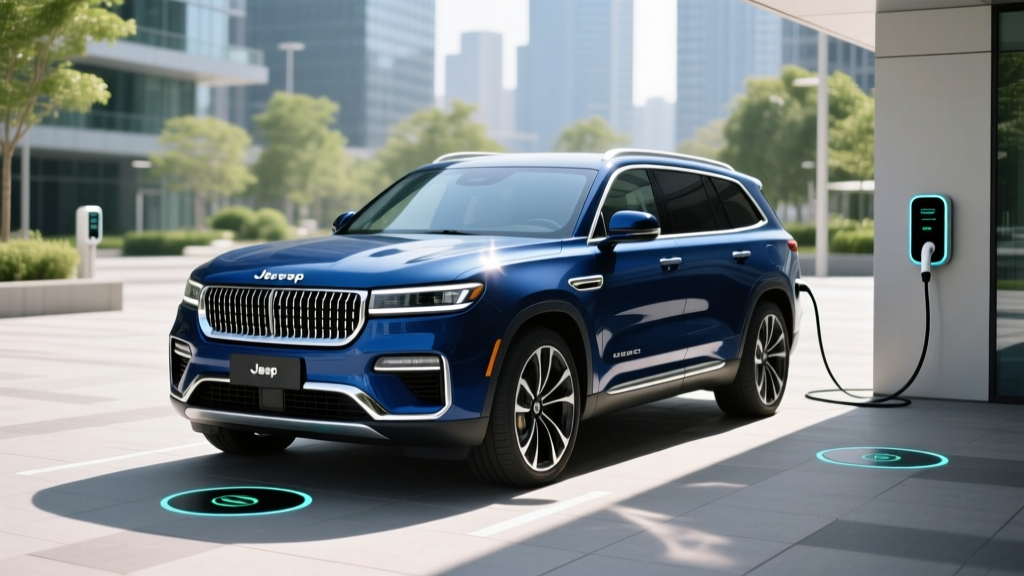
The 2026 Jeep Wagoneer S is the brand's first all-electric vehicle built on the Stellantis STLA Large platform, packing 600 horsepower, a 100 kWh battery, and an EPA-estimated 320 miles of range into a premium SUV package. But with a starting MSRP pushing past $71,000, buyers are turning to lease deals as a strategic way to access the Wagoneer S while leveraging the $7,500 federal tax credit — even if they wouldn't qualify for a purchase credit. Here's the full financial picture.
Battery: 100 kWh (NMC) | EPA Range: 320 mi | Peak DC Charge: 175 kW (10–80% in ~23 min)
Power: 600 hp / 617 lb-ft | 0–60 mph: 3.4 sec | Base MSRP: $71,995 (Launch Edition)
Why Lease Deals Are Dominating Wagoneer S Conversations
Leasing the Wagoneer S isn't just about lower monthly payments — it's a workaround to one of the most restrictive federal EV incentive structures in history. Under the commercial clean vehicle credit (§45W), automakers can pass the full $7,500 credit to lessees as a lease cash incentive, regardless of whether the vehicle's battery components or critical minerals meet the strict §30D sourcing requirements. This means a Wagoneer S lease may qualify for $7,500 off even when a purchase would not.
For the 2026 model year, Jeep has been aggressive with lease cash offers. Combined with the federal lease loophole and Stellantis dealer incentives, we've seen effective lease pricing that reduces the capitalized cost by $7,500 to $10,000 depending on the region and dealer. That's a significant offset on a vehicle with an MSRP near $72,000.
Federal Tax Credit Eligibility: Purchase vs. Lease Rules
If you're considering buying rather than leasing, the §30D federal tax credit has strict eligibility gates. Here's the current checklist for 2026:
- MSRP Cap: SUVs and trucks must be under $80,000 MSRP. The Wagoneer S Launch Edition at $71,995 qualifies; higher trims or optioned-up builds may exceed the cap.
- Buyer Income Limits: AGI must not exceed $300,000 (joint), $225,000 (head of household), or $150,000 (individual).
- Battery Sourcing: A percentage of critical minerals must be sourced from the U.S. or free-trade-agreement countries, and battery components cannot contain materials from foreign entities of concern (primarily China). The Wagoneer S's sourcing compliance varies by build date — always verify with the dealer using the IRS VIN lookup tool.
- Point-of-Sale Transfer: As of 2024, eligible buyers can transfer the credit to the dealer at purchase, reducing the sale price by up to $7,500 upfront rather than waiting for a tax refund. (IRS qualifying vehicles list)
- Lease Advantage: Under §45W, the lessor claims the credit and typically passes it through as lease cash — no income cap, no MSRP cap, no sourcing restrictions apply to the lessee.
Beyond the federal credit, states like California (CVRP up to $2,000+), Colorado (up to $5,000 state credit), and New York offer additional rebates. Utility companies like PG&E, ConEdison, and Xcel Energy may offer $500–$1,500 rebates for home charger installation. Check your state energy office and utility provider for current programs — these change frequently and often have limited funding pools.
5-Year Total Cost of Ownership: Wagoneer S vs. Gas SUV
To understand whether a Wagoneer S lease or purchase makes financial sense, we need to model the full 5-year cost against a comparable gas-powered luxury SUV. We're using the Jeep Grand Cherokee L Overland (MSRP ~$68,000, 18 MPG combined) as the baseline comparison.
| Cost Category (5 Years) | Wagoneer S EV | Gas SUV (18 MPG) |
|---|---|---|
| Purchase/Lease Cost (after credits) | $64,495* | $68,000 |
| Fuel / Charging | $4,800 | $16,667 |
| Insurance (5-yr total) | $14,500 | $11,000 |
| Maintenance | $1,800 | $4,200 |
| Depreciation (estimated) | $28,000 | $22,000 |
| 5-Year Total | $113,595 | $121,867 |
*Assumes $7,500 federal lease cash applied. Based on 15,000 miles/year, $0.14/kWh home charging, $3.50/gallon gas. Insurance based on national EV average premium data. Depreciation estimates based on 2024–2025 luxury EV resale trends. Actual results vary by region and driving pattern.
The Wagoneer S saves roughly $8,200 over five years in this model, driven almost entirely by fuel and maintenance savings that partially offset higher insurance and steeper depreciation.
Charging vs. Gas: The Per-Mile Math
The Wagoneer S's 100 kWh battery and 320-mile EPA range translate to roughly 31 kWh per 100 miles, or about 108 MPGe combined (fueleconomy.gov). Here's how that converts to real dollars:
| Scenario | Cost Per Mile | Annual Cost (15k mi) |
|---|---|---|
| Wagoneer S — Home Charging ($0.14/kWh) | $0.043 | $651 |
| Wagoneer S — Public DC Fast ($0.40/kWh) | $0.124 | $1,860 |
| Gas SUV (18 MPG, $3.50/gal) | $0.194 | $2,917 |
| Gas SUV (18 MPG, $4.50/gal) | $0.250 | $3,750 |
Home charging is where the savings materialize. If you rely primarily on public DC fast charging at $0.40/kWh, the Wagoneer S's per-mile cost climbs to $0.124 — still cheaper than gas, but the gap narrows significantly. This is why Level 2 home charging access is essentially non-negotiable for EV economics. Expect to invest $800–$2,000 in a home Level 2 charger installation (240V, 48A circuit) to capture the full savings.
The EPA rates the Wagoneer S at 320 miles, but plan for ~260–280 miles in real-world highway driving at 70+ mph, and as low as 220–240 miles in sub-freezing temperatures. At a 175 kW peak DC charge rate, expect 10–80% in roughly 23 minutes under ideal conditions, tapering significantly above 80% SoC. For road trips, plan stops at 200-mile intervals to stay in the fast-charging sweet spot.
Maintenance Savings: Fewer Parts, Real Dollars
EVs eliminate the most common recurring maintenance costs of internal combustion vehicles. The Wagoneer S has no engine oil, no transmission fluid, no spark plugs, no exhaust system, and no timing belt. Regenerative braking significantly extends brake pad life — many EV owners report original brake pads at 80,000+ miles.
| Maintenance Item | Wagoneer S EV | Gas SUV |
|---|---|---|
| Oil Changes (5 yr) | $0 | $600–$900 |
| Brake Pads (5 yr) | $0–$200 | $600–$1,200 |
| Transmission Service | $0 | $300–$500 |
| Tire Rotation & Replacement | $1,200–$1,600 | $1,000–$1,400 |
| Cabin Air Filter & Wipers | $200–$300 | $200–$300 |
| 5-Year Total (estimated) | $1,600–$2,100 | $3,700–$5,300 |
One caveat: EV tires wear faster due to instant torque and heavier vehicle weight. The Wagoneer S at roughly 5,800 lbs will go through tires more quickly than a lighter gas SUV. Budget for premium EV-rated tires (like the Michelin Pilot Sport EV or Hankook iON) at $250–$350 per corner when replacement time comes.
The Insurance Reality: Expect to Pay More
EV insurance premiums run 15–25% higher than comparable gas vehicles, and the Wagoneer S is no exception. The reasons are structural: higher repair costs after collisions (specialized parts, high-voltage safety protocols, certified technician requirements), greater vehicle value, and a still-maturing actuarial data pool for EV claims.
For a Wagoneer S with a clean driving record, expect annual premiums of $2,600–$3,200 depending on your state, compared to $1,900–$2,400 for a Grand Cherokee L. That's an additional $3,500 over five years. Always get insurance quotes before signing a lease or purchase agreement — the premium difference can erase fuel savings if you're in a high-rate state like Michigan, Florida, or Louisiana.
Depreciation: The EV Resale Wildcard
EV depreciation has been volatile. Luxury EVs saw steep drops in 2023–2024 as Tesla price cuts cascaded through the used market, newer models with better range entered the segment, and early-adopter lease returns flooded inventory. The Wagoneer S, as a new nameplate with no historical resale data, carries uncertainty.
Based on current luxury EV trends (Cadillac Lyriq, BMW iX, Audi Q8 e-tron), expect 45–55% depreciation over 5 years for the Wagoneer S. That translates to a residual value of roughly $32,000–$39,000 on a $71,995 MSRP. Gas luxury SUVs like the Grand Cherokee L typically retain 55–60%, putting their 5-year residual around $37,000–$41,000.
This is precisely why leasing can be advantageous: you transfer the depreciation risk to the lessor. If the money factor and residual in your lease agreement are favorable (residual set at 50% or higher), you're effectively paying for less depreciation than the market might actually deliver.
Current Wagoneer S Lease Deal Structure (2026)
Based on available lease programs and typical deal structures for the 2026 Wagoneer S Launch Edition, here's what a competitive lease looks like:
- MSRP: $71,995
- Lease Cash / Federal Credit Pass-Through: -$7,500
- Adjusted Capitalized Cost: ~$64,495
- Residual Value (36 months, 55%): $39,597
- Money Factor: ~0.0025 (equivalent to ~6% APR)
- Estimated Monthly Payment (36 mo, 10k mi/yr): $850–$950 + tax
- Due at Signing: First payment + acquisition fee + registration (~$1,500–$2,500)
These figures are estimates based on typical Stellantis lease structures. Actual terms vary by dealer, region, credit tier, and current incentives. Always negotiate the capitalized cost — not just the monthly payment — and verify whether the $7,500 lease cash is being applied to your specific deal.
Wagoneer S Lease vs. Buy: Decision Framework
- You want the $7,500 federal credit without worrying about income caps or battery-sourcing rules
- You prefer predictable monthly costs and plan to upgrade in 3 years
- You want to avoid EV depreciation risk on a new, unproven nameplate
- Your annual mileage stays under 12,000–15,000 miles
- You qualify for the §30D purchase credit (income under limits, vehicle meets sourcing rules)
- You plan to keep the vehicle 5+ years and drive high mileage
- You want to build equity and avoid lease-end disposition fees
- You can negotiate a purchase price below MSRP with the point-of-sale credit applied
Frequently Asked Questions
How much does it really cost to own a Jeep Wagoneer S EV over 5 years?
Based on our modeling, the 5-year total cost of ownership for the Wagoneer S is approximately $113,000–$115,000 including purchase price (after federal credit), charging, insurance, maintenance, and depreciation. That's roughly $7,000–$9,000 less than a comparably priced gas luxury SUV, with savings driven by fuel and maintenance offsetting higher insurance and depreciation costs.
Do I qualify for the $7,500 federal tax credit on the Wagoneer S?
For a purchase, you must meet all §30D requirements: AGI under $300,000/$225,000/$150,000 (joint/HOH/individual), vehicle MSRP under $80,000, and battery sourcing compliance. For a lease, the credit passes through as lease cash under §45W with no income or sourcing restrictions for the lessee. Always verify current eligibility using the IRS qualifying vehicle database and confirm with your dealer.
How much do I save on fuel and maintenance with the Wagoneer S?
Home charging at $0.14/kWh costs roughly $650/year for 15,000 miles — about $2,200 less per year than fueling a comparable 18 MPG gas SUV at $3.50/gallon. Maintenance savings add another $400–$600 per year by eliminating oil changes, reducing brake wear, and removing transmission service. Combined annual savings: $2,600–$2,800.
Are EVs like the Wagoneer S more expensive to insure?
Yes, typically 15–25% more. Expect $2,600–$3,200 annually for the Wagoneer S versus $1,900–$2,400 for a gas equivalent. Higher repair costs, specialized parts, and vehicle value drive the premium gap. Get quotes from multiple insurers before committing — some companies (like Tesla Insurance, Progressive, and State Farm) have more competitive EV rates.
How well does the Wagoneer S hold its value?
As a new nameplate, there's no historical data, but luxury EVs currently depreciate 45–55% over 5 years versus 40–45% for gas luxury SUVs. Leasing transfers this risk to the lessor. If you buy, plan for a residual value around $32,000–$39,000 after 5 years. Battery health reports and remaining warranty coverage will heavily influence resale value.
What home charging setup do I need for the Wagoneer S?
The Wagoneer S accepts up to 11.5 kW on Level 2 (48A, 240V). A home Level 2 charger adds roughly 30–35 miles of range per hour of charging. Professional installation of a 60A circuit with a hardwired charger typically costs $800–$2,000 depending on your electrical panel capacity and run distance. An overnight charge (8–10 hours) fully replenishes the 100 kWh battery.
Tax credit and incentive information reflects 2026 rules as published by the IRS. Rules change frequently — always verify current eligibility. Range, efficiency, and pricing data sourced from fueleconomy.gov and manufacturer specifications. Real-world results vary based on driving conditions, climate, and charging habits.