The Short Answer: Honda's EV Pivot Explained
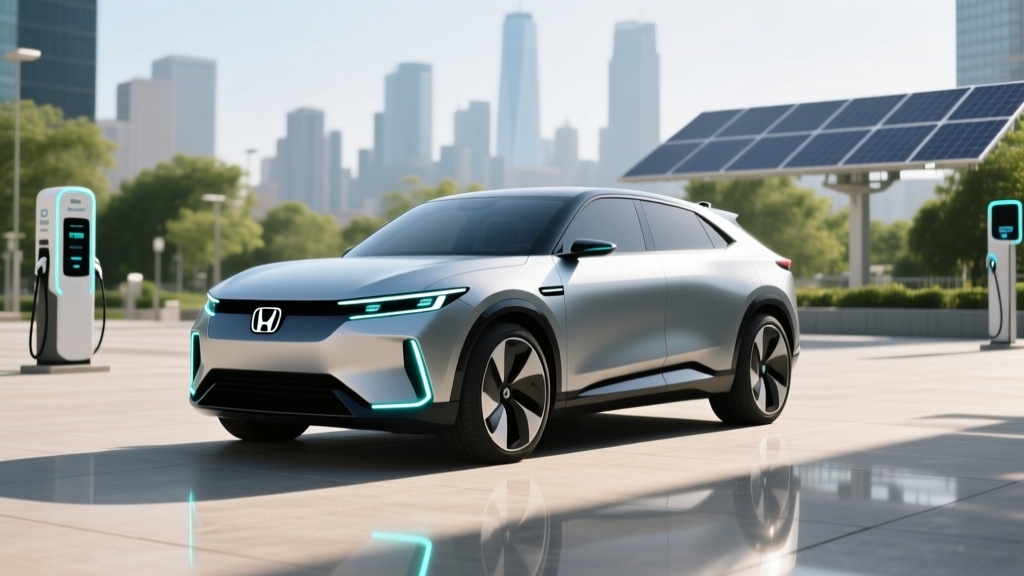
Honda has officially scrapped several electric vehicle models, most notably discontinuing the Honda Prologue and Acura ZDX — both Ultium-platform SUVs developed in partnership with General Motors. The decision, driven by shifting market demand, unfavorable tariff environments, and Honda's strategic pivot toward its own in-house EV architecture and hybrid powertrains, leaves current owners and prospective buyers with critical questions about parts availability, resale values, and warranty support. If you currently own a Prologue or ZDX, your vehicle remains fully supported under Honda's existing 3-year/36,000-mile bumper-to-bumper and 8-year/100,000-mile battery warranty. If you were shopping for one, Honda now directs buyers toward its expanded hybrid lineup and upcoming next-generation EVs built on its proprietary platform.
Which Honda and Acura EV Models Were Scrapped?
The discontinuation affects Honda's first-generation battery-electric offerings that relied on GM's Ultium platform:
| Model | Platform | EPA Range | Battery | Peak DC Charge | Base MSRP (Final Year) | Status |
|---|---|---|---|---|---|---|
| Honda Prologue (FWD) | GM Ultium | 296 mi | 85 kWh (NMC) | 155 kW | $47,400 | Discontinued |
| Honda Prologue (AWD) | GM Ultium | 281 mi | 85 kWh (NMC) | 155 kW | $50,400 | Discontinued |
| Acura ZDX (A-Spec) | GM Ultium | 313 mi | 102 kWh (NMC) | 190 kW | $64,500 | Discontinued |
| Acura ZDX Type S | GM Ultium | 278 mi | 102 kWh (NMC) | 190 kW | $73,500 | Discontinued |
These models were essentially rebadged Chevrolet Blazer EV and Cadillac Lyriq variants. Honda's decision to end the GM partnership for EVs means no successor models will emerge from this collaboration. Honda's next-generation EVs — expected to begin arriving in 2027 — will use the company's proprietary "e:Architecture" platform, developed entirely in-house.
What This Means for Current Prologue and ZDX Owners
If you already own a discontinued Honda or Acura EV, the practical impact is more nuanced than "your car is now worthless." Here's what you actually need to know:
Warranty and Service Support
Honda and Acura remain legally obligated to honor all existing warranties. The 8-year/100,000-mile battery and powertrain warranty remains intact, and Honda must maintain parts inventory for a minimum of 10 years under federal regulations. Because the Ultium platform is shared with GM vehicles still in production (Chevrolet Blazer EV, Cadillac Lyriq), many mechanical and electrical components will continue to be manufactured. The risk is primarily with Honda/Acura-specific body panels, interior trim, and infotainment hardware.
Resale Value Impact
Discontinued models typically see a 10–18% sharper depreciation curve in the first 12 months after announcement compared to continuing models, based on historical data from vehicles like the Chevy Bolt EV (pre-revival announcement). Prologue owners who purchased near MSRP should expect current trade-in values roughly 25–35% below original purchase price, depending on mileage and condition. This is steeper than comparable continuing models like the Hyundai Ioniq 5, which holds approximately 55–60% of value at the 2-year mark.
Software Updates and Connectivity
This is the area with the most uncertainty. Honda has committed to maintaining over-the-air (OTA) updates and HondaLink connectivity for existing vehicles, but the timeline for winding down software support on discontinued platforms is typically 5–7 years. Google Built-In infotainment (used in both the Prologue and ZDX) relies on Google's automotive platform, which Google has committed to supporting independently of manufacturer decisions.
Honda's EV vs. Hybrid Strategy: The Numbers Behind the Pivot
Honda's decision wasn't made in a vacuum. The company looked at real sales data, market conditions, and the economics of EV production versus its highly profitable hybrid lineup. Here's the comparison that likely drove the decision:
2026 Honda Lineup: EV vs. Hybrid Cost Comparison
| Metric | Honda Prologue Elite AWD (Discontinued) | 2026 Honda CR-V Hybrid Sport Touring | 2026 Honda Accord Hybrid Sport-L |
|---|---|---|---|
| Base MSRP | $57,900 | $42,350 | $37,295 |
| Federal Tax Credit (§30D) | $0 (GM-sourced battery) | N/A (hybrid) | N/A (hybrid) |
| EPA Efficiency | 95 MPGe | 40 MPG combined | 44 MPG combined |
| Annual Fuel/Energy Cost* | $620 (electricity) | $1,580 (gasoline) | $1,440 (gasoline) |
| 5-Year Fuel/Energy Total | $3,100 | $7,900 | $7,200 |
| 5-Year Estimated Maintenance | $1,800 | $3,200 | $2,900 |
| 5-Year Total Cost of Ownership** | ~$62,800 | ~$53,450 | ~$47,395 |
*Based on 15,000 miles/year, $0.14/kWh national average electricity rate, $3.40/gallon gasoline. **Includes purchase price, fuel/energy, maintenance. Excludes insurance, depreciation, and financing.
The Prologue's fundamental problem: it was priced like a premium EV but couldn't access the §30D federal tax credit because its battery cells and critical minerals were sourced through GM's supply chain, which did not meet the domestic-content and critical-minerals thresholds established by the Inflation Reduction Act. A $57,900 SUV with no tax credit incentive and a 155 kW peak charge rate (slow by 2026 standards) was difficult to position against rivals like the Hyundai Ioniq 5 (240 kW peak charging, eligible for up to $7,500) or the Tesla Model Y (250 kW peak, eligible for point-of-sale credit).
Meanwhile, Honda's hybrid models — the CR-V Hybrid, Accord Hybrid, and Civic Hybrid — sell at volume, require no charging infrastructure, and generate strong margins. Honda's hybrid sales grew approximately 40% year-over-year through 2025, while the Prologue sold below Honda's initial 70,000-unit annual target.
Real Alternatives: What to Buy Instead in 2026
If you were considering a Honda Prologue or Acura ZDX, here's how the competitive landscape looks with concrete data:
| Vehicle | Type | EPA Range / MPG | Battery / Powertrain | Peak DC Charge | 10–80% Time | Base MSRP | §30D Credit Eligible |
|---|---|---|---|---|---|---|---|
| Hyundai Ioniq 5 (Long Range AWD) | BEV | 290 mi | 84 kWh (NMC) | 240 kW | ~18 min | $48,600 | Yes (up to $7,500) |
| Tesla Model Y (Long Range AWD) | BEV | 320 mi | 78 kWh (NMC/LFP) | 250 kW | ~15 min | $44,990 | Yes (up to $7,500) |
| Ford Mustang Mach-E (Premiere AWD) | BEV | 290 mi | 91 kWh (NMC) | 150 kW | ~30 min | $43,995 | Yes (up to $7,500) |
| Honda CR-V Hybrid Sport Touring | HEV | 40 MPG combined | 2.0L + 2-motor hybrid | N/A | N/A | $42,350 | No |
| Toyota RAV4 Prime (PHEV) | PHEV | 42 mi electric + 38 MPG | 18.1 kWh + 2.5L hybrid | 6.6 kW (L2 only) | ~2.5 hr (L2) | $44,500 | No |
Real-World Range Reality Check
EPA estimates are tested under controlled conditions. In real-world highway driving at 70–75 mph with climate control active:
- Ioniq 5 AWD: Expect ~240–260 miles highway; drops to ~200–220 miles in sub-30°F cold weather due to battery resistance and cabin heating demands.
- Model Y Long Range: Expect ~270–290 miles highway; Tesla's heat pump gives it an edge in cold weather (~240–260 miles at 20°F).
- Prologue AWD (for reference): Expect ~230–250 miles highway; cold-weather performance was a known weak point, dropping to ~180–200 miles due to the Ultium platform's less aggressive thermal management in Honda's tuning.
Decision Framework: What Should You Buy Now?
If/Then Buyer Guide: Post-Honda EV Cancellation
IF you want a Honda/Acura specifically and need an SUV →
THEN buy the 2026 CR-V Hybrid (40 MPG combined, $42,350, proven reliability). Wait for Honda's next-gen in-house EVs expected in 2027–2028.
IF you want a midsize electric SUV with fast charging and tax credit eligibility →
THEN buy the Hyundai Ioniq 5 (240 kW peak, 10–80% in ~18 min, eligible for up to $7,500 §30D credit at point of sale). The 2026 model year includes NACS port compatibility for direct Tesla Supercharger access.
IF you want maximum range and the most mature charging network →
THEN buy the Tesla Model Y (320 mi EPA, Supercharger network, eligible for $7,500 credit). Note: insurance costs average 15–20% higher than comparable non-Tesla EVs.
IF you can't charge at home and don't want range anxiety →
THEN buy a plug-in hybrid like the Toyota RAV4 Prime (42 miles electric-only covers most commutes, then 38 MPG on gas for road trips). No reliance on public charging infrastructure.
IF you already own a Prologue or ZDX →
THEN hold the vehicle if you're satisfied with it. Warranty support continues, parts availability is stable through the GM Ultium shared platform. Consider selling before the 4-year mark when depreciation steepens for discontinued models, unless you plan to drive it 8+ years.
Common Misconceptions About Honda's EV Decision
| Myth | Fact |
|---|---|
| "Honda is abandoning electric vehicles entirely." | Honda is abandoning the GM Ultium partnership and these specific models. The company has committed $40 billion to developing its own e:Architecture platform, with next-gen EVs expected starting in 2027. Honda's goal of 100% EV and fuel-cell sales by 2040 remains stated policy. |
| "Prologue and ZDX owners won't be able to get their cars serviced." | Federal law requires manufacturers to maintain parts for at least 10 years. The shared Ultium platform means many components remain in active production through GM. Authorized Honda/Acura dealers will continue servicing these vehicles. |
| "The Prologue was a bad EV." | The Prologue was a competent EV with 296 miles of range, comfortable ride quality, and competitive interior space. Its problems were strategic: no federal tax credit eligibility, 155 kW peak charging (below the 200+ kW class standard by 2025), and a pricing structure that couldn't compete with purpose-built rivals. |
| "Honda hybrids are a step backward from EVs." | Honda's two-motor hybrid system delivers 40–48 MPG combined with no charging dependency, no range anxiety, and a $10,000–$15,000 lower purchase price. For buyers without home charging access or those in extreme climates, hybrids are the more practical electrified option in 2026. |
| "I should sell my Prologue immediately." | Panic selling into a flooded market maximizes your loss. If the vehicle meets your daily needs, the rational move is to continue driving it under warranty. If you need to sell, list privately rather than trading in — dealers will lowball discontinued models more aggressively. |
First-Time EV Buyer Considerations in 2026
Honda's EV cancellation is a reminder that buying an EV involves risks that don't exist with conventional vehicles. Here's what first-time buyers should evaluate before committing:
Home Charging Access Is Non-Negotiable for Most Buyers
Public DC fast charging costs $0.35–$0.55/kWh on networks like Electrify America and EVgo, compared to $0.12–$0.16/kWh for home Level 2 charging. A driver covering 15,000 miles annually in a vehicle averaging 3.5 miles/kWh will spend approximately $1,500–$2,350/year on public charging versus $515–$685/year charging at home. If you cannot install a Level 2 charger at home (240V, 32–48 amp circuit, typically $800–$2,500 for installation including a panel evaluation by a licensed electrician), a plug-in hybrid or conventional hybrid is likely a better financial choice.
Cold-Weather Range Loss Is Real and Quantifiable
All lithium-ion batteries lose efficiency in cold temperatures. At 20°F, expect 20–35% range reduction depending on whether the vehicle uses a heat pump (more efficient) or resistive cabin heating. Vehicles like the Tesla Model Y and Hyundai Ioniq 5 use heat pumps and fare better; the discontinued Prologue's resistive heating system was a contributor to its poor cold-weather reputation.
Tax Credit Eligibility Is Specific and Changing
The IRS §30D clean vehicle credit for 2026 requires:
- Vehicle MSRP under $55,000 (sedans) or $80,000 (SUVs/trucks)
- Buyer adjusted gross income under $150,000 (single) / $300,000 (joint)
- Battery components manufactured or assembled in North America (percentage thresholds increase annually)
- Critical minerals sourced from the U.S. or FTA-partner countries (percentage thresholds increase annually)
- Credit can be transferred to the dealer at point of sale as a purchase-price reduction
The Prologue failed the battery sourcing requirement. Always verify eligibility on the IRS website or with a tax professional before assuming you'll receive the credit.
Insurance Costs Are Higher for EVs
EV insurance premiums average 15–25% higher than comparable gas vehicles due to higher repair costs (specialized high-voltage safety training, expensive battery packs, aluminum-intensive structures). Budget an additional $200–$500/year over what you'd pay for a gas-powered equivalent.
The Bottom Line for Honda Shoppers
Honda scrapping its first-generation electric vehicle models is a setback for the brand's EV ambitions but not a reason to abandon electrified vehicles altogether. The Prologue and ZDX were stopgap products — competent but uncompetitive on price, charging speed, and tax-credit eligibility. Honda's hybrid lineup offers genuine fuel savings with zero lifestyle compromise, and the company's next-generation in-house EVs should address the fundamental weaknesses of the Ultium-based models when they arrive.
For current owners: your vehicle is still supported, still drivable, and still a functional daily EV. For prospective buyers: the market offers better options today in the Ioniq 5, Model Y, and Mach-E for pure EVs, or Honda's own CR-V Hybrid for an electrified vehicle that doesn't depend on charging infrastructure.
Frequently Asked Questions
Will Honda release new electric vehicles after scrapping the Prologue?
Yes. Honda is developing its proprietary e:Architecture platform with next-generation EVs expected to begin arriving in the 2027–2028 timeframe. These will be designed from the ground up by Honda, with battery partnerships that are expected to qualify for federal tax credits. Specific models, pricing, and range figures have not been finalized as of early 2026.
Should I sell my Honda Prologue now or keep driving it?
If you're satisfied with the vehicle's range and charging performance for your daily needs, keeping it is the financially rational choice. The 8-year/100,000-mile battery warranty remains active, and parts support is stable. If you sell, expect 25–35% below original purchase price at trade-in; private-party sales will yield 5–10% more. Holding past the 4-year mark will likely result in steeper depreciation as the discontinuation effect compounds.
Can I still get my Prologue or ZDX serviced at a Honda/Acura dealer?
Yes. All authorized Honda and Acura dealerships will continue to service these vehicles. The Ultium platform components are shared with GM vehicles still in production, ensuring continued parts availability for drivetrain and electrical systems. Honda-specific body and interior parts are subject to standard 10-year parts-availability requirements.
Is the Honda CR-V Hybrid a good alternative to the Prologue?
For most buyers, yes. The CR-V Hybrid delivers 40 MPG combined (versus the Prologue's 95 MPGe), costs $15,000+ less, requires no charging infrastructure, and has no range variability from weather or driving style. The trade-off: you still use gasoline and produce tailpipe emissions. If your priority is operating cost and practicality without charging hassle, the CR-V Hybrid is the stronger choice. If your priority is zero tailpipe emissions and you have reliable home charging, look to the Ioniq 5 or Model Y.
Why did Honda's EV partnership with GM fail?
Multiple factors converged: the Ultium-based Prologue couldn't qualify for the §30D federal tax credit due to battery sourcing rules, making it uncompetitive on effective price. The 155 kW peak charge rate fell behind the 200–250 kW standard established by rivals. Honda's strategic preference is to control its own EV technology stack rather than depend on a competitor's platform. Changing tariff environments and slower-than-expected EV adoption rates in the U.S. market further reduced the business case for continuing the partnership.
What happens to my Honda EV's resale value long-term?
Discontinued EVs typically depreciate 10–18% more than continuing models in the first two years after cancellation. Long-term (5+ years), values stabilize based on the vehicle's actual utility — range, reliability, and parts availability. The Prologue's shared Ultium platform is a stabilizing factor compared to a fully orphaned vehicle. Expect values to track similarly to the Chevy Bolt EV post-cancellation: steep initial drop, then gradual stabilization as the vehicle proves reliable in service.