Quick Verdict: Jeep's Premium Electric Flagship Arrives
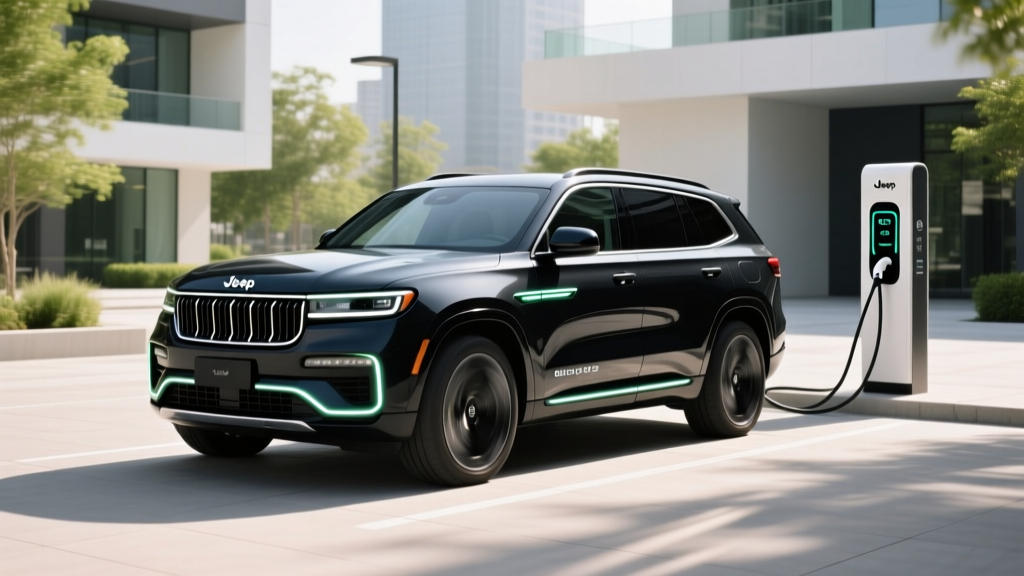
The 2026 Jeep Wagoneer S marks Jeep's serious entry into the premium electric SUV segment, combining the brand's off-road heritage with Stellantis' STLA Large platform. With up to 400 miles of EPA-estimated range, dual-motor all-wheel drive, and a starting price around $65,000 before incentives, it targets buyers who want luxury EV performance without abandoning Jeep's rugged DNA.
Real-World Range Reality Check
EPA Estimate: 400 miles (Limited trim, estimated)
Real-World Expectation: Expect 320-360 miles in mixed driving, dropping to 280-320 miles on sustained highway runs at 70+ mph. Cold weather (below freezing) can reduce range by 20-30%, bringing winter highway range down to 220-260 miles. The 100-kWh usable battery provides a comfortable buffer, but heavy towing or aggressive driving will push consumption toward 3.0-3.5 kWh/mile.
Battery, Range & Efficiency
The Wagoneer S uses a 100-kWh usable battery pack (111 kWh gross) with nickel-manganese-cobalt (NMC) chemistry, chosen for its energy density and cold-weather performance over LFP alternatives. This positions it between the Tesla Model X (100 kWh, 348-mile range) and the Rivian R1S (149 kWh Max Pack, 400+ miles).
| Specification | 2026 Jeep Wagoneer S |
|---|---|
| Battery Capacity (Usable) | 100 kWh |
| Battery Chemistry | NMC (Nickel-Manganese-Cobalt) |
| EPA Range (Est.) | Up to 400 miles |
| Efficiency (Est.) | 2.5 kWh/mile (90 MPGe combined) |
| Drivetrain | Dual-motor AWD |
| Horsepower | 600 hp |
| 0-60 mph | ~3.8 seconds |
Efficiency should land around 2.5 kWh per mile (roughly 90 MPGe combined), which is competitive for a 6,000-pound luxury SUV but trails the more aerodynamic Tesla Model X (102 MPGe). The thermal management system includes a heat pump for improved cold-weather efficiency and battery preconditioning for DC fast charging.
Charging Speed & Infrastructure
The Wagoneer S supports up to 160 kW DC fast charging via CCS connector (with NACS adapter compatibility for Tesla Supercharger access). At peak rate, you'll add roughly 150 miles in 15 minutes, though the charge curve tapers significantly above 80% state of charge.
| Charging Level | Power | Time / Range Added |
|---|---|---|
| Level 1 (120V) | 1.4 kW | ~4 miles per hour |
| Level 2 (240V, 48A) | 11.5 kW | ~35 miles per hour, 0-100% in ~10 hours |
| DC Fast Charge | 160 kW peak | 10-80% in ~28 minutes, 80-100% adds 20+ minutes |
Charging Curve Reality: The 160 kW peak only sustains between 10-50% state of charge. From 50-80%, expect 100-120 kW, and above 80% the rate drops to under 50 kW to protect battery health. For road trips, plan stops at 20-80% rather than full charges to minimize time at chargers.
Home charging on a 48-amp Level 2 circuit (requiring a 60-amp breaker) will fully replenish the battery overnight. Installation costs typically range from $800-$2,500 depending on electrical panel capacity and distance from panel to garage. Homes with 100-amp service may need a panel upgrade ($1,500-$3,000 additional).
Performance & Driving Dynamics
The dual-motor all-wheel-drive system delivers 600 horsepower and an estimated 600 lb-ft of torque, launching the Wagoneer S to 60 mph in approximately 3.8 seconds. That puts it in Tesla Model X Plaid territory for acceleration, though the Jeep prioritizes comfort over track performance.
Jeep's Selec-Terrain system carries over to the electric platform, offering Auto, Sport, Snow, Sand/Mud, and Rock modes. The air suspension provides up to 8.3 inches of ground clearance in Off-Road mode and can lower for highway efficiency. Towing capacity is rated at 7,500 pounds when properly equipped—competitive with the Rivian R1S (7,700 lbs) and well above the Tesla Model X (5,000 lbs).
Regenerative braking offers multiple levels, including a one-pedal driving mode that brings the vehicle to a complete stop. The transition between regen and friction brakes is well-calibrated, avoiding the grabby feel that plagues some competitors.
Interior, Tech & Cargo Space
The Wagoneer S cabin seats seven in three rows, with premium materials including available Nappa leather, real wood trim, and a 12.3-inch digital cluster paired with a 12.3-inch center touchscreen running Uconnect 5. The passenger gets their own 10.25-inch display, and rear passengers have dual 10.1-inch screens with HDMI inputs.
| Dimension | Measurement |
|---|---|
| Cargo (Behind 3rd Row) | 18 cu ft |
| Cargo (Behind 2nd Row) | 48 cu ft |
| Cargo (Max, 2nd/3rd Folded) | 95 cu ft |
| Front Legroom | 41.3 inches |
| 2nd-Row Legroom | 39.1 inches |
| 3rd-Row Legroom | 30.2 inches |
The third row is best suited for children on longer trips—adults will find it cramped beyond short drives. Cargo space behind the third row (18 cu ft) is tight for a vehicle this size, though folding the third row opens up a practical 48 cu ft for family gear.
Driver Assistance: The Wagoneer S includes Jeep's Active Driving Assist (SAE Level 2), which provides adaptive cruise control with stop-and-go and lane centering on highways. This is not autonomous driving—you must keep hands on the wheel and remain engaged. Available Night Vision with pedestrian/animal detection and a 360-degree camera system aid visibility in this large vehicle.
Pricing, Trims & Federal Tax Credit
The 2026 Wagoneer S launches in two trims, with pricing that positions it against the BMW iX, Tesla Model X, and Rivian R1S:
| Trim | MSRP | Est. After §30D Credit |
|---|---|---|
| Limited | $65,000 | $57,500 (if eligible) |
| Overland | $75,000 | $67,500 (if eligible) |
Federal Tax Credit Eligibility (§30D): The Wagoneer S may qualify for up to $7,500 in federal tax credits, but eligibility depends on multiple factors per current IRS rules:
- MSRP Cap: SUVs must be under $80,000—both trims qualify
- Income Limits: Modified AGI cannot exceed $300,000 (joint), $225,000 (head of household), or $150,000 (single)
- Battery Sourcing: Critical minerals and battery components must meet North American sourcing thresholds that tighten annually through 2029
- Point-of-Sale Transfer: Eligible buyers can transfer the credit to the dealer for an immediate price reduction at purchase
Consult a tax professional to confirm your eligibility, as battery sourcing requirements are complex and subject to change. State incentives (California, Colorado, New York, and others) may stack on top of federal credits.
Warranty & Ownership Costs
Jeep provides competitive warranty coverage:
- Battery/Powertrain: 8 years / 100,000 miles (whichever comes first), with a capacity retention threshold of 70%
- Bumper-to-Bumper: 3 years / 36,000 miles
- Corrosion: 5 years / unlimited miles
The battery warranty's 70% capacity threshold is standard for the industry—if your battery degrades below 70% of original capacity within the warranty period, Jeep will repair or replace it. Real-world degradation data from similar NMC packs suggests 10-15% capacity loss over 8 years/100,000 miles under normal use, meaning most owners will retain 85-90% capacity.
Insurance premiums for the Wagoneer S will likely run 15-25% higher than gas-powered equivalents due to repair costs and parts pricing. Expect annual premiums of $2,800-$3,800 depending on location, driving record, and coverage levels.
Pros & Cons: Who Should Buy the Wagoneer S?
Pros
- 400-mile range eliminates most range anxiety for road trips
- 7,500-lb towing capacity beats Tesla Model X
- Premium interior with genuine luxury materials
- Off-road capability with air suspension and Selec-Terrain modes
- Competitive 0-60 time for a three-row SUV
- Access to Tesla Supercharger network via NACS adapter
Cons
- 160 kW peak DC charging trails Hyundai/Kia's 350 kW capability
- Third-row space is tight for adults on long trips
- Cargo space behind third row (18 cu ft) is limited
- Base price above $65,000 limits tax credit eligibility for some buyers
- Efficiency (90 MPGe) trails more aerodynamic competitors
- Limited real-world reliability data as a new model
Choose the Wagoneer S If:
- You need three rows and 7,500-lb towing in an electric SUV
- You want genuine off-road capability with luxury appointments
- You prioritize range (400 miles) over ultra-fast charging
- You're upgrading from a gas Wagoneer or Grand Cherokee and want to stay in the Jeep family
Look Elsewhere If:
- You prioritize fastest possible DC charging (consider Hyundai Ioniq 9 or Kia EV9 with 350 kW capability)
- You need maximum cargo space (Rivian R1S offers more usable volume)
- You want proven long-term reliability data (Tesla Model X has years of real-world ownership data)
- Your budget is under $60,000 (consider the smaller Jeep Recon or wait for price reductions)
Competitor Comparison
| Spec | Jeep Wagoneer S | Tesla Model X | Rivian R1S | BMW iX |
|---|---|---|---|---|
| EPA Range | 400 mi (est.) | 348 mi | 410 mi (Max) | 324 mi |
| Battery | 100 kWh | 100 kWh | 149 kWh | 111.5 kWh |
| 0-60 mph | 3.8 sec | 3.8 sec (Plaid: 2.5) | 3.5 sec | 4.4 sec |
| DC Fast Charge | 160 kW | 250 kW | 220 kW | 195 kW |
| Towing | 7,500 lbs | 5,000 lbs | 7,700 lbs | 3,500 lbs |
| Starting MSRP | $65,000 | $79,990 | $79,900 | $87,250 |
The Wagoneer S undercuts competitors on price while matching or exceeding towing capacity. Its charging speed is its weakest competitive point, though 160 kW is adequate for most road trip scenarios with proper planning.
FAQ: Common Wagoneer S Questions
What is the real-world range of the Jeep Wagoneer S?
Expect 320-360 miles in mixed driving conditions, with highway driving at 70+ mph reducing that to 280-320 miles. Cold weather can drop range by 20-30%, so winter highway range may be 220-260 miles. The 100-kWh battery provides a comfortable buffer for most daily driving and weekend trips.
How fast does the Wagoneer S charge at home and on the road?
On a 48-amp Level 2 home charger (240V), you'll add about 35 miles per hour, fully charging overnight in roughly 10 hours. DC fast charging peaks at 160 kW, adding 150 miles in 15 minutes or reaching 80% in about 28 minutes. Charging slows significantly above 80% to protect battery health.
Does the Wagoneer S qualify for the $7,500 federal tax credit?
It may qualify, but eligibility depends on your income (under $300,000 joint/$150,000 single), the vehicle's MSRP (under $80,000 for SUVs—both trims qualify), and battery sourcing requirements that change annually. The credit can be transferred to the dealer at purchase for an immediate price reduction. Consult a tax professional and check IRS.gov for current rules.
Is the Wagoneer S worth buying vs. the Tesla Model X or Rivian R1S?
The Wagoneer S offers the best value proposition with a $65,000 starting price, 400-mile range, and 7,500-lb towing capacity. Choose it if you want Jeep's off-road heritage and don't need the fastest charging. The Model X offers superior Supercharger access and Autopilot refinement but costs $15,000 more. The R1S provides more cargo space and proven adventure capability but also starts near $80,000.
Can the Wagoneer S use Tesla Superchargers?
Yes, via a NACS adapter. The Wagoneer S uses a CCS connector natively but will support Tesla's Supercharger network through an adapter, expanding your charging options significantly on road trips. Electrify America, EVgo, and other networks remain accessible with the native CCS plug.
What's the warranty coverage on the battery?
Jeep covers the battery and electric powertrain for 8 years or 100,000 miles, whichever comes first. The warranty guarantees at least 70% capacity retention—if your battery degrades below that threshold, Jeep will repair or replace it. Real-world data suggests most NMC batteries retain 85-90% capacity over that period under normal use.