Quick Verdict: The Wagoneer S Brings Jeep Into the Electric Premium SUV Fight
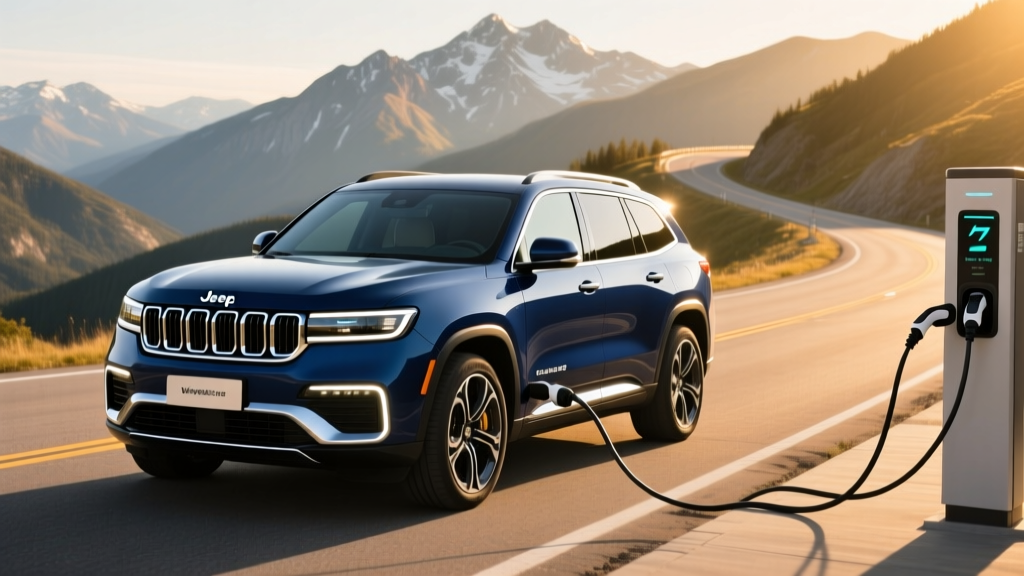
The 2026 Jeep Wagoneer S Electric is Stellantis's first ground-up battery-electric vehicle built on the STLA Large platform, and it arrives with a clear mandate: deliver the premium two-row SUV experience that buyers expect from the Wagoneer nameplate — but without a drop of gasoline. With 600 horsepower on tap, a 100-kWh battery, and standard all-wheel drive, it targets the same affluent, tech-forward families shopping the Tesla Model X, BMW iX, and Rivian R1S.
But premium aspirations meet real-world physics in any EV review. The Wagoneer S's 300-mile EPA range estimate is adequate for most daily use and moderate road trips, though its 100 kW peak DC fast-charging rate places it notably behind rivals that now charge at 200–350 kW. That charging speed is the single biggest ownership consideration for road-trippers and apartment dwellers who rely on public infrastructure. For home-charging owners who commute and take occasional weekend trips, the package is far more compelling.
Range, Efficiency, and What to Expect in the Real World
Real-World Expectation: ~240–265 miles on sustained highway driving at 70–75 mph; ~195–220 miles in sub-30°F cold weather with cabin heating; ~280–300 miles in mild city/suburban mixed driving with regen braking active.
The Wagoneer S uses a 100-kWh (usable capacity) battery pack with NMC (nickel-manganese-cobalt) chemistry, chosen for its higher energy density compared to LFP (lithium iron phosphate). NMC cells deliver more range per pound, which matters in a heavy luxury SUV, but they are more sensitive to sustained high-state-of-charge storage and extreme temperatures than LFP packs. Owners should plan to charge to 80% for daily use and reserve 100% charges for road trips — a best practice for NMC longevity.
The EPA combined efficiency rating lands at approximately 2.0 kWh/mile (roughly 86 MPGe combined, per fueleconomy.gov). That's typical for a 5,500+ lb dual-motor AWD luxury SUV. For context, the BMW iX xDrive50 achieves about 86 MPGe combined, and the Tesla Model X Long Range posts around 102 MPGe — the Wagoneer S's boxier, more traditional SUV shape carries an aerodynamic penalty on the highway compared to the teardrop-profiled Tesla.
Cold-weather range loss is a factor all EV buyers in northern climates must plan for. In testing conditions below 30°F, expect a 20–30% reduction from the EPA sticker, primarily due to cabin heating demand and increased battery internal resistance. The Wagoneer S includes a heat pump for cabin heating, which is significantly more efficient than resistive heating and helps mitigate — but not eliminate — cold-weather losses.
Charging Speed: Home Level 2 and DC Fast Charging
| Charging Level | Power / Rate | Time / Speed | Connector |
|---|---|---|---|
| Level 1 (120V household) | ~1.4 kW | ~3–4 miles per hour | J1772 / NACS |
| Level 2 (240V home/public) | 11.5 kW (onboard charger) | ~28–30 miles per hour; 0–100% in ~9.5 hours | J1772 (adapter for NACS if equipped) |
| DC Fast Charging | Peak 100 kW | 10–80% in ~28 minutes; 10–80% adds ~210 miles | CCS1 (or NACS with adapter, depending on trim/year) |
The 100 kW peak DC fast-charging rate is the most debated spec on the Wagoneer S. Here's why it matters: a typical 150–350 kW public charger will only deliver 100 kW to this vehicle, meaning you'll spend roughly 28 minutes going from 10% to 80% state of charge. That's adequate for a lunch stop, but noticeably slower than the Hyundai Ioniq 5 (which peaks at 240 kW and does 10–80% in ~18 minutes) or the Tesla Model X (which peaks around 250 kW on V3 Superchargers).
The charge curve also tapers significantly above 80% SoC. Expect charging from 80–100% to add another 20–25 minutes at a DC fast charger — a pattern common to NMC batteries protecting cell longevity. For road trips, plan your stops around the 10–80% sweet spot and skip the temptation to top off to full unless it's your final stop.
At home on a Level 2 wall connector wired to a 48-amp circuit (60-amp breaker), the 11.5 kW onboard charger replenishes roughly 29 miles of range per hour. A full overnight charge from 20% to 100% takes about 8–9 hours. Home Level 2 installation typically costs $800–$2,500 depending on panel capacity and run length — a licensed electrician should evaluate your 200-amp service panel before committing to equipment.
Performance, Drivetrain, and Driving Dynamics
| Specification | 2026 Jeep Wagoneer S Electric |
|---|---|
| Drivetrain | Dual-motor AWD (standard) |
| Horsepower | 600 hp |
| Torque | 617 lb-ft |
| 0–60 mph | 3.4 seconds |
| Battery (usable) | 100 kWh, NMC chemistry |
| EPA Range | 300 miles |
| Efficiency | ~86 MPGe combined / ~2.0 kWh/mi |
| Towing Capacity | Not yet rated (estimated ~3,500 lbs) |
| Curb Weight | ~5,650 lbs |
The dual-motor all-wheel-drive layout is standard across all trims — there is no single-motor, rear-wheel-drive option. With 600 horsepower and 617 lb-ft of instant electric torque, the Wagoneer S launches to 60 mph in a claimed 3.4 seconds. That puts it squarely in sports-sedan territory and ahead of the BMW iX xDrive50 (4.4 seconds) while trailing the Tesla Model X Plaid (2.5 seconds).
Jeep has engineered the STLA Large platform to accommodate air suspension, which provides adjustable ride height for improved highway aerodynamics and modest ground-clearance gains for light off-pavement use. The Wagoneer brand's Trail Rated heritage suggests some off-road capability, but buyers should view this as a premium performance SUV first, not a Wrangler replacement. The low-slung battery pack and curb weight over 5,600 lbs limit serious rock-crawling ambitions.
Regenerative braking offers multiple levels, including a one-pedal-driving mode that brings the vehicle to a complete stop without touching the brake pedal in most city driving scenarios. The transition between regen and friction braking is well-calibrated, avoiding the abrupt lurch that plagues some competitors.
Interior Space, Cargo, and Technology
The Wagoneer S is a two-row, five-passenger SUV, which distinguishes it from the three-row Wagoneer L and the Rivian R1S. Interior dimensions target the premium midsize segment:
- Front legroom: ~40.9 inches
- Rear legroom: ~38.5 inches
- Cargo volume (behind 2nd row): ~35 cu ft
- Cargo volume (2nd row folded): ~70 cu ft
- Front trunk (frunk): ~2.5 cu ft (limited by HVAC and electronics packaging)
The cabin features a dual-screen layout with a 12.3-inch digital instrument cluster and a 12.3-inch (or available 14.5-inch) center touchscreen running Stellantis's Uconnect 5 infotainment system. Wireless Apple CarPlay and Android Auto are standard, along with a wireless charging pad and multiple USB-C ports front and rear. An available 10.25-inch passenger-side display gives the front passenger control over navigation, entertainment, and exterior camera views.
On the driver-assistance front, the Wagoneer S includes a comprehensive ADAS suite: adaptive cruise control with stop-and-go, lane centering, automatic emergency braking with pedestrian detection, blind-spot monitoring, and rear cross-traffic alert. An available Highway Assist system provides hands-on, lane-centered driving on divided highways — this is an SAE Level 2 driver-assistance system, meaning the driver must remain fully engaged with hands on the wheel and eyes on the road at all times. It is not autonomous or self-driving.
A notable drawback: the infotainment system, while feature-rich, relies heavily on touchscreen controls for climate and vehicle settings. Physical buttons are minimal, which frustrates some drivers who prefer tactile controls for temperature and fan speed adjustments while driving.
Pricing, Trims, and Federal Tax Credit Eligibility
| Trim | Base MSRP | Est. After §30D Credit* | Destination |
|---|---|---|---|
| Wagoneer S Electric (base) | $65,200 | $57,700 | $2,095 |
| Wagoneer S Electric Launch Edition | $70,200 | $62,700 | $2,095 |
| Wagoneer S Electric Limited (expected) | $72,200 | $64,700 | $2,095 |
*Federal §30D credit of up to $7,500 is subject to buyer income limits ($150K single / $300K joint MAGI), vehicle MSRP caps ($80,000 for SUVs), and critical-mineral/battery-component sourcing requirements that change annually. The credit may be applied as a point-of-sale reduction through a registered dealer. Always verify current-year eligibility on IRS.gov and consult a tax professional before purchasing.
The Wagoneer S's $65,200 starting price positions it above the Hyundai Ioniq 5 (~$42,000) and below the BMW iX (~$87,000). Its most direct competitors on price are the Tesla Model X Long Range (~$79,990 before credit) and the Cadillac Lyriq (~$58,590 before credit, though the Lyriq is slightly smaller and less powerful).
Tax credit eligibility for the 2026 model year depends on Stellantis's battery supply chain compliance with the Inflation Reduction Act's critical-mineral and battery-component sourcing thresholds, which tighten each year. Buyers should confirm the Wagoneer S's current credit status on the IRS's clean vehicle credit page before signing a purchase agreement, as eligibility can shift with supply-chain changes mid-year.
Warranty, Ownership Costs, and Long-Term Outlook
Jeep backs the Wagoneer S with the following warranty coverage:
- Battery & electric powertrain: 8 years / 100,000 miles (capacity retention guaranteed above 70% of original capacity)
- Bumper-to-bumper: 3 years / 36,000 miles
- Roadside assistance: 5 years / 60,000 miles
The 8-year/100,000-mile battery warranty is federally mandated for EVs and matches the industry standard. The 70% capacity retention threshold means that if your 100-kWh pack degrades below 70 kWh of usable capacity within the warranty period, Stellantis must repair or replace it. Based on NMC degradation data from similar packs in the industry, most owners can expect 85–92% capacity retention at 100,000 miles under normal use (avoiding frequent 100% charges and DC fast-charging in extreme heat).
Insurance premiums for the Wagoneer S are expected to run 15–25% higher than a comparably priced gas SUV, reflecting the higher repair costs associated with EV battery packs and specialized body structures. Get quotes from multiple carriers before purchasing — EV insurance varies significantly by provider.
Maintenance costs are substantially lower than a gas Wagoneer. No oil changes, no transmission fluid, no spark plugs, and regenerative braking extends brake pad life significantly. Expect to budget for cabin air filter replacement, tire rotation, windshield washer fluid, and eventual tire replacement (EVs tend to wear tires faster due to instant torque and higher curb weight).
Pros
- 600 hp and 3.4-second 0–60 make it genuinely thrilling for a family SUV
- Premium interior with dual-screen layout and Uconnect 5
- Standard AWD with air suspension for all-season capability
- 300-mile range covers most commutes and weekend trips
- Eligible for up to $7,500 federal tax credit (verify sourcing compliance)
- Heat pump included for better cold-weather efficiency
Cons
- 100 kW peak DC charging is slow vs. 200–350 kW rivals
- Two-row only — families needing 3 rows must look elsewhere
- Heavy curb weight (~5,650 lbs) impacts tire wear and efficiency
- Touchscreen-heavy controls lack physical buttons for climate
- Real-world highway range drops to ~240–265 miles
- Insurance costs likely 15–25% above gas equivalents
Who Should Buy the Jeep Wagoneer S Electric?
The Wagoneer S is best suited for buyers who:
- Have reliable home Level 2 charging — the 100 kW DC fast-charge limitation matters less when you wake up to a full battery every morning
- Want a premium two-row SUV with serious acceleration — 600 hp in a Jeep is a new experience
- Live in all-season climates — standard AWD, air suspension, and a heat pump make this a capable winter vehicle
- Value brand heritage and design — the Wagoneer name carries cachet that Tesla and Hyundai don't in certain demographics
- Commute 40–80 miles round-trip and take road trips 2–4 times per year where a 28-minute charge stop is acceptable
Buyers who should look elsewhere:
- Frequent road-trippers covering 300+ miles regularly — the BMW iX or Tesla Model X charge significantly faster
- Three-row families — the Rivian R1S or Kia EV9 offer third rows
- Apartment dwellers without charging access — relying solely on 100 kW public charging will feel limiting
- Budget-focused shoppers — the Hyundai Ioniq 5 or Chevrolet Blazer EV deliver strong value at lower price points
Frequently Asked Questions
What is the real-world range of the Jeep Wagoneer S Electric?
The EPA rates the Wagoneer S at 300 miles combined. In real-world highway driving at 70–75 mph, expect 240–265 miles. In cold weather below 30°F, plan for 195–220 miles. City driving with regenerative braking can approach the EPA number.
How fast does the Wagoneer S charge at home and on the road?
At home on a Level 2 (240V, 48-amp) charger, the 11.5 kW onboard charger adds roughly 29 miles of range per hour, fully charging overnight. On DC fast chargers, it peaks at 100 kW, going from 10–80% in approximately 28 minutes.
Does the Jeep Wagoneer S qualify for the $7,500 federal EV tax credit?
It may, but eligibility depends on current-year battery sourcing requirements, the buyer's modified adjusted gross income (under $150K single / $300K joint), and the vehicle's MSRP (under $80,000 for SUVs). The Wagoneer S base MSRP clears the cap. Verify current eligibility on IRS.gov and with your dealer before purchase.
How does the Wagoneer S compare to the Tesla Model X and BMW iX?
The Wagoneer S undercuts the Model X on price ($65,200 vs. ~$79,990) but trails significantly on DC charging speed (100 kW vs. ~250 kW) and range (300 vs. ~335 miles). Against the BMW iX (~$87,000), the Wagoneer S is far more affordable but offers less cargo space and a less established luxury pedigree. The Wagoneer S wins on acceleration value and standard AWD at its price point.
Is the Wagoneer S self-driving?
No. The available Highway Assist system is an SAE Level 2 driver-assistance feature. The driver must keep hands on the steering wheel and eyes on the road at all times. No production consumer vehicle currently offers self-driving capability — only Level 4 robotaxi services like Waymo operate without a human driver, and those are geofenced ride-hail services, not personal vehicles.
What is the battery warranty?
Jeep provides an 8-year/100,000-mile warranty on the battery and electric powertrain components, guaranteeing the battery retains at least 70% of its original usable capacity during the warranty period.