The Short Answer on the Jeep Wagoneer EV
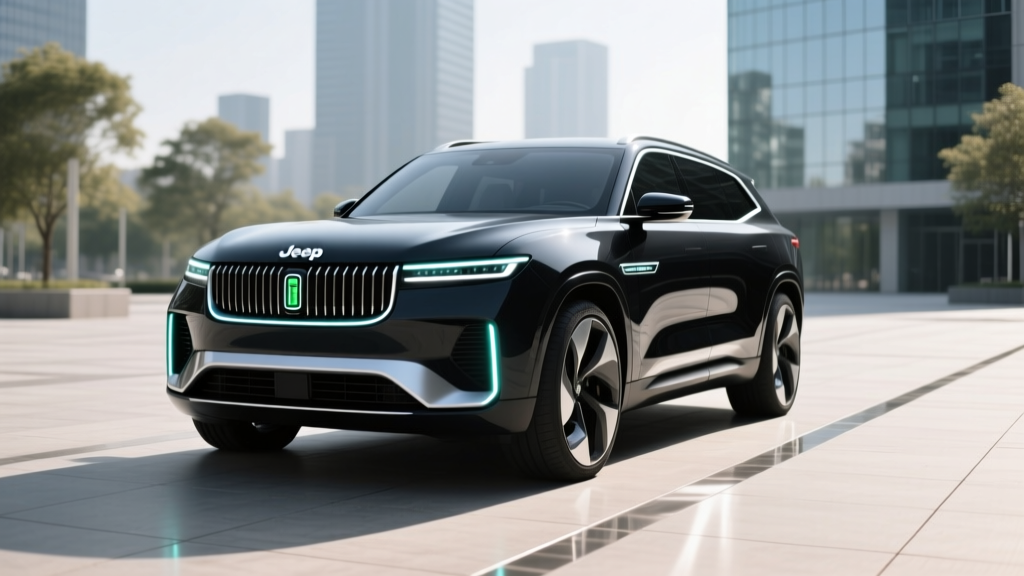
The 2026 Jeep Wagoneer EV is a full-size, three-row electric SUV built on Stellantis' STLA Large platform. It targets buyers who want serious interior space and off-road credibility without a gas tank. Expect an EPA-estimated range of roughly 300–320 miles on the largest battery pack, DC fast charging up to 200 kW (10–80% in approximately 25–28 minutes), and a starting MSRP in the mid-$50,000s before incentives. However, as a large, heavy SUV, real-world highway range and cold-weather performance will fall noticeably short of the EPA sticker — plan for 230–260 miles in mixed highway driving at 70+ mph, and potentially less in sub-freezing climates. Federal §30D tax credit eligibility depends on battery sourcing, your income, and the vehicle's final MSRP classification.
Range, Battery, and Efficiency: What the Numbers Actually Mean
The Wagoneer EV is expected to offer multiple battery configurations. The largest pack is projected at approximately 110–118 kWh of usable capacity, likely using NMC (nickel manganese cobalt) chemistry given the energy-density requirements of a full-size SUV. Here's what that translates to in practice:
| Spec | Estimated Figure | Notes |
|---|---|---|
| Battery Capacity (usable) | ~110–118 kWh | NMC chemistry expected |
| EPA Range (est.) | 300–320 mi | Largest pack, RWD or AWD dependent |
| Real-World Highway (70 mph) | ~230–260 mi | Large frontal area, high rolling resistance |
| Cold-Weather Range (20°F) | ~200–240 mi | ~25–35% loss typical for large packs without heat pump |
| MPGe (combined, est.) | ~85–95 MPGe | Heavy vehicle; efficiency lags smaller EVs |
| Energy Consumption | ~35–40 kWh/100 mi | Expect higher than midsize EV crossovers |
Real-World Range Reality Check
The EPA sticker will likely show 300+ miles, but full-size EV SUVs consistently lose 15–25% of rated range at sustained highway speeds due to aerodynamic drag scaling with velocity squared. Add winter temperatures and a fully loaded cabin (passengers + cargo), and 200–240 miles is a safer planning number for road trips. If your daily commute is under 60 miles round-trip, this won't matter. If you regularly drive 250+ miles between charging stops, you'll need to plan carefully.
Charging Speed and Infrastructure Compatibility
The Wagoneer EV is expected to support DC fast charging at up to 200 kW via the NACS (North American Charging Standard) connector, aligning with Stellantis' broader move to NACS across its lineup. This grants access to Tesla's Supercharger network — a significant practical advantage for road-tripping families.
| Charging Level | Power (kW) | Miles Added per Hour | Use Case |
|---|---|---|---|
| Level 1 (120V household) | ~1.4 kW | ~3–4 mi/hr | Emergency top-ups only; 30+ hours for full charge |
| Level 2 (240V home/public) | ~11.5–19.2 kW | ~30–50 mi/hr | Overnight home charging; 6–10 hours for full charge |
| DC Fast Charging | Up to ~200 kW peak | N/A | 10–80% in ~25–28 min; tapers significantly above 80% |
A critical ownership note: that 200 kW peak rate is not sustained across the entire charging session. Like all EVs, the Wagoneer EV's charge curve tapers as the battery fills — you'll see peak speeds between roughly 10–40% state of charge, then a gradual decline. The 10–80% time of 25–28 minutes is realistic for a pack this size, but charging from 80–100% can add another 20–30 minutes. For road trips, the optimal strategy is short, frequent stops (10–80%) rather than topping off completely.
For home Level 2 charging, budget $800–$2,500 for a quality 48-amp charger plus professional installation, depending on whether your electrical panel needs an upgrade to 200A service. This is a non-negotiable cost for convenient EV ownership in a vehicle with a battery this large — Level 1 charging at 1.4 kW would take well over 70 hours to fill a depleted 110+ kWh pack.
Pricing, Trims, and Federal Tax Credit Eligibility
The 2026 Jeep Wagoneer EV is expected to start in the mid-$50,000 range for a base trim, with higher trims pushing past $70,000. This positions it against the Rivian R1S, Kia EV9, and the upper trims of the Tesla Model X.
| Trim | Est. MSRP | Key Features |
|---|---|---|
| Base (Sport/SE equivalent) | ~$55,000–$58,000 | Standard range pack, RWD or AWD, 3 rows |
| Mid (Limited/Overland equivalent) | ~$62,000–$67,000 | Extended range, premium interior, ADAS suite |
| Top (Trailhawk/Summit equivalent) | ~$70,000–$75,000 | Max range, off-road hardware, air suspension, luxury package |
Federal §30D Tax Credit — Key Requirements (2026)
The Wagoneer EV's eligibility for up to $7,500 in federal tax credits (now available as a point-of-sale rebate) depends on several factors that change annually. Per IRS guidelines, you must meet ALL of the following:
- MSRP Cap: SUVs/vans/pickups must have an MSRP at or below $80,000 — most Wagoneer EV trims should qualify, but fully loaded models could exceed this.
- Buyer Income Cap: Modified AGI must not exceed $150,000 (single), $225,000 (head of household), or $300,000 (joint filing).
- Battery Sourcing: Critical minerals and battery components must meet escalating domestic/free-trade-agreement sourcing thresholds. Stellantis has been working to localize supply chains, but final eligibility for each trim must be confirmed at point of sale.
- Assembly: Final assembly must occur in North America. The Wagoneer EV is expected to be assembled in the U.S.
Always verify eligibility with your dealer and a tax professional before purchase. Rules are subject to legislative change.
Wagoneer EV vs. Gas Wagoneer: The Cost Comparison
How does the electric Wagoneer stack up against its gas-powered sibling over five years? The gas Wagoneer starts around $62,000 and gets roughly 17–20 MPG combined. Here's a realistic breakdown:
| Cost Category | Wagoneer EV (est.) | Gas Wagoneer (est.) |
|---|---|---|
| Purchase Price (mid-trim) | $65,000 | $67,000 |
| Federal Tax Credit | –$7,500 (if eligible) | $0 |
| Effective Purchase | $57,500 | $67,000 |
| Fuel/Energy (5 yr, 15K mi/yr) | $5,400–$7,200 (home + public) | $14,600–$17,500 (gas at $3.40–$4.00/gal) |
| Maintenance (5 yr) | $1,500–$2,500 | $4,000–$5,500 |
| Insurance (5 yr avg.) | $10,500–$13,000 | $9,000–$11,500 |
| Estimated Depreciation | $22,000–$27,000 | $20,000–$25,000 |
| Total 5-Year Cost | ~$75,000–$87,000 | ~$95,000–$106,000 |
Assumptions: 75,000 miles over 5 years, electricity at $0.14–$0.18/kWh (mix of home and DCFC), gas at $3.40–$4.00/gal, 18 MPG combined for gas Wagoneer. Depreciation estimates are preliminary for the EV; actual EV resale values are evolving. Source: fueleconomy.gov for gas MPG data.
The EV wins on operating costs by a wide margin — saving roughly $8,000–$12,000 on fuel and maintenance over five years. Insurance tends to run 10–20% higher for EVs due to repair costs and battery replacement risk. Depreciation is the wildcard: EV resale values have been volatile, though three-row family EVs have held relatively steady as demand grows.
Real-World Ownership: What First-Time EV Buyers Need to Know
Buying a Wagoneer EV isn't the same as buying a gas Wagoneer. Here are the practical realities that no brochure will emphasize:
Home Charging Is Almost Mandatory for a Battery This Large
A 110+ kWh battery charged at Level 1 (120V) gains roughly 3–4 miles per hour — meaning a full charge from near-empty takes 70+ hours. This is functionally useless for daily life. You need a Level 2 (240V) home charger, ideally 48 amps on a 60-amp circuit, to replenish the pack overnight. Budget $800–$1,500 for the charger unit and $500–$2,000 for electrician installation. If your home has 100-amp electrical service, a panel upgrade to 200A could add $1,500–$3,500.
Public Charging Reliability Varies Wildly
Even with NACS/Supercharger access, not every station works perfectly. Plan to use apps like PlugShare or A Better Routeplanner to vet stations on road trips. For a family SUV doing highway miles, aim to stop when you reach 15–20% SoC rather than risking single-digit percentages in areas with sparse infrastructure.
Cold Weather Is the Real Range Killer
At 20°F, expect 25–35% range loss compared to the EPA sticker. A 320-mile EPA rating becomes roughly 200–240 miles. Preconditioning the battery while plugged in (a feature most modern EVs offer via scheduled departure) mitigates this somewhat, but if you live in the upper Midwest or Northeast and regularly drive long distances in winter, this is a genuine planning constraint — not "range anxiety" hype.
Battery Longevity and Warranty
Federal law mandates that EV batteries carry a warranty of at least 8 years/100,000 miles (10 years/150,000 miles in CARB states). The warranty typically guarantees the battery will retain at least 70% of its original capacity. NMC chemistry degrades somewhat faster than LFP, but modern thermal management systems have significantly improved longevity. Expect 85–92% capacity retention after 5 years/75,000 miles based on current industry data.
Common Misconceptions About the Wagoneer EV
| Myth | Fact |
|---|---|
| "300+ miles of range means I can drive 300 miles before stopping." | At highway speeds (70–80 mph) in a large SUV, expect 230–260 real miles. In winter, potentially 200–240. Plan stops at 70–80% of rated range for safety. |
| "The $7,500 tax credit applies to everyone." | Income caps, MSRP caps, and battery-sourcing rules all apply. Some trims or buyers may not qualify. Verify with your dealer and the IRS §30D guidelines. |
| "I can just plug it into a regular outlet." | Level 1 adds ~3–4 mi/hr. For a 110+ kWh pack, a full charge takes 70+ hours. Level 2 installation is effectively required. |
| "EV batteries need replacing every few years." | Modern EV batteries are warrantied for 8 yr/100K mi with 70%+ capacity retention. Real-world data shows most packs lasting 150,000+ miles with gradual, manageable degradation. |
| "It charges at 200 kW the whole time." | 200 kW is the peak rate, typically sustained only between ~10–40% SoC. Above 80%, charging slows dramatically to protect battery health. The 10–80% time (~25–28 min) is the meaningful metric. |
Should You Buy the Jeep Wagoneer EV? A Decision Framework
Choose the Wagoneer EV If:
- You have reliable Level 2 home charging (or can install it).
- Your daily driving is under 80 miles round-trip, with occasional longer road trips.
- You need three rows and serious cargo space but want to eliminate gas costs.
- You qualify for the §30D tax credit, bringing effective pricing below a comparably equipped gas Wagoneer.
- You value access to the Tesla Supercharger network via NACS for road trips.
- You live in a mild-to-moderate climate, or you're willing to plan around winter range loss.
Consider the Gas Wagoneer or a PHEV Alternative If:
- You cannot install Level 2 charging at home and rely solely on public infrastructure.
- You regularly tow heavy loads (towing cuts EV range by 30–50%).
- You live in a cold climate with long highway commutes and limited charging infrastructure.
- Your household income exceeds the §30D caps, eliminating the tax credit advantage.
- You plan to keep the vehicle 10+ years and are uncertain about long-term EV depreciation and out-of-warranty battery replacement costs (est. $15,000–$25,000 for a pack this size).
Frequently Asked Questions
Is the Jeep Wagoneer EV available to buy now?
The Wagoneer EV was announced as part of Stellantis' electrification roadmap. Availability for the 2026 model year is expected, but exact on-sale dates and final EPA-certified specs should be confirmed with your local Jeep dealer or the official Stellantis press site before making purchase plans.
How does the Wagoneer EV compare to the Kia EV9 or Rivian R1S?
The Kia EV9 offers similar three-row utility at a lower starting price (~$55,000–$73,000) with EPA ranges up to 304 miles and proven availability. The Rivian R1S provides more off-road capability and up to 410 miles of range (Max pack) but starts significantly higher. The Wagoneer EV's differentiator will be brand loyalty, Jeep heritage, and Stellantis' dealer network — but it enters a competitive segment where rivals have head starts in real-world validation.
Will the Wagoneer EV qualify for the $7,500 federal tax credit?
It depends on the specific trim's MSRP (must be ≤$80,000 for SUVs), your income, and whether the battery meets 2026 critical-mineral and component sourcing thresholds. Trims under $80K with compliant batteries should qualify for eligible buyers. Always confirm at point of sale and consult a tax professional.
What happens if the battery fails out of warranty?
Out-of-warranty battery replacement for a 110+ kWh pack would likely cost $15,000–$25,000 based on current industry pricing. However, complete battery failure is rare — degradation is gradual. Most owners will see reduced range over time rather than sudden failure. The 8-year/100,000-mile warranty provides substantial coverage.
Can I tow with the Wagoneer EV?
Full-size electric SUVs typically offer towing capacities of 5,000–7,500 lbs. However, towing at or near maximum capacity reduces range by 30–50%. A 300-mile EPA range could drop to 150–200 miles while towing a heavy trailer. If towing is a primary use case, factor this into your route planning carefully.
What's the difference between kW and kWh?
kW (kilowatts) measures power — the rate at which energy flows. Think of it like water pressure from a hose. kWh (kilowatt-hours) measures energy — the total amount stored or consumed. Think of it like gallons in a bucket. The Wagoneer EV's battery capacity is measured in kWh (~110–118 kWh), while its charging speed is measured in kW (up to ~200 kW peak).