If you're researching the Jeep Wagoneer electric range and how to keep its large battery charged at home, you're not alone. As Stellantis rolls out its STLA Large platform for the Wagoneer EV lineup, buyers are weighing the promised range against the reality of charging a 100+ kWh battery in a residential garage. This guide covers the real-world charging picture — from Level 1 trickle charging to DC fast-charging curves — and gives you exact numbers on what a home installation costs in 2026.
Jeep Wagoneer EV Range and Battery Specs
The 2026 Jeep Wagoneer S (the first all-electric Wagoneer variant on sale) uses a ~100 kWh usable lithium-ion (NMC chemistry) battery pack on the STLA Large platform. Stellantis has targeted an EPA-estimated range of approximately 300 miles for the Launch Edition dual-motor configuration, though final EPA certification figures may vary by trim and wheel size.
| Spec | Wagoneer S Launch Edition (2026) |
|---|---|
| Battery (usable) | ~100 kWh (NMC) |
| EPA Range | ~300 mi (estimated) |
| Peak DC Fast Charge | ~200 kW (est.) |
| 10–80% DC Charge Time | ~27–30 min (est.) |
| Level 2 Onboard Charger | 11.5 kW (48A) |
| Horsepower | ~600 HP (dual motor) |
| 0–60 mph | ~3.4 sec |
| Base MSRP | $65,995 |
Charging Levels Explained: How Fast Does Each Add Range?
Understanding the difference between kW (power — how fast energy flows) and kWh (energy — how much the battery stores) is essential. The Wagoneer S stores roughly 100 kWh; how quickly you refill it depends on the charging level.
| Level | Voltage | Power (kW) | Miles Added/Hour | Best Use |
|---|---|---|---|---|
| Level 1 | 120V | 1.0–1.4 kW | 3–4 mi/hr | Emergency / overnight trickle |
| Level 2 | 240V | 7.2–11.5 kW | 22–35 mi/hr | Daily home / workplace |
| DC Fast | 400–800V DC | 50–350 kW | 150–500+ mi/hr (peak) | Road trips |
For the Wagoneer S, a full Level 1 charge from 10% to 100% would take over 70 hours — impractical for daily use. Level 2 at 11.5 kW (the vehicle's onboard charger max) can refill 10–100% in roughly 9–10 hours, making overnight charging viable. DC fast charging at 200 kW peak can add approximately 150 miles in 15 minutes, though the charge curve tapers significantly above 80% State of Charge (SoC) to protect battery health.
Home Charger Installation: Electrical Requirements and Costs
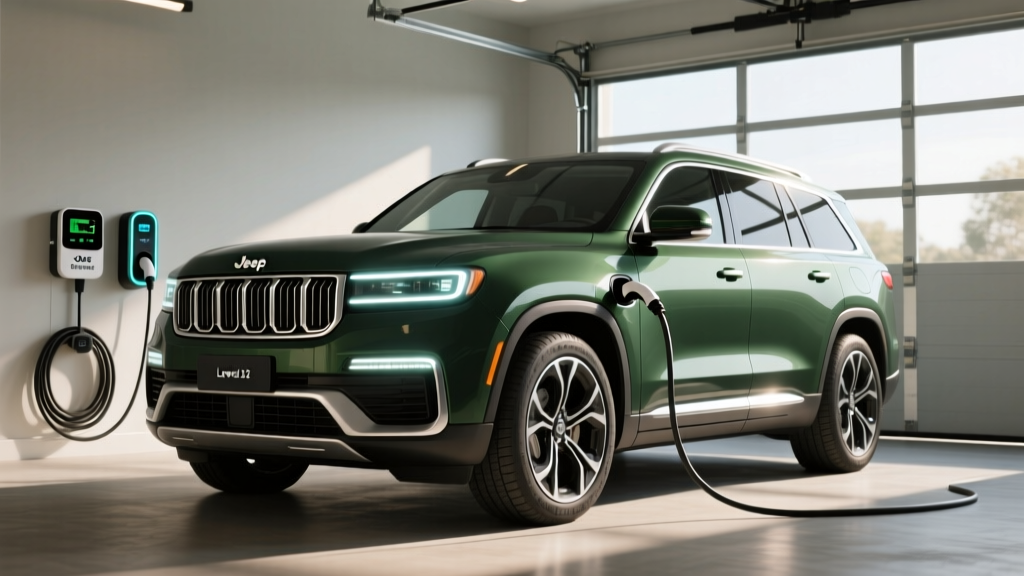
Installing a Level 2 home charger for the Wagoneer S requires a dedicated 240V circuit, typically 60A to support a 48A continuous charger load (the National Electrical Code requires circuits rated at 125% of continuous load). Here's what to expect:
| Component | Details | Cost Range |
|---|---|---|
| Level 2 Charger (Equipment) | 48A, 240V, hardwired or NEMA 14-50 | $400–$800 |
| Electrician Labor | Run 60A circuit, mount charger, wire to panel | $500–$2,000 |
| Permit & Inspection | Local electrical permit | $50–$300 |
| Panel Upgrade (if needed) | Upgrade 100A → 200A service | $1,500–$4,000 |
| Total (no panel upgrade) | $950–$3,100 | |
| Total (with panel upgrade) | $2,450–$7,100 |
What Electrical Upgrades Might I Need?
Homes built before 1990 often have 100A service panels with limited spare breaker slots. Adding a 60A EV circuit may require a panel upgrade to 200A — a significant cost but one that also future-proofs your home for solar, heat pumps, or a second EV. A licensed electrician will perform a load calculation per NEC Article 220 to determine if your existing panel can handle the additional draw. Never skip the permit — unpermitted work can void home insurance and cause issues at resale.
Connector Compatibility: NACS, CCS1, and Adapter Needs
The 2026 Wagoneer S launches with a CCS1 (Combined Charging System) port, consistent with most non-Tesla EVs sold in North America through 2025. However, with Tesla's North American Charging Standard (NACS) becoming the industry default from 2025 onward, Stellantis has signaled future adoption. Here's how compatibility breaks down:
| Network / Standard | Connector | Wagoneer S Compatibility |
|---|---|---|
| Electrify America, EVgo, ChargePoint | CCS1 | Native — plug and charge |
| Tesla Supercharger (NACS) | NACS | Requires CCS-to-NACS adapter (check Stellantis approval) |
| Home Level 2 (J1772) | J1772 / NACS | J1772 native; NACS chargers may need adapter |
| CHAdeMO | CHAdeMO | Not compatible (legacy standard) |
If you plan to use Tesla Superchargers on road trips — which remain the most reliable DC fast-charging network — invest in an OEM-approved CCS-to-NACS adapter. Third-party adapters exist but may not support full charge rates or pass-through communication for billing.
Recommended Home Chargers for the Wagoneer S
To maximize the Wagoneer S's 11.5 kW onboard charger, choose a Level 2 unit rated at 48A (11.5 kW). Here are three proven options for 2026:
ChargePoint Home Flex (NACS or J1772)
- Power: Up to 12 kW (50A adjustable)
- Cable: 23 ft
- Smart Features: Wi-Fi, app scheduling, Alexa
- Price: ~$550 (J1772) / ~$600 (NACS)
Emporia Level 2 Smart Charger
- Power: Up to 11.5 kW (48A)
- Cable: 24 ft
- Smart Features: Energy monitoring, solar integration
- Price: ~$400
Wallbox Pulsar Plus
- Power: Up to 11.5 kW (48A)
- Cable: 25 ft
- Smart Features: Wi-Fi + Bluetooth, load balancing
- Price: ~$550
All three units support hardwired or NEMA 14-50 plug installation. Hardwired is preferred for 48A+ chargers, as NEMA 14-50 receptacles are technically rated for 50A and continuous 48A draws have caused overheating issues with lower-quality outlets. If using a receptacle, specify a commercial-grade Hubbell or Bryant 14-50R.
Charging Cost: Home vs. Public vs. Gas
One of the strongest ownership arguments for the Wagoneer S over its gas-powered Wagoneer sibling is per-mile energy cost. Here's how the numbers break down for a 100 kWh battery:
| Scenario | Rate ($/kWh) | Cost for Full Charge | Cost Per Mile (300 mi range) |
|---|---|---|---|
| Home Off-Peak (utility TOU) | $0.10 | $10.00 | $0.033 |
| Home Standard Rate | $0.16 | $16.00 | $0.053 |
| Public Level 2 (ChargePoint) | $0.30 | $30.00 | $0.10 |
| DC Fast (Electrify America) | $0.48 | $48.00 | $0.16 |
| Gas Wagoneer (17 MPG combined, $3.40/gal) | — | $60.00 (17.6 gal) | $0.20 |
Even at public DC fast-charging rates, the Wagoneer S costs less per mile than the gas Wagoneer. At home off-peak rates, you're paying roughly six cents per mile vs. twenty — a savings of over $4,000 per year at 15,000 miles driven. According to fueleconomy.gov, the average US electricity rate for EV charging remains well below gasoline on a per-mile basis in every state.
Safety, Code, and Permit Considerations
EV charger installation is electrical work that must comply with NEC Article 625 (Electric Vehicle Charging System Equipment). Key requirements:
- Dedicated circuit: The charger must have its own breaker — no shared circuits with appliances.
- GFCI protection: 240V receptacles for EV charging require GFCI breakers in most jurisdictions (2023 NEC update).
- Outdoor rating: If installing outside, the charger must carry a NEMA 4 (weatherproof) rating, and conduit/wiring must be rated for wet locations.
- Cable management: NEC requires that charging cables not create a trip hazard — wall-mounted cord retractors or J-hooks are recommended.
Always pull a permit. The inspection ensures your electrician's work meets code, and the permit record protects you during a future home sale. Some utilities offer rebates of $250–$500 for permitted Level 2 installations — check with your provider before work begins.
FAQ: Jeep Wagoneer Electric Range and Charging
How much does it cost to install a home EV charger for the Wagoneer S?
Expect $950–$3,100 for a standard installation (equipment + electrician + permit) if your panel has capacity. If a 200A panel upgrade is needed, total cost can reach $2,450–$7,100. Get at least two quotes from licensed electricians.
How fast will each charging level add range to the Wagoneer S?
Level 1 (120V) adds about 3–4 miles per hour. Level 2 (240V, 48A) adds roughly 30–35 miles per hour. DC fast charging at 200 kW peak can add 150+ miles in 15 minutes, tapering as the battery approaches 80% SoC.
Which connector does the Wagoneer S use?
The 2026 Wagoneer S uses a CCS1 connector natively. For Tesla Supercharger access, you'll need an OEM-approved CCS-to-NACS adapter. Verify adapter compatibility with Stellantis before purchase.
Does the Wagoneer S qualify for the federal EV tax credit?
Under current IRS §30D rules, eligibility depends on MSRP caps (SUVs capped at $80,000), buyer income limits ($300K joint / $150K single), and battery critical-mineral/battery-component sourcing requirements. The Wagoneer S MSRP may fall under the cap, but sourcing rules are strict — confirm eligibility at the point of sale with your dealer and consult a tax professional.
Can I charge the Wagoneer S on a regular 120V outlet?
Yes, but Level 1 at ~1.4 kW adds only 3–4 miles per hour — a full charge would take over 70 hours. It's useful for emergency top-ups or low-mileage drivers, but Level 2 is essential for practical daily ownership of a 100 kWh battery.
How does cold weather affect the Wagoneer S electric range?
Expect 20–30% range reduction in sub-freezing temperatures. A 300-mile EPA estimate may drop to 200–230 real-world miles in winter. Preconditioning the battery while plugged in (using grid power rather than battery) mitigates this loss and improves DC fast-charge speeds in cold weather.