The Tesla Model S has been the benchmark luxury electric sedan since 2012, but its long production run means reliability varies dramatically depending on which model year you're considering. Whether you're evaluating a used 2016 Model S 90D, a 2020 Long Range, or a brand-new 2026 Model S, understanding the reliability patterns by generation is essential before committing six figures — or even five figures on the used market.
This guide breaks down Tesla Model S reliability by year and generation, pairs that data with a full 2026 model-year review, and gives you the exact specs, charging numbers, and ownership economics you need to make an informed decision.
Tesla Model S Reliability by Year: Generation Breakdown
The Model S has undergone several major hardware revisions. Reliability correlates strongly with these generational shifts rather than individual model years alone.
2012–2015: Early Production (60, 85, P85, P85D)
The earliest Model S vehicles (battery capacities of 60 kWh and 85 kWh) are now 10–14 years old. Common failure points include:
- Drive unit failures: Early large drive units (LDU) were prone to bearing wear and coolant seal leaks, often requiring replacement between 60,000–100,000 miles.
- MCU1 (first-gen touchscreen): The NVIDIA Tegra 3–based media control unit suffered from eMMC flash memory wear, causing yellowing screens, touch unresponsiveness, and total failure. Tesla issued a recall and upgraded many to MCU2.
- 12V lead-acid battery: Parasitic drain from always-on connectivity killed 12V batteries frequently, sometimes stranding owners.
- Battery degradation: Early 85 kWh packs (NCA chemistry, Panasonic cells) showed 10–15% degradation by 100,000 miles, with some cells developing voltage imbalance.
- Door handles: Motorized retractable handles were a frequent failure point, with replacement costing $500–$800 per handle.
Verdict: High maintenance risk. Budget $3,000–$6,000 for likely repairs in the first two years of ownership unless service records confirm major components were replaced.
2016–2019: Facelift Era (75D, 100D, P100D, Standard/Long Range/Performance)
The 2016 refresh brought a cleaner front fascia (no black grille), upgraded interior materials, and the introduction of the 100 kWh battery pack. Key reliability notes:
- 100 kWh battery: The P100D's 100 kWh pack had early issues with battery management system (BMS) calibration and contactor failures. Some units required full pack replacement under warranty.
- Autopilot Hardware 2/2.5: Cameras and radar units on AP2/AP2.5 vehicles experienced intermittent failures. Calibration issues were common after windshield replacements.
- Air suspension: The optional Smart Air Suspension continued to see compressor and strut failures, with replacement struts costing $1,500–$2,500 each.
- Improved drive units: The rear small drive unit (SDU) and revised LDU were more reliable than early counterparts.
Verdict: Moderate reliability. The 2017–2019 model years are generally considered the sweet spot for used Model S buyers — post-MCU2, pre-2021 refresh, with improved hardware.
2020–2022: Plaid Transition & Refresh (Long Range, Plaid)
The 2021 refresh (internally called "Palladium") brought a completely redesigned interior with a 17-inch landscape touchscreen, yoke steering option, tri-motor Plaid powertrain, and heat pump for improved cold-weather efficiency.
- Plaid tri-motor: The three-motor setup (one front, two rear) has proven robust, with carbon-sleeved rotors handling extreme RPMs. Early Plaid models had some 12V battery and thermal management software bugs.
- Heat pump introduction: The octovalve thermal management system improved cold-weather range by ~10–15% but added complexity. Some owners reported HVAC valve failures in 2021–2022 models.
- Build quality: The Fremont factory's 2021–2022 production saw panel-gap inconsistencies and occasional interior trim rattles — cosmetic rather than mechanical.
- Yoke steering: Controversial and not a reliability concern per se, but the steer-by-wire system (introduced later) has been reliable in practice.
Verdict: Good reliability overall. Most remaining issues are software-related and addressed via OTA updates.
2023–2026: Current Generation (Long Range, Plaid)
The current Model S benefits from Tesla's matured manufacturing processes, Hardware 4 (AI4) for Autopilot/FSD, a 12V lithium auxiliary battery (replacing the problematic lead-acid), and refined thermal management.
- Fewer panel-gap complaints: Build quality improved noticeably from 2023 onward.
- 12V lithium battery: Eliminates the chronic 12V failure issue that plagued earlier years.
- HW4 cameras: Higher-resolution cameras with improved low-light performance; no widespread hardware failures reported as of early 2026.
- Continued NMC battery chemistry: Tesla uses Panasonic-supplied NCA/NMC cells in the Model S (not LFP, which is reserved for the standard-range Model 3/Y). Degradation curves remain favorable — typically 5–8% loss over 100,000 miles based on fleet data.
Verdict: Best reliability in Model S history. Current models are the safest bet for new buyers.
2026 Tesla Model S: Full Specifications
| Spec | Long Range | Plaid |
|---|---|---|
| EPA Range | 402 miles | 359 miles |
| Battery (usable) | ~95 kWh (NCA/NMC) | ~95 kWh (NCA/NMC) |
| Drivetrain | Dual-Motor AWD | Tri-Motor AWD |
| Horsepower | 670 hp | 1,020 hp |
| 0–60 mph | 3.1 seconds | 1.99 seconds |
| Top Speed | 155 mph | 200 mph |
| Max DC Fast Charge | 250 kW | 250 kW |
| 10–80% DC Time | ~27 minutes | ~27 minutes |
| Level 2 Charge Rate | 11.5 kW (~34 mi/hr) | 11.5 kW (~34 mi/hr) |
| MPGe (combined) | 120 MPGe | 116 MPGe |
| Efficiency | 28 kWh/100 mi | 29 kWh/100 mi |
| Cargo Volume | 28 cu ft (rear) + 5.3 cu ft (frunk) | 28 cu ft (rear) + 5.3 cu ft (frunk) |
| Rear Legroom | 35.4 inches | 35.4 inches |
| Base MSRP | $74,990 | $89,990 |
| Battery Warranty | 8 yr / 150,000 mi | 8 yr / 150,000 mi |
| Basic Warranty | 4 yr / 50,000 mi | 4 yr / 50,000 mi |
Real-World Range: What the EPA Number Doesn't Tell You
EPA Estimate: 402 miles (Long Range) / 359 miles (Plaid)
Real-World Highway (70–75 mph): ~320–350 miles
Real-World Mixed Driving: ~350–380 miles
Cold Weather (below 32°F): ~260–310 miles (20–35% reduction without preconditioning)
Plaid Track/Spirited Driving: ~200–240 miles
The Model S Long Range's 402-mile EPA rating is among the highest of any production EV sold in the U.S. (fueleconomy.gov). However, EPA range assumes a mix of city and highway driving at moderate temperatures with climate control at reasonable settings.
In real-world highway testing at sustained 70–75 mph speeds, expect 320–350 miles before needing to charge. The heat pump — standard since the 2021 refresh — significantly mitigates cold-weather range loss compared to older resistive-heater models, but you'll still see a 20–35% reduction in sub-freezing temperatures unless you precondition the battery while plugged in.
For Plaid owners who actually use the 1,020-horsepower tri-motor system aggressively, range drops precipitously. Sustained high-power output generates significant heat, and the thermal management system prioritizes battery protection over range.
Charging Speed: DC Fast, Level 2, and Home Setup
| Charging Level | Power | Miles Added per Hour | Notes |
|---|---|---|---|
| Level 1 (120V) | ~1.4 kW | ~4 mi/hr | Emergency/trickle only |
| Level 2 (240V, 48A) | 11.5 kW | ~34 mi/hr | Home Wall Connector; full charge ~9 hrs |
| DC Fast (Supercharger V2) | 150 kW peak | ~200 mi in 30 min | Older Supercharger stations |
| DC Fast (Supercharger V3/V4) | 250 kW peak | ~200 mi in 15 min | 10–80% in ~27 min; tapers above 80% |
The Model S peaks at 250 kW on V3/V4 Superchargers using its native NACS connector. The charge curve ramps quickly to peak power (typically reaching 250 kW by 15–20% SoC), sustains high power through ~50% SoC, then progressively tapers. The 10–80% charge takes approximately 27 minutes — competitive but not class-leading, as the Hyundai Ioniq 5 and Kia EV6 on 800V architectures can achieve 10–80% in ~18 minutes at 350 kW chargers.
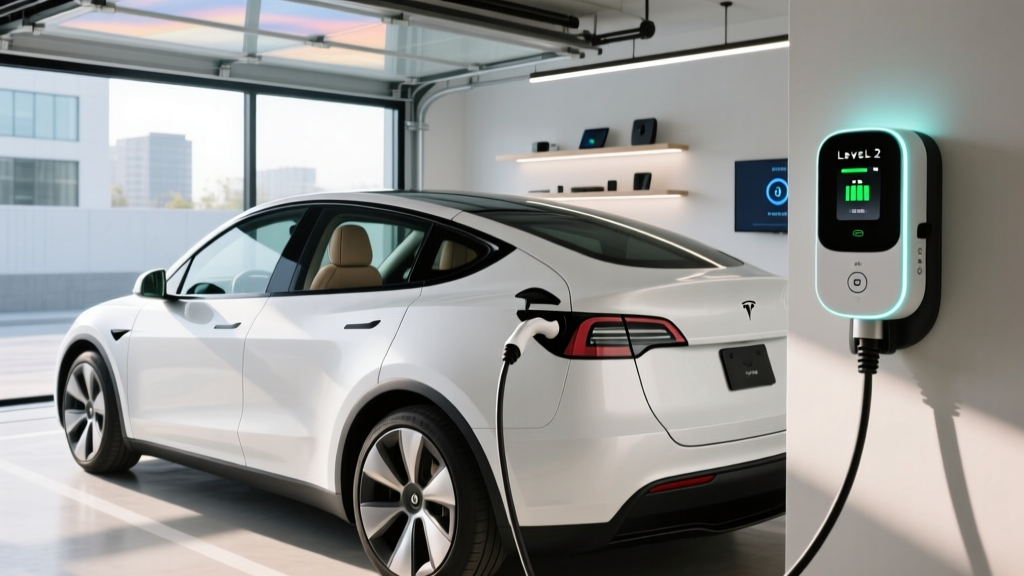
For home charging, Tesla's Wall Connector at 48 amps on a 60-amp circuit delivers 11.5 kW, adding roughly 34 miles of range per hour. A full 0–100% charge takes about 9 hours. Most owners charging overnight from 20–80% need only 4–5 hours. Home installation typically costs $500–$2,000 depending on panel proximity and whether a panel upgrade to 200A service is needed.
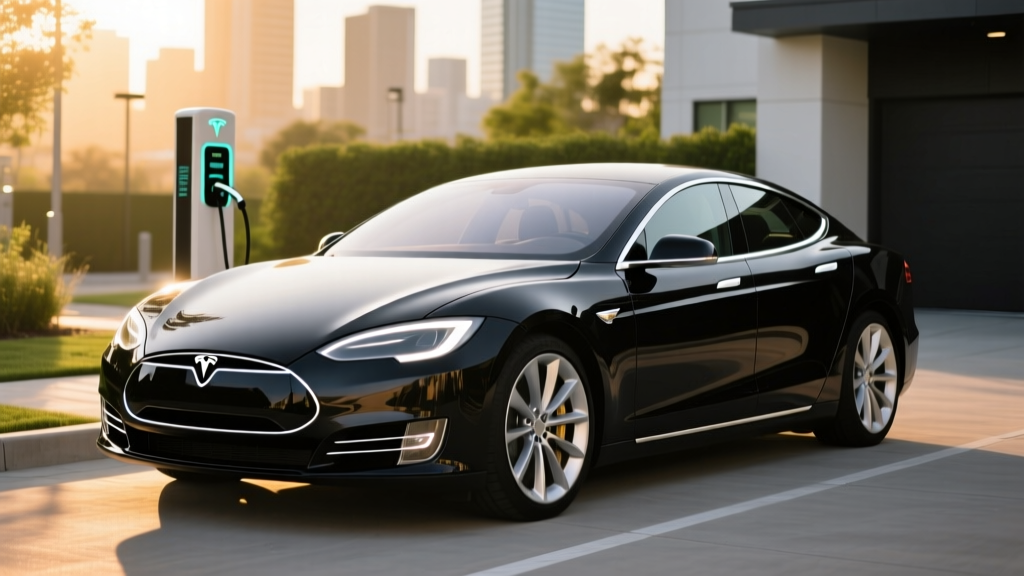
A key advantage: the Model S uses the native NACS (North American Charging Standard) connector, granting access to the full Tesla Supercharger network — the most reliable and widespread DC fast-charging network in the U.S. Non-Tesla EVs gaining Supercharger access in 2025–2026 must use adapters, which adds friction.
Performance, Tech, and Interior
The Model S Long Range's 670-horsepower dual-motor setup delivers a 3.1-second 0–60 mph time — faster than most sports cars, let alone luxury sedans. The Plaid's 1,020 hp and 1.99-second 0–60 time remain the quickest production sedan in the world.
The 17-inch landscape touchscreen runs Tesla's proprietary infotainment system, which includes Netflix, YouTube, and a full gaming suite (Cyberpunk 2077 runs on the AMD Ryzen–based MCU). The 12.3-inch digital instrument cluster is minimal but functional. A rear 8-inch touchscreen controls climate and media for back-seat passengers.
Driver assistance comes via Tesla Autopilot (standard) or Full Self-Driving (Supervised) for an additional $8,000 one-time purchase or $99/month. FSD Supervised is an SAE Level 2 system — it requires continuous driver attention and hands-on-wheel (or eyes-on-road with the cabin camera) at all times. It is not autonomous driving.
Tesla Autopilot and FSD (Supervised) are SAE Level 2 driver-assistance systems. The driver must remain fully engaged, monitor the road, and be prepared to take over immediately. These systems do not make the vehicle self-driving. Misuse has resulted in serious crashes and NHTSA investigations. Always drive attentively.
The Model S offers 28 cubic feet of rear cargo space (with rear seats folded, it expands significantly) plus a 5.3-cubic-foot front trunk (frunk). Rear legroom is 35.4 inches — adequate but not class-leading compared to the Mercedes EQS (38.0 inches) or BMW i7 (40.5 inches). The Model S prioritizes performance and efficiency over limousine-level rear comfort.
Pricing, Tax Credits, and Ownership Cost
| Trim | Base MSRP | Destination | Federal Tax Credit (§30D) | Est. Net Price |
|---|---|---|---|---|
| Long Range | $74,990 | $1,390 | $0 (exceeds MSRP cap) | $76,380 |
| Plaid | $89,990 | $1,390 | $0 (exceeds MSRP cap) | $91,380 |
Critical tax credit note: The Model S does not qualify for the $7,500 federal EV tax credit under IRS §30D. The reason: the sedan MSRP cap is $55,000, and the Model S starts at $74,990 — well above the limit (irs.gov). There is no workaround for this; the vehicle simply exceeds the price ceiling regardless of buyer income or battery sourcing.
For buyers seeking a federal incentive, the only applicable credit would be if purchasing through a qualifying lease structure (where the lessor claims the commercial clean vehicle credit under §45W and passes savings to the lessee), but Tesla does not currently offer leasing on the Model S in most markets.
State-level incentives may apply depending on your jurisdiction — check your state's DMV or energy office for current rebates. Some states like California, Colorado, and Massachusetts offer additional EV incentives that are not subject to the federal MSRP cap.
5-Year Ownership Cost Snapshot
Based on 15,000 miles/year, $0.14/kWh average electricity cost, and premium insurance estimates:
- Electricity (5 years): ~$3,600 (at 28 kWh/100 mi)
- Comparable gasoline sedan (25 MPG, $3.50/gal): ~$10,500
- Maintenance savings: ~$2,500–$4,000 (no oil changes, minimal brake wear due to regen)
- Insurance: $2,800–$4,200/year (Model S premiums are 30–50% above average due to repair costs and performance)
- Depreciation: The Model S has historically depreciated 40–55% over 5 years — steeper than the Model 3/Y due to lower volume and higher initial price
Pros, Cons, and Who Should Buy
Pros
- 402-mile EPA range (Long Range) — among the longest of any EV
- Supercharger network access with native NACS connector
- Class-leading performance (1.99s 0–60 on Plaid)
- Over-the-air updates continuously add features
- Best-in-class reliability for 2023+ model years
- Strong cargo capacity with hatchback + frunk
- Heat pump for improved cold-weather efficiency
Cons
- No federal tax credit (exceeds $55K MSRP cap)
- Rear legroom trails German luxury competitors
- Insurance premiums significantly above average
- 250 kW peak charge rate lags 800V competitors (350 kW)
- Yoke steering not ideal for all drivers
- High depreciation relative to Model 3/Y
- Pre-2021 models carry significant reliability risk
Who This EV Suits Best
- Long-distance commuters and road trippers: 402-mile range + Supercharger network makes the Model S the ultimate EV road-trip sedan.
- Performance enthusiasts: Plaid's 1,020 hp and sub-2-second 0–60 are unmatched in the sedan world at any price.
- Tech-forward buyers: Tesla's software ecosystem, OTA updates, and gaming/entertainment suite are best-in-class.
Who Should Look Elsewhere
- Chauffeur-driven luxury seekers: The Mercedes EQS and BMW i7 offer superior rear-seat comfort and ride quality.
- Budget-conscious buyers: No tax credit and high insurance make the Model S expensive to own. Consider a used 2019 Model S Long Range instead.
- Families needing three-row seating: The Model X, Rivian R1S, or Kia EV9 are better choices.
Model S vs. Key Competitors
| Spec | Tesla Model S LR | Mercedes EQS 450+ | BMW i7 xDrive50 | Lucid Air Pure |
|---|---|---|---|---|
| EPA Range | 402 mi | 390 mi | 318 mi | 419 mi |
| Starting MSRP | $74,990 | $104,400 | $105,700 | $69,900 |
| 0–60 mph | 3.1s | 5.9s | 4.5s | 3.8s |
| Max DC Charge | 250 kW | 200 kW | 195 kW | 250 kW |
| Rear Legroom | 35.4 in | 38.0 in | 40.5 in | 36.3 in |
| Federal Tax Credit | No | No | No | No (MSRP cap) |
The Model S occupies a unique position: it's the performance and efficiency leader at a lower price than the German competition, but it sacrifices rear-seat luxury. The Lucid Air Pure undercuts it on price and beats it on range, but Lucid's service network is far smaller and Supercharger access requires an adapter. The EQS and i7 win on ride comfort and interior opulence but cost $30,000+ more and charge slower.
Frequently Asked Questions
What is the real-world range of the 2026 Tesla Model S?
The Long Range achieves an EPA-estimated 402 miles, but expect 320–350 miles in real-world highway driving at 70–75 mph, and 260–310 miles in sub-freezing temperatures. The Plaid's 359-mile EPA rating drops to roughly 280–310 miles in mixed real-world use, and significantly less under hard acceleration.
How fast does the Model S charge at home and on the road?
At home on a Level 2 Tesla Wall Connector (240V, 48A), the Model S charges at 11.5 kW, adding about 34 miles of range per hour — a full charge in roughly 9 hours. On DC fast charging, it peaks at 250 kW on V3/V4 Superchargers, reaching 10–80% in approximately 27 minutes. The charge curve tapers significantly above 80% SoC to protect battery health.
Does the Tesla Model S qualify for the federal EV tax credit?
No. Under current IRS §30D rules, sedans must have an MSRP at or below $55,000 to qualify. The Model S starts at $74,990, disqualifying it entirely. This applies regardless of buyer income or battery sourcing. Check irs.gov for the latest rules, as regulations can change.
Which Model S years are the most reliable?
The 2023–2026 model years are the most reliable, benefiting from matured manufacturing, the 12V lithium auxiliary battery, and refined thermal management. Among used models, 2017–2019 (post-MCU2, pre-refresh) offer the best value-to-reliability ratio. Avoid 2012–2015 models unless you have comprehensive service records and budget for repairs.
Is the Model S worth buying over competitors in 2026?
If your priorities are range, Supercharger network access, performance, and tech, the Model S Long Range at $74,990 is the best value in the luxury EV sedan segment. If rear-seat comfort and ride quality matter more, the Mercedes EQS or BMW i7 are superior despite their higher prices. If you want maximum range at the lowest price, the Lucid Air Pure (419 mi, $69,900) is compelling, though with a less proven service network.
How long will the Model S battery last?
Tesla warranties the Model S battery for 8 years or 150,000 miles, whichever comes first, with a minimum 70% capacity retention threshold. Fleet data suggests the NCA/NMC packs in the Model S typically lose 5–8% capacity over 100,000 miles and 10–15% over 200,000 miles. Battery replacement (if needed out of warranty) costs approximately $15,000–$22,000 depending on pack configuration and labor.
What are the biggest ongoing costs of owning a Model S?
Insurance is the standout cost — premiums average $2,800–$4,200 annually due to high repair costs, aluminum body panels, and performance classification. Electricity costs are low (~$720/year at 15,000 miles and $0.14/kWh). Maintenance is minimal compared to ICE vehicles. Tire replacement runs $1,200–$2,000 for a set of performance tires every 25,000–35,000 miles.