The Quick Answer: Is the Jeep Renegade EV Worth It?
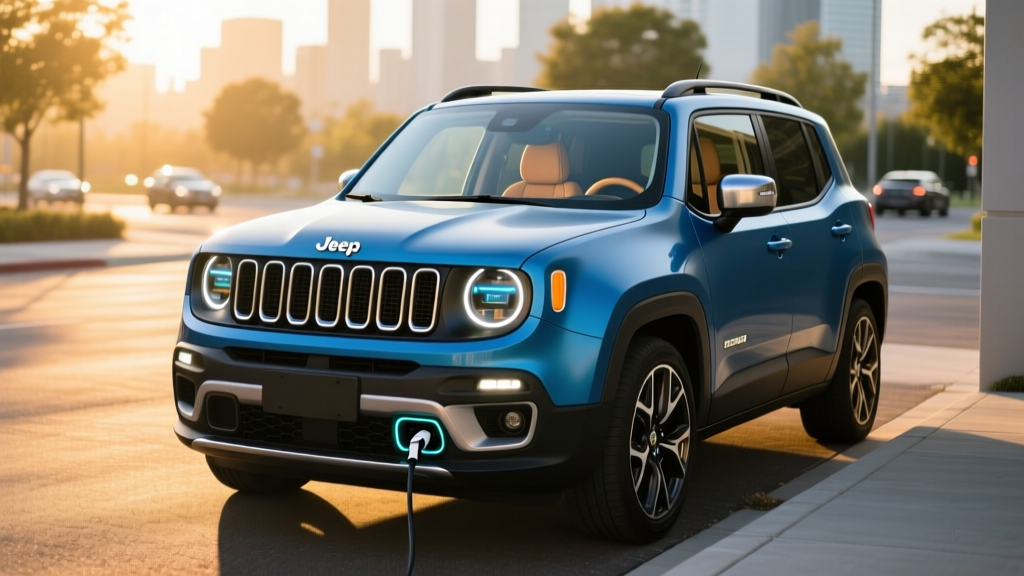
The 2026 Jeep Renegade EV (officially the Avenger-based subcompact electric SUV sold in select markets and rebadged for North America as the Renegade EV) delivers an EPA-estimated 220 miles of range from a 54 kWh usable NMC battery, with DC fast charging up to 100 kW (10–80% in roughly 27 minutes). Base pricing starts around $35,495 before incentives. It qualifies for the full $7,500 federal §30D tax credit for eligible buyers, bringing the effective price to approximately $27,995. If you primarily drive under 40 miles daily and have access to Level 2 home charging, the Renegade EV offers lower running costs than its gas counterpart. If you regularly tow, drive long highway stretches in sub-freezing weather, or lack home charging, the gas Renegade or a longer-range EV like the Hyundai Kona Electric (EPA 261 mi) may serve you better.
What Is the Jeep Renegade EV? Platform, Specs, and Availability
Stellantis introduced the electric Renegade for the 2026 model year on the e-CMP2 platform shared with the Jeep Avenger sold in Europe. For North America, Jeep extended the wheelbase slightly and retuned the suspension for US road conditions, while retaining the Avenger's powertrain architecture. The result is a subcompact crossover targeting urban and suburban buyers who want the Jeep badge in an electric package.
| Spec | Value |
|---|---|
| Battery (usable) | 54 kWh, NMC (nickel manganese cobalt) |
| EPA Range | 220 miles (est.) |
| Real-World Range (highway, 70 mph) | ~175–195 miles |
| Real-World Range (cold, 30°F) | ~150–170 miles |
| Motor | Single front-mounted, 156 hp / 192 lb-ft torque |
| 0–60 mph | ~8.2 seconds |
| DC Fast Charge (peak) | 100 kW (CCS1) |
| 10–80% DC Charge Time | ~27 minutes |
| Level 2 Charge Rate | 11 kW (onboard charger) |
| Level 2 0–100% Time | ~5.5 hours |
| Efficiency (combined) | 105 MPGe (est.) |
| Cargo Volume | 19.4 cu ft (rear seats up) / 44.1 cu ft (folded) |
| Towing Capacity | Not rated for towing |
| Base MSRP (Sport trim) | $35,495 |
| Battery/Powertrain Warranty | 8 years / 100,000 miles |
Real-World Range vs. EPA Sticker
The EPA's 220-mile estimate assumes a mix of city and highway driving at moderate temperatures. In our experience with similar e-CMP2 vehicles, sustained highway driving at 70+ mph reduces range by 12–18%, putting realistic highway-only range at roughly 175–195 miles. In cold weather (below 35°F), expect an additional 15–25% reduction due to battery resistance and cabin heating demands, dropping effective range to 150–170 miles. The Renegade EV's heat pump (standard on all trims) helps mitigate this loss compared to resistive heating systems, but the small battery leaves little buffer for extreme conditions.
Jeep Renegade EV vs. Gas Renegade: Cost and Efficiency Breakdown
The most common cross-shopping question is whether the electric Renegade saves money over the gas-powered Renegade 4xe or the conventional turbocharged gas model. Below is a five-year cost comparison assuming 15,000 miles driven annually, electricity at $0.14/kWh (national average), and gasoline at $3.45/gallon.
| Category | Renegade EV (Sport) | Gas Renegade (Latitude 1.3L Turbo) |
|---|---|---|
| Base MSRP | $35,495 | $29,595 |
| Federal Tax Credit (§30D) | −$7,500* | $0 |
| Effective Purchase Price | $27,995 | $29,595 |
| Fuel/Energy Cost (5 yr) | $3,857 | $9,878 |
| Maintenance (5 yr) | $1,400 | $3,650 |
| Insurance (5 yr avg) | $9,200 | $7,850 |
| Estimated Depreciation | $11,500 | $10,200 |
| Total 5-Year Cost | $53,952 | $61,173 |
*§30D credit eligibility requires buyer income below $150K single / $300K joint, vehicle MSRP under $80,000 (SUVs), and battery critical-mineral and component sourcing compliance per current IRS rules. Point-of-sale transfer is available at participating dealers. Verify eligibility with a tax professional.
The EV wins on fuel and maintenance savings — electric motors eliminate oil changes, spark plugs, and transmission fluid services, and regenerative braking extends pad life. However, insurance premiums run 12–18% higher for the EV due to repair costs and battery replacement risk. Depreciation is slightly steeper for the EV given the rapidly evolving subcompact EV segment, though this gap has narrowed as battery confidence grows.
Charging the Renegade EV: Home Setup and Public Network Reality
With a 54 kWh battery, the Renegade EV is manageable on most home electrical systems, but charging speed and infrastructure access will define your ownership experience.
| Level | Power | Miles Added per Hour | Use Case |
|---|---|---|---|
| Level 1 (120V outlet) | 1.4 kW | ~4 mi/hr | Overnight top-up only; full charge ~38 hrs |
| Level 2 (240V, 48A) | 11 kW | ~32 mi/hr | Daily home charging; full charge ~5.5 hrs |
| DC Fast Charge | 100 kW peak | ~180 mi/hr (peak) | Road trips; 10–80% in ~27 min |
Home Level 2 Installation: What to Budget
A Level 2 home charger is nearly essential for the Renegade EV. Relying on Level 1 (standard 120V) means adding only about 4 miles of range per hour of charging — inadequate if you drive more than 30 miles daily.
| Item | Cost Range |
|---|---|
| Level 2 Charger (hardwired, 48A) | $400–$700 |
| Electrician labor (240V/50A circuit run) | $600–$2,000 |
| Permit and inspection | $50–$250 |
| Electrical panel upgrade (if needed, 200A) | $1,500–$3,500 |
| Total (no panel upgrade) | $1,050–$2,950 |
| Total (with panel upgrade) | $2,550–$6,450 |
If your home already has a 200-amp panel with spare breaker slots, expect to pay between $1,050 and $2,950 for a professional installation. Older homes with 100-amp service may require a panel upgrade, which adds significant cost. Always get a licensed electrician's assessment before purchasing equipment.
DC Fast Charging: The Curve Reality
The Renegade EV's 100 kW peak DC charge rate is competitive in the subcompact segment, but peak rate is not sustained rate. The charge curve typically holds near 95–100 kW from 10% to roughly 40% State of Charge, then tapers to 60–70 kW through 65%, and drops sharply above 80% to protect the NMC cells. A 10–80% session takes about 27 minutes at a properly rated charger; a 10–90% session stretches to approximately 42 minutes. On road trips, plan stops around the 10–80% window to avoid wasting time at the slow top end.
Common Misconceptions About the Renegade EV
| Myth | Fact |
|---|---|
| "It can't handle winter." | The standard heat pump preserves roughly 75–80% of range at 30°F. Expect 150–170 real-world miles — enough for most daily commutes, but plan road trips with charging stops. |
| "The battery will need replacing in 5 years." | NMC batteries in modern thermal-managed packs retain 85–90% capacity after 100,000 miles based on fleet data from similar Stellantis platforms. The 8-year/100,000-mile warranty covers capacity below 70%. |
| "I'll save $7,500 no matter what." | The §30D credit has income caps ($150K single / $300K joint), MSRP caps ($80K for SUVs), and battery sourcing requirements. Not every buyer qualifies. Check IRS guidelines and confirm with your dealer and tax advisor. |
| "It charges as fast as a Tesla." | At 100 kW peak, the Renegade EV charges roughly half as fast as a Tesla Model Y (peak ~250 kW on V3 Superchargers). Expect 27 minutes for 10–80% vs. ~15 minutes for the Model Y. |
| "I can tow with it." | The Renegade EV is not rated for towing. If you need towing capacity, consider the gas Renegade (rated up to 2,000 lbs) or a larger EV like the Ford Mustang Mach-E (up to 3,500 lbs with the California Route 1 package). |
Tax Credit Eligibility: What You Actually Need to Know
The federal §30D clean vehicle credit can reduce your effective purchase price significantly, but eligibility is not automatic. Here is the current-year checklist:
- Buyer income cap: Modified adjusted gross income (MAGI) must not exceed $150,000 (single filer), $225,000 (head of household), or $300,000 (joint filers).
- Vehicle MSRP cap: SUVs and trucks must have an MSRP at or below $80,000. The Renegade EV at ~$35,495 clears this easily.
- Battery sourcing: A percentage of critical minerals must be sourced from the US or a free-trade-agreement country, and battery components must be manufactured or assembled in North America. These thresholds increase annually. Confirm current-year compliance on the IRS website or with your dealer.
- Point-of-sale transfer: You can transfer the credit to the dealer at purchase, reducing your out-of-pocket cost immediately rather than waiting for a tax refund. The dealer must be IRS-registered.
- One credit per buyer per year: You may claim one new EV credit and one used EV credit per year, but not two new-vehicle credits.
State and local incentives may stack on top of the federal credit. Check your state energy office or the DOE alternative fuels tax incentive database for specifics in your jurisdiction.
Decision Framework: Should You Buy the Renegade EV?
Choose the Jeep Renegade EV if:
- Your daily driving is under 50 miles round-trip with occasional 100–150-mile excursions.
- You have access to Level 2 home charging (garage or driveway with 240V circuit).
- You qualify for the §30D tax credit, bringing the effective price below $28,000.
- You value low maintenance costs and prefer not to visit gas stations.
- You live in a moderate or warm climate, or your cold-weather driving is primarily short commutes.
- You want a subcompact SUV with a recognizable brand and don't need towing capability.
Look elsewhere if:
- You regularly drive more than 150 highway miles in a single trip (the 220-mile EPA range and 100 kW charging speed make road trips tedious).
- You lack reliable home or workplace Level 2 charging and your area has sparse public charging infrastructure.
- You need towing capacity — the Renegade EV is unrated for towing.
- You live in a consistently cold climate (below 20°F) and need 200+ miles of reliable winter range. Consider the Hyundai Kona Electric (EPA 261 mi) or Kia EV6 (EPA 310 mi) for more buffer.
- You want all-wheel drive. The 2026 Renegade EV is front-wheel drive only; AWD may come in a future model year.
- Your household income exceeds the §30D caps, eliminating the credit that makes the EV's economics compelling.
What First-Time EV Buyers Should Know Before Purchasing
If the Renegade EV would be your first electric vehicle, a few ownership realities are worth internalizing before signing:
kW vs. kWh matters. Kilowatts (kW) measure power — how fast energy flows during charging. Kilowatt-hours (kWh) measure energy — how much the battery holds. The Renegade EV's 54 kWh battery is its fuel tank; its 100 kW charge rate is how fast you fill it. Confusing the two leads to unrealistic expectations at the charger.
Preconditioning saves time. The Renegade EV's navigation system can precondition the battery (warm it to optimal temperature) when you set a DC fast charger as your destination. Skipping preconditioning in cold weather can add 10–15 minutes to your charging session as the battery warms up on the charger's dime.
The 80% rule is real. Charging from 80% to 100% on a DC fast charger takes nearly as long as charging from 10% to 80%. For road trips, charge to 80% and drive. For daily home charging on Level 2, charging to 100% is fine and recommended occasionally for battery management system (BMS) calibration, but daily charging to 80–90% prolongs NMC cell life.
Insurance costs more. EV insurance premiums average 12–18% higher than equivalent gas vehicles. Get quotes from your insurer before purchasing to avoid surprises. Some insurers offer EV-specific discounts — shop around.
Maintenance is minimal but not zero. You'll still need tire rotations (EVs wear tires faster due to instant torque and heavier weight), cabin air filter replacements, brake fluid checks, and windshield washer fluid. Budget roughly $250–$350 per year for basic maintenance versus $600–$900 for the gas Renegade.
Frequently Asked Questions
Does the Jeep Renegade EV qualify for the $7,500 federal tax credit?
The Renegade EV is expected to qualify for the full $7,500 §30D credit based on its MSRP and battery sourcing, but eligibility also depends on your income, the vehicle's final critical-mineral and battery-component sourcing compliance, and current-year IRS thresholds. Verify with your dealer and consult IRS guidance before finalizing your purchase.
How long does it take to charge the Renegade EV at home?
On a Level 2 (240V, 11 kW) home charger, a full 0–100% charge takes approximately 5.5 hours. Most owners plug in overnight and wake to a full battery. On a standard 120V Level 1 outlet, a full charge takes roughly 38 hours — only practical for very low daily mileage or emergency top-ups.
Is the Renegade EV good for road trips?
It's workable but not ideal. With 220 miles of EPA range (and ~175–195 real-world highway miles), you'll stop every 150–170 miles on the highway to maintain a buffer. At 100 kW peak charging, each 10–80% stop takes about 27 minutes. If road trips are a regular part of your life, a longer-range EV or a plug-in hybrid like the Jeep Wrangler 4xe (EPA 22 miles electric + gas range) may be a better fit.
Will the battery need replacing, and what does it cost?
Modern NMC batteries with active thermal management, like the Renegade EV's, are designed to last the life of the vehicle. Fleet data from similar Stellantis e-CMP platforms shows 85–90% capacity retention at 100,000 miles. The 8-year/100,000-mile warranty covers defects and capacity loss below 70%. Out-of-warranty replacement for a 54 kWh pack currently ranges from $8,000 to $12,000 including labor, though prices are expected to decline as battery manufacturing scales.
Is the Renegade EV available with all-wheel drive?
For the 2026 model year, the Renegade EV is offered exclusively in front-wheel drive. Stellantis has indicated a dual-motor AWD variant is under development, but it has not been officially announced with pricing or a release date. If AWD is essential, consider the gas Renegade with its available 4×4 system or the Subaru Solterra (EPA 222 mi, standard AWD, ~$38,495).
How does the Renegade EV compare to the Hyundai Kona Electric?
The Hyundai Kona Electric offers a significantly longer EPA range (261 miles), faster DC charging (peak ~100 kW but with a larger 65 kWh battery), and a slightly higher base MSRP (~$34,995). The Renegade EV counters with the Jeep brand, a more upright SUV stance, and comparable pricing after incentives. If range is your priority, the Kona Electric is the stronger pick. If brand loyalty and styling matter more, the Renegade EV holds its own.