Rivian R3 MSRP and Trim Pricing for 2026
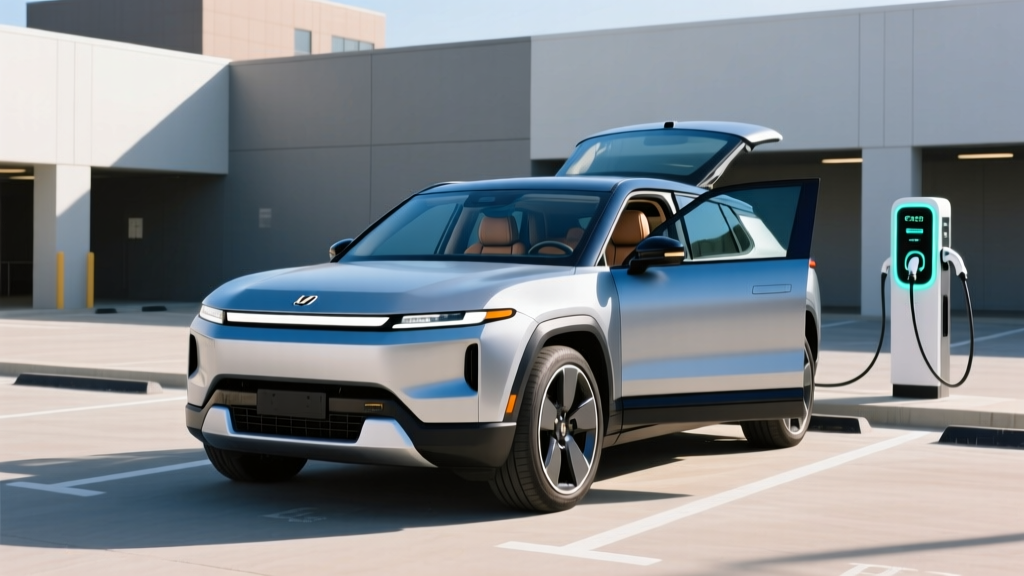
Rivian's compact electric crossover finally reaches driveways in 2026, and the headline number matters: the Rivian R3 MSRP starts at $45,000 for the Standard trim with a single-motor rear-wheel-drive layout. That positions it squarely against the Tesla Model Y, Hyundai Ioniq 5, and the upcoming Volvo EX30 in the most competitive EV segment in America.
Here's how the full 2026 lineup breaks down before destination fees and options:
| Trim | Drivetrain | Est. Battery | MSRP |
|---|---|---|---|
| Standard (RWD) | Single Motor | ~70 kWh (LFP) | $45,000 |
| Standard (AWD) | Dual Motor | ~70 kWh (LFP) | $50,000 |
| Adventure (AWD) | Dual Motor | ~95 kWh (NMC) | $55,000 |
| Performance (AWD) | Dual Motor | ~95 kWh (NMC) | $60,000 |
Destination adds approximately $1,800. Rivian has not yet published final EPA certification for every trim, so the figures below reflect preliminary estimates based on Rivian's stated targets at the 2024 reveal and subsequent production updates. Treat them as informed projections, not sticker guarantees.
Estimated Price After Federal Tax Credit (§30D)
| Trim | MSRP + Dest. | Est. Credit | Effective Price |
|---|---|---|---|
| Standard RWD | $46,800 | Up to $7,500 | ~$39,300 |
| Standard AWD | $51,800 | Up to $7,500 | ~$44,300 |
| Adventure AWD | $56,800 | Up to $7,500 | ~$49,300 |
| Performance AWD | $61,800 | Up to $7,500 | ~$54,300 |
The critical caveat: §30D eligibility depends on your modified adjusted gross income (AGI), the vehicle's MSRP cap (SUVs/crossovers capped at $80,000 — the R3 clears this easily), and battery-component and critical-minerals sourcing requirements that tighten each year. As of 2026, both the battery components and critical minerals thresholds are stringent, and not every R3 configuration may qualify for the full $7,500. Rivian publishes a tax-credit eligibility page that buyers should cross-check before ordering. Point-of-sale transfer is available, letting you apply the credit as a down-payment reduction at delivery if you qualify. For the latest rules, consult the IRS §30D guidance directly or speak with a tax professional.
Range, Battery Chemistry, and Real-World Expectations
Rivian targets two battery packs for the R3: a smaller pack using lithium iron phosphate (LFP) chemistry and a larger pack using nickel-manganese-cobalt (NMC). The chemistry choice is not just a capacity difference — it fundamentally affects how you'll own the vehicle.
| Trim | Chemistry | Est. Usable kWh | EPA Est. Range | Efficiency |
|---|---|---|---|---|
| Standard RWD | LFP | ~70 kWh | ~250 mi | ~3.6 mi/kWh (~110 MPGe) |
| Standard AWD | LFP | ~70 kWh | ~235 mi | ~3.4 mi/kWh (~105 MPGe) |
| Adventure AWD | NMC | ~95 kWh | ~315 mi | ~3.3 mi/kWh (~100 MPGe) |
| Performance AWD | NMC | ~95 kWh | ~290 mi | ~3.1 mi/kWh (~95 MPGe) |
Real-World Range Reality Check
EPA estimates assume a mix of city and moderate-speed highway driving at moderate temperatures. Here's what to actually plan for:
- Highway driving (70-80 mph): Expect 10-15% less than the EPA sticker. The Adventure AWD's 315-mile sticker likely translates to ~265-280 miles at sustained interstate speeds.
- Cold weather (below 32°F): LFP chemistry is more susceptible to cold-weather range loss — plan for 20-30% reduction without preconditioning. NMC performs somewhat better but still loses 15-25%.
- City/commuter driving: You'll often beat the EPA number thanks to regenerative braking. The Standard RWD could deliver 260+ miles in stop-and-go use.
- Towing: Rivian hasn't published a tow rating for the R3 yet, but any trailer will cut range roughly in half — a consistent EV reality.
Why the chemistry split matters: LFP batteries tolerate daily charging to 100% without accelerated degradation — Rivian (and Tesla) recommend you charge LFP to full regularly to help the battery management system calibrate. NMC batteries last longest when kept between 20-80% for daily use, saving 100% charges for road trips. If your commute is short and you can charge at home every night, the LFP Standard trim offers lower upfront cost and simpler ownership habits. If you road-trip frequently or live in a cold climate, the NMC Adventure pack's extra capacity provides a meaningful buffer.
Charging Speed: DC Fast Charge and Home Level 2
Charging speed is where compact EVs often disappoint, so the R3's numbers deserve scrutiny. Rivian has confirmed the R3 will ship with a NACS (North American Charging Standard) port natively — no adapter needed for Tesla Superchargers.
| Charging Level | Connector | Max Rate | Speed / Time |
|---|---|---|---|
| Level 1 (120V) | NACS / J1772 adapter | ~1.4 kW | ~4-5 mi/hr |
| Level 2 (240V, 48A) | NACS / Wall Connector | ~11.5 kW | ~30-35 mi/hr |
| DC Fast Charge | NACS | Peak ~200 kW (NMC) / ~170 kW (LFP) | 10-80% in ~25-28 min |
Understanding the charge curve is essential. The R3's peak DC rate of ~200 kW (on NMC Adventure/Performance trims) is not sustained for the entire session. Like all EVs, the R3 will charge at or near peak rate from roughly 10-50% state of charge, then taper progressively. The 10-80% time of approximately 25-28 minutes assumes you arrive at a functioning 250+ kW charger with the battery preconditioned — meaning you've navigated to the charger using the R3's built-in routing, which warms the battery to optimal temperature.
LFP trims charge slightly slower at peak (~170 kW) because LFP chemistry doesn't accept charge as aggressively at high states of charge. Expect a 10-80% session in roughly 28-32 minutes on the Standard trims.
Home charging practicality: At 11.5 kW on a 48-amp Level 2 circuit, the Standard RWD (70 kWh pack) charges from 10-100% in about 6.5 hours — easily overnight. The Adventure trim's 95 kWh pack takes roughly 8.5 hours. Most R3 owners will need a 60-amp dedicated circuit installed, which typically costs $800-$2,000 depending on your electrical panel's capacity and the run length from panel to garage. If your home has a 100-amp main panel, a panel upgrade to 200 amps can add $1,500-$3,000.
Performance, Drivetrain, and Driving Dynamics
Rivian built its reputation on the R1T and R1S — vehicles with outsized power and genuine off-road capability. The R3 is smaller and more efficiency-focused, but it doesn't feel like a penalty box.
| Trim | Drivetrain | Est. Horsepower | Est. 0-60 mph |
|---|---|---|---|
| Standard RWD | Single Motor, Rear | ~250 hp | ~6.5 sec |
| Standard AWD | Dual Motor | ~400 hp | ~4.8 sec |
| Adventure AWD | Dual Motor | ~450 hp | ~4.5 sec |
| Performance AWD | Dual Motor | ~550 hp | ~3.5 sec |
The single-motor RWD variant will be the volume seller and the efficiency champion. Its ~250 hp is adequate for confident highway merging and city driving, and the lighter front axle helps maximize range. The dual-motor AWD trims add a front motor for all-weather traction and significantly more power — the Performance trim's sub-4-second 0-60 time puts it in sports-sedan territory, though at the cost of roughly 25 miles of EPA range versus the Adventure trim.
Rivian's dual-motor system uses a permanent-magnet motor on one axle and an induction motor on the other, allowing the system to disconnect the front motor entirely during cruising for efficiency gains. This is the same architecture proven in the R1S and R1T, refined for the R3's lighter platform.
Interior, Cargo Space, and Technology
The R3's exterior dimensions place it in the compact crossover segment (roughly the footprint of a Toyota RAV4), but Rivian's skateboard-style EV platform frees up interior volume that gas-powered competitors can't match.
- Cargo (rear seats up): ~26 cu ft
- Cargo (rear seats folded): ~58 cu ft
- Front trunk (frunk): ~5 cu ft — enough for a charging cable bag and groceries
- Rear legroom: ~38 inches
- Front headroom: ~40 inches
These are preliminary figures based on Rivian's published exterior dimensions and interior packaging details from pre-production vehicles. Final production measurements may vary slightly.
On the technology front, the R3 runs Rivian's latest software stack on a 15.6-inch center display. Key features include:
- Rivian Driver+ (Level 2 ADAS): Adaptive cruise control with lane-centering on highways. This is an SAE Level 2 system — the driver must remain attentive with hands on or near the wheel at all times. It is not autonomous driving.
- Native NACS routing: The navigation system automatically plans charging stops on road trips, preconditioning the battery as you approach a DC fast charger.
- Over-the-air updates: Rivian has a strong track record of meaningful OTA improvements, including range optimizations and new features post-delivery.
- Camp Mode and Gear Tunnel (if equipped): Rivian's signature outdoor-oriented features may carry over in adapted form for the Adventure trim.
- V2L (Vehicle-to-Load): Power external devices from the vehicle's battery — useful for camping or emergency backup.
Notable drawbacks reported from pre-production drives include a firm ride on the larger wheel options (20-inch and above) and the absence of Apple CarPlay/Android Auto — Rivian insists its native infotainment handles phone integration through its own app layer, which remains a divisive choice among buyers.
Warranty Coverage
Rivian's warranty structure for the R3 is expected to mirror its existing R1 coverage:
- Battery & Drive Unit: 8 years / 120,000 miles (whichever comes first), with a capacity retention threshold of 70% — if the battery degrades below 70% of original capacity within the warranty period, Rivian replaces or repairs it.
- Bumper-to-Bumper: 5 years / 60,000 miles
- Corrosion: 12 years, unlimited miles
- Roadside Assistance: 5 years / 60,000 miles
The 120,000-mile battery warranty is competitive, though some rivals like Hyundai/Kia offer 10-year/100,000-mile coverage. Rivian's 70% retention threshold is industry-standard — Tesla uses the same benchmark. In practice, modern LFP and NMC packs with active thermal management rarely hit that threshold within the warranty period. Data from Rivian's R1 fleet (now hundreds of millions of cumulative miles) suggests typical degradation of 8-12% over the first 100,000 miles.
Who the Rivian R3 Is For — and Who Should Look Elsewhere
The R3 fills a specific niche: buyers who want a compact EV crossover with genuine outdoor capability, native Supercharger access, and Rivian's software-driven ownership experience — without stepping up to the R1S's $75,000+ price tag.
Choose the Rivian R3 If:
- You want a compact EV with AWD and light off-road capability for camping, skiing, or rural commutes
- Native NACS/Supercharger access matters to you for road-trip convenience
- You prefer Rivian's adventure-oriented brand identity and OTA-driven software experience
- Your budget is $45,000-$60,000 and you want something more distinctive than a Model Y
Look Elsewhere If:
- You need maximum range above all else — the Hyundai Ioniq 5 (up to 361 mi EPA) or Tesla Model Y Long Range may suit better
- Apple CarPlay/Android Auto is non-negotiable
- You want the lowest possible price — the Chevy Equinox EV starts significantly lower
- You need three rows of seating — the R3 is strictly a five-passenger vehicle
Rivian R3 vs. Key Competitors
| Spec | Rivian R3 Adventure | Tesla Model Y LR | Hyundai Ioniq 5 LR | Volvo EX30 |
|---|---|---|---|---|
| Base MSRP | $55,000 | ~$48,000 | ~$50,500 | ~$44,900 |
| EPA Range | ~315 mi | ~330 mi | ~310 mi | ~265 mi |
| Battery (kWh) | ~95 kWh (NMC) | ~78 kWh (NMC) | ~84 kWh (NMC) | ~69 kWh (NMC) |
| DC Fast Charge Peak | ~200 kW | ~250 kW | ~240 kW | ~153 kW |
| 10-80% DC Time | ~25 min | ~22 min | ~18 min | ~28 min |
| 0-60 mph | ~4.5 sec | ~5.0 sec | ~5.1 sec | ~3.4 sec (Twin Motor) |
| Native NACS | Yes | Yes | No (CCS + adapter) | No (CCS + adapter) |
| Cargo (rear up) | ~26 cu ft | ~30 cu ft | ~27 cu ft | ~18 cu ft |
The R3 trades peak charging speed and maximum cargo space for a more rugged identity, a potentially more robust AWD system, and Rivian's adventure ecosystem. The Ioniq 5 charges faster thanks to its 800V architecture; the Model Y offers the most range and Supercharger maturity; the EX30 is the cheapest but smallest. The R3's competitive advantage is its combination of NACS-native charging, credible off-road chops, and a brand identity that resonates with outdoor buyers.
Pros
- Native NACS port — full Supercharger network access without an adapter
- LFP option for Standard trims enables daily 100% charging without degradation concern
- Dual-motor AWD with genuine light off-road capability
- Strong OTA update track record from Rivian
- Distinctive design in a segment dominated by look-alike crossovers
- Competitive MSRP with §30D tax credit potential
Cons
- DC fast-charge speed (~200 kW peak) trails the Ioniq 5 and Model Y
- No Apple CarPlay or Android Auto
- Production ramp risk — Rivian's Normal, IL factory must scale a new model
- Firm ride reported on larger wheel options
- Real-world highway range will fall 10-15% below EPA sticker, as with all EVs
- Frunk smaller than some competitors
Frequently Asked Questions
What is the real-world range of the Rivian R3?
The EPA-estimated range for the R3 ranges from approximately 235 miles (Standard AWD, LFP) to 315 miles (Adventure AWD, NMC). In real-world highway driving at 70-80 mph, expect 10-15% less than the sticker — so roughly 265-280 miles for the Adventure trim. In cold weather below freezing, plan for an additional 15-30% reduction depending on chemistry and whether you precondition the battery.
How fast does the Rivian R3 charge?
On a DC fast charger, the R3 peaks at approximately 200 kW (NMC trims) or 170 kW (LFP trims), achieving a 10-80% charge in roughly 25-32 minutes depending on pack size and conditions. At home on a 48-amp Level 2 charger (11.5 kW), expect a full overnight charge in 6.5-8.5 hours. Level 1 (120V) adds roughly 4-5 miles per hour — useful for overnight top-ups but not practical as a primary charging method.
How much does the Rivian R3 cost after tax credits?
If you qualify for the full $7,500 federal §30D credit and apply it at point of sale, the Standard RWD drops to approximately $39,300 and the Adventure AWD to approximately $49,300. Eligibility depends on your income (AGI caps: $150,000 single / $300,000 joint), the vehicle's MSRP (under $80,000 for SUVs — the R3 qualifies), and battery sourcing requirements. Check the IRS clean vehicle credit page and Rivian's eligibility tool before ordering.
Does the Rivian R3 qualify for the federal EV tax credit?
The R3 is expected to qualify, but the exact credit amount ($3,750 or $7,500) depends on whether its battery components and critical minerals meet 2026's sourcing thresholds under §30D. Rivian has been working to localize its supply chain, but final eligibility per trim is determined at the time of delivery. Always verify current eligibility on fueleconomy.gov and the IRS site before committing to a purchase.
Is the Rivian R3 worth buying vs. the Tesla Model Y or Hyundai Ioniq 5?
The R3 is worth considering if you value native Supercharger access, a rugged brand identity, and dual-motor AWD with off-road credibility. If your priority is maximum charging speed, the Ioniq 5's 800V system charges faster. If you want the longest proven range and the most mature charging network, the Model Y still leads. The R3's differentiator is its combination of outdoor utility and EV practicality in a compact package — no direct rival matches that exact blend.
When can I actually buy the Rivian R3?
Rivian began production of the R3 at its Normal, Illinois facility in early 2026, with first customer deliveries expected mid-2026. Reservation holders from the 2024 announcement are being fulfilled first. New orders placed now may face a wait of several months depending on trim and configuration. Check Rivian's R3 page for current availability estimates.
What battery chemistry should I choose — LFP or NMC?
Choose LFP (Standard trims) if you want lower cost, simpler daily charging habits (charge to 100% freely), and don't need maximum range. Choose NMC (Adventure/Performance trims) if you road-trip frequently, live in a cold climate, or want the longest possible range per charge. NMC offers better energy density and cold-weather performance but benefits from being kept between 20-80% for daily use.