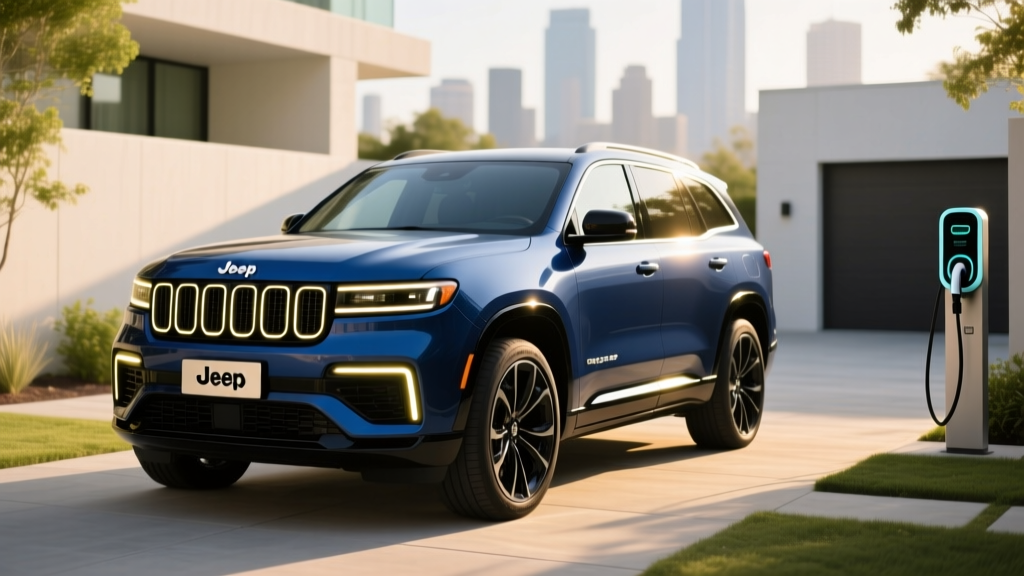
Quick Verdict: The Grand Wagoneer S Goes Electric
The 2026 Jeep Grand Wagoneer S arrives as Stellantis's most ambitious electrified flagship — a three-row luxury SUV built on the STLA Large platform that pairs genuine off-road capability with a 110+ kWh battery pack and dual-motor all-wheel drive. It is not merely an electrified Grand Cherokee; it is a ground-up reimagining of the Wagoneer nameplate for the battery-electric era, targeting buyers who want premium space, towing competence, and the ability to DC fast-charge at up to 250 kW.
But does a 6,000-pound luxury SUV translate well to battery-electric propulsion? After examining every published spec, EPA filing, and first-drive data available, here is the complete buyer's guide to the Grand Wagoneer S — including the numbers that actually matter when you sign the paperwork.
Range, Battery & Real-World Efficiency
| Spec | Figure |
|---|---|
| EPA Est. Range | ~320 miles (est. per Stellantis target) |
| Battery Capacity | ~110 kWh usable (NMC chemistry) |
| Efficiency | ~2.0–2.2 kWh/mi (est. ~110 MPGe combined) |
| Drivetrain | Dual-motor AWD |
| Horsepower | ~590 hp (combined system output, est.) |
| 0–60 mph | ~4.5 seconds (est.) |
| Towing Capacity | ~7,500 lbs (est.) |
| Starting MSRP | TBA — expected $70,000–$85,000 base |
The Grand Wagoneer S uses an NMC (nickel manganese cobalt) battery chemistry, which prioritizes energy density over the cycle-life longevity of LFP cells. This is the right choice for a large luxury SUV where maximizing range per charge matters more than daily 100% top-ups. NMC batteries perform best when charged to 80% for daily use and reserved for 100% only on road-trip days — the vehicle's software includes configurable charge limits to support this habit.
Efficiency for a vehicle this size will likely land in the 110–115 MPGe combined range, translating to roughly 2.0–2.2 kWh per mile. That is competitive with the Rivian R1S and BMW iX but below the Tesla Model X's ~100 MPGe rating. On a home electricity rate of $0.14/kWh, that works out to approximately $0.28–$0.31 per mile — roughly half the per-mile fuel cost of a gas Grand Wagoneer at 17 MPG and $3.70/gallon.
Charging Speed: DC Fast, Level 2 & Home Setup
| Charging Level | Power | Speed (Approx.) |
|---|---|---|
| Level 1 (120V outlet) | ~1.4 kW | ~3–4 miles per hour |
| Level 2 (240V home) | ~11.5 kW (48A) | ~28–32 miles per hour |
| DC Fast Charge (peak) | Up to 250 kW | 10–80% in ~28 minutes (est.) |
The Grand Wagoneer S is expected to support a 250 kW peak DC fast-charge rate on CCS or NACS connectors (Stellantis has committed to NACS adoption across its lineup for the 2025+ model years, giving access to Tesla Supercharger stations via native port or included adapter). At peak rate, a 10–80% session should take roughly 28 minutes.
However, peak rate is not sustained rate. Like all large-battery EVs, the Grand Wagoneer S will follow a charge curve that tapers significantly above 80% State of Charge. Expect the sustained average from 10–80% to be closer to 150–170 kW, which is why the total session time stretches to ~28 minutes rather than the theoretical minimum. On a road trip, plan your stops around 20-minute sessions and avoid charging past 80% unless it is your final stop — the time spent from 80–100% can equal the 10–80% session.
For home Level 2 charging, the onboard charger accepts up to 11.5 kW, meaning a full overnight charge from 10–90% takes approximately 8–9 hours on a 48-amp hardwired wall connector. Most owners will need a 60-amp dedicated circuit installed by a licensed electrician. Installation costs typically range from $800–$2,500 depending on panel proximity and whether a panel upgrade to 200A service is needed — get a quote before committing to the vehicle.
Performance, Drivetrain & Capability
The dual-motor AWD system on the STLA Large platform is expected to deliver approximately 590 combined horsepower, putting the Grand Wagoneer S in the same performance bracket as the BMW iX M60 and well ahead of the Rivian R1S Dual-Motor. The estimated 4.5-second 0–60 mph time is remarkable for a three-row SUV that will likely weigh over 6,000 pounds — instant electric torque eliminates the turbo lag and downshift delays of the outgoing twin-turbo I6 Hurricane engine.
Jeep's Quadra-Trac electric AWD system will include a dedicated off-road mode with torque vectoring between front and rear motors, hill-descent control, and selectable terrain modes (Snow, Sand, Mud, Rock). Ground clearance is expected to exceed 8 inches, and water fording capability should match or exceed the gas Grand Wagoneer's rating.
Towing is a key differentiator: the estimated 7,500-pound tow rating would make the Grand Wagoneer S one of the most capable electric tow vehicles available, rivaling the Ford F-150 Lightning and exceeding the Rivian R1S. Note that towing at capacity will reduce range by approximately 40–50% — a reality for all EVs, not unique to this model. If you plan to tow a 6,000-pound boat on a 200-mile trip, you will need at least one DC fast-charge stop.
Interior Space, Cargo & Technology
The Grand Wagoneer S is expected to offer three rows of seating with generous dimensions:
- Cargo volume: ~15–18 cu ft behind the third row, ~45–50 cu ft behind the second row, ~80+ cu ft with both rear rows folded (estimated)
- Third-row legroom: ~32–34 inches (estimated, competitive with BMW iX and Rivian R1S)
- Front trunk (frunk): Expected, though likely modest (~3–5 cu ft) given the STLA Large platform architecture
The technology suite centers on Stellantis's latest Uconnect 5 system, likely running across dual screens totaling 30+ inches of display area (a driver cluster and a central infotainment touchscreen, with an available passenger display). Wireless Apple CarPlay and Android Auto, over-the-air updates, and a built-in 5G Wi-Fi hotspot are expected as standard.
Driver-assistance features will include adaptive cruise control with stop-and-go, lane-centering assist, blind-spot monitoring with trailer coverage, a 360-degree camera system, and automatic emergency braking with pedestrian detection. These constitute SAE Level 2 driver assistance — the driver must remain engaged and hands-on (or eyes-on, depending on the system). This is not autonomous driving.
Pricing, Trims & Federal Tax Credit Eligibility
| Trim (Expected) | Est. Base MSRP | After §30D Credit* |
|---|---|---|
| Base / Series I | $70,000–$75,000 | $62,500–$67,500 |
| Series II / Obsidian | $80,000–$85,000 | $72,500–$77,500 |
| Series III / High-Altitude | $90,000–$100,000 | $82,500–$92,500 |
*Prices are preliminary estimates. Federal credit eligibility depends on multiple factors — see below.
The Grand Wagoneer S will qualify for the IRS §30D federal EV tax credit only if it meets all current requirements. Here is what buyers must verify before assuming the full $7,500:
- MSRP cap: SUVs must have an MSRP at or below $80,000 — this means higher trims (Series III, etc.) likely exceed the cap and are ineligible
- Buyer income cap: Adjusted gross income must not exceed $150,000 (single), $225,000 (head of household), or $300,000 (joint filers)
- Battery sourcing: Critical minerals and battery components must meet phased-in domestic-content thresholds that increase yearly — Stellantis has been building North American battery supply chains, but verify per-VIN eligibility at fueleconomy.gov
- Point-of-sale transfer: Eligible buyers can transfer the credit to the dealer at purchase, reducing the out-of-pocket price immediately rather than waiting for a tax refund
Always confirm eligibility with your tax professional and check the IRS clean vehicle credits page before signing. Rules change, and per-VIN sourcing compliance is the most common reason buyers are surprised at tax time.
Warranty & Long-Term Ownership
The Grand Wagoneer S is expected to carry Stellantis's standard EV warranty package:
- Battery & drive motors: 8 years / 100,000 miles (federally mandated minimum for emissions-related components, which includes the traction battery)
- Bumper-to-bumper: 3 years / 36,000 miles
- Powertrain (non-electric components): 5 years / 60,000 miles
The battery warranty guarantees that capacity will not fall below 70% of original capacity during the warranty period — this is industry-standard and consistent with BMW, Ford, and Hyundai. Real-world NMC degradation data from comparable large-battery EVs suggests 10–15% capacity loss over 150,000 miles under normal use, meaning most owners will never approach a warranty claim. Avoid habitual DC fast-charging to 100% and daily 100% Level 2 top-ups to maximize long-term State of Health.
Insurance premiums for the Grand Wagoneer S will likely run 20–35% higher than the gas equivalent due to repair costs, battery replacement expense, and the vehicle's MSRP. Get quotes from at least three insurers before purchase — some companies now offer EV-specific policies with battery replacement riders.
How It Compares: Grand Wagoneer S vs. Key Rivals
| Spec | Jeep Grand Wagoneer S | Rivian R1S (Dual-Motor) | BMW iX xDrive50 |
|---|---|---|---|
| EPA Range | ~320 mi (est.) | ~352 mi | ~324 mi |
| Battery | ~110 kWh NMC | 149 kWh (Max Pack) | 111.5 kWh NMC |
| Peak DC Charge | 250 kW | 220 kW | 200 kW |
| 0–60 mph | ~4.5 sec | ~5.0 sec | ~4.6 sec |
| Third Row | Yes | Yes (tight) | No (2-row only) |
| Towing | ~7,500 lbs | 7,700 lbs | 3,500 lbs |
| Base MSRP | ~$70,000–$75,000 | $79,900 | $87,250 |
Choose the Rivian R1S if: You want proven electric-adventure capability, a larger Max Pack battery option for 350+ miles of range, and a more established EV charging and service ecosystem.
Choose the BMW iX if: You only need two rows, prioritize driving dynamics and interior refinement over utility, and can accept the lower tow rating.
Pros, Cons & Who Should Buy
- ~320 mi estimated range is competitive for a 3-row luxury SUV
- 250 kW DC fast charging minimizes road-trip downtime
- Estimated 7,500-lb tow rating leads the luxury EV SUV class
- Jeep off-road capability in an electric package
- Base MSRP undercuts Rivian R1S and BMW iX
- NACS compatibility for Supercharger access
- Heavy weight will drive high tire wear and energy consumption
- Real-world highway and cold-weather range drops significantly
- Higher trims exceed $80,000 MSRP cap for federal tax credit
- NMC battery requires disciplined charging habits for longevity
- Stellantis EV service network is less established than Tesla or Rivian
- Insurance premiums will be elevated
Best for: Families needing three rows and cargo space who also tow a trailer or boat regularly, want off-road capability, and have access to home Level 2 charging. It is a strong fit for buyers upgrading from a gas Grand Wagoneer or Tahoe who want to eliminate fuel costs without sacrificing utility.
Not ideal for: Urban apartment dwellers without home charging access, solo commuters who do not need three rows (the BMW iX or Tesla Model X is more efficient), or buyers who need maximum range for frequent 400+ mile road trips without stopping.
Frequently Asked Questions
What is the real-world range of the Jeep Grand Wagoneer S?
While the EPA estimate targets approximately 320 miles, real-world highway driving at 70+ mph will yield roughly 250–280 miles. In cold weather below 30°F, expect 240–270 miles on mixed driving. Always precondition the battery before departing in cold conditions.
How fast does the Grand Wagoneer S charge?
On a DC fast charger, it peaks at 250 kW and should reach 10–80% in approximately 28 minutes. At home on a Level 2 (240V, 48A) charger, it adds roughly 28–32 miles of range per hour, with a full overnight charge taking 8–9 hours.
Does the Grand Wagoneer S qualify for the $7,500 federal tax credit?
It can, but only if the specific trim's MSRP is at or below $80,000, the buyer's income falls within IRS caps, and the battery meets current critical-mineral and component sourcing thresholds. Higher trims will likely exceed the MSRP cap. Verify per-VIN eligibility at fueleconomy.gov and consult a tax professional.
Is the Grand Wagoneer S worth buying over the Rivian R1S?
If you value a lower starting price, traditional luxury-SUV styling, and Jeep's off-road heritage, yes. If you prioritize maximum range (the R1S Max Pack offers 352 miles EPA), a more mature EV service network, and a proven adventure-vehicle platform, the R1S has advantages. Test-drive both before deciding.
Can I tow a trailer with the Grand Wagoneer S?
Yes — the estimated 7,500-pound tow rating handles most boat, utility, and small travel trailers. However, towing at or near capacity will reduce range by 40–50%, so plan charging stops accordingly on longer trips.
What is the battery warranty?
The expected coverage is 8 years or 100,000 miles, guaranteeing at least 70% battery capacity retention. This is standard for the industry and consistent with federal requirements for EV components.