The Quick Answer: Should You Buy the Jeep EV Wrangler?
The Jeep EV Wrangler (officially the Jeep Recon, Jeep's all-electric Wrangler-class SUV built on the STLA Large platform) is a compelling choice for buyers who want Wrangler-style off-road capability with zero tailpipe emissions — but it comes with trade-offs the gas Wrangler doesn't have. Expect an EPA-estimated 315–330 miles of range (real-world off-road or cold-weather driving drops that to ~240–260 miles), a starting MSRP around $52,995, and DC fast charging that peaks near 175 kW (10–80% in roughly 27 minutes). If you have Level 2 home charging and mostly drive on pavement with occasional trail use, the Recon saves you roughly $1,800–$2,400/year in fuel over the gas Wrangler. If you routinely tow, drive long distances in remote areas with sparse charging, or live where winter temperatures stay below 20°F, the gas or 4xe plug-in hybrid Wrangler may still be the smarter buy.
What the Jeep EV Wrangler (Recon) Actually Is
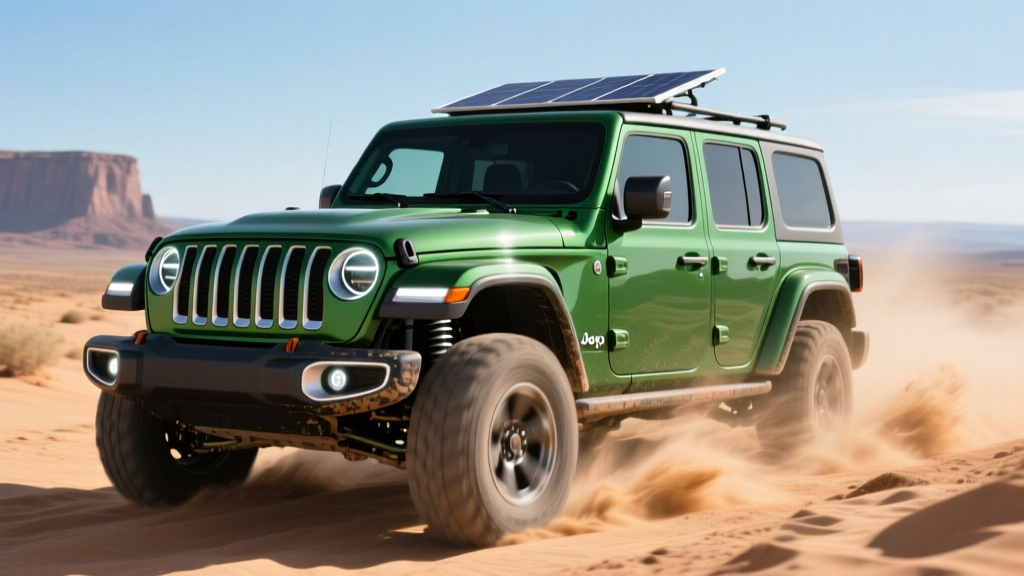
Jeep doesn't badge a vehicle "EV Wrangler" — the production model carrying that mantle is the Jeep Recon, an all-electric, body-on-frame-style SUV that debuted for the 2025 model year and carries into 2026 with minor software and trim updates. It rides on Stellantis's STLA Large BEV platform and is engineered to deliver the Wrangler's signature off-road chops — solid-axle-equivalent articulation, Selec-Trac full-time 4x4, and aggressive approach/departure angles — without an internal combustion engine.
The Recon sits alongside the Wrangler 4xe (a plug-in hybrid with ~22 miles of electric-only range) and the traditional gas Wrangler (3.6L V6 or 2.0L turbo). Here's how the lineup breaks down for a buyer deciding which Wrangler-class vehicle fits their life.
| Spec | Jeep Recon (EV) | Wrangler 4xe (PHEV) | Wrangler Gas (3.6L V6) |
|---|---|---|---|
| Powertrain | Dual-motor AWD BEV | 2.0L turbo + 2 motors | 3.6L V6 + eTorque |
| Horsepower | ~335 hp | 375 hp combined | 285 hp |
| 0–60 mph | ~6.2 sec | ~6.0 sec | ~7.3 sec |
| EPA Range / MPG | ~320 mi (est.) | 49 MPGe / 22 mi EV | ~22 MPG combined |
| Usable Battery | ~100 kWh (NMC) | 17.3 kWh (NMC) | N/A |
| Max DC Fast Charge | ~175 kW | ~50 kW | N/A |
| 10–80% DC Time | ~27 min | ~30 min (to 80%) | N/A |
| Towing Capacity | ~3,500 lbs (est.) | 3,500 lbs | 3,500–5,000 lbs |
| Starting MSRP | ~$52,995 | ~$51,795 | ~$33,895 |
| Federal Tax Credit (§30D) | Up to $7,500* | Up to $7,500* | $0 |
* §30D eligibility depends on MSRP caps, buyer income limits, and battery/critical-mineral sourcing rules. Verify at IRS.gov before purchasing.
Real-World Range: What the EPA Sticker Won't Tell You
Jeep targets roughly 320 miles of EPA-estimated range for the Recon with its ~100 kWh NMC battery pack. That's competitive with the Ford Bronco EV (when it arrives) and well above what most off-road-focused SUVs deliver. But EPA numbers assume mixed driving at moderate temperatures — conditions that rarely match real off-road or adventure use.
Range Reality Check
EPA Estimate: ~320 miles
Highway at 75 mph: ~265–280 miles (the Recon's boxy shape creates significant aerodynamic drag)
Cold Weather (below 30°F): ~230–260 miles (NMC chemistry loses 15–25% capacity in deep cold; using cabin heat without a heat pump worsens this)
Off-Road / Low-Speed Trail: Range is less relevant here — energy use spikes on steep grades, but low speeds mean less total consumption per mile. Expect ~1.5–2.0 kWh/mile on technical trails vs ~0.32 kWh/mile on the highway.
For context, the gas Wrangler 3.6L manages about 22 MPG combined, giving it a ~374-mile range on its 17-gallon tank — and you can carry a jerry can on the trail. The Recon can't be refueled from a portable container, so remote backcountry trips require careful charge planning or a generator-based emergency charger (which adds weight and complexity).
Charging Speed and Infrastructure: The Off-Road EV Bottleneck
The Recon's ~175 kW peak DC fast-charge rate is adequate but not class-leading. Competitors like the Rivian R1S (200+ kW) and Hyundai Ioniq 5 (240 kW) charge faster. More importantly, the Recon's charging curve — like all NMC packs — tapers significantly above 80% state of charge (SoC). Here's what a typical session looks like:
| Level | Power | Miles Added per Hour | Typical Use Case |
|---|---|---|---|
| Level 1 (120V outlet) | ~1.4 kW | ~4 mi/hr | Emergency / trickle top-off |
| Level 2 (240V, 48A) | ~11.5 kW | ~34 mi/hr | Overnight home charging (full charge in ~9 hrs) |
| DC Fast Charge | Peak ~175 kW | ~500+ mi/hr (peak) | Road trips; 10–80% in ~27 min |
Off-road charging reality: Most trailheads lack Level 2 or DC chargers. If you're running Moab or the Rubicon Trail, you'll need to charge fully at home or at a hotel the night before. The nascent PlugShare network shows growing rural coverage, but charging deserts remain a genuine constraint in the Mountain West and rural Southwest.
Preconditioning matters. The Recon's battery management system can precondition the pack for faster DC charging when you navigate to a charger via the infotainment system. Skipping this step in cold weather can add 10–15 minutes to your 10–80% time.
Total Cost of Ownership: Recon EV vs Gas Wrangler
The Recon's higher MSRP is partially offset by fuel savings, lower maintenance costs, and potential tax credits. Here's a 5-year / 75,000-mile ownership comparison assuming $3.50/gallon gas and $0.14/kWh home electricity (national averages):
| Cost Category | Recon (EV) | Wrangler Gas |
|---|---|---|
| Purchase Price (base MSRP) | $52,995 | $33,895 |
| Federal Tax Credit (§30D) | –$3,750 to –$7,500* | $0 |
| Fuel / Electricity (75k mi) | $2,100 (home charging) | $11,930 (22 MPG avg) |
| Maintenance (5 yrs) | ~$1,200 | ~$3,800 |
| Insurance (5 yrs, est.) | ~$9,500 | ~$7,800 |
| Estimated Depreciation | ~$22,000 | ~$14,500 |
| 5-Year Total (approx.) | ~$80,295 | ~$71,925 |
* The §30D credit amount varies based on critical-mineral and battery-component sourcing. As of 2026, many Stellantis vehicles qualify for $3,750 (minerals only) rather than the full $7,500. Check current eligibility on fueleconomy.gov.
The takeaway: The Recon costs roughly $8,000–$10,000 more over 5 years than the gas Wrangler, primarily due to higher purchase price and steeper depreciation. Fuel and maintenance savings recover about $12,400, but not enough to close the gap. The math flips if gas prices rise above $4.50/gallon, if you drive more than 15,000 miles/year, or if you secure the full $7,500 credit and your state offers additional rebates.
Off-Road Capability: Can an EV Really Trail-Drive?
This is the question that separates the Recon from every other EV SUV. The answer is: yes, with caveats.
Advantages over gas:
- Instant torque at zero RPM — no need to build revs for rock crawling. The dual-motor setup delivers precise, independent front/rear torque distribution.
- Lower center of gravity — the battery pack sits under the floor, reducing rollover risk on side slopes.
- No engine to stall or flood — water fording depth is competitive (Jeep targets ~28+ inches), and there's no air intake to hydrolock.
- One-pedal driving on descents gives superior speed control without riding the brakes.
Limitations to acknowledge:
- Weight. The Recon likely tips the scales at 5,500+ lbs, compared to ~4,400 lbs for a gas Wrangler. That extra mass increases tire wear, lengthens braking distances, and makes recovery (winching, pulling free from mud) more difficult.
- Range on the trail. Steep, technical terrain can push consumption to 1.5–2.0 kWh/mile. A 10-mile out-and-back trail could burn 30–40 miles of range.
- No portable refueling. You can carry extra gas for a Wrangler. You can't carry extra electrons without a heavy, expensive portable power station.
- Charging at trailheads. Infrastructure is sparse. Plan accordingly.
Common Misconceptions About the Jeep EV Wrangler
| Myth | Fact |
|---|---|
| "EVs can't off-road — they'll run out of battery." | Low-speed trail driving is actually efficient for EVs. The concern is getting to and from remote trailheads without charging infrastructure, not the trail itself. |
| "The battery will die in cold weather." | NMC packs lose 15–25% range in sub-freezing temps, but the Recon's thermal management system mitigates this. You'll still have 230+ miles — enough for most daily use. |
| "I'll save $7,500 on taxes." | The §30D credit is subject to income caps ($150K single / $300K joint), MSRP caps ($80K for SUVs), and battery-sourcing rules. Many buyers qualify for $3,750 or $0. Verify at IRS.gov. |
| "EV maintenance is free." | No oil changes, but tires wear faster due to weight and torque, cabin air filters need replacement, and the battery coolant system requires periodic service. Budget ~$240/year. |
| "It charges as fast as a Tesla." | The Recon peaks at ~175 kW. Tesla's V4 Superchargers deliver up to 250+ kW, and vehicles like the Ioniq 5 hit 240 kW. Plan for ~27 min (10–80%), not 15. |
Decision Framework: Which Wrangler Is Right for You?
Choose the Jeep Recon (EV) If:
- You have reliable Level 2 home charging (garage or driveway with 240V access).
- Your daily driving is under 80 miles and mostly on pavement.
- You want instant off-road torque and a lower center of gravity for trail use within ~100 miles of home.
- You qualify for the §30D tax credit and your state offers additional EV incentives.
- You want to eliminate gas station visits and reduce tailpipe emissions.
Choose the Wrangler 4xe (PHEV) If:
- You want electric-only commuting (~22 miles) but need gas-engine range for long road trips and remote trails.
- You don't have reliable home charging access.
- You frequently tow near the 3,500-lb limit and can't risk range loss from trailer drag.
- You want the lowest-risk entry into electrified Jeep ownership.
Choose the Gas Wrangler If:
- You regularly drive in areas with no DC fast-charging infrastructure (rural Mountain West, remote national forests).
- You tow heavy loads (the gas Wrangler's 5,000-lb capacity with the turbo-diesel or 3.6L beats the Recon's estimated 3,500 lbs).
- Your budget is under $40,000 and you don't qualify for the tax credit.
- You plan to modify heavily (aftermarket support for gas Wranglers dwarfs the Recon's at this stage).
First-Time EV Buyer Essentials
If the Recon is your first EV, here's what dealerships often won't emphasize:
1. Home charging is non-negotiable for most owners. A Level 2 home charger (240V, 48A) costs $800–$2,500 installed depending on your electrical panel. If your home has a 100A panel, a $1,500–$3,000 upgrade to 200A may be required. Hire a licensed electrician — don't DIY high-voltage work.
2. kW vs kWh — know the difference. kW (kilowatts) is the rate of power flow — like water pressure from a hose. kWh (kilowatt-hours) is total energy stored — like the size of the bucket. The Recon's battery holds ~100 kWh of energy; it charges at up to 175 kW of power. Confusing these is the #1 first-time EV mistake.
3. The charge curve is real. The "175 kW" peak only applies between roughly 10–50% SoC. Above 80%, charging slows dramatically to protect the battery — sometimes to under 50 kW. Plan road-trip stops around 10–80% charges, not 0–100%.
4. Insurance costs more. EVs typically carry 15–25% higher premiums than gas equivalents due to higher repair costs and battery replacement risk. Get quotes before buying.
5. Battery degradation is slow but real. NMC batteries typically lose 8–12% capacity over 8 years / 100,000 miles. Jeep's battery warranty covers 8 years / 100,000 miles with a minimum 70% capacity retention threshold — consistent with NHTSA-documented industry standards.
Frequently Asked Questions
Is the Jeep Recon the same as the Wrangler EV?
Functionally, yes — the Recon is Jeep's all-electric SUV designed to fill the Wrangler's off-road role in a zero-emission package. However, it has its own nameplate, distinct styling, and a dedicated STLA Large platform rather than being a converted gas Wrangler.
Can I take the Jeep Recon through deep water?
Jeep targets a water-fording depth of approximately 28+ inches, competitive with the gas Wrangler. EVs have no air intake to hydrolock, but submerging battery connections or electronics beyond rated depth can cause catastrophic damage. Always check the owner's manual for exact fording limits before attempting water crossings.
How long does the Recon battery last?
Based on NMC chemistry data from similar packs, expect 85–92% capacity retention after 8 years / 100,000 miles. Jeep's warranty guarantees at least 70% retention over that period. Full battery replacement (if needed out of warranty) is estimated at $12,000–$18,000 — a significant but unlikely expense within the first decade.
Does the Recon qualify for the $7,500 federal tax credit?
Possibly, but not automatically. Under current §30D rules, eligibility depends on: (1) your taxable income (≤$150K single / $300K joint), (2) the vehicle's MSRP (≤$80K for SUVs), and (3) battery-component and critical-mineral sourcing requirements. As of 2026, many Stellantis-built EVs qualify for $3,750 (meeting one of two sourcing thresholds). Always verify on fueleconomy.gov and consult a tax professional before relying on the credit.
Can I install a rooftop tent on the Recon?
Jeep has confirmed roof-rack accessory compatibility, but the Recon's glass-panel roof (a design signature) may limit load capacity compared to the gas Wrangler's solid steel roof. Check the owner's manual for dynamic and static roof-load ratings before mounting a rooftop tent — exceeding them can void warranty coverage.
What happens if I run out of charge on the trail?
Unlike a gas vehicle, you can't pour in fuel from a jerry can. Your options are: (1) call a flatbed tow truck to carry you to the nearest charger, (2) use a portable power station (like an EcoFlow or Bluetti) with a Level 1 adapter for a slow emergency trickle (adding ~3–5 miles of range per hour), or (3) plan your trips to avoid this scenario entirely. Most experienced EV off-roaders plan routes with a 30–40% range buffer.