Quick Answer: Is the Jeep Wagoneer EV Worth Waiting For?
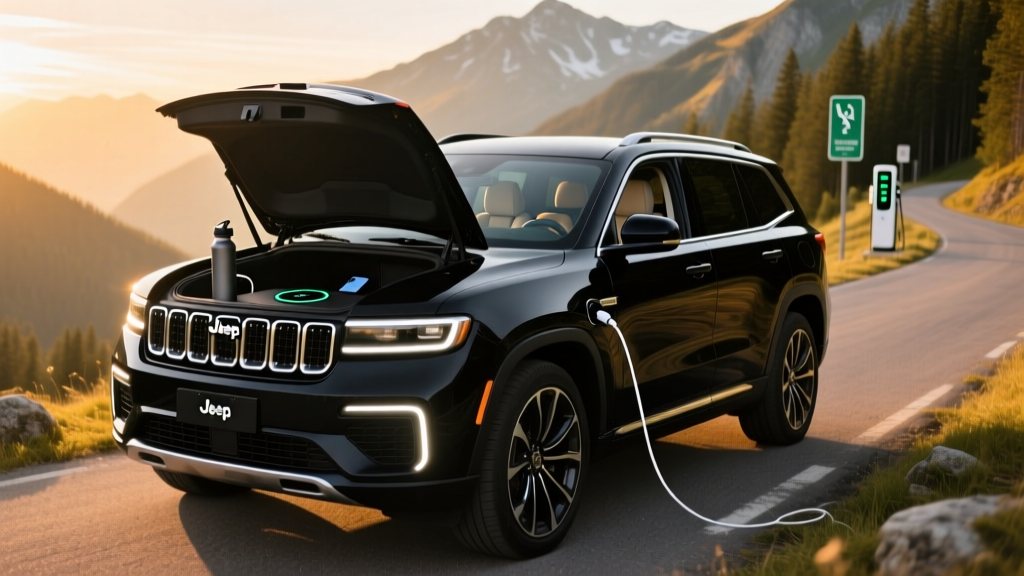
The Jeep Wagoneer EV is an announced, upcoming full-size electric SUV built on Stellantis' STLA Large platform. Based on preliminary specifications, buyers should expect an EPA range target of approximately 300–400 miles depending on battery configuration, DC fast charging capability in the 200–350 kW range, and a starting MSRP likely between $65,000 and $75,000. As of early 2026, Stellantis has not confirmed final production specs, pricing, or a firm on-sale date. If you need a three-row electric SUV now, alternatives like the Kia EV9, Rivian R1S, or Tesla Model X are already on dealer lots with confirmed EPA figures. If you want the Wagoneer badge, Jeep's off-road DNA, and can wait, here's what the numbers tell us so far.
What We Know About the Wagoneer EV Platform and Battery
The Wagoneer EV rides on the STLA Large architecture, a flexible platform engineered by Stellantis to support battery-electric vehicles across its brand portfolio. This platform was designed from the outset to accommodate large battery packs and high-power charging, positioning the Wagoneer EV to compete directly with the Kia EV9 (EPA range up to 304 miles), the Rivian R1S Dual-Motor (EPA up to 410 miles with the Max Pack), and the extended-range Tesla Model X (EPA 335 miles).
Stellantis has indicated the STLA Large platform supports battery packs ranging up to approximately 118 kWh of usable capacity, likely using NMC (nickel manganese cobalt) chemistry given the energy-density requirements of a full-size, three-row SUV targeting 400 miles of range. LFP (lithium iron phosphate) chemistry, while more durable and lower-cost, is heavier and less energy-dense — making it better suited for smaller vehicles or shorter-range trims.
| Specification | Estimated Figure | Status |
|---|---|---|
| Platform | STLA Large | Confirmed |
| Battery Chemistry | NMC (likely) | Estimated |
| Battery Capacity (usable) | ~100–118 kWh | Estimated |
| EPA Range Target | 300–400 mi | Manufacturer target |
| Peak DC Fast Charge Rate | ~200–350 kW | Estimated |
| 10–80% DC Charge Time | ~20–30 min (estimated) | Estimated |
| Level 2 AC Charging | ~11–19.2 kW | Estimated |
| Drivetrain | AWD / e-4WD expected | Likely |
| 0–60 mph | ~4.5–6.0 sec (depending on trim) | Estimated |
| Seating | 3 rows / 6–7 passengers | Expected |
| Starting MSRP | ~$65,000–$75,000 | Estimated |
| Battery Warranty | 8 yr / 100,000 mi (expected) | Based on federal minimum |
Real-World Range Reality Check
If the Wagoneer EV achieves its targeted 400-mile EPA rating on a top-trim configuration, expect real-world highway driving at 70–80 mph to yield roughly 300–340 miles before needing a charge. Cold-weather driving (below 32°F) can reduce range by 20–30%, meaning a 400-mile EPA vehicle might deliver 280–320 miles in winter conditions. These are typical reductions for large, heavy electric SUVs — not unique to Jeep. A lower-range trim targeting 300 miles EPA could realistically deliver 220–260 miles on a winter highway trip.
Charging Speed: What to Expect at Home and on the Road
Charging is where large-battery EVs live or die. A 100+ kWh battery needs robust charging infrastructure to avoid multi-hour stops.
DC Fast Charging (Road Trips)
The STLA Large platform is engineered for 800-volt-class architecture, which, if implemented in the Wagoneer EV, would enable peak charge rates potentially reaching 350 kW at compatible chargers. However, peak rate is not sustained rate. In practice, EVs hold peak kW only between roughly 10–40% State of Charge (SoC), then taper progressively. A realistic expectation for a 10–80% session on a 350 kW-capable charger is 20–25 minutes, assuming battery preconditioning is active and the charger can deliver sufficient power. On older 150 kW chargers (still common on networks like Electrify America and EVgo), that same session could stretch to 35–45 minutes.
Preconditioning matters. If the Wagoneer EV includes navigation-based battery preconditioning (warming the battery before you arrive at a DC fast charger), it will significantly improve charge speed in cold weather. Without it, winter fast-charging sessions can be 30–50% slower.
Level 2 Home Charging
With a ~100–118 kWh battery, Level 2 charging speed is critical. Here's why: on a standard 11.5 kW Level 2 home charger (48-amp circuit), fully recharging a depleted 118 kWh battery takes roughly 10–11 hours. Upgrading to a 19.2 kW charger (80-amp circuit) cuts that to approximately 6–7 hours. For most owners who plug in nightly and rarely drain the battery below 30%, an 11.5 kW home charger is sufficient — you're replacing 60–70% of the battery overnight, which is 200+ miles of range restored.
| Charging Level | Power (kW) | Miles of Range per Hour | 10–80% Time (Est.) |
|---|---|---|---|
| Level 1 (120V outlet) | 1.4 kW | ~3–5 mi/hr | 60+ hours |
| Level 2 (240V, 48A) | 11.5 kW | ~30–38 mi/hr | 7–8 hours |
| Level 2 (240V, 80A) | 19.2 kW | ~50–63 mi/hr | 4.5–5 hours |
| DC Fast (150 kW station) | ~150 kW peak | N/A | ~35–45 min |
| DC Fast (350 kW station) | ~350 kW peak | N/A | ~20–25 min |
Wagoneer EV vs. Gas Wagoneer: Cost and Ownership Comparison
The current gas-powered Jeep Wagoneer starts around $62,000 and returns approximately 16–20 MPG combined depending on configuration (per fueleconomy.gov). Here's how the economics compare over five years of ownership, assuming 15,000 miles driven annually.
| Cost Category | Gas Wagoneer (4WD) | Wagoneer EV (Est.) |
|---|---|---|
| Purchase Price (base MSRP) | $62,000 | $70,000 (est.) |
| Federal Tax Credit (§30D) | $0 | Up to $7,500* |
| Effective Purchase Price | $62,000 | ~$62,500 |
| Fuel / Energy (5 yrs, 75K mi) | ~$14,500 (gas @ $3.50/gal, 17 MPG) | ~$5,200 (electric @ $0.14/kWh, 2.2 kWh/mi) |
| Maintenance (5 yrs) | ~$4,500 | ~$1,800 |
| Insurance (5 yrs, est.) | ~$12,000 | ~$13,500 |
| Estimated 5-Year Total | ~$93,000 | ~$83,000 |
*Federal §30D tax credit eligibility depends on MSRP caps (vans/SUVs: $80,000), buyer income limits ($300K MFJ / $150K single), and battery critical-mineral and component sourcing requirements that continue to tighten annually. Consult IRS guidance on the Clean Vehicle Credit and a tax professional before purchasing. The credit can now be transferred to the dealer as a point-of-sale discount.
The Wagoneer EV's higher purchase price is substantially offset by the federal credit, dramatically lower fueling costs (especially with home charging on residential electricity rates), and reduced maintenance — no oil changes, fewer brake replacements due to regenerative braking, and no transmission fluid service. Insurance tends to run 10–15% higher for EVs due to repair costs and parts pricing, partially eroding savings.
Federal Tax Credit Eligibility: Can You Get $7,500?
The §30D Clean Vehicle Credit is not a guaranteed $7,500 for every buyer. Here's the checklist for 2026 purchases:
- MSRP Cap: The vehicle's base MSRP (including destination) must not exceed $80,000 for SUVs/pickups/vans.
- Buyer Income Limits: Modified adjusted gross income must not exceed $300,000 (married filing jointly), $225,000 (head of household), or $150,000 (single).
- Battery Sourcing: A percentage of critical minerals must be sourced from the U.S. or free-trade-agreement countries, and battery components must be manufactured or assembled in North America — these thresholds increase each year, and some vehicles that qualified in 2024 may not qualify in 2026.
- Point-of-Sale Transfer: You can elect to transfer the credit to the dealer at purchase, reducing your out-of-pocket cost immediately rather than waiting to claim it on your tax return.
- Final Assembly: The vehicle must undergo final assembly in North America.
Whether the Wagoneer EV qualifies will depend on Stellantis' battery supply chain at the time of sale. This is one of the most fluid aspects of EV purchasing — verify eligibility on the official fueleconomy.gov tax credit lookup tool closer to the vehicle's release.
Common Misconceptions About the Wagoneer EV
| Myth | Fact |
|---|---|
| "A 400-mile EV never needs to stop and charge on road trips." | Real-world highway range is typically 75–85% of EPA. A 400-mile EPA rating yields ~300–340 highway miles. You'll still stop every 3–4 hours on long trips — which aligns with recommended rest breaks. |
| "EV batteries need replacing every 5 years." | Modern NMC and LFP batteries are warrantied for 8 years/100,000 miles minimum. Data from long-term EV fleets shows most batteries retain 85–90% capacity after 150,000 miles. Full replacement is rare and costs $10,000–$20,000+ for large packs. |
| "I can charge on any regular outlet and it'll be fine." | Level 1 (120V) charging adds only 3–5 miles of range per hour. For a 118 kWh battery, that's roughly 30–40 miles overnight — adequate only for very low-mileage drivers. A Level 2 (240V) home charger is practically mandatory for a large-battery EV. |
| "Electric SUVs can't tow." | Electric motors produce peak torque from zero RPM. The Rivian R1S tows up to 7,700 lbs. However, towing at capacity can reduce range by 40–50%. Expect the Wagoneer EV to offer competitive tow ratings with a similar range trade-off. |
| "The tax credit is a guaranteed $7,500 off." | Eligibility depends on your income, the vehicle's MSRP, and complex battery-sourcing rules that tighten yearly. Some EVs lose partial or full credit eligibility as rules evolve. |
Real-World Ownership: What First-Time EV Buyers Must Know
Before committing to the Wagoneer EV — or any large electric SUV — honestly assess your situation:
Home Charging Access: Can you install a 240V Level 2 charger? Expect $500–$2,500 for a quality Level 2 unit (e.g., ChargePoint Home Flex, Emporia V2, Tesla Wall Connector) plus $500–$3,000 for electrician installation, depending on panel capacity and run length. If your home has a 100-amp electrical panel, a panel upgrade to 200 amps may cost an additional $1,500–$4,000. Without home charging, you'll rely on public DC fast chargers and workplace charging — workable, but significantly more expensive and less convenient.
Climate Considerations: If you live in a region with sustained sub-freezing winters, budget for 20–30% range loss. The Wagoneer EV's large battery helps absorb this penalty — losing 25% of 400 miles still leaves 300 miles — but it's a factor for trip planning. A heat pump (if equipped) will help preserve cabin heating efficiency without draining the battery as severely as resistive heaters.
Driving Patterns: If your daily commute is under 60 miles round-trip, a Wagoneer EV with any battery configuration will handle daily driving with nightly Level 2 top-ups and require DC fast charging only on road trips. If you regularly drive 200+ miles per day or tow frequently, plan for more frequent charging stops and higher energy costs.
Public Charging Reliability: Networks like Tesla Supercharger (now open to non-Tesla EVs via NACS adapter or native NACS port), Electrify America, and EVgo vary in uptime and maintenance. The Wagoneer EV's connector type — likely NACS, given Stellantis' announced adoption of the North American Charging Standard — will determine which networks you can access natively without adapters.
Decision Framework: Should You Wait for the Wagoneer EV?
Choose to wait for the Wagoneer EV if:
- You want a full-size, three-row SUV with Jeep's brand identity and likely off-road-oriented e-4WD capability
- You have home Level 2 charging access (or can install it)
- You don't need to purchase in the next 6 months
- You value a large battery (100+ kWh) for road-trip range confidence
- You're willing to pay $65,000–$80,000+ for a premium electric SUV
Choose an available alternative now if:
- You need a three-row EV immediately — the Kia EV9 (EPA up to 304 mi, starting ~$55,000), Rivian R1S (EPA up to 410 mi, starting ~$76,000), or Tesla Model X (EPA 335 mi, starting ~$82,000) are confirmed and available
- Your budget is under $60,000 — consider the EV9 or wait for potential Wagoneer EV lower trims
- You tow frequently and need confirmed tow ratings and real-world range-while-towing data
- You want proven reliability data from at least 1–2 model years of owner feedback
Frequently Asked Questions
When will the Jeep Wagoneer EV be available to buy?
Stellantis has announced the Wagoneer EV as part of its electrification roadmap, but a firm on-sale date has not been confirmed as of early 2026. Production timing will depend on STLA Large platform rollout and factory readiness. Expect official pricing and specs to be released several months before deliveries begin.
Will the Wagoneer EV qualify for the $7,500 federal tax credit?
Possibly, but it's not guaranteed. Eligibility depends on the vehicle's MSRP (must be under $80,000 for SUVs), your income, and whether the battery meets increasingly strict critical-mineral and component sourcing requirements under §30D. Check the fueleconomy.gov database and consult a tax professional before relying on the credit in your purchase budget.
How much will it cost to install a home charger for the Wagoneer EV?
Budget $1,000–$5,500 total for a Level 2 home charging setup, including the charger unit ($500–$2,500) and professional installation ($500–$3,000). If your electrical panel needs an upgrade from 100A to 200A, add $1,500–$4,000. Always get a quote from a licensed electrician before purchasing equipment.
Will the Wagoneer EV use NACS or CCS for charging?
Stellantis has indicated adoption of the NACS (North American Charging Standard) connector for its North American EVs, which would give the Wagoneer EV native access to Tesla Superchargers and a growing number of NACS-equipped public stations. Final connector confirmation will come with official specs.
Can the Wagoneer EV go off-road?
Jeep's brand identity is built on off-road capability, and an electric Wagoneer would likely feature an e-4WD system with torque vectoring. Electric motors offer advantages off-road — instant torque at zero RPM, precise individual-wheel control. However, ground clearance, approach/departure angles, and underbody protection will determine real trail capability. Expect Jeep to market Trail Rated or equivalent variants if the lineup includes off-road-focused trims.
How does the Wagoneer EV compare to the gas Wagoneer on fuel cost?
At $3.50/gallon and 17 MPG combined, the gas Wagoneer costs approximately $0.21 per mile in fuel. At $0.14/kWh (national average residential electricity) and an estimated 2.2 kWh/mile, the Wagoneer EV would cost approximately $0.07 per mile — roughly one-third the fueling cost. Over 75,000 miles, that's a savings of approximately $9,300 in energy costs alone.