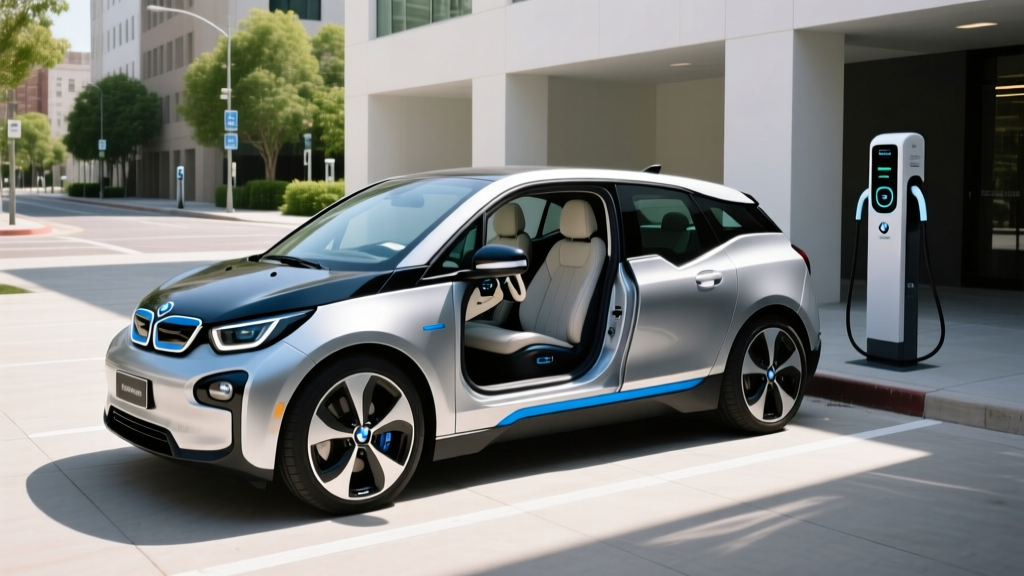
The BMW i3 occupies a unique niche in the electric vehicle landscape: a premium compact hatchback built around an unconventional carbon-fiber-reinforced plastic (CFRP) passenger cell and a distinctly short wheelbase. Originally launched for the 2014 model year and discontinued in the U.S. after 2021, the i3 remains one of the most talked-about used EVs on the market. But with the EV landscape shifting dramatically by 2026, buyers researching the BMW i3 wheelbase, range, and daily usability need clear, data-driven answers before pulling the trigger on a pre-owned example or comparing it to modern alternatives.
This review covers the final-generation BMW i3 (2019–2021 model years with the 120 Ah battery), examining its dimensions, real-world range, charging performance, and ownership economics. Whether you're eyeing a certified pre-owned i3 or simply benchmarking its packaging against newer compact EVs, here's everything that matters.
BMW i3 Wheelbase and Exterior Dimensions Explained
The BMW i3's wheelbase measures 101.2 inches (2,570 mm) — roughly 6 to 8 inches shorter than most modern compact crossovers. That short wheelbase is central to the i3's identity: it enables a remarkably tight 32.8-foot turning circle, making the car exceptionally maneuverable in dense urban environments. However, it also limits rear-seat legroom and highway stability compared to longer-wheelbase EVs.
| Dimension | Measurement |
|---|---|
| Wheelbase | 101.2 in (2,570 mm) |
| Overall Length | 158.3 in (4,020 mm) |
| Overall Width (w/o mirrors) | 69.9 in (1,775 mm) |
| Overall Height | 62.9 in (1,598 mm) |
| Curb Weight | ~2,974 lbs (BEV) |
| Turning Circle | 32.8 ft |
The short wheelbase directly impacts interior packaging. Front-seat occupants enjoy generous headroom and a commanding, upright seating position thanks to the i3's tall roofline. Rear-seat passengers, however, get only 31.9 inches of legroom — adequate for children or short commutes, but tight for adults on longer trips. The rear-hinged "coach doors" (no B-pillar) ease access but require the front doors to open first.
Range, Battery, and Efficiency: The 120 Ah Generation
The final-generation BMW i3 (2019–2021) uses a 42.2 kWh battery pack (37.9 kWh usable) with Samsung SDI NMC (nickel-manganese-cobalt) lithium-ion cells. This was a significant upgrade from the original 60 Ah (22 kWh) and 94 Ah (33 kWh) packs, finally giving the i3 competitive range for its era.
Real-World Expectation: Expect 120–140 miles in mixed highway driving at 70+ mph, and as low as 95–110 miles in sub-freezing winter conditions with cabin heating. City driving with regenerative braking can push closer to the EPA sticker or slightly above. The i3's light weight (~2,974 lbs) helps efficiency but its small battery caps total distance.
On the efficiency front, the EPA rates the i3 BEV at 113 MPGe combined (120 city / 106 highway), translating to roughly 30 kWh per 100 miles. That's competitive with many modern EVs despite the older platform, largely because the i3 is so light. For context, a 2025 Hyundai Ioniq 5 (3,800+ lbs) achieves around 114 MPGe combined — similar efficiency with a far larger battery and more range.
| Spec | Value |
|---|---|
| Battery Chemistry | NMC (Samsung SDI) |
| Gross Battery Capacity | 42.2 kWh |
| Usable Battery Capacity | 37.9 kWh |
| EPA Range | 153 miles |
| MPGe (City / Hwy / Combined) | 120 / 106 / 113 |
| Energy Consumption | ~30 kWh/100 mi |
Charging Speed: DC Fast Charge and Home Level 2
The BMW i3's charging capabilities reflect its era. DC fast charging uses the CCS1 (Combo) connector on U.S.-spec models, but the peak charge rate is limited to approximately 50 kW. That's far below the 150–350 kW rates common on 2025–2026 EVs, meaning road-trip charging stops take noticeably longer.
| Charging Level | Power / Rate | Time / Notes |
|---|---|---|
| Level 1 (120V household) | ~1.4 kW | ~27 hours (0–100%); adds ~4 mi/hr |
| Level 2 (240V, 32A) | 7.4 kW | ~5.5 hours (0–100%); adds ~25 mi/hr |
| DC Fast Charge (CCS1) | 50 kW peak | 10–80% in ~35–40 minutes |
The 10–80% DC fast charge time of approximately 35–40 minutes is the i3's biggest practical limitation for road trips. Because the battery is small (37.9 kWh usable), even a modest 50 kW charge rate represents a relatively high C-rate, and the charge curve tapers significantly above 80%. For daily driving with home Level 2 charging, however, the 7.4 kW onboard charger is perfectly adequate — most owners will plug in overnight and wake up to a full battery.
Owner tip: The i3's battery thermal management relies primarily on passive cooling with limited active conditioning. In extreme heat, sustained DC fast charging may throttle below 50 kW. Preconditioning the battery (available via the iDrive connected app) before arriving at a DC charger can help maintain peak rates in cold weather.
Performance and Driving Dynamics
The BMW i3 BEV is powered by a single rear-mounted electric motor producing 170 horsepower and 184 lb-ft of torque. That's enough for a 0–60 mph time of approximately 7.2 seconds — brisk for city merging but not sports-sedan quick. The i3s variant (discontinued for the U.S. after 2020) bumped output to 184 hp and dropped the 0–60 to about 6.9 seconds.
What the i3 lacks in straight-line performance, it compensates for with driving feel. The carbon-fiber passenger cell and aluminum chassis keep weight low and centered. The skinny 155/70R19 tires minimize rolling resistance but offer modest grip. The tall, narrow body leans in corners more than a conventional hatchback, but the instant torque and one-pedal driving capability (strong regenerative braking) make the i3 genuinely engaging in stop-and-go urban traffic.
The optional Range Extender (REx) variant — available through 2021 — added a 647cc two-cylinder BMW motorcycle engine that acted as a generator to maintain battery charge, extending total range to approximately 200 miles combined (electric + gasoline). The REx adds roughly 260 lbs and reduces electric-only range to about 126 miles EPA. It was a clever bridge solution before long-range BEVs became affordable, but it introduces maintenance complexity (oil changes, fuel system) that pure BEV owners avoid.
Pricing, Tax Credits, and Used-EV Economics
Because BMW discontinued the i3 after the 2021 model year, no new examples are available in 2026. All purchases will be on the used market, where the federal Used Clean Vehicle Credit (IRS §25E) becomes relevant rather than the new-vehicle §30D credit.
| Item | Details |
|---|---|
| Original MSRP (2021 base) | ~$44,450 (BEV) |
| Typical Used Price (2026) | $18,000–$28,000 depending on mileage/condition |
| Used EV Tax Credit (§25E) | Up to $4,000 (30% of sale price, capped) |
| §25E Income Caps | $75K single / $112,500 HOH / $150K joint (AGI) |
| §25E Price Cap | Sale price must be ≤ $25,000 |
| Dealer Requirement | Must purchase from a licensed dealer (not private party) |
The §25E credit can meaningfully reduce the cost of a used i3 — but only if you meet all criteria. The vehicle's sale price must be $25,000 or less, the buyer's adjusted gross income must fall below the caps, and the purchase must be through a licensed dealer. Many 2019–2021 i3s with moderate mileage now list in the $20,000–$25,000 range, making them potentially eligible. Always verify current IRS §25E rules before purchasing, as regulations and eligible vehicle lists can shift.
The original EPA fueleconomy.gov listing for the 2021 BMW i3 confirms the 153-mile range and 113 MPGe combined figures cited throughout this review.
Interior, Cargo, and Technology
The i3's interior is unlike anything else in BMW's lineup — or the broader EV market. Sustainable materials dominate: the dashboard uses eucalyptus wood and recycled plastics, the door panels feature kenaf (a natural fiber), and available wool-blend upholstery replaces traditional leather. It's a genuinely premium, design-forward cabin that ages well.
Practicality is a mixed story. Cargo volume behind the rear seats measures just 15.1 cubic feet — less than a Honda Civic hatchback. Fold the rear seats (50/50 split) and you get approximately 50.9 cubic feet, which is usable for IKEA runs or airport trips but still below compact-crossover competitors.
| Measurement | Value |
|---|---|
| Front Headroom | 39.6 in |
| Front Legroom | 40.5 in |
| Rear Headroom | 37.8 in |
| Rear Legroom | 31.9 in |
| Cargo (rear seats up) | 15.1 cu ft |
| Cargo (rear seats folded) | 50.9 cu ft |
Technology in the 2019–2021 i3 centers on BMW's iDrive 6.0 system displayed on a 10.25-inch widescreen. Apple CarPlay is standard (wireless on later builds); Android Auto was not offered on the i3. The digital instrument cluster is a compact 5.7-inch screen. Available driver assists include Active Driving Assistant (forward collision warning, automatic emergency braking, lane departure warning) and Parking Assistant with a rearview camera. These are SAE Level 0–1 features — basic safety aids, not semi-autonomous driving systems.
Warranty and Long-Term Battery Health
When new, BMW covered the i3's high-voltage battery with an 8-year/100,000-mile warranty against defects and excessive capacity loss (defined as dropping below 70% of original capacity). The powertrain warranty was 4 years/50,000 miles, and the basic vehicle warranty was 4 years/50,000 miles.
For 2026 buyers looking at used examples, the 8-year battery warranty on a 2019 model expires in 2027, while a 2021 model is covered through 2029 — provided the vehicle hasn't exceeded 100,000 miles. Real-world battery degradation data from i3 owners has been encouraging: most 120 Ah models retain 90–95% of original capacity after 50,000–60,000 miles, thanks in part to the conservative usable buffer (4.3 kWh reserved above and below the usable window).
If you're evaluating a used i3, request a battery state-of-health (SoH) reading from a BMW dealer or use an OBD-II app like BimmerCode to check the actual degradation percentage. This is the single most important data point for a used EV purchase.
Pros, Cons, and Who Should Buy the BMW i3
Pros
- Exceptional city maneuverability (32.8-ft turning circle)
- Lightweight, efficient design (113 MPGe combined)
- Unique, sustainable interior materials
- Strong regenerative braking for one-pedal driving
- Potentially eligible for $4,000 used EV tax credit
- Low running costs (electricity + minimal maintenance)
Cons
- Limited 153-mile EPA range; ~120 mi real-world highway
- Slow DC fast charging (50 kW peak, ~35–40 min to 80%)
- Cramped rear seat (31.9 in legroom) and small cargo area
- Coach doors require front doors open first for rear access
- No Android Auto support
- Narrow tires limit wet/snow traction
- Discontinued — no new models, limited future dealer support
Best for: Urban commuters with home charging who prioritize maneuverability, efficiency, and distinctive design over range and cargo space. The i3 excels as a second car or a dedicated city runabout. It's a strong pick for someone with a short, predictable commute (under 50 miles round-trip) who rarely needs to carry rear-seat passengers or haul cargo.
Not ideal for: Families needing rear-seat space, frequent road-trippers (50 kW charging and 153-mile range make long drives tedious), or anyone in a region with sparse DC fast-charging infrastructure. If you regularly drive 100+ miles between charges, look at a used Chevrolet Bolt EV (259-mile range) or a newer Hyundai Kona Electric (261-mile range) instead.
Frequently Asked Questions
What is the real-world range of the BMW i3?
The EPA rates the 2019–2021 BMW i3 BEV at 153 miles. In real-world mixed driving at highway speeds, expect 120–140 miles. In cold weather (below 32°F) with cabin heating, range can drop to 95–110 miles. City driving with regenerative braking may approach or slightly exceed the EPA figure.
How fast does the BMW i3 charge at home and on DC fast chargers?
On a Level 2 (240V) home charger at 7.4 kW, the i3 charges from empty to full in about 5.5 hours, adding roughly 25 miles of range per hour. On a DC fast charger, it peaks at 50 kW, reaching 10–80% in approximately 35–40 minutes. Charge speed tapers significantly above 80%.
Does the BMW i3 qualify for any federal EV tax credit?
As a discontinued model, the i3 is only available used. It may qualify for the federal Used Clean Vehicle Credit (§25E) of up to $4,000, provided the sale price is $25,000 or less, the buyer's AGI is under the income caps ($75K single / $150K joint), and the purchase is through a licensed dealer. Verify current rules at IRS.gov.
What is the BMW i3's wheelbase, and how does it affect the driving experience?
The BMW i3's wheelbase is 101.2 inches (2,570 mm) — significantly shorter than most modern compact EVs. This gives the i3 an exceptionally tight 32.8-foot turning circle, making it ideal for city driving and parking. The trade-off is reduced rear-seat legroom (31.9 inches) and slightly less highway stability compared to longer-wheelbase vehicles.
Is the BMW i3 worth buying in 2026 vs. competitors?
The i3 is worth considering if you want an affordable, efficient, and distinctive urban EV and can accept its range and charging limitations. For $18,000–$25,000 (potentially $14,000–$21,000 after the §25E credit), it's a compelling city car. However, if you need more range, faster charging, or rear-seat space, a used Chevrolet Bolt EV/EUV, Nissan Leaf Plus, or Hyundai Kona Electric offers more practicality for similar money.
How long will the BMW i3 battery last?
BMW warranted the i3's high-voltage battery for 8 years or 100,000 miles against dropping below 70% capacity. Real-world data from owners shows the 120 Ah (42.2 kWh) battery retaining 90–95% capacity after 50,000–60,000 miles. With proper care (avoiding frequent 100% charges and prolonged DC fast charging in extreme heat), the battery should remain functional well beyond 100,000 miles.