Quick Answer: Is the Jeep Compass EV Worth Buying?
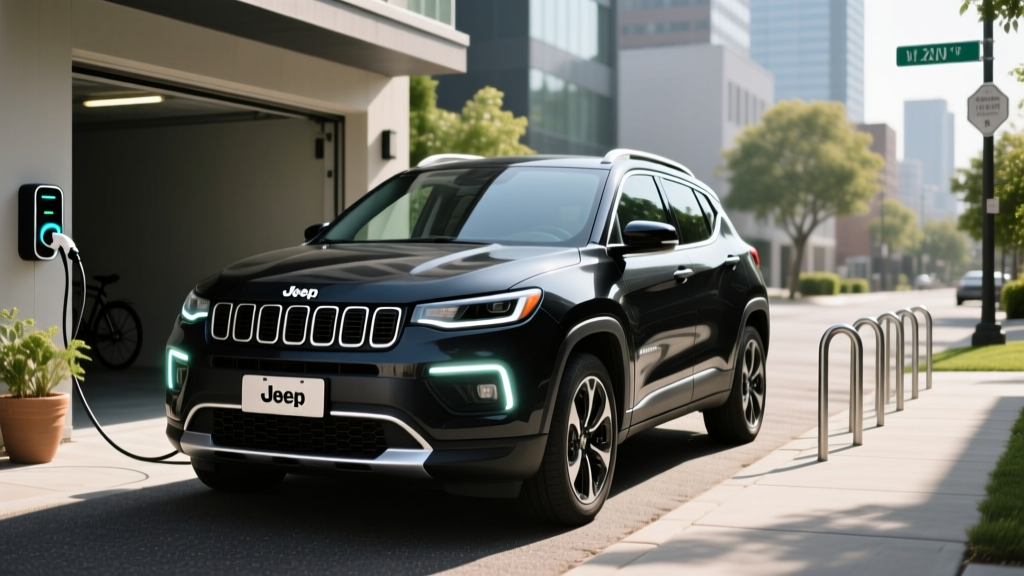
The 2026 Jeep Compass EV is Stellantis' first all-electric compact SUV for the U.S. market, built on the STLA Medium platform. Expect an EPA-estimated range of approximately 250–300 miles depending on trim, a usable battery capacity near 70–80 kWh, and DC fast-charging capability up to roughly 150–175 kW. Pricing is anticipated to start in the low-to-mid $40,000s before incentives. It directly competes with the Hyundai Ioniq 5, Volkswagen ID.4, and Tesla Model Y in the compact electric crossover segment. If you need off-road credibility with daily electric commuting and have access to Level 2 home charging, the Compass EV is worth a serious look — but if you regularly tow, drive in extreme cold, or lack reliable charging access, a plug-in hybrid alternative like the Jeep Compass 4xe may serve you better.
What We Know About the 2026 Jeep Compass EV So Far
Stellantis confirmed the next-generation Jeep Compass for global markets will be fully electric, leveraging the STLA Medium architecture shared with upcoming Peugeot, Citroën, and Alfa Romeo models. For the U.S. market, the Compass EV slots below the Jeep Recon and Wagoneer S in Stellantis' expanding electric lineup. While final EPA certification numbers are still pending at the time of writing, here's what we can piece together from STLA Medium platform data, European homologation filings, and Stellantis' stated targets:
| Specification | Estimated / Announced |
|---|---|
| Platform | STLA Medium (BEV) |
| Battery Chemistry | NMC (nickel manganese cobalt) |
| Usable Battery Capacity | ~70–80 kWh (estimated) |
| EPA Range (est.) | 250–300 miles |
| Peak DC Fast Charge | ~150–175 kW |
| 10–80% DC Charge Time | ~25–32 minutes (est.) |
| Level 2 AC Charging | ~11 kW onboard charger |
| Drivetrain | FWD standard; AWD available |
| Horsepower | ~200–240 hp (trim-dependent) |
| 0–60 mph | ~6.5–7.5 sec (est.) |
| Starting MSRP (est.) | $42,000–$48,000 |
| Federal Tax Credit (§30D) | Up to $7,500 — eligibility TBD on battery sourcing |
| Battery Warranty | 8 years / 100,000 miles (expected) |
Important caveat: These are preliminary figures based on platform-level data and Stellantis announcements. The EPA has not yet published official range or efficiency numbers for the U.S.-spec Compass EV. We will update this guide when final certification data is available via fueleconomy.gov.
Real-World Range: What to Actually Expect
EPA range stickers tell only part of the story. Based on the STLA Medium platform's efficiency profile and comparable vehicles in this class, here's a realistic breakdown:
Range Reality Check
- EPA estimate: ~270 miles (mid-range AWD trim, anticipated)
- Highway driving (70–75 mph): ~220–240 miles — aerodynamic drag hits all SUVs hard at speed
- Cold weather (below 32°F): ~190–215 miles — NMC batteries lose 20–30% capacity in deep cold without preconditioning
- City / mixed suburban: ~260–280 miles — regenerative braking recovers energy in stop-and-go traffic
The Compass EV is expected to feature a heat pump for cabin heating, which significantly reduces cold-weather range loss compared to resistive heating systems. If you live in northern states where winter temperatures regularly drop below freezing, plan your daily driving around ~70% of the EPA sticker figure to avoid surprises. Preconditioning the battery while plugged in — warming it to optimal temperature before departure — will recover some of that lost range and improve DC fast-charging speeds in cold weather.
Charging: Home, Public, and What It Costs
Charging logistics will make or break your Compass EV ownership experience. Here's what you need to know across all three charging levels:
| Level | Power (kW) | Miles Added/Hour | Use Case |
|---|---|---|---|
| Level 1 (120V outlet) | ~1.4 kW | ~4–5 mi/hr | Overnight trickle; emergency only |
| Level 2 (240V home) | ~11 kW | ~35–40 mi/hr | Daily home charging; full charge in 7–8 hours |
| DC Fast Charging | ~150–175 kW peak | ~180+ mi in 30 min | Road trips; 10–80% in ~25–32 minutes |
Home Charging Installation Costs
A Level 2 home charger (240V, 48-amp circuit) is practically essential for daily EV ownership. Here's what installation typically costs:
| Item | Cost Range |
|---|---|
| Level 2 charger hardware (ChargePoint, Wallbox, Emporia) | $350–$700 |
| Electrician labor (240V/50A circuit run) | $500–$2,000 |
| Electrical panel upgrade (if needed, 100A → 200A) | $1,500–$3,500 |
| Permits and inspection | $50–$300 |
| Total (no panel upgrade) | $900–$3,000 |
| Total (with panel upgrade) | $2,400–$6,500 |
Always get a quote from a licensed electrician before purchasing. Many utility companies offer rebates of $250–$500 for home charger installation — check with your local provider.
Charging Cost vs. Gasoline
| Factor | Compass EV | Gas Compass (AWD, 27 MPG combined) |
|---|---|---|
| Energy source | Electricity (~$0.14/kWh national avg.) | Gasoline (~$3.40/gal) |
| Consumption rate | ~32 kWh/100 mi (est.) | ~3.7 gal/100 mi |
| Annual energy cost (home charging) | ~$538 | ~$1,500 |
| Annual energy cost (public DC only) | ~$1,100–$1,350 | ~$1,500 |
The savings gap narrows considerably if you rely exclusively on public DC fast charging at $0.35–$0.48/kWh. Home charging is where EV economics truly shine. Without reliable home or workplace charging, the Compass EV's operating cost advantage over the gas model shrinks dramatically.
EV vs. Gas vs. PHEV: Which Compass Is Right for You?
Jeep offers (or will offer) multiple Compass powertrains. Here's how they compare for different buyer profiles:
Compass Powertrain Decision Framework
Choose the Compass EV if:
- You have Level 2 home or workplace charging
- Your daily commute is under 80 miles round-trip
- You want the lowest per-mile operating cost
- You rarely tow (EV towing capacity is typically limited to ~1,500–2,000 lbs)
- You drive fewer than 300 miles between charging opportunities
Choose the Compass 4xe (PHEV) if:
- You lack reliable home charging but want some electric driving
- You take frequent road trips into charging-desert regions
- You need towing capacity above 2,000 lbs
- You want electric-only commuting (~25–30 miles) with gas backup
Choose the gas Compass if:
- Your budget is strictly under $30,000
- You live in a rural area with zero public charging infrastructure
- You regularly tow trailers or carry heavy loads
- You drive in extreme cold (-20°F or below) for extended periods
Federal Tax Credit and Total Cost of Ownership
The IRS §30D clean vehicle credit offers up to $7,500 for qualifying new EVs, but eligibility is not guaranteed for the Compass EV. The credit splits into two halves:
- $3,750 — Battery components: Must be manufactured or assembled in North America (percentage thresholds increase annually)
- $3,750 — Critical minerals: Must be sourced from the U.S. or a free-trade-agreement partner country
Additionally, buyer income caps apply ($150,000 single / $300,000 joint filers), and the vehicle MSRP must not exceed $80,000 for SUVs. Stellantis has not confirmed whether the U.S.-spec Compass EV battery pack will meet sourcing requirements for the full $7,500, the partial $3,750, or neither. The point-of-sale transfer option allows dealers to apply the credit as a down-payment reduction at purchase if you qualify.
Always verify current eligibility on the IRS website or with a tax professional before counting the credit toward your budget. Rules have shifted multiple times since 2023 and continue to evolve.
5-Year Ownership Cost Estimate
| Category | Compass EV (AWD) | Gas Compass (AWD) |
|---|---|---|
| Purchase price (est., mid-trim) | $46,000 | $33,000 |
| Federal tax credit | –$3,750 to –$7,500 | $0 |
| Home charger install | $1,500 | $0 |
| Fuel / electricity (5 years) | $2,700 | $7,500 |
| Maintenance (5 years) | $1,200 | $3,000 |
| Insurance (5 years, avg.) | $7,500 | $6,000 |
| Estimated depreciation | $18,000 | $14,000 |
| Estimated 5-Year Total | ~$55,650–$59,400 | ~$63,500 |
The EV breaks even or pulls ahead over five years primarily through fuel and maintenance savings — no oil changes, fewer brake replacements (regenerative braking reduces pad wear), and fewer moving parts. However, EV insurance premiums run 15–25% higher on average due to elevated repair costs, and depreciation remains uncertain for newer EV nameplates. These figures are estimates; actual costs vary by state, driving habits, and electricity rates.
Common Misconceptions About the Compass EV
| Myth | Fact |
|---|---|
| "EVs don't work in cold weather" | Range drops 20–30% in sub-freezing temps, but the Compass EV's expected heat pump mitigates cabin-heating energy draw. Preconditioning while plugged in recovers much of the loss. |
| "The battery will need replacing in 5 years" | NMC batteries in modern EVs are engineered for 200,000+ miles before reaching 70–80% capacity. The expected 8-year/100,000-mile warranty covers premature degradation. |
| "I'll save $7,500 no matter what" | The §30D credit depends on battery sourcing, your income, and MSRP caps. Many EVs qualify for only $3,750 or nothing. Verify before purchasing. |
| "Public charging is too unreliable" | Networks like Tesla Supercharger (now open to NACS-equipped non-Teslas), Electrify America, and EVgo have improved uptime significantly. Plan road trips with apps like A Better Routeplanner and always have a backup station. |
| "EVs cost more to insure" | True — premiums average 15–25% higher. Get quotes before buying to budget accurately. |
What First-Time EV Buyers Should Know Before Ordering
If the Compass EV is your first electric vehicle, these practical realities will shape your daily experience:
- Charging is a lifestyle shift, not just a car feature. You'll plug in at home every night like charging a phone. If you can't install a Level 2 charger at home or access one at work, EV ownership becomes significantly less convenient.
- Road trips require planning. Unlike gas stations, DC fast chargers may be sparse on rural routes. Use route-planning tools and precondition the battery before arriving at a charger for maximum speed.
- The charge curve matters. Peak charging speed (e.g., 175 kW) only applies between roughly 10–50% state of charge. Above 80%, charging slows dramatically to protect battery health. Plan to charge to 80% on road trips and move on — don't wait for 100%.
- Tires wear faster on EVs. The Compass EV's added battery weight and instant torque increase tire wear by roughly 15–20% compared to the gas model. Budget for replacement tires every 30,000–40,000 miles.
- Regenerative braking changes how you drive. One-pedal driving mode lets you slow down by lifting off the accelerator, reducing brake wear and recovering energy. Most EV owners adapt within a week and prefer it.
Frequently Asked Questions
When will the Jeep Compass EV be available in the U.S.?
Stellantis has announced the next-generation Compass as a global EV, but the U.S. launch timeline has not been precisely confirmed as of early 2026. Industry reports suggest a late-2026 or early-2027 arrival for American dealerships. Monitor jeep.com for official updates.
Will the Jeep Compass EV qualify for the $7,500 federal tax credit?
It depends on battery component manufacturing and critical-mineral sourcing at the time of purchase, as well as your income level and the vehicle's MSRP. Stellantis has not confirmed U.S. battery sourcing details. Check the IRS clean vehicle credit page for the latest eligibility list before committing.
Can the Compass EV tow a trailer?
Compact electric SUVs in this class typically offer towing ratings between 1,500 and 2,250 pounds. This is sufficient for a small utility trailer or a pair of dirt bikes, but not a boat or camper. If you need heavier towing, the gas or PHEV Compass variants will likely offer higher ratings.
What connector does the Compass EV use — NACS or CCS?
Stellantis has indicated its future U.S. EVs will adopt the NACS (Tesla-style) connector, aligning with the broader industry shift. If the Compass EV launches with CCS, adapters will be available for Supercharger access. Confirm the connector type when final U.S. specs are released.
How long will the battery last?
Modern NMC lithium-ion packs are designed to retain 70–80% of original capacity after 150,000–200,000 miles. The expected 8-year/100,000-mile battery warranty covers degradation below a specified threshold (typically 70%). Avoid routinely charging to 100% or draining to 0% to maximize longevity — the 20–80% daily range is ideal.
Is the Compass EV good for off-road driving?
Jeep is expected to offer a Trailhawk variant with enhanced ground clearance, all-terrain tires, and off-road drive modes. However, EV off-roading adds range-drain concerns in remote areas without charging. For serious trail use far from civilization, a gas or PHEV powertrain remains more practical.