Quick Verdict: The Performance Family Hauler
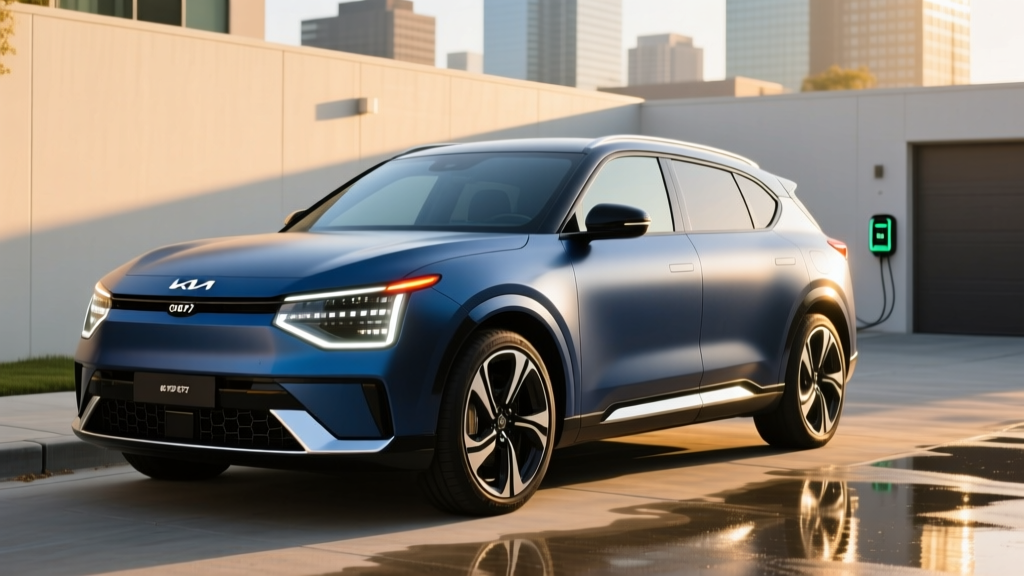
The 2026 Kia EV9 GT is the range-topping, dual-motor performance variant of Kia's three-row electric SUV. With 576 horsepower, a 0-60 mph sprint in roughly 4.5 seconds, and seating for up to seven, it targets buyers who want sports-sedan acceleration in a full-size family hauler. But performance comes at a cost: the EV9 GT sacrifices some efficiency and range compared to the lighter, single-motor EV9 trims, and at a starting MSRP near $73,000, it pushes past the federal tax credit MSRP cap. Here's the full data-driven breakdown of what you're actually getting — and what you're giving up.
Range, Battery & Efficiency: The Real Numbers
Real-World Expectation: Expect roughly 230–250 miles in mixed highway driving at 70+ mph. In cold weather (below 30°F), plan for 190–220 miles depending on cabin heat usage and terrain. The GT's wider 21-inch wheels and stickier summer tires increase rolling resistance versus lower trims.
The EV9 GT uses a 100.0 kWh (usable) NMC (nickel-manganese-cobalt) lithium-ion battery pack mounted beneath the floor. Kia has not switched the GT to LFP chemistry — likely due to the energy-density demands of the heavy, performance-oriented platform. NMC offers higher specific energy but is more sensitive to sustained 100% SoC storage; daily charging to 80% is recommended for longevity.
Efficiency is the trade-off for performance. The GT returns approximately 79 MPGe combined, which translates to roughly 42 kWh per 100 miles. For comparison, the EV9 Light RWD achieves 89 MPGe and 304 miles of EPA range. If maximizing range is your priority, the GT is not the trim to choose.
| Spec | Value |
|---|---|
| EPA Range | ~270 miles |
| Battery (usable) | 100.0 kWh, NMC |
| Drivetrain | Dual-motor AWD |
| Horsepower | 576 hp (combined) |
| Torque | ~516 lb-ft |
| 0-60 mph | ~4.5 seconds |
| Top Speed | ~135 mph (electronically limited) |
| Max DC Fast Charge | 210 kW (peak) |
| 10-80% DC Charge Time | ~24 minutes |
| Level 2 Home Charge Rate | 10.9 kW (~33 mi/hr) |
| MPGe (combined) | ~79 MPGe |
| Efficiency | ~42 kWh/100 mi |
| Towing Capacity | ~4,000 lbs (est., with trailer prep) |
| Cargo (behind 3rd row) | 20.2 cu ft |
| Cargo (2nd row folded) | 43.5 cu ft |
| Cargo (all rows folded) | 81.7 cu ft |
| Base MSRP | ~$73,000 |
| Battery Warranty | 10 yr / 100,000 mi |
| Powertrain Warranty | 10 yr / 100,000 mi |
Charging Speed: DC Fast, Level 2 & Home Setup
The EV9 GT is built on Hyundai Motor Group's E-GMP platform with an 800-volt electrical architecture, which enables some of the fastest DC charging in the three-row SUV segment.
| Level | Power (kW) | Speed (mi/hr added) | Notes |
|---|---|---|---|
| Level 1 (120V household) | ~1.4 kW | ~3–4 mi/hr | Emergency/trickle only; full charge in ~70+ hours |
| Level 2 (240V home/public) | 10.9 kW | ~33 mi/hr | Full 0-100% in ~9.5 hours; ideal overnight |
| DC Fast Charge (peak) | 210 kW | ~650+ mi/hr (peak) | 10-80% in ~24 min; tapers sharply above 80% |
Charging-curve reality check: The 210 kW peak only sustains from roughly 10% to 45% SoC under ideal thermal conditions (battery preconditioned, ambient temp 65–85°F). After 60% SoC, the rate drops to ~120 kW, and above 80% it falls to ~60 kW. If you regularly need to charge past 80% on road trips, budget an extra 15–20 minutes for that final 20%. Kia's official EV9 page includes preconditioning navigation routing — use it.
For home charging, a 48-amp Level 2 wall connector on a dedicated 60-amp circuit will deliver the full 10.9 kW. Expect installation costs of $800–$2,200 depending on panel proximity and whether your home needs a 200-amp service upgrade. The EV9 GT ships with the NACS (Tesla-style) charge port for 2026, giving native access to Tesla Superchargers without an adapter — a significant advantage for road-trip charging reliability.
Performance: 576 Horsepower in a Three-Row SUV
The dual-motor AWD powertrain produces 576 horsepower and approximately 516 lb-ft of torque, split between a front motor (~215 hp) and a rear motor (~361 hp). The GT trim includes a sport-tuned adaptive suspension, larger brakes, and an electronic limited-slip differential on the rear axle.
The 0-60 mph time of roughly 4.5 seconds puts the EV9 GT in the same acceleration ballpark as a Porsche Macan GTS or BMW X5 M50i — except with instant torque delivery and no turbo lag. In practice, the GT feels quicker than the number suggests because electric torque is available from 0 RPM. However, the 5,600+ lb curb weight is noticeable during cornering; this is a straight-line performer, not a canyon carver.
Drive modes include Eco, Normal, Sport, and a GT-exclusive Track mode that stiffens damping, sharpens throttle response, and allows more rear-bias torque distribution. Regenerative braking is adjustable through four levels, with i-Pedal (one-pedal driving) available at the maximum setting.
Interior Space, Tech & Driver Assistance
The EV9 GT seats up to seven (2-3-2 configuration) or six with second-row captain's chairs. Interior dimensions are generous:
- Front legroom: 41.5 inches
- Second-row legroom: 42.8 inches (bench) / 42.0 inches (captain's chairs)
- Third-row legroom: 32.0 inches — usable for children and short-trip adults, tight for long hauls
- Front headroom: 40.2 inches (without panoramic roof)
The GT features a 12.3-inch digital instrument cluster merged with a 12.3-inch central touchscreen in a single curved housing. Wireless Apple CarPlay and Android Auto are standard. The GT adds a head-up display with augmented-reality navigation, a 14-speaker Meridian premium audio system, and digital side mirrors (camera-based, replacing traditional mirror housings — availability varies by state regulation).
On the driver-assistance front, the EV9 GT comes equipped with Kia's Highway Driving Assist 2 (HDA2), a SAE Level 2 system combining adaptive cruise control, lane-centering, and automated lane changes on divided highways. The driver must maintain hands-on-wheel or eyes-on-road engagement at all times. This is not autonomous driving — it's an advanced cruise-and-steering assist.
Pricing, Trims & Federal Tax Credit Eligibility
The 2026 EV9 GT sits at the top of the EV9 lineup. Pricing across the range:
| Trim | Drivetrain | MSRP (est.) | §30D Credit Eligible? |
|---|---|---|---|
| Light | RWD | ~$56,000 | Potentially — under $80K SUV cap |
| Wind | AWD | ~$62,000 | Potentially — under $80K SUV cap |
| Land | AWD | ~$67,500 | Potentially — under $80K SUV cap |
| GT-Line | AWD | ~$70,000 | Potentially — under $80K SUV cap |
| GT | AWD (576 hp) | ~$73,000 | Potentially — under $80K SUV cap |
Federal tax credit (§30D) analysis for the EV9 GT: The IRS classifies the EV9 as an SUV, which carries an $80,000 MSRP cap (vs. $55,000 for sedans). At ~$73,000 base, the GT clears the MSRP threshold. However, eligibility depends on several factors that change frequently:
- Buyer income caps: Modified AGI must not exceed $300,000 (joint), $225,000 (head of household), or $150,000 (single). See IRS §30D guidelines.
- Battery sourcing: The credit is split into two halves — $3,750 for critical-minerals sourcing and $3,750 for battery-component assembly. Sourcing requirements tighten annually; verify current-year compliance on the IRS qualified-vehicle list before purchasing.
- Point-of-sale transfer: As of 2024+, you can transfer the credit to the dealer at purchase, reducing your out-of-pocket cost immediately — even if you owe less than $7,500 in taxes. This is subject to dealer participation.
- Options & destination: A fully loaded GT with packages can push near or past the $80,000 MSRP cap. Confirm the final MSRP (including destination, excluding dealer add-ons) before signing.
Note: Always consult a tax professional and verify eligibility on the official IRS qualified-vehicle list before purchase. Rules are subject to legislative change.
EV9 GT vs. Competitors: How Does It Stack Up?
The three-row electric SUV segment is small but growing. Here's how the EV9 GT compares to its closest rivals:
| Spec | Kia EV9 GT | Rivian R1S Dual-Motor | Tesla Model X Plaid |
|---|---|---|---|
| EPA Range | ~270 mi | ~340 mi (Max Pack) | ~320 mi |
| Battery | 100 kWh NMC | ~149 kWh (Max) | ~100 kWh |
| Horsepower | 576 hp | ~665 hp (Dual Max) | 1,020 hp |
| 0-60 mph | ~4.5 sec | ~4.5 sec | ~2.5 sec |
| DC Fast Charge (peak) | 210 kW | ~220 kW | ~250 kW |
| Seating | 6 or 7 | 5 or 7 | 5, 6, or 7 |
| Cargo (max) | 81.7 cu ft | ~88 cu ft | ~88 cu ft |
| Base MSRP (perf. trim) | ~$73,000 | ~$89,000 (Dual Max) | ~$95,000 (Plaid) |
| Battery Warranty | 10 yr / 100K mi | 8 yr / 175K mi | 8 yr / 150K mi |
The EV9 GT's advantage is clear: it delivers comparable performance to the Rivian R1S and Tesla Model X at a significantly lower price point. The trade-off is range — neither the R1S Max Pack nor the Model X come close to the EV9 GT's ~270-mile EPA figure in their performance trims, but both offer extended-range options the EV9 lacks. If road-trip range is non-negotiable, the Rivian's Max Pack (~340 mi) is the segment leader.
Who Should Buy the EV9 GT (And Who Shouldn't)
- You need three rows but want genuine performance-car acceleration
- You primarily commute and road-trip within a 200-mile radius
- You value Kia's 10-year/100,000-mile battery warranty (best in segment)
- You want native NACS Supercharger access without an adapter
- You want a sub-$80K MSRP to keep the §30D tax credit in play
- Maximum range is your top priority (choose EV9 Wind/Land or Rivian R1S Max Pack)
- You regularly tow heavy loads over long distances (towing cuts range ~40-50%)
- You need a usable third row for full-size adults on long trips
- You live in a region with sparse DC fast-charging infrastructure and need every mile of range
Pros & Cons
- 576 hp and 4.5-sec 0-60 in a 7-seat SUV is remarkable for ~$73K
- 800V architecture enables 210 kW DC charging, 10-80% in ~24 min
- Native NACS port = Tesla Supercharger access without adapter
- 10-year/100,000-mile battery and powertrain warranty
- Spacious 2nd row with 42.8 inches of legroom
- HDA2 is a competent Level 2 highway assist
- Under $80K MSRP cap preserves §30D credit eligibility
- ~270-mi EPA range is the weakest in the EV9 lineup; real-world is lower
- Efficiency at 42 kWh/100 mi is poor vs. lighter EV9 trims
- Third row is tight for adults (32.0 in legroom)
- Heavy curb weight (~5,600 lbs) dulls handling vs. sport sedans
- Cold-weather range drop to ~190-220 mi requires trip planning
- No frunk (front trunk) — E-GMP packaging uses that space for HVAC/components
- Fully optioned GT may approach $80K MSRP cap
Frequently Asked Questions
What is the real-world range of the 2026 Kia EV9 GT?
The EPA estimates ~270 miles, but expect roughly 230–250 miles in mixed highway driving at sustained speeds above 70 mph. In cold weather (below 30°F), range drops to approximately 190–220 miles due to battery thermal management loads and cabin heating. City driving with regenerative braking can match or slightly exceed the EPA figure.
How fast does the EV9 GT charge at home and on the road?
On a Level 2 home charger (240V, 48A), the EV9 GT charges at 10.9 kW, adding about 33 miles of range per hour — a full charge takes roughly 9.5 hours. On a DC fast charger, it peaks at 210 kW and can go from 10% to 80% in approximately 24 minutes under optimal conditions (preconditioned battery, moderate ambient temperature).
Does the 2026 Kia EV9 GT qualify for the $7,500 federal EV tax credit?
It potentially qualifies. The EV9 is classified as an SUV with an $80,000 MSRP cap under §30D, and the GT's ~$73,000 base price fits under that limit. However, your eligibility also depends on income caps ($300K joint / $150K single), battery critical-mineral and component sourcing requirements that tighten annually, and whether the specific build appears on the IRS qualified-vehicle list. Consult IRS.gov and a tax professional before relying on the credit.
Is the EV9 GT worth it versus the Rivian R1S or Tesla Model X?
If you want three-row seating, strong performance, and a sub-$80K price, the EV9 GT is the value leader. The Rivian R1S offers more range (with Max Pack) and better off-road capability but starts ~$16K higher. The Tesla Model X Plaid is far quicker (2.5-sec 0-60) but costs ~$22K more and has a tighter third row. For most families, the EV9 GT's combination of price, warranty, and Supercharger access is the most practical package.
What is the battery warranty on the 2026 EV9 GT?
Kia covers the EV9 GT's battery and powertrain for 10 years or 100,000 miles, whichever comes first. The battery warranty guarantees that capacity will not fall below approximately 70% of original capacity during the warranty period. This is among the longest EV battery warranties in the segment, exceeding Tesla's 8-year/150,000-mile coverage and matching Hyundai's.
Can the EV9 GT tow?
Kia rates the AWD EV9 at approximately 4,000 pounds when equipped with the factory tow package. However, towing at or near capacity will reduce range by 40–50%, meaning a 270-mile EPA range could drop to 135–160 miles. Plan charging stops accordingly if you tow frequently.
Does the EV9 GT have a front trunk (frunk)?
No. The E-GMP platform in the EV9 uses the front compartment for power electronics, HVAC components (including the heat pump), and the front motor. There is no sealed frunk storage. Cargo capacity is limited to the rear cargo area (20.2 cu ft behind the third row, up to 81.7 cu ft with all rows folded).