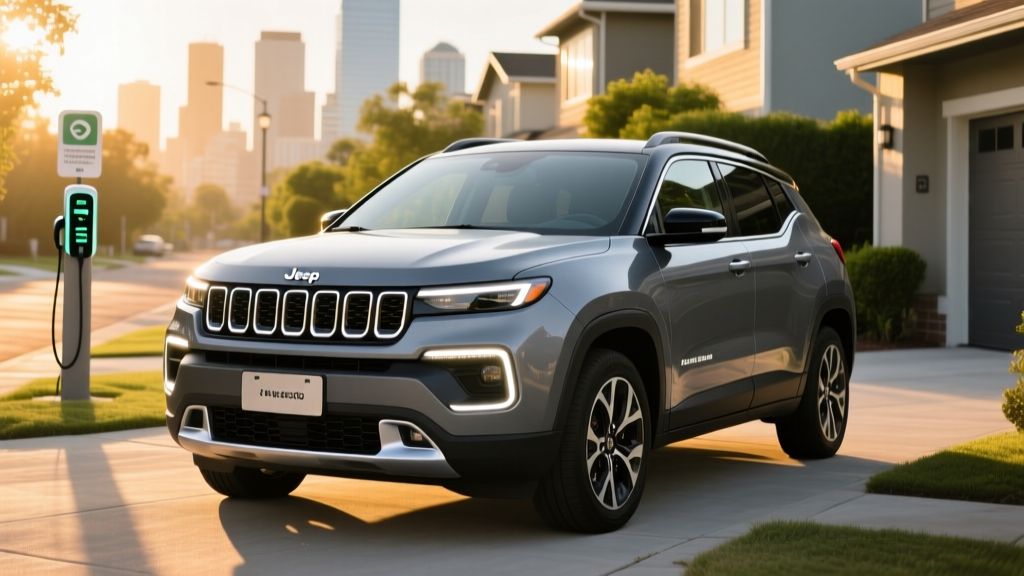
The subcompact EV segment keeps growing, and Stellantis is finally planting its flag in North America with the 2026 Jeep Avenger compact crossover. Originally launched as a Europe-only model in 2023, this smaller, city-friendly SUV has been re-engineered for the U.S. market with a larger battery, revised suspension tuning, and the brand's trademark off-road styling cues. But does a badge known for rugged trail capability translate into a practical daily electric driver?
We spent time with the Avenger 4xe (the all-electric variant) to measure its real-world efficiency, test its charging curve, and evaluate whether its ~$34,000 starting price and potential federal tax credit eligibility make it a serious contender against the Hyundai Kona Electric, Chevrolet Equinox EV, and Kia Niro EV. Here is everything buyers need to know before heading to a dealership.
Range, Battery, and Real-World Efficiency
The U.S.-spec 2026 Jeep Avenger compact crossover is equipped with a 54 kWh usable lithium-ion NMC (nickel manganese cobalt) battery pack mounted beneath the floor. This is an increase over the European model's 51 kWh pack and reflects Stellantis's effort to meet American range expectations.
Real-world expectation: Plan for approximately 215–230 miles during sustained highway driving at 70+ mph, and closer to 180–200 miles in freezing temperatures (below 32°F) with cabin heating active. City and suburban driving with regenerative braking engaged can stretch range to 260+ miles, exceeding the EPA sticker thanks to frequent deceleration energy recapture.
The Avenger achieves an EPA-rated 115 MPGe combined (roughly 29 kWh per 100 miles), which places it mid-pack in the subcompact EV segment. For comparison, the Hyundai Kona Electric returns 129 MPGe combined, while the Chevrolet Equinox EV 2LT FWD earns 118 MPGe. The Avenger's boxy, upright styling — great for the Jeep aesthetic — creates more aerodynamic drag than sleeker competitors, which explains the slight efficiency penalty at highway speeds.
| Spec | Value |
|---|---|
| EPA Range | 250 miles |
| Battery (usable) | 54 kWh, NMC chemistry |
| Efficiency | 115 MPGe / 29 kWh per 100 mi |
| Peak DC Fast Charge | 100 kW |
| 10–80% DC Charge Time | ~30 minutes |
| Level 2 Home Charging | 11 kW (onboard charger) |
| Motor Output | 156 hp / 192 lb-ft torque |
| Drivetrain | FWD (single motor) |
| 0–60 mph | 8.4 seconds |
| Cargo Volume (rear seats up) | 19.0 cu ft |
| Cargo Volume (rear seats folded) | 48.0 cu ft |
| Base MSRP (Sport trim) | $33,995 |
| Battery Warranty | 8 years / 100,000 miles |
Charging Speed: DC Fast and Home Level 2
The Avenger supports a maximum DC fast-charge rate of 100 kW via its CCS1 connector (NACS adapter availability is expected via Stellantis's announced partnership with Tesla's Supercharger network, though a native NACS port is not yet offered on the 2026 model). At peak rate, a 10–80% charge takes approximately 30 minutes.
Here is where the Avenger falls behind some competitors. The Hyundai Kona Electric peaks at 150 kW (10–80% in ~18 minutes), and the Equinox EV can accept up to 150 kW as well. The Avenger's 100 kW ceiling means longer stops on road trips — roughly 12 extra minutes per fast-charge session compared to the segment leaders.
| Charging Level | Power | Miles Added per Hour | Full Charge Time (0–100%) |
|---|---|---|---|
| Level 1 (120V household) | ~1.4 kW | ~5 miles/hr | ~38 hours |
| Level 2 (240V home/public) | 11 kW (max onboard) | ~38 miles/hr | ~5.5 hours |
| DC Fast Charge | 100 kW (peak) | ~200 miles/hr (at peak) | 10–80% in ~30 min |
Charging curve reality check: The Avenger holds near-peak 100 kW rate from roughly 10% to 50% state of charge, then tapers to ~65 kW through 70%, and drops further to ~35 kW above 80%. This is typical for NMC chemistry at this price point, but it means charging from 80–100% at a DC fast charger is painfully slow — plan to charge to 80% and go, rather than waiting for a full top-off.
For home charging, the 11 kW onboard charger is a strong point. On a 48-amp Level 2 circuit (the most common home installation), the Avenger can accept the full 11 kW, adding roughly 38 miles of range per hour. A full overnight charge from 10% takes about 5 hours — easily achievable with off-peak electricity rates.
Performance and Driving Dynamics
The 2026 Avenger is powered by a single front-mounted permanent-magnet electric motor producing 156 horsepower and 192 lb-ft of torque. That routes to the front wheels only — there is no AWD or dual-motor option for the U.S. market at launch, which may disappoint buyers expecting Jeep's legendary 4x4 capability.
The 0–60 mph time of 8.4 seconds is adequate for merging and city driving but trails sportier competitors like the Kona Electric (7.0 seconds with its 201 hp motor). Where the Avenger shines is low-speed torque delivery: the 192 lb-ft is available from 0 rpm, giving it a punchy, responsive feel in stop-and-go traffic and around town.
Ride quality is tuned for comfort over sportiness. The suspension soaks up potholes and speed bumps with composure, and the cabin remains quiet at highway speeds thanks to acoustic laminated front glass. Steering is light and numb — this is not a driver's car, but it is an easy, low-stress commuter.
Ground clearance stands at 7.9 inches, which is respectable for the class and allows light gravel-road and snow-bank capability. Jeep includes Selec-Terrain drive modes (Normal, Eco, Sand, Mud) that adjust throttle mapping and traction control, though without AWD, these are more about traction management than true off-road prowess.
Interior, Tech, and Cargo Practicality
Inside, the Avenger compact crossover uses a 10.25-inch digital instrument cluster and a 10.25-inch touchscreen infotainment system running Stellantis's Uconnect 5 software. Wireless Apple CarPlay and Android Auto are standard across all trims, and the system supports over-the-air updates. A 6-speaker audio system is standard; a 9-speaker Alpine upgrade is available on the Limited trim.
Build quality is a mixed bag. The dashboard features a nice mix of soft-touch materials and textured plastics, but the door panels and lower console use hard, hollow-feeling plastics that feel below what Hyundai and Kia offer at this price. The seats are comfortable for front passengers, but rear legroom is tight at 36.1 inches — adults over 6 feet will feel cramped on longer trips.
Cargo space is competitive: 19.0 cubic feet behind the rear seats and 48.0 cubic feet with the 60/40 split rear seats folded. There is no front trunk (frunk) — the space under the hood is occupied by power electronics. A removable, washable cargo floor liner is a nice Jeep touch for muddy gear or pet hair.
Driver-assistance technology includes standard automatic emergency braking with pedestrian detection, lane-keeping assist, adaptive cruise control with stop-and-go, blind-spot monitoring, and rear cross-traffic alert. This is SAE Level 2 driver assistance — the driver must remain fully engaged with hands on the wheel at all times. There is no hands-free driving feature comparable to GM's Super Cruise or Ford's BlueCruise.
Pricing, Trims, and Federal Tax Credit Eligibility
The 2026 Jeep Avenger compact crossover is offered in three trims for the U.S. market:
| Trim | Base MSRP | Key Features | Est. Price After Max Credit* |
|---|---|---|---|
| Sport | $33,995 | 10.25" screens, wireless CarPlay/AA, 17" wheels, adaptive cruise | ~$26,495 |
| Latitude | $37,495 | Adds heated seats/steering wheel, power liftgate, roof rails, 18" wheels | ~$29,995 |
| Limited | $41,495 | Adds leather, panoramic roof, Alpine audio, 360° camera, ambient lighting | ~$33,995 |
*Estimated price assumes full $7,500 federal tax credit eligibility. Actual credit amount and eligibility depend on IRS §30D requirements.
Does the Jeep Avenger qualify for the federal EV tax credit? Based on preliminary Stellantis guidance and current IRS §30D rules, the Avenger is expected to qualify for at least a partial credit ($3,750–$7,500) when purchased new, subject to the following requirements:
- MSRP cap: The Avenger's base MSRP falls under the $80,000 SUV/truck cap — all trims qualify on price.
- Buyer income limits: Modified adjusted gross income must not exceed $150,000 (single), $225,000 (head of household), or $300,000 (joint filers).
- Battery sourcing: The critical minerals and battery component requirements phase in annually. For 2026, a percentage of battery components must be manufactured or assembled in North America, and a percentage of critical minerals must be sourced from the U.S. or free-trade-agreement partners. Stellantis has not published full sourcing documentation for the U.S.-spec Avenger at time of writing — verify on fueleconomy.gov before purchasing.
- Point-of-sale transfer: Eligible buyers can transfer the credit to the dealer at purchase, reducing the out-of-pocket price immediately rather than waiting for a tax refund.
Important: Tax credit eligibility rules change frequently and depend on battery supply-chain details that can shift model year to model year. Consult a tax professional and verify current eligibility on irs.gov before making a purchase decision.
How It Compares to Key Competitors
The subcompact electric crossover segment in 2026 is stacked. Here is how the Avenger stacks up against its three most direct rivals:
| Spec | Jeep Avenger | Hyundai Kona Electric | Chevy Equinox EV 2LT | Kia Niro EV |
|---|---|---|---|---|
| EPA Range | 250 mi | 261 mi | 319 mi | 239 mi |
| Battery | 54 kWh NMC | 64.8 kWh NMC | 85 kWh NMC | 64.8 kWh NMC |
| DC Fast Charge Peak | 100 kW | 150 kW | 150 kW | 85 kW |
| 10–80% Time | ~30 min | ~18 min | ~20 min | ~44 min |
| HP | 156 hp | 201 hp | 213 hp | 201 hp |
| 0–60 mph | 8.4 sec | 7.0 sec | 7.9 sec | 7.2 sec |
| Cargo (seats up) | 19.0 cu ft | 25.5 cu ft | 26.4 cu ft | 18.5 cu ft |
| Base MSRP | $33,995 | $32,975 | $33,600 | $39,600 |
| MPGe (combined) | 115 | 129 | 118 | 113 |
Choose the Hyundai Kona Electric if: You want the fastest charging in the segment, more cargo room, sportier acceleration, and slightly better range at a lower starting price.
Choose the Chevrolet Equinox EV if: Maximum range (319 mi) and interior space are your top priorities, and you plan to take regular road trips.
Choose the Kia Niro EV if: You want a proven, conservative EV with strong warranty coverage and don't mind slower DC charging.
Pros and Cons
- Competitive starting price under $34,000
- Distinctive Jeep design with real ground clearance (7.9")
- Comfortable, quiet ride quality for daily commuting
- Strong 11 kW Level 2 onboard charger for fast home charging
- Uconnect 5 infotainment is responsive and user-friendly
- 8-year / 100,000-mile battery warranty
- 100 kW DC fast-charge peak lags segment leaders (150 kW)
- No AWD or dual-motor option available
- Rear seat legroom is tight (36.1") for taller adults
- Cargo space (19.0 cu ft) is below Kona and Equinox
- Real-world highway range drops to ~215–230 miles
- Hard plastics on door panels and lower interior
Who Should Buy the Jeep Avenger Compact Crossover?
The 2026 Avenger is best suited for urban and suburban commuters who have reliable home charging (Level 2), drive fewer than 50 miles round-trip daily, and want an EV with character and brand cachet rather than a plain-Jane appliance. It is a strong choice as a second car in a two-car household, or as a primary vehicle for singles and couples without children who value style and ease of parking over maximum cargo space.
It is not the right pick for frequent road-trippers (the 100 kW charging and 250-mile range mean more stops and longer waits), families who regularly carry rear-seat passengers (legroom is tight), or anyone who needs AWD for snow-belt commuting. Buyers in those categories should look at the Equinox EV 3RS AWD, the Hyundai Ioniq 5, or wait for Stellantis to release a larger, AWD-capable Jeep EV.
Frequently Asked Questions
What is the real-world range of the 2026 Jeep Avenger?
The EPA rates the Avenger at 250 miles. In real-world mixed driving, expect 230–250 miles. Sustained highway driving at 70+ mph drops range to approximately 215–230 miles. In cold weather (below freezing) with the heater running, plan for 180–200 miles. Preconditioning the battery while plugged in helps mitigate cold-weather range loss.
How fast does the Jeep Avenger charge at home and on the road?
On a DC fast charger, the Avenger peaks at 100 kW and charges from 10–80% in approximately 30 minutes. At home on a 240V Level 2 charger (48 amps), the 11 kW onboard charger adds about 38 miles of range per hour, fully replenishing the battery in roughly 5.5 hours. Level 1 (120V) trickle charging adds about 5 miles per hour — only suitable for emergency or very low-mileage use.
Does the Jeep Avenger qualify for the $7,500 federal EV tax credit?
The Avenger is expected to qualify for at least a partial federal tax credit ($3,750–$7,500) under IRS §30D, as its MSRP falls well under the $80,000 SUV cap. However, eligibility depends on battery-component and critical-mineral sourcing requirements that change annually, plus buyer income limits ($150K single / $300K joint). Verify current eligibility on fueleconomy.gov and consult a tax professional before purchasing. The credit can be transferred to the dealer at point of sale for an immediate price reduction.
Is the Jeep Avenger worth buying over the Hyundai Kona Electric or Chevy Equinox EV?
It depends on your priorities. The Avenger offers distinctive styling, a comfortable ride, and a competitive price. However, the Kona Electric charges significantly faster (150 kW vs 100 kW), offers more cargo room, and accelerates quicker — all at a slightly lower base price. The Equinox EV delivers substantially more range (319 vs 250 miles) and interior space. Choose the Avenger if Jeep brand appeal and rugged design matter to you; choose the Kona or Equinox for pure practicality.
Does the Jeep Avenger have all-wheel drive?
No. The 2026 U.S.-spec Avenger is front-wheel drive only, with a single electric motor. Stellantis has not announced an AWD or dual-motor variant for the North American market. If AWD is essential, consider the Hyundai Ioniq 5 AWD, Chevrolet Equinox EV AWD, or the upcoming Jeep Recon, which is expected to offer 4x4 electric capability.
What is the battery warranty on the Jeep Avenger?
Stellantis covers the Avenger's battery pack for 8 years or 100,000 miles, whichever comes first. The warranty guarantees the battery will retain a minimum percentage of its original capacity (typically 70% or above) during the coverage period. The basic vehicle warranty is 3 years / 36,000 miles, and the powertrain warranty (motor, reduction gear) is 5 years / 60,000 miles.
Can the Jeep Avenger use Tesla Superchargers?
Stellantis has announced plans to provide NACS adapters for CCS-equipped vehicles to access Tesla's Supercharger network. As of the 2026 model year, the Avenger ships with a CCS1 port. A NACS adapter is expected to be available (likely as a dealer-installed accessory or included with certain trims), but confirm adapter availability and Supercharger compatibility with your dealer before relying on Tesla's network for travel.