The Short Answer on Jaguar Land Rover's EV Delay
Jaguar Land Rover (JLR) has postponed the launch of its next-generation all-electric vehicles multiple times since the original 2021 "Reimagine" strategy announcement. As of early 2026, the new Jaguar electric GT — previewed by the Type 00 concept — is now expected to begin deliveries in late 2026 at the earliest, while the first all-electric Land Rover model has slipped to 2027. The delays stem from JLR's shift away from a shared platform with fellow Tata Motors subsidiary to a proprietary in-house architecture, compounded by software integration challenges and supply-chain retooling. For buyers who were counting on a Jaguar or Land Rover EV, the practical reality is this: you will not be able to purchase and take delivery of a new all-electric Jaguar or Land Rover until the 2027 model year at the earliest. If you need an electrified luxury vehicle now, you'll need to look at current alternatives or consider JLR's existing plug-in hybrid (PHEV) lineup.
Timeline of the Jaguar Land Rover Electric Vehicle Delay
Understanding how we got here helps set realistic expectations for when these vehicles will actually reach driveways.
- February 2021: JLR CEO Thierry Bolloré announces the "Reimagine" strategy — Jaguar goes all-electric by 2025, Land Rover launches six EVs by 2026.
- Mid-2022: New CEO Adrian Mardell acknowledges the timeline is "under review" as JLR pivots from a shared Tata/Jaguar platform to developing its own architecture internally.
- 2023: Successor CEO Adrian Mardell confirms Jaguar's first EV is delayed to 2025. Bolloré's original platform decision is scrapped entirely.
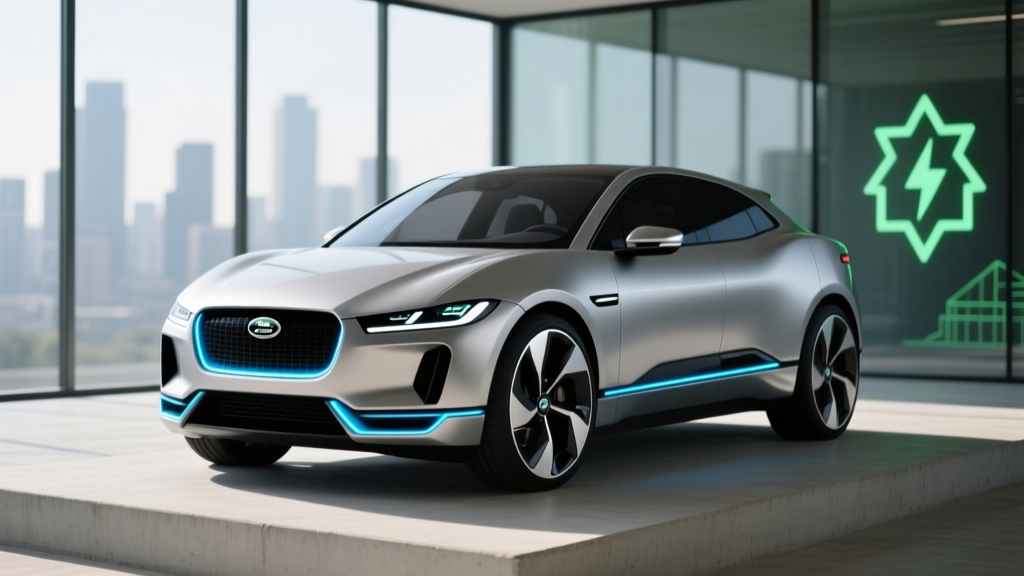
- Late 2023: Jaguar unveils the Type 00 concept at Miami Art Week, signaling a radical upmarket repositioning — a grand-touring EV targeting the Bentley/Porsche price bracket rather than competing with the BMW i4 or Mercedes EQE.
- 2024: Jaguar confirms a three-model EV family on its new "JEA" (Jaguar Electric Architecture) platform. First production model expected late 2025. Land Rover's first EV pushed to "later this decade."
- 2025: Further delays surface in automotive trade press. The first Jaguar EV slips to late 2026/early 2027 deliveries. Land Rover's electric Range Rover is now pegged for 2027.
- Early 2026: JLR maintains its commitment to an all-electric future but has not opened reservations or published final EPA-certified specifications for any production model.
The core issue: JLR chose to build its EV platform from scratch rather than leverage existing architecture from Tata or a partner like Magna Steyr. That decision preserves brand differentiation but has cost the company years of development time while competitors like Porsche, BMW, Mercedes-Benz, and Genesis have launched or refreshed entire EV lineups.
What We Know About the Upcoming Jaguar EV Specs (Preliminary)
Because no production Jaguar EV has been EPA-certified or officially priced as of early 2026, every figure below is based on JLR's public statements, concept-car disclosures, and industry analysis. Treat these as estimated targets, not confirmed specifications.
| Specification | Estimated Target |
|---|---|
| Platform | JEA (Jaguar Electric Architecture) — proprietary |
| Battery Capacity | ~100–120 kWh (NMC chemistry expected) |
| EPA Range (Target) | ~370–430 miles (unconfirmed) |
| Powertrain | Dual-motor AWD, estimated 600+ hp |
| 0–60 mph | Under 4.0 seconds (target) |
| DC Fast Charging | 800V architecture; peak rate TBD (target 250+ kW) |
| Body Style | Four-door grand tourer (low-slung GT, not SUV) |
| Starting Price (Estimated) | $100,000–$130,000+ |
| Federal §30D Tax Credit | Unlikely to qualify — exceeds MSRP cap for sedans ($55,000) and likely fails battery-sourcing requirements |
JLR has emphasized that the new Jaguar will be a fundamentally different brand — more exclusive, higher-priced, and lower-volume than the outgoing XE, XF, and F-Pace. The company has stated it will produce fewer units at higher margins, positioning Jaguar closer to Porsche and Bentley than to its former self.
How JLR's Current PHEV Lineup Compares to Waiting for the EV
If you're a JLR loyalist who wants some electrification now, the brand's existing plug-in hybrid models are the only option. Here's how they stack up against the promise of a future all-electric Jaguar or Land Rover.
| Factor | Current JLR PHEVs (2026 MY) | Upcoming JLR All-Electric (Est.) |
|---|---|---|
| Availability | Order now, deliver in weeks | Late 2026 / 2027 at earliest |
| Electric-Only Range | ~19–37 miles (EPA, varies by model) | ~370–430 miles (target, unconfirmed) |
| Combined MPGe / MPG | ~35–50 MPGe (electric mode); 19–22 MPG (gas-only) | ~90–110 MPGe (estimated) |
| Charging | Level 2 only (7.2 kW onboard); no DC fast charge on most trims | 800V DC fast charge (250+ kW target) |
| Fuel Cost (Annual, 12k mi) | ~$1,200–$1,800 (mixed electric/gas driving) | ~$500–$700 (all-electric, at $0.14/kWh national avg) |
| Maintenance | Oil changes, spark plugs, transmission fluid still required | No engine maintenance; brake pad life extended via regen |
| Tailpipe Emissions | Zero in EV mode; gas engine emits CO₂ when active | Zero tailpipe emissions |
| Price Range | $70,000–$115,000 MSRP | $100,000–$130,000+ (estimated) |
The current PHEV lineup — including the Range Rover P460e, Range Rover Sport P460e, and Defender P400e — offers genuine electric-only commuting capability for short trips. The Range Rover P460e, for instance, delivers an EPA-estimated 37 miles of electric range with a 31.8 kWh battery. That covers most daily commutes without burning a drop of fuel. But on longer trips, you're back to a 3.0L inline-six burning premium gasoline at roughly 20 MPG combined.
Real-world ownership note: PHEVs only deliver their efficiency promise if you charge them regularly. Owners who don't plug in nightly end up driving a heavy luxury SUV at gas-only MPG — often worse than a comparable non-hybrid because of the extra battery weight. If you lack reliable home charging access, a PHEV's advantage shrinks considerably.
Cost Breakdown: Buying Now vs. Waiting for JLR's EV
Let's model a realistic five-year ownership scenario comparing a current Range Rover P460e PHEV against a hypothetical 2027 Jaguar electric GT, and against a comparable competitor EV available today.
| Cost Category | Range Rover P460e PHEV ($108k MSRP) | Porsche Taycan 4S ($107k MSRP) | Est. Jaguar EV GT (2027, ~$115k) |
|---|---|---|---|
| Purchase Price | $108,000 | $107,000 | $115,000 (est.) |
| Federal Tax Credit (§30D) | $0 (exceeds MSRP cap) | $0 (exceeds MSRP cap) | $0 (likely, per MSRP + sourcing) |
| Energy (5 years) | $7,500 (gas + electricity mix) | $3,200 (electricity only) | $3,000 (est., electricity) |
| Maintenance (5 years) | $4,500 (engine + EV systems) | $2,200 (EV only) | $2,000 (est.) |
| Insurance (5 years) | $12,000 | $13,500 | $13,000 (est.) |
| Estimated Depreciation | ~$54,000 (50%) | ~$48,000 (45%) | TBD — new brand positioning |
| 5-Year Total Cost | ~$186,000 | ~$173,900 | ~$185,000 (est.) |
Sources: Energy costs based on fueleconomy.gov data and a national electricity average of $0.14/kWh. Insurance estimates from industry averages for luxury vehicles in this price class. Depreciation figures are estimates based on segment norms — the Jaguar's unprecedented repositioning makes its residual value highly uncertain.
The Porsche Taycan, available now, delivers lower operating costs and avoids the ongoing engine maintenance of a PHEV. The hypothetical Jaguar EV may land in a similar cost bracket, but you're paying a premium for exclusivity and waiting at least another year — possibly two — to take delivery.
Competitor EVs You Can Actually Buy Right Now
The Jaguar Land Rover electric vehicle delay means buyers in the $80,000–$140,000 luxury EV segment have well-established alternatives. Here's how the field looks in 2026:
- Porsche Taycan (2026 refresh): Up to 318 miles EPA range, 800V architecture with peak 270 kW DC charging (10–80% in ~19 minutes), 0–60 in 2.4 seconds (Turbo GT). Starting at ~$92,000. The benchmark for performance-luxury EVs.
- BMW i7 xDrive60: 318 miles EPA, 101.7 kWh NMC battery, peak 195 kW DC charging (10–80% in ~28 min), 0–60 in 4.5 seconds. Starting at ~$120,000. Full-size luxury sedan with available Level 2 highway assist.
- Mercedes-Benz EQS 450+: Up to 390 miles EPA (2026 update), 118 kWh battery, peak 200 kW DC charging (10–80% in ~31 min). Starting at ~$105,000. The range leader in this segment.
- Genesis Electrified GV70: 236 miles EPA, 77.4 kWh battery, peak 240 kW DC charging (10–80% in ~18 min). Starting at ~$67,000. More affordable, but smaller and shorter-range.
- Lucid Air Grand Touring: 516 miles EPA — the longest-range luxury EV available. 112 kWh battery, peak 300+ kW charging. Starting at ~$125,000. If range is your priority, nothing else comes close.
Each of these is orderable today with known EPA figures, verified charging curves, and established service networks. The Jaguar's exclusivity and design appeal are real draws, but they come with the risk of an unproven platform, no confirmed service infrastructure for an all-new brand identity, and at least another 12–18 months of waiting.
Common Misconceptions About the JLR EV Delay
| Myth | Fact |
|---|---|
| "JLR abandoned its EV plans entirely." | False. JLR has invested billions in its JEA platform and a new dedicated EV production line at its Solihull, UK plant. The program is active, not canceled. |
| "The delays mean the technology is behind." | Not necessarily. JLR's 800V architecture targets competitive charging speeds. The delay is primarily about platform-development strategy and software integration, not battery-cell limitations. |
| "I can reserve a Jaguar EV now." | As of early 2026, JLR has not opened public reservations for any production electric Jaguar. Any "waitlist" is an unofficial expression-of-interest form, not a binding reservation. |
| "The new Jaguar will qualify for the $7,500 federal tax credit." | Highly unlikely. Under current IRS §30D rules, sedans must have an MSRP under $55,000 to qualify. The Jaguar EV's estimated $100,000+ price eliminates it immediately. Even the SUV/van/truck cap of $80,000 would exclude it. Buyer income limits also apply. |
| "Land Rover's electric Range Rover is coming in 2026." | Unlikely. The electric Range Rover has been pushed to 2027 or later based on recent industry reports. The current Range Rover P460e PHEV remains the most electrified option. |
Decision Framework: Should You Wait or Buy Now?
If-Then Guide for JLR EV Buyers
Wait for the Jaguar EV if:
- You are specifically drawn to Jaguar's new design direction and upmarket brand positioning, and no current competitor excites you the same way.
- Your current vehicle has at least 18–24 months of reliable life left, so the wait doesn't force a compromise purchase.
- You prioritize exclusivity and low production volume over proven service networks and established resale-value data.
- You have reliable home Level 2 charging already installed (240V, 48-amp circuit minimum) and are prepared for an 800V-capable DC fast-charging ecosystem.
Buy a competitor EV now if:
- You need a vehicle within the next 3–6 months.
- You want verified EPA range data, confirmed charging speeds, and published safety ratings from NHTSA or IIHS before committing six figures.
- You value an established dealer and service network — especially important for a luxury EV where software updates, battery diagnostics, and collision repair require specialized training.
- You drive more than 15,000 miles per year and want to start saving on fuel costs immediately rather than continuing to pay premium gasoline prices.
Buy a JLR PHEV now if:
- You are committed to the Land Rover or Range Rover brand and need an SUV — no competitor matches the Defender or Range Rover's combination of off-road capability and luxury.
- Your daily commute is under 35 miles round-trip and you can charge at home every night, allowing you to drive almost entirely on electricity during the week.
- You frequently take long road trips where a pure EV's charging stops would be inconvenient on your routes (e.g., rural areas with sparse DC fast-charging infrastructure).
Real-World Ownership Considerations Before You Commit
Whether you wait for JLR's EV or buy a competitor now, these factors apply to any luxury EV purchase in 2026:
Home charging is non-negotiable for satisfaction. Every EV ownership survey shows that owners with home Level 2 charging report dramatically higher satisfaction than those relying on public charging. Budget $800–$2,500 for a professional Level 2 installation (240V, 48-amp dedicated circuit with a NEMA 14-50 outlet or hardwired wall connector). If your electrical panel is at capacity, a panel upgrade to 200A can add $1,500–$3,500. Without home charging, a $100,000+ EV becomes an expensive inconvenience.
Cold weather reduces range 20–40%. If you live in a climate where winter temperatures regularly drop below freezing, the Jaguar's estimated 400-mile target could realistically deliver 240–320 miles in January. Competitors like the BMW i7 and Porsche Taycan use heat-pump-based thermal management systems to mitigate this, but physics is physics — expect less range when it's cold. JLR has not published details on its thermal management approach.
Insurance costs are higher. Luxury EVs typically cost 15–25% more to insure than their gas counterparts due to battery replacement costs, specialized repair requirements, and higher parts prices. Budget $2,500–$3,500 annually for comprehensive coverage on a $100,000+ EV, depending on your state, driving record, and insurer.
Charging on road trips requires planning. Even with 800V architecture and 250+ kW peak charging, real-world DC fast charging follows a curve: you'll see peak speeds between roughly 10–50% state of charge, with significant tapering above 80%. A "10–80% in 20 minutes" claim means the last 20% could take another 25–30 minutes. Plan road-trip stops around 15–25 minute breaks at chargers spaced 150–200 miles apart, and always have a backup charging location in your route plan.
Frequently Asked Questions
When will I be able to buy a fully electric Jaguar?
Based on the most recent reports as of early 2026, the first production electric Jaguar — a four-door GT — is expected to begin deliveries in late 2026 or early 2027. However, JLR has missed multiple prior deadlines, so further delays remain possible. No reservations are currently open.
Will the electric Land Rover / Range Rover come out before the Jaguar?
No. The all-electric Range Rover has been pushed to 2027 or later. The Jaguar EV is expected to reach market first, though both timelines remain subject to change. The current Range Rover P460e PHEV is the most electrified Range Rover available now.
Will Jaguar's new EV qualify for the federal $7,500 tax credit?
Almost certainly not. Under current IRS §30D rules, passenger cars (sedans) must have an MSRP under $55,000, and SUVs/trucks/vans under $80,000. The Jaguar EV's estimated $100,000+ price exceeds both caps. Additionally, strict battery-component and critical-mineral sourcing requirements disqualify many luxury EVs regardless of price. Always consult a tax professional for your specific situation.
Should I buy a Jaguar F-Pace or I-Pace now before they're discontinued?
The I-Pace (Jaguar's current all-electric SUV, launched in 2019) has been effectively discontinued — it uses aging 90 kWh battery tech with 234 miles of EPA range and relatively slow 100 kW peak DC charging. It's not competitive with 2026 EVs. The F-Pace is a conventional gas vehicle outside our coverage scope. If you want a current Jaguar, the PHEV models offer the most modern electrified powertrain, but they are stopgap products, not the brand's future direction.
What's the best luxury EV I can buy right now instead of waiting for Jaguar?
It depends on your priorities. For driving dynamics and charging speed: Porsche Taycan. For maximum range: Lucid Air Grand Touring (516 mi EPA). For full-size luxury: BMW i7. For value: Genesis Electrified GV70. Each has verified specs, established service networks, and available inventory today.
How much will it cost to charge a Jaguar EV at home?
Assuming a ~110 kWh battery and a national average electricity rate of $0.14/kWh, a full home charge would cost roughly $15.40. Over a year of 12,000 miles at an estimated 3 miles/kWh efficiency, annual home-charging cost would be approximately $560. Compare that to $2,400+ per year in premium gasoline for a comparable luxury gas vehicle averaging 20 MPG at $4.00/gallon.