The Quick Answer: Who Should Buy the Jaguar I-PACE?
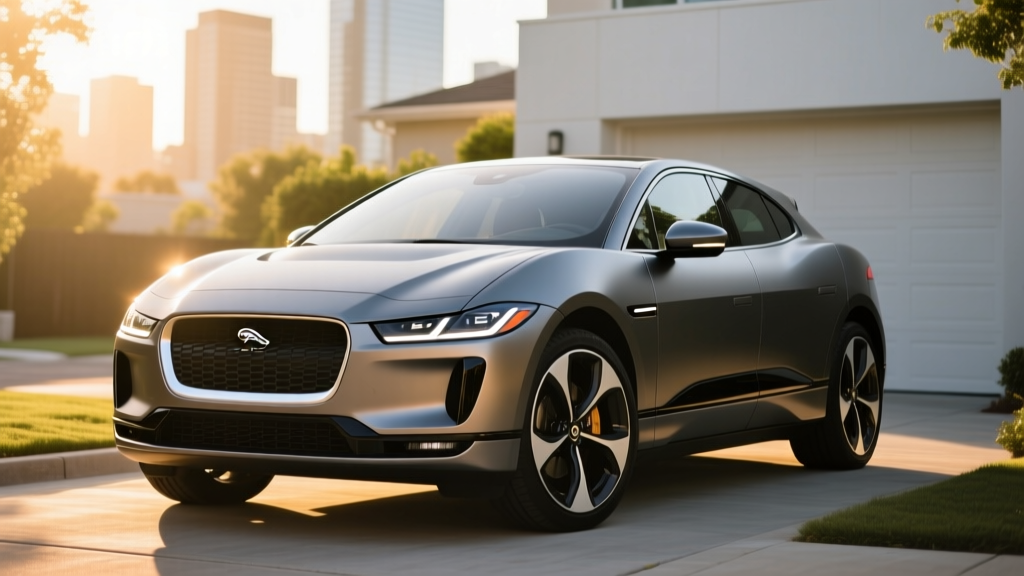
Bottom line: The Jaguar I-PACE is a premium electric SUV best suited for buyers who prioritize driving dynamics and design over maximum range or cutting-edge charging speeds. With an EPA-estimated 246 miles of range, a 90 kWh battery, and peak DC fast charging at 100 kW (10–80% in roughly 45 minutes), it trails newer rivals like the BMW iX and Genesis Electrified GV70 on efficiency metrics. However, its 394 hp, standard all-wheel drive, and sports-car handling make it one of the most engaging EVs in its class. If you have reliable Level 2 home charging, drive under 200 miles daily, and value ride quality over spec-sheet dominance, the I-PACE delivers. If you frequently road-trip or live in a charging desert, look elsewhere.
Jaguar I-PACE Specs at a Glance
| Specification | 2026 Jaguar I-PACE |
|---|---|
| EPA Range | 246 miles |
| Battery (usable) | 90 kWh (NMC lithium-ion) |
| Drivetrain | Dual-motor AWD |
| Horsepower / Torque | 394 hp / 512 lb-ft |
| 0–60 mph | 4.5 seconds |
| Peak DC Fast Charge | 100 kW (CCS) |
| 10–80% DC Charge Time | ~45 minutes |
| Level 2 Charge Rate | 11 kW (~7.5 hours, 0–100%) |
| EPA Efficiency | 76 MPGe combined |
| Battery Warranty | 8 years / 100,000 miles |
| Base MSRP (approx.) | ~$73,100 |
Real-World Range Reality: The EPA rates the I-PACE at 246 miles, but expect roughly 210–225 miles in mixed highway driving at 70+ mph. In cold weather (below 30°F), plan for 175–195 miles due to battery resistance and cabin heating demands. The I-PACE lacks a heat pump, which increases energy consumption in winter compared to rivals like the Hyundai Ioniq 5 or BMW iX that use one. Source: fueleconomy.gov.
How the I-PACE Compares to a Gas Luxury SUV
The most common cross-shop for the I-PACE is a midsize luxury gas SUV like the Porsche Macan or BMW X5. Here is how the numbers stack up over five years of ownership, assuming 12,000 miles per year, $0.14/kWh home electricity, $3.70/gallon gas, and no major repairs.
| Cost Factor (5 Years) | Jaguar I-PACE EV | Gas Luxury SUV (22 MPG avg) |
|---|---|---|
| Purchase Price (base) | $73,100 | $62,000 |
| Fuel / Electricity | $4,200 | $12,100 |
| Maintenance (est.) | $1,800 | $4,500 |
| Insurance (est.) | $12,500 | $10,800 |
| Federal Tax Credit (§30D) | Check eligibility* | $0 |
| Estimated 5-Year Total | ~$91,600 | ~$89,400 |
*The §30D federal EV tax credit has strict MSRP caps ($80,000 for SUVs), buyer income limits, and battery-sourcing requirements. The I-PACE may or may not qualify depending on your tax year and Jaguar's supply chain compliance. Always verify current eligibility on irs.gov or consult a tax professional.
The I-PACE saves roughly $7,900 in fuel and maintenance over five years, but its higher purchase price and insurance premiums narrow the gap. The financial case strengthens if you qualify for the tax credit, have cheap overnight electricity (under $0.10/kWh), or drive more than 12,000 miles annually.
Charging Realities: What I-PACE Owners Need to Know
The I-PACE uses a CCS1 connector for DC fast charging and a J1772 inlet for Level 2. Its 100 kW peak charge rate is the single biggest ownership consideration in 2026. Here is what that means practically:
| Charging Level | Power | Miles Added per Hour | Best Use Case |
|---|---|---|---|
| Level 1 (120V household) | ~1.4 kW | ~3–4 miles | Emergency / overnight top-up only |
| Level 2 (240V home) | 11 kW | ~30 miles | Daily charging — full charge overnight |
| DC Fast Charge | Peak 100 kW | ~150 miles in 30 min | Road trips (plan extra stops) |
Home charging is nearly mandatory. A full Level 2 charge takes about 7.5 hours — plug in at 10 PM, wake up to a full battery at 6 AM. Without home or workplace Level 2 access, the I-PACE's 100 kW DC charging speed becomes a liability. At a 150 kW Electrify America station, the I-PACE cannot pull more than 100 kW, meaning a 10–80% session takes roughly 45 minutes. Compare that to a Hyundai Ioniq 5, which peaks at 240 kW and completes the same session in about 18 minutes.
Charge curve taper matters. The I-PACE holds close to its peak 100 kW rate between 10–50% State of Charge (SoC), then tapers to roughly 60–70 kW above 60%, and slows further above 80%. On road trips, plan to charge from 10–60% for the fastest stops rather than waiting for 80%.
Myths vs. Facts About the Jaguar I-PACE
| Myth | Fact |
|---|---|
| "The battery will need replacing in a few years." | Jaguar warranties the battery for 8 years/100,000 miles against degradation below 70% capacity. Real-world NMC data suggests 10–15% degradation over 8 years with normal use. |
| "I can charge it at any Tesla Supercharger." | The I-PACE uses CCS1, not NACS. As of 2026, Tesla Supercharger access for non-Tesla CCS vehicles is limited to select stations with Magic Dock adapters — check the Tesla app before relying on this. |
| "It qualifies for the full $7,500 federal tax credit." | Eligibility depends on battery critical-mineral sourcing, your income, and the $80,000 SUV MSRP cap. Verify annually at irs.gov — rules change. |
| "246 miles of range isn't enough." | The average American drives 37 miles per day (FHWA data). 246 miles covers 95%+ of daily needs with home charging. Range matters most on road trips — plan accordingly. |
| "EVs cost more to insure." | Often true. The I-PACE's premium status and repair costs push insurance 10–20% higher than comparable gas SUVs. Get quotes before buying. |
Real-World Ownership Considerations
Climate and Cold Weather
The I-PACE does not have a heat pump, which means cabin heating in winter draws directly from the 90 kWh battery. In sustained sub-freezing temperatures, expect a 20–30% range reduction. If you live in Minnesota, Montana, or upstate New York, your effective winter range drops to roughly 175–195 miles. Preconditioning the cabin while plugged in (via the Jaguar InControl app) mitigates this significantly.
Home Charging Installation
Budget $800–$2,500 for a professional Level 2 charger installation (40-amp or 50-amp circuit, hardwired or NEMA 14-50). If your electrical panel is maxed out or you need a 200-amp service upgrade, costs can reach $3,000–$5,000. Always get a quote from a licensed electrician before purchasing the vehicle.
Maintenance
The I-PACE eliminates oil changes, spark plugs, and transmission fluid. Brake wear is significantly reduced thanks to regenerative braking. Expect to replace cabin air filters, wiper blades, brake fluid (every 2–3 years), and tires (EVs wear tires faster due to instant torque and heavier weight — budget $1,200–$1,800 for a set of premium all-seasons every 30,000–40,000 miles).
Driving Dynamics
This is where the I-PACE earns its keep. The dual-motor AWD system delivers 394 hp and 512 lb-ft of torque with instantaneous response. The 0–60 mph time of 4.5 seconds beats most gas SUVs in its price range. The low center of gravity (battery pack mounted in the floor) gives it cornering composure that taller EVs cannot match. If driving engagement matters to you, the I-PACE remains a standout.
Decision Framework: Should You Buy the Jaguar I-PACE?
Buy the I-PACE if:
- You have Level 2 charging at home or work
- Your daily driving is under 180 miles
- You value handling, ride quality, and design over spec-sheet dominance
- You road-trip fewer than 4–5 times per year and can plan charging stops
- You want a luxury EV that does not look or feel like every other crossover
Look elsewhere if:
- You rely solely on public DC fast charging (the 100 kW peak is slow for 2026)
- You regularly drive 300+ miles in a day — the 246-mile EPA range and 45-minute charge stops add up
- You live in extreme cold and need maximum winter range (consider a heat-pump-equipped rival)
- You want the latest ADAS features — the I-PACE's driver-assist suite is competent but not class-leading
- You need three rows of seating or maximum cargo space (the I-PACE seats five and offers 25.3 cu ft of cargo behind the rear seats)
Frequently Asked Questions
Does the Jaguar I-PACE qualify for the federal EV tax credit?
Possibly. The §30D credit requires the vehicle MSRP to be at or below $80,000 (SUV cap), your income to fall under IRS thresholds ($300,000 joint / $150,000 single), and the battery to meet critical-mineral and component sourcing rules. Jaguar's eligibility status can change year to year. Check the latest list at fueleconomy.gov and confirm with a tax professional before relying on the credit.
How long does the I-PACE battery last?
Jaguar warranties the high-voltage battery for 8 years or 100,000 miles, guaranteeing it retains at least 70% of original capacity. NMC chemistry batteries typically degrade 1–2% per year under normal use. At that rate, expect roughly 85–90% capacity after 8 years. A full battery replacement out of warranty is expensive — estimated at $15,000–$22,000 — but rarely needed within the first decade.
Can the I-PACE use Tesla Superchargers?
Not directly. The I-PACE has a CCS1 charge port. Tesla's NACS connector is different. Some Tesla Supercharger stations now offer a "Magic Dock" CCS adapter for non-Tesla vehicles, but availability is limited. For reliable DC fast charging, use Electrify America, EVgo, or ChargePoint networks that natively support CCS. Jaguar does not currently offer a NACS adapter for the I-PACE.
What does it cost to charge the I-PACE at home?
A full 90 kWh charge at the US average residential rate of $0.16/kWh costs about $14.40 and yields roughly 246 miles of range. That equates to about $0.059 per mile — compared to $0.168 per mile for a gas SUV averaging 22 MPG at $3.70/gallon. Over 12,000 miles per year, home charging saves approximately $1,300 annually versus gasoline.
Is the I-PACE still worth buying against newer EVs?
It depends on your priorities. Newer EVs like the BMW iX xDrive50 (324-mile range, 150 kW charging) and Genesis Electrified GV70 (236-mile range, 200+ kW charging) surpass the I-PACE on efficiency metrics. But the I-PACE's ride quality, steering feel, and interior craftsmanship remain competitive. If you can find a certified pre-owned model at a discount, the value proposition improves significantly.
How does the I-PACE handle on road trips?
Plan for charging stops every 180–200 miles. At 100 kW peak, a 10–80% session takes about 45 minutes. Use apps like PlugShare or A Better Routeplanner to map CCS stations along your route. The I-PACE's navigation system can precondition the battery for faster charging when a DC station is set as your destination — always use this feature to minimize charge time.
Final Word
The Jaguar I-PACE is not the EV with the best spec sheet in 2026 — and it never claimed to be. It is a driver's electric SUV that trades range and charging speed for dynamics, comfort, and distinctive design. If that trade-off aligns with how you actually drive and charge, it remains a rewarding ownership experience. If you need maximum efficiency, look to the BMW iX, Hyundai Ioniq 5, or Tesla Model Y. Test-drive the I-PACE with a full charge on a winding road, then decide with data — not marketing — in hand.