Quick Verdict: The AMG EQS Is a Luxury Missile With Real Range
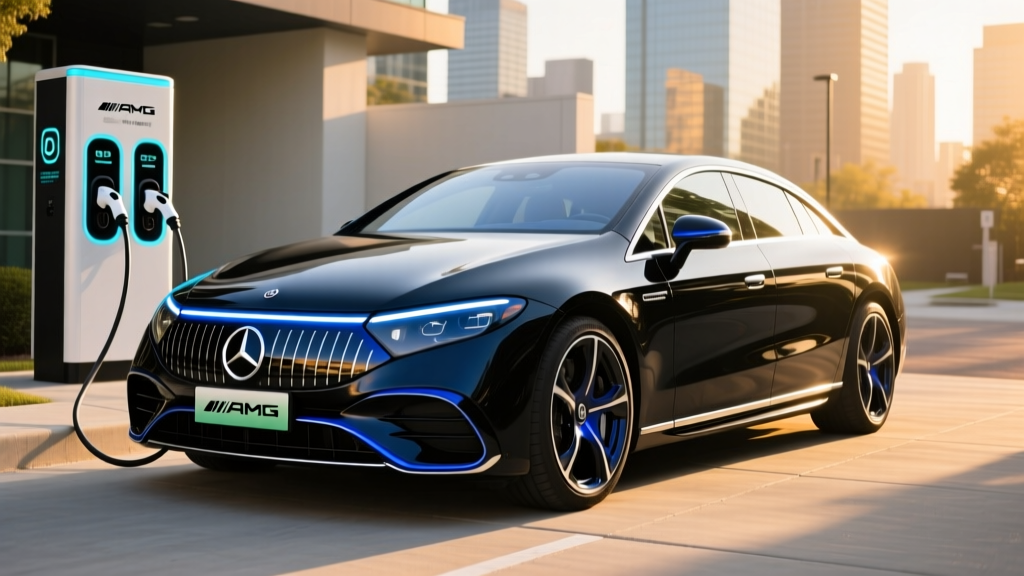
The 2026 Mercedes-AMG EQS 53 4MATIC+ occupies a rare corner of the EV market: a full-size luxury sedan that delivers supercar-rivaling acceleration while still offering over 300 miles of EPA-rated range. Built on Mercedes' dedicated EVA2 platform, the AMG-tuned EQS pairs a 118 kWh usable battery with dual-motor all-wheel drive and a performance-oriented suspension. It's a six-figure statement piece, but one that functions as a legitimate daily driver — not just a spec-sheet showpiece.
For buyers cross-shopping the Porsche Taycan Turbo S, Tesla Model S Plaid, or BMW i7 M70, the AMG EQS offers the most interior space, the most efficient highway cruising, and one of the smoothest DC fast-charging curves in the segment. But its weight, price, and limited federal tax credit eligibility will narrow the buyer pool considerably.
Range, Efficiency, and Real-World Expectations
Real-World Expectation: ~270–295 miles highway at 70–80 mph; ~230–260 miles in freezing weather with cabin heat; up to 340+ miles in mild city/suburban driving with regen.
The AMG EQS 53 carries a 118 kWh usable battery pack (120 kWh gross) using NMC (nickel manganese cobalt) chemistry, optimized for energy density over the cycle-life advantages of LFP. The EPA rates it at 330 miles combined — a strong figure for a 5,700+ lb performance sedan. Efficiency lands at approximately 78 MPGe combined, or about 41 kWh per 100 miles, per fueleconomy.gov.
In real-world highway driving at sustained 75–80 mph speeds, expect to use roughly 380–420 Wh/mi, translating to 270–295 miles before hitting a comfortable 10% state of charge. Cold weather (below 30°F) introduces a 20–30% range penalty typical of large NMC packs without a dedicated heat pump circuit for the cabin — the EQS uses a resistive PTC heater supplemented by a heat pump for battery thermal management, but cabin heating still draws heavily. City drivers leveraging strong regenerative braking (up to 0.3g of deceleration in D Auto mode) can push past the EPA sticker in mild conditions.
| Spec | Value |
|---|---|
| EPA Range | 330 miles |
| Battery (usable / gross) | 118 kWh / 120 kWh, NMC |
| Efficiency | 78 MPGe / ~41 kWh/100mi |
| Drivetrain | Dual-motor AWD (4MATIC+) |
| Horsepower | 649 hp (751 hp w/ RACE START) |
| Torque | 700 lb-ft (752 lb-ft w/ RACE START) |
| 0–60 mph | 3.4 seconds |
| Top Speed | 155 mph (electronically limited) |
| Max DC Fast Charge | 200 kW (CCS1 / NACS w/ adapter) |
| 10–80% DC Charge Time | ~31 minutes |
| Level 2 AC Charge Rate | 9.6 kW (~28 mi/hr) |
| Cargo Volume | 22.0 cu ft (trunk); 62.5 cu ft (seats folded) |
| Rear Legroom | 41.9 inches |
| Curb Weight | ~5,775 lbs |
| Battery Warranty | 10 years / 155,000 miles |
| Base MSRP | $149,350 (incl. destination) |
Charging Speed: DC Fast, Level 2, and the Charge Curve Reality
| Level | Power / Rate | Miles Added per Hour | Notes |
|---|---|---|---|
| Level 1 (120V) | 1.4 kW | ~3–4 mi/hr | Emergency/top-up only |
| Level 2 (240V, 40A) | 9.6 kW | ~28 mi/hr | Full charge in ~12.5 hrs |
| DC Fast Charge | 200 kW peak | ~180 mi in 15 min (10–50%) | Tapers significantly above 80% SoC |
The AMG EQS peaks at 200 kW on a DC fast charger — competitive with the BMW i7 but below the Porsche Taycan's 800V architecture, which sustains 270+ kW. Mercedes' 400V system means peak rate is achieved only between roughly 10–40% state of charge. From 10–80%, expect approximately 31 minutes at a 350 kW-capable station (the car will only pull what it can accept).
The charge curve is the critical detail most spec sheets obscure. The EQS sustains roughly 170–200 kW from 10–45% SoC, then steps down to ~120 kW through 65%, and drops to ~60 kW by 80%. Charging from 80–100% adds another 40+ minutes — plan road trips to 80% stops unless you're parked overnight. Battery preconditioning activates automatically when a DC fast charger is set as the navigation destination, warming the pack to the ~35°C optimal window for peak charge acceptance.
For home charging, the onboard 9.6 kW AC charger fills the 118 kWh pack in about 12.5 hours from empty — practical for overnight top-ups if you're starting from 20–30% SoC. A 48-amp Level 2 home station (hardwired, NEMA 14-50 or direct-wire) is strongly recommended; a licensed electrician will typically quote $800–$2,200 for installation depending on panel proximity and whether a 200-amp service upgrade is needed.
Performance: What 751 Horsepower Feels Like in a Luxury Sedan
The AMG EQS 53 uses a dual-motor setup with a permanently excited synchronous motor (PSM) on each axle, delivering 649 hp in standard driving and 751 hp with RACE START (AMG's launch control mode). The 0–60 mph sprint clocks in at 3.4 seconds — devastating for a vehicle with the footprint of an S-Class. Torque vectoring via the rear motor and AMG-tuned air suspension with adaptive damping keep the 5,775-lb sedan surprisingly composed through corners, though physics always wins: you'll feel the mass during rapid direction changes.
The AMG-specific drive modes — Slippery, Comfort, Sport, Sport+, and Individual — alter throttle mapping, suspension stiffness, steering weight, and regen intensity. Sport+ firms the air springs noticeably and sharpens the rear-axle steering (standard, up to 4.5 degrees), giving the EQS a turning circle of just 36.7 feet — tighter than many compact sedans. The AMG Performance exhaust sound is synthesized through the Burmester 4D surround system; it's a matter of taste, but the silent default is always available.
Braking is handled by large 16.9-inch front rotors with 6-piston calipers, necessary for a vehicle of this mass and speed. Regenerative braking recovers up to 300 kW, though the blend between regen and friction brakes is occasionally noticeable at low speeds — a minor calibration issue in an otherwise polished package.
Interior, Tech, and the Hyperscreen Experience
The cabin is where the AMG EQS justifies its price most convincingly. The standard MBUX Hyperscreen stretches 56 inches across the dashboard, combining a 12.3-inch driver cluster, a 17.7-inch central OLED touchscreen, and a 12.3-inch front-passenger display into a single curved glass panel. The system runs Mercedes' latest MBUX generation with wireless Apple CarPlay/Android Auto, over-the-air updates, and an AI assistant that learns driver habits for climate and seat-position preferences.
Rear passengers enjoy 41.9 inches of legroom — more than the Taycan and competitive with the BMW i7 — and available rear-seat entertainment screens, heated/ventilated/massaging outboard seats, and a rear-axle tablet for climate and media control. Cargo space is a generous 22.0 cubic feet in the trunk (it's a liftback, not a traditional sedan trunk), expanding to 62.5 cu ft with the 40/20/40 rear seats folded. The frunk is small — about 3 cu ft — limited by the HVAC equipment packaged forward.
Driver assistance includes Mercedes' Drive Pilot system, which is SAE Level 2 driver-assist technology (not self-driving), requiring hands-on-wheel engagement and continuous driver supervision. It includes adaptive cruise with stop-and-go, active lane-keeping, automatic lane-change on confirmation, and evasive steering assist. Mercedes has received conditional approval for Level 3 Drive Pilot in limited jurisdictions (Nevada, California) at speeds up to 40 mph in heavy traffic, but this feature requires separate activation and specific conditions.
Pricing, Trims, and Federal Tax Credit Eligibility
| Trim | Base MSRP | As-Tested (typical options) | Federal §30D Credit |
|---|---|---|---|
| EQS 53 4MATIC+ Sedan | $149,350 | $162,000–$175,000 | Not eligible (MSRP cap exceeded) |
| EQS 53 4MATIC+ SUV | $152,900 | $165,000–$180,000 | Not eligible (MSRP cap exceeded) |
The 2026 Mercedes-AMG EQS 53 starts at $149,350 (including $1,150 destination). With the AMG Night Package, Executive Rear Seat Plus package, and MBUX Hyperscreen already standard, most examples leave the dealership between $160,000 and $175,000.
Federal tax credit: The AMG EQS does not qualify for the IRS §30D clean vehicle credit. The §30D credit imposes an MSRP cap of $55,000 for sedans — the AMG EQS exceeds this by nearly 3x. Even the base EQS 450+ sedan ($105,550 MSRP) falls well above the cap. Buyers at this price point should consult a tax professional about potential state-level incentives (California's CVRP is income-capped and unlikely to apply; some states offer luxury-EV exemptions or utility rebates for home charger installation). Per IRS §30D guidelines, the MSRP cap is strict regardless of buyer income or battery sourcing.
Ownership costs beyond purchase price include premium insurance (expect $3,800–$5,500/year depending on state and driving record), tire replacement (AMG-specific 21-inch Michelin Pilot Sport EV tires run $450–$600 each), and electricity costs that average roughly $0.14/kWh nationally — making a full charge approximately $16.50 at home vs. $90+ for an equivalent tank of premium fuel in an AMG S 63.
Pros, Cons, and Who Should Buy the AMG EQS
Pros
- 330-mile EPA range is class-leading for a performance sedan
- Exceptional cabin quietness and ride quality at highway speeds
- 751 hp RACE START delivers supercar acceleration in a 4-door
- Generous rear legroom and liftback cargo versatility
- Smooth, predictable DC charge curve with good preconditioning
- 10-year/155,000-mile battery warranty exceeds industry standard
- Standard rear-axle steering gives surprisingly tight turning radius
Cons
- $149K+ base price; no federal tax credit eligibility
- 5,775-lb curb weight is felt during aggressive cornering
- 200 kW DC peak is below Porsche Taycan's 800V capability
- Resistive cabin heating hurts cold-weather range vs. full heat pump
- Hyperscreen UI can be distracting; too many touch-only controls
- Depreciation risk is high — luxury EVs lose value faster than ICE equivalents
- AMG ride is firm in Sport+; daily comfort requires Comfort mode
Who the AMG EQS Is For
Choose the AMG EQS if: You want a daily-drivable luxury performance sedan with real 300+ mile range, prioritize interior space and technology over outright track capability, and your budget comfortably exceeds $150K without tax-credit reliance.
Look elsewhere if: You want the fastest-charging EV in the segment (Porsche Taycan Turbo GT), the lowest price-per-horsepower (Tesla Model S Plaid), or need federal tax credit eligibility (no luxury EV qualifies at current MSRP caps).
How the AMG EQS Stacks Up Against Key Rivals
Against the Porsche Taycan Turbo S ($190K+), the AMG EQS offers 50% more rear legroom, 100+ more miles of EPA range, and a smoother ride — but the Taycan's 800V architecture charges at 270+ kW and its chassis dynamics are a generation ahead on canyon roads. The Tesla Model S Plaid ($89,990) is faster to 60 (1.99 sec claimed) at half the price, but its interior quality, NVH levels, and ride comfort don't compete in this luxury tier. The BMW i7 M70 ($169,795) is the closest direct rival — similar size, similar price, 657 hp — but its 318-mile EPA range and less distinctive interior design give the AMG EQS a slight edge in daily livability.
Frequently Asked Questions
What is the real-world range of the Mercedes-AMG EQS?
The EPA rates it at 330 miles combined. In real-world highway driving at 70–80 mph, expect 270–295 miles. In freezing temperatures with cabin heat, plan for 230–260 miles. City driving with regenerative braking in mild weather can exceed the EPA figure.
How fast does the AMG EQS charge at home and on the road?
At home on a Level 2 (240V, 40A) charger, it adds roughly 28 miles per hour, filling the pack in about 12.5 hours. On DC fast chargers, it peaks at 200 kW and charges from 10–80% in approximately 31 minutes. The charge curve tapers significantly above 80% SoC.
Does the Mercedes-AMG EQS qualify for the federal EV tax credit?
No. The IRS §30D clean vehicle credit has an MSRP cap of $55,000 for sedans. The AMG EQS starts at $149,350, making it ineligible regardless of buyer income or battery sourcing. Consult a tax professional for any applicable state or utility incentives.
Is the AMG EQS worth buying over the Porsche Taycan or Tesla Model S?
It depends on priorities. The AMG EQS offers the best combination of range, interior space, and luxury refinement in the segment. The Taycan wins on charging speed and driving dynamics; the Model S Plaid wins on price-to-performance. For daily luxury grand touring, the AMG EQS has the strongest case.
What is the battery warranty on the AMG EQS?
Mercedes covers the high-voltage battery for 10 years or 155,000 miles (whichever comes first), with a capacity retention threshold of 70% state of health. This exceeds the federal minimum of 8 years/100,000 miles and is competitive with BMW's 8-year/100,000-mile coverage.
Does the AMG EQS have a heat pump for cold weather?
The EQS uses a heat pump for battery thermal management but relies on a resistive PTC heater for cabin heating. This draws more energy in cold weather than a full cabin heat pump system (as found in the Hyundai Ioniq 5 or Tesla Model Y), contributing to the 20–30% range loss in sub-freezing conditions.
Can the AMG EQS use Tesla Superchargers?
Mercedes has adopted the NACS (North American Charging Standard) connector for newer models. For 2026 EQS models equipped with CCS1, a Mercedes-approved NACS adapter enables access to Tesla Supercharger V3 and V4 stations. Confirm connector type at point of purchase, as the transition is ongoing across model years.
Sources: EPA fueleconomy.gov, Mercedes-Benz USA, IRS §30D Clean Vehicle Credit.