The Quick Answer: Is the All Electric Jaguar Worth It in 2026?
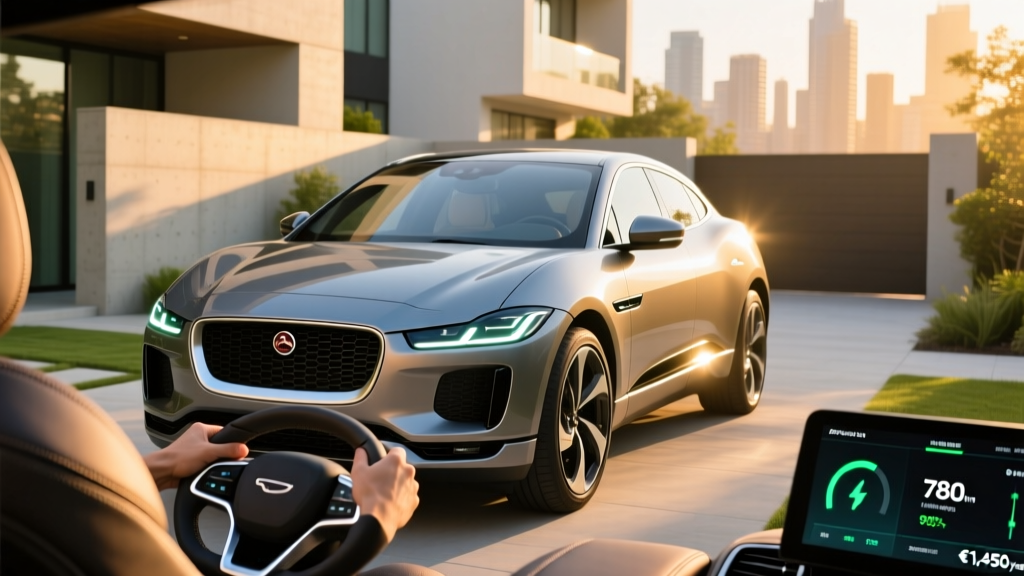
The all electric Jaguar I-PACE remains one of the most distinctive luxury EVs on the market, pairing 246 miles of EPA-estimated range with a 100 kWh battery, 394 horsepower, and genuine sports-sedan dynamics in an SUV body. Starting at approximately $73,100 (before incentives), the I-PACE competes with the BMW iX, Audi Q8 e-tron, and Tesla Model X. However, its 100 kW peak DC fast-charging speed is a genuine limitation for road-trippers, and real-world highway range often lands closer to 200–215 miles. For daily commuting and weekend drives under 150 miles, the I-PACE delivers exceptional refinement. For frequent 300+ mile road trips, its charging curve will test your patience.
2026 I-PACE Specifications: The Numbers That Matter
| Specification | 2026 Jaguar I-PACE |
|---|---|
| EPA Range | 246 miles |
| Battery Capacity (Usable) | 90 kWh (NMC chemistry, 100 kWh gross) |
| Peak DC Fast Charge Rate | 100 kW |
| 10–80% DC Charge Time | ~45 minutes |
| Level 2 AC Charge Rate | 11 kW (7.2 kW on some trims) |
| Level 2 0–100% Time | ~10 hours (11 kW) |
| 0–60 mph | 4.5 seconds |
| Horsepower / Torque | 394 hp / 512 lb-ft |
| MPGe (Combined) | 76 MPGe |
| Efficiency | 44 kWh/100 mi |
| Drivetrain | Dual-motor AWD |
| Cargo Volume | 25.3 cu ft (rear seats up) / 51.0 cu ft (folded) |
| Base MSRP (R-Dynamic S) | ~$73,100 |
| Battery Warranty | 8 years / 100,000 miles (70% capacity retention) |
| Vehicle Warranty | 5 years / 60,000 miles |
Real-World Range vs. EPA Sticker
The EPA rates the I-PACE at 246 miles, but real-world results vary significantly by condition. In mild weather (60–75°F) with mixed city/highway driving, expect 220–235 miles. At sustained highway speeds of 75+ mph, range drops to roughly 200–215 miles. In cold weather (below 32°F), plan for 170–195 miles due to battery resistance and cabin heating demands. The I-PACE lacks a heat pump on older model years, which exacerbates winter range loss — verify whether your specific model year includes one before purchasing.
Charging the I-PACE: Home, Public, and the 100 kW Limitation
The I-PACE's charging profile is the single biggest ownership variable to understand before buying. Here is a breakdown by charging level:
| Charging Level | Power (kW) | Miles Added per Hour | Typical Use Case |
|---|---|---|---|
| Level 1 (120V household) | ~1.4 kW | ~3 mi/hr | Emergency / trickle only |
| Level 2 (240V home, 48A) | 11 kW | ~25 mi/hr | Daily home charging |
| DC Fast Charge (peak) | 100 kW | ~220 mi/hr (peak) | Road trips, public stations |
The 100 kW ceiling is the critical number. While competitors like the BMW iX (up to 195 kW), Hyundai Ioniq 5 (up to 240 kW), and Tesla Model X (up to 250 kW on V3 Superchargers) can accept significantly more power, the I-PACE physically cannot charge faster than 100 kW on DC. This means a 10–80% session takes roughly 45 minutes at a compatible station — compared to 18–25 minutes in faster-charging rivals.
For daily driving with home Level 2 charging, this limitation is irrelevant. You plug in overnight and wake up with a full battery. But if your lifestyle involves regular road trips exceeding 200 miles between stops, the slower DC rate adds meaningful time to each journey. On a 500-mile trip, expect three charging stops of ~30–40 minutes each, versus two stops of ~20 minutes in a faster-charging EV.
Home Charging Setup Costs
Most I-PACE owners will want a Level 2 home charger. Budget for the following:
- Level 2 charger hardware (48A): $400–$700 (e.g., ChargePoint Home Flex, Emporia Vue, Wallbox Pulsar Plus)
- Electrical panel assessment: $100–$250 (if your panel is near capacity, a 200A upgrade can add $1,500–$3,000)
- 240V circuit installation (50A breaker, 6-gauge wire): $500–$2,000 depending on run length and conduit needs
- Permits: $50–$200 depending on locality
- Total typical install: $1,000–$3,000 (without panel upgrade)
Always hire a licensed electrician and pull permits — improper EV charger installations create fire risk and may void insurance coverage. Check whether your utility offers rebates for Level 2 installations; many do.
I-PACE vs. Gas SUV: Cost of Ownership Over 5 Years
The most common question from luxury SUV shoppers: does going electric actually save money? Here is a concrete 5-year comparison between the I-PACE and a comparable gas-powered luxury SUV (using the BMW X5 xDrive40 as a baseline at ~$65,000 MSRP, 24 MPG combined).
| Cost Category (5 Years / 75,000 Miles) | Jaguar I-PACE (EV) | BMW X5 xDrive40 (Gas) |
|---|---|---|
| Purchase Price (base) | $73,100 | $65,000 |
| Federal Tax Credit (§30D) | $0–$7,500 (see eligibility below) | $0 |
| Fuel / Electricity | $3,750–$5,250 (home + public mix) | $9,375 (at $3.00/gal, 24 MPG) |
| Maintenance (oil, filters, brakes) | $1,200–$1,800 | $3,500–$4,500 |
| Insurance (average) | $10,500–$13,000 | $8,500–$10,500 |
| Depreciation (est. 5-yr) | ~55–60% ($40,200–$43,800) | ~45–50% ($29,250–$32,500) |
| Estimated Total 5-Year Cost | $85,000–$95,000 | $83,000–$90,000 |
Key takeaway: The I-PACE saves significantly on fuel and maintenance — roughly $5,000–$7,000 over five years. However, higher insurance premiums (EVs typically cost 15–25% more to insure due to repair costs and parts pricing) and steeper depreciation (a persistent issue for Jaguar specifically and luxury EVs broadly) largely offset those savings. The I-PACE is not a budget decision; it is a refinement and performance decision with modest operating-cost benefits.
Federal Tax Credit Eligibility (§30D)
Under current IRS §30D rules, the I-PACE's tax-credit eligibility is uncertain and depends on battery-sourcing and critical-mineral requirements that change annually. Key constraints for buyers:
- MSRP cap: SUVs must be under $80,000 — the I-PACE base qualifies, but loaded trims may exceed the cap
- Income cap: AGI must not exceed $150,000 (single) / $300,000 (joint) / $225,000 (head of household)
- Battery sourcing: Critical minerals and battery components must meet escalating domestic-content thresholds
- Point-of-sale transfer: If eligible, the credit can be applied at the dealership to reduce the purchase price directly
Verify current-year eligibility on the IRS website and with your Jaguar dealer before assuming a $7,500 credit. Rules tighten each year, and Jaguar's supply-chain sourcing may or may not qualify in any given model year. Consult a tax professional for your specific situation.
Common Misconceptions About the All Electric Jaguar I-PACE
| Myth | Fact |
|---|---|
| "The I-PACE charges as fast as a Tesla." | The I-PACE peaks at 100 kW DC. A Tesla Model X on a V3 Supercharger peaks at 250 kW — roughly 2.5x faster in the 10–80% window. |
| "I'll get 246 miles on the highway." | EPA range includes city driving with regenerative braking. Sustained 75-mph highway driving typically yields 200–215 miles. Cold weather reduces this further. |
| "The battery will need replacing soon." | Jaguar warranties the battery for 8 years/100,000 miles at 70% capacity retention. NMC batteries in liquid-cooled packs like the I-PACE typically degrade 1.5–2.5% per year under normal use. At 10 years, expect ~80–85% original capacity — not a failure point. |
| "EVs have no maintenance costs." | EVs eliminate oil changes, spark plugs, and transmission fluid. But tires wear 20–30% faster due to instant torque and vehicle weight, cabin air filters still need replacing, brake fluid needs periodic flushing, and the 12V auxiliary battery still requires monitoring. |
| "I can charge anywhere with any plug." | The I-PACE uses a CCS1 connector for DC fast charging. It cannot natively use Tesla Superchargers (NACS) without an adapter, and CHAdeMO stations are increasingly rare. Verify network compatibility in your area. |
Who Should (and Shouldn't) Buy the All Electric Jaguar I-PACE
Decision Framework: Is the I-PACE Right for You?
Choose the I-PACE if:
- You have reliable Level 2 home charging and most daily driving is under 100 miles round-trip
- You value distinctive British design, interior craftsmanship, and driving dynamics over maximum range or charging speed
- You rarely take road trips exceeding 200 miles without an overnight stop
- You want a luxury EV that stands apart from the Tesla-dominated landscape
- You can secure a favorable lease or CPO (certified pre-owned) deal that mitigates depreciation risk
Look elsewhere if:
- You frequently drive 300+ mile routes and need fast DC charging (consider the BMW iX, Hyundai Ioniq 5, or Tesla Model X)
- You lack home charging access and rely solely on public infrastructure — the 45-minute charge sessions will frustrate
- You live in extreme cold climates where the I-PACE's winter range drops below 180 miles and you need more buffer
- Minimizing 5-year total cost is your primary goal — the I-PACE's depreciation and insurance premiums work against it
- You need three-row seating or maximum cargo space (the I-PACE is a two-row midsize SUV)
First-Time EV Buyer Checklist for the I-PACE
If the I-PACE is your first electric vehicle, here is what you need to confirm before signing:
- Home charging feasibility: Do you have a garage or dedicated parking spot with access to a 240V circuit or the ability to install one? If you live in an apartment or condo, check whether your building supports EV charging before committing.
- Electrical panel capacity: A licensed electrician should confirm your panel has room for a 50A breaker. If your home has a 100A panel that is already heavily loaded, a panel upgrade adds $1,500–$3,000 to your setup cost.
- Commute and driving pattern audit: Track your typical weekly mileage. If it is under 300 miles and you can charge at home, the I-PACE's range is more than sufficient. If it exceeds 400 miles regularly, consider whether public charging infrastructure exists along your routes.
- Insurance quotes: Get quotes from at least three insurers before purchasing. EV insurance for luxury vehicles can be 20–30% higher than equivalent gas vehicles. Some insurers offer EV-specific discounts.
- Charging network apps: Download and test ChargePoint, EVgo, Electrify America, and PlugShare before buying. Map out DC fast chargers along your most common routes. The I-PACE's CCS1 connector is widely supported, but station reliability varies by network.
- Preconditioning habit: The I-PACE can precondition its battery while plugged in, warming it to optimal temperature for fast charging or efficient driving. Use this feature — it significantly improves DC charge speeds in cold weather and preserves range.
- Tax credit verification: Check IRS §30D for the current model year's eligibility. Do not assume you qualify until you verify income, MSRP, and battery-sourcing requirements.
I-PACE vs. Key Rivals: How the All Electric Jaguar Stacks Up
| Spec | Jaguar I-PACE | BMW iX xDrive50 | Audi Q8 e-tron | Tesla Model X LR |
|---|---|---|---|---|
| EPA Range | 246 mi | 324 mi | 285 mi | 335 mi |
| Battery (Usable kWh) | 90 kWh | 105.2 kWh | 106 kWh | 100 kWh |
| Peak DC Charge (kW) | 100 kW | 195 kW | 170 kW | 250 kW |
| 10–80% DC Time | ~45 min | ~31 min | ~31 min | ~20 min |
| 0–60 mph | 4.5 sec | 4.4 sec | 5.5 sec | 3.8 sec |
| Horsepower | 394 hp | 516 hp | 402 hp | 670 hp |
| Base MSRP | ~$73,100 | ~$87,250 | ~$75,500 | ~$79,990 |
| Cargo (rear seats up) | 25.3 cu ft | 35.5 cu ft | 28.5 cu ft | 44.1 cu ft |
The I-PACE is the most affordable entry in this comparison and offers the most distinctive design language. But it trails every competitor in range, DC charging speed, and cargo space. The BMW iX is the clear road-trip champion with 324 miles of range and 195 kW charging. The Tesla Model X dominates on performance and Supercharger network access. The Audi Q8 e-tron splits the difference with strong refinement and 170 kW charging.
According to fueleconomy.gov, the I-PACE's 76 MPGe combined is competitive within its class but reflects its heavier energy consumption at 44 kWh/100 mi — higher than the more aerodynamic Tesla Model X (34 kWh/100 mi). That efficiency gap directly translates to more frequent charging stops and higher electricity costs per mile.
Frequently Asked Questions
Is the Jaguar I-PACE a good first EV?
It can be, provided you have home Level 2 charging and your daily driving is under 150 miles. The I-PACE drives beautifully and feels like a traditional luxury car in the best way. Its main drawback for first-time EV owners is the 100 kW DC charging speed, which requires more planning on longer trips. If your lifestyle is primarily local with occasional road trips, the I-PACE is an excellent introduction to electric driving.
How long does the I-PACE battery last?
Jaguar warranties the high-voltage battery for 8 years or 100,000 miles against dropping below 70% capacity. Based on industry data for liquid-cooled NMC packs, most I-PACE owners report degradation of roughly 1.5–2.5% per year. At 8 years, expect 80–88% of original capacity — still well above the warranty threshold. Full battery replacement, if ever needed, currently costs approximately $15,000–$20,000, but this is rare under normal ownership.
Can I charge the I-PACE at Tesla Superchargers?
Not natively. The I-PACE uses a CCS1 connector, while Tesla Superchargers use NACS. As of 2026, some networks are opening Supercharger stalls to non-Tesla EVs via a built-in CCS adapter cable at the stall, but availability is limited and growing slowly. For reliable DC fast charging, rely on Electrify America, EVgo, and ChargePoint stations with CCS connectors.
How does cold weather affect the I-PACE?
In temperatures below 32°F, expect a 20–30% reduction in range — from 246 miles EPA down to approximately 170–195 miles. This is due to increased battery internal resistance, cabin heating demands, and reduced regenerative braking efficiency. Preconditioning the battery while plugged in mitigates some of this loss. If you live in a consistently cold climate, this range reduction should factor into your purchase decision.
Is the I-PACE eligible for the $7,500 federal tax credit?
Eligibility depends on the current model year's battery-sourcing compliance under IRS §30D. The I-PACE's base MSRP falls under the $80,000 SUV cap, and qualifying buyers must meet income limits ($300,000 joint / $150,000 single). However, battery component and critical-mineral sourcing requirements tighten each year. Confirm eligibility with your dealer and the IRS before relying on the credit in your budget.