The BMW EV Tax Credit Landscape for 2026
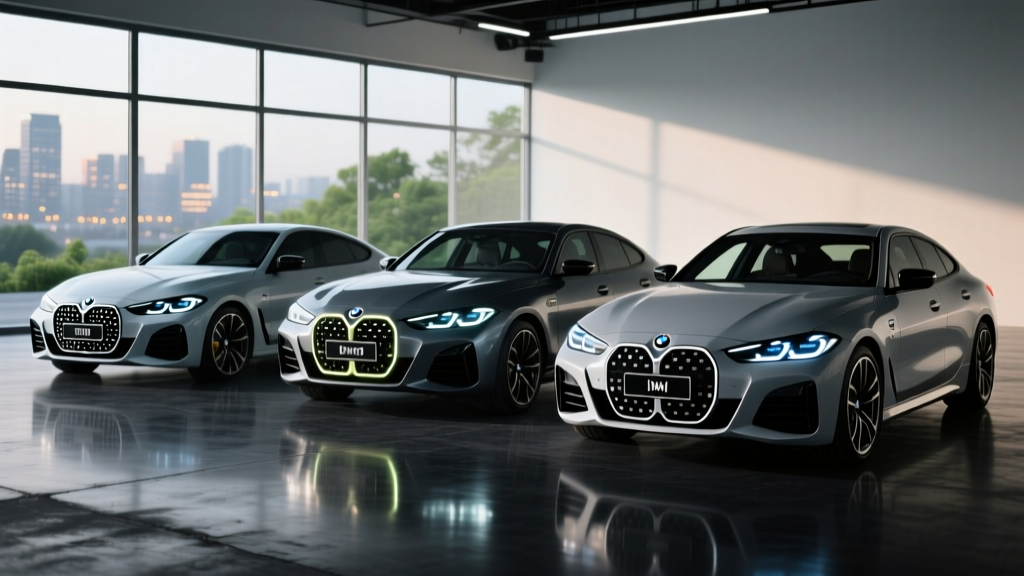
BMW's electric lineup has expanded significantly, but navigating the federal EV tax credit — officially known as the Clean Vehicle Credit under IRS §30D — remains one of the most confusing parts of buying an electric BMW. Not every model qualifies, not every buyer qualifies, and the rules around battery sourcing and critical minerals have tightened considerably since the Inflation Reduction Act reshaped eligibility.
This guide cuts through the noise with exact figures for the 2026 model-year BMW EVs, current §30D eligibility requirements, and a full 5-year total cost of ownership breakdown so you know precisely what you're signing up for — savings, costs, and all.
Which 2026 BMW EVs Qualify for the Federal Tax Credit?
The short answer: it depends on the model, the trim, and critically, where the battery cells and critical minerals were sourced. Here's where the current BMW electric lineup stands under §30D rules as of early 2026:
| Model | Base MSRP | MSRP Cap | Max Credit | Notes |
|---|---|---|---|---|
| BMW i4 (eDrive40/xDrive40) | ~$52,200 | $55,000 (sedan) | Up to $7,500* | Qualifies if battery sourcing requirements met; M50 trim ($69,700) exceeds MSRP cap |
| BMW i5 (eDrive40/xDrive40) | ~$66,800 | $55,000 (sedan) | $0 | Exceeds $55K sedan MSRP cap — does NOT qualify |
| BMW iX (xDrive50) | ~$87,250 | $80,000 (SUV/van/pickup) | $0 | Exceeds $80K SUV MSRP cap — does NOT qualify |
| BMW i7 | ~$119,300 | $55,000 (sedan) | $0 | Far exceeds MSRP cap — does NOT qualify |
*Credit amount depends on meeting both the critical-minerals requirement ($3,750) and the battery-components requirement ($3,750). Verify current-year eligibility on the IRS qualifying list before purchase, as sourcing compliance can change mid-year.
The practical takeaway: the BMW i4 eDrive40 is currently the only realistic path to a BMW EV tax credit, and only if your income falls within limits and the specific build meets battery-sourcing thresholds. Every other model in BMW's EV lineup prices above the §30D MSRP caps.
Federal Tax Credit Eligibility: The Full Checklist
Even if you're buying a qualifying BMW i4, the credit isn't automatic. You must clear every hurdle below:
IRS §30D Eligibility Checklist
- Income caps (modified AGI): $150,000 single filer / $225,000 head of household / $300,000 joint filers
- MSRP caps: $55,000 for sedans, wagons, and hatchbacks; $80,000 for SUVs, vans, and pickups
- Battery components: Must be manufactured or assembled in North America (phased percentage thresholds increase yearly)
- Critical minerals: Must be sourced from the US or a free-trade-agreement country (phased percentage thresholds increase yearly)
- Vehicle assembly: Final assembly must occur in North America
- Transferability: You may transfer the credit to the dealer as a point-of-sale rebate (reduces purchase price directly) — this is available regardless of tax liability
- One credit per vehicle: The vehicle must be new, purchased for personal use (not resale), and primarily used in the US
Source: IRS Clean Vehicle Credit. Rules are subject to change — verify at time of purchase.
A critical nuance many buyers miss: BMW's vehicles are assembled in Germany (Dingolfing and Munich plants). This means no current BMW EV meets the North American final-assembly requirement, which effectively disqualifies the entire BMW EV lineup from the §30D new-vehicle credit regardless of MSRP. This is a significant development that catches many shoppers off guard after they've seen headlines about "$7,500 EV credits."
5-Year Total Cost of Ownership: BMW i4 eDrive40 vs. BMW 3 Series Gas
Even without the federal tax credit, the ownership math for a BMW i4 still deserves a hard look. Let's compare the 2026 BMW i4 eDrive40 against its closest gas counterpart, the 2026 BMW 330i, over 5 years and 75,000 miles (15,000 miles/year).
Key Specs Comparison
| Spec | BMW i4 eDrive40 | BMW 330i |
|---|---|---|
| MSRP | $52,200 | $44,900 |
| Powertrain | Single motor, 335 HP | 2.0L turbo I4, 255 HP |
| Battery/Fuel | 81.5 kWh usable (NMC) | 15.6 gal tank |
| EPA Range / MPG | 307 mi / 100 MPGe combined | 30 MPG combined |
| 0-60 mph | 5.5 sec | 5.6 sec |
| DC Fast Charge | Peak 205 kW, 10-80% ~31 min | N/A |
| Warranty | 4yr/50K mi basic; 8yr/100K mi battery | 4yr/50K mi basic |
| Category | BMW i4 eDrive40 | BMW 330i (Gas) |
|---|---|---|
| Purchase Price (MSRP) | $52,200 | $44,900 |
| Federal Tax Credit | $0 (assembly in Germany) | N/A |
| Fuel / Charging (75K mi) | $4,500 | $9,375 |
| Insurance (5 yr) | $14,400 | $12,000 |
| Maintenance (5 yr) | $2,100 | $4,500 |
| Depreciation (est.) | $23,500 | $19,000 |
| TOTAL 5-YEAR COST | $96,700 | $90,775 |
| Cost Per Mile | $1.29/mi | $1.21/mi |
Assumptions: Electricity at $0.14/kWh national average for home charging (i4 efficiency ~3.3 mi/kWh = $0.06/mi). Gasoline at $3.75/gal, 30 MPG combined ($0.125/mi). Insurance based on national EV average premium ~$2,880/yr vs. ~$2,400/yr for gas equivalent. Depreciation estimated at 45% for i4 and 42% for 330i over 5 years based on current luxury EV resale trends. Maintenance from industry averages.
Charging vs. Gas: The Per-Mile Cost Breakdown
This is where the BMW i4 genuinely saves money — but the savings depend heavily on how and where you charge.
Cost Per Mile: BMW i4 vs. BMW 330i
| Charging/Fuel Scenario | Cost/Mile | Annual Cost (15K mi) |
|---|---|---|
| BMW i4 — Home Level 2 ($0.14/kWh) | $0.042 | $630 |
| BMW i4 — Public DC Fast ($0.48/kWh avg) | $0.145 | $2,175 |
| BMW i4 — Blended (70% home / 30% DCFC) | $0.073 | $1,095 |
| BMW 330i — Gasoline ($3.75/gal, 30 MPG) | $0.125 | $1,875 |
The i4 uses approximately 30 kWh per 100 miles (EPA combined). At the national average residential electricity rate, home charging costs roughly $0.042 per mile — about one-third the cost of gasoline. But if you rely entirely on public DC fast charging at current network rates ($0.40-$0.55/kWh), your per-mile cost can actually exceed gasoline.
The lesson is clear: home charging access is the single biggest financial variable in EV ownership. A BMW i4 owner with reliable Level 2 home charging saves roughly $1,200-$1,400 per year on energy versus the 330i. An apartment dweller relying exclusively on public DC fast chargers might save nothing at all on fuel — or even spend more.
Maintenance Savings: Where the i4 Pulls Ahead
Electric vehicles have far fewer moving parts than internal-combustion vehicles, and this translates to measurable maintenance savings over time.
| Maintenance Item | BMW i4 (EV) | BMW 330i (Gas) | 5-Year Savings |
|---|---|---|---|
| Oil changes | None | ~$150/yr (synthetic) | $750 |
| Brake pads | Rarely (regen braking) | $400-600 per axle at ~40K mi | $500-$1,000 |
| Transmission fluid | None (single-speed) | $200-300 at ~60K mi | $250 |
| Spark plugs | None | $300-400 at ~60K mi | $350 |
| Coolant/air filters | Minimal | $200-400 over 5 yr | $300 |
| Total Estimated Savings | $2,150-$2,650 |
Regenerative braking is the standout here. Because the i4's electric motor handles most deceleration, the friction brakes see far less use. Many EV owners report original brake pads lasting 80,000-100,000+ miles. Combined with no oil changes, no spark plugs, and no transmission service, the i4 saves roughly $2,400 over 5 years in routine maintenance.
One cost to budget for: EVs are heavier (the i4 is ~4,700 lbs vs. the 330i at ~3,580 lbs), which can accelerate tire wear. Expect to replace tires 10,000-15,000 miles sooner than on a gas equivalent. At $250-$350 per tire for performance rubber, that's a $200-$400 incremental cost over 5 years.
Insurance Cost Reality: Why EVs Cost More to Insure
This is the line item that erodes EV savings, and BMW owners should be prepared for it.
EVs typically cost 15-25% more to insure than comparable gas vehicles. For a BMW i4, expect annual premiums in the range of $2,600-$3,200 depending on your state, driving record, and coverage level — versus roughly $2,200-$2,600 for a 330i.
Why the premium?
- Higher repair costs: Battery pack damage from even minor collisions can total the vehicle or require expensive specialist repair. Body shops need EV-specific certification.
- Higher parts costs: BMW EV components (power electronics, electric motors, high-voltage wiring) are expensive and have limited aftermarket alternatives.
- Specialized labor: Fewer certified high-voltage technicians means higher labor rates for collision repair.
- Total-loss frequency: Insurers are more likely to declare an EV a total loss after structural damage due to battery-safety protocols, even when the damage seems minor.
The insurance premium gap — roughly $400-$600/year extra for the i4 — partially offsets fuel and maintenance savings. Over 5 years, that's $2,000-$3,000 in additional insurance costs. Always get quotes from your insurer for the specific model before purchasing.
Depreciation and Resale Value: The Honest Picture
Luxury EVs have experienced steeper depreciation than their gas counterparts in recent years, driven by rapid technology advancement, aggressive price competition (especially from Tesla), and consumer uncertainty about long-term battery health.
Based on current market trends for luxury electric sedans:
- BMW i4 eDrive40: Estimated 45-50% depreciation over 5 years / 75,000 miles. A $52,200 purchase might retain $26,000-$29,000 in resale value.
- BMW 330i: Estimated 40-45% depreciation over the same period. A $44,900 purchase might retain $25,000-$27,000.
The i4's higher starting price means higher absolute-dollar depreciation, even if the percentage is similar. This is the single largest cost in EV ownership and the reason the 5-year TCO for the i4 doesn't dramatically undercut the 330i despite fuel and maintenance savings.
Factors that could improve BMW EV resale values going forward include improved public charging infrastructure, growing consumer comfort with used EVs, and potential battery-health certification programs. But as of 2026, plan for depreciation to be the dominant cost.
State, Local, and Utility Incentives: Beyond Federal
While the federal §30D credit doesn't currently apply to new BMW EVs due to the assembly requirement, other incentives may still be available depending on where you live:
Examples of Non-Federal Incentives (Vary by Region)
- California (CVRP): Up to $2,000 rebate for income-qualified buyers of new EVs (check California Energy Commission for current availability)
- Colorado: State EV tax credit up to $5,000 for vehicles under $80,000 MSRP
- New York (Drive Clean Rebate): Up to $2,000 point-of-sale rebate
- Utility rebates: Many utilities offer $500-$1,500 rebates for home Level 2 charger installation, or time-of-use rate plans that reduce charging costs by 30-50%
- HOV lane access: Several states grant single-occupant carpool-lane access to EVs regardless of income or vehicle price
These programs change frequently and have funding caps. Check your state energy office and local utility for current offerings.
For a BMW i4 buyer in California or Colorado, state incentives can partially compensate for the lost federal credit — potentially saving $2,000-$5,000 depending on income qualification and program availability.
Bottom Line: Is a BMW EV Worth It Without the Federal Credit?
The absence of the §30D federal tax credit for BMW EVs is a genuine financial setback — it effectively adds $7,500 to the cost gap between the i4 and the 330i. Here's the decision framework:
Choose the BMW i4 if:
- You have reliable home Level 2 charging (the fuel savings are real — ~$1,200/yr)
- You live in a state with its own EV incentive that partially offsets the lost federal credit
- You plan to lease (avoiding depreciation risk)
- You value the driving experience: instant torque, near-silent operation, one-pedal driving, and lower center of gravity
- You want to lock in fuel costs and insulate against gas-price volatility
Choose the BMW 330i (or wait) if:
- You cannot charge at home and would rely on public DC fast charging exclusively
- The $7,300 MSRP premium plus higher insurance and depreciation makes the TCO unacceptable
- You want a vehicle that qualifies for the full $7,500 federal credit (consider US-assembled alternatives like the Tesla Model 3, which qualifies for at least $3,750 depending on sourcing)
- You drive more than 300 miles regularly between charges and want zero range-planning overhead
The BMW i4 is a genuinely excellent electric sedan — 307 miles of EPA range, 205 kW DC fast charging, and BMW's typical build quality. But without the federal tax credit, the financial case rests entirely on fuel savings, maintenance savings, and personal preference for electric driving. Run the numbers for your specific situation before signing.
Frequently Asked Questions
Why doesn't the BMW i4 qualify for the federal EV tax credit?
The §30D Clean Vehicle Credit requires final assembly in North America. BMW manufactures the i4 in Munich, Germany, which disqualifies it regardless of MSRP, battery sourcing, or buyer income. This applies to all current BMW EVs (i4, i5, iX, i7).
Can I get the federal tax credit on a used BMW EV?
Possibly. The §25E Previously-Owned Clean Vehicle Credit offers up to $4,000 (or 30% of the sale price, whichever is less) for used EVs. Requirements include: the vehicle must be at least 2 model years old, sold by a licensed dealer for $25,000 or less, and buyer income must not exceed $75,000 (single) or $150,000 (joint). A used 2022 or 2023 BMW i4 may qualify if it has depreciated below the $25,000 threshold.
How much does it cost to charge a BMW i4 at home?
A full charge from 10% to 100% on the i4's 81.5 kWh usable battery requires roughly 75 kWh. At the US national average of $0.14/kWh, that's about $10.50 for a full charge, yielding approximately 307 miles of EPA-rated range. Real-world highway range is closer to 250-270 miles, so expect roughly $10.50 for 260 practical miles.
Is BMW's battery warranty adequate?
BMW covers the i4's high-voltage battery for 8 years or 100,000 miles, whichever comes first, against defects and capacity loss below 70% of original capacity. This is the industry-standard minimum. If the battery degrades to below 70% within the warranty period, BMW will repair or replace it at no cost. Independent data from similar NMC packs suggests most retain 85-90% capacity at the 8-year mark under normal use.
Does the BMW i4 use NACS or CCS for charging?
The 2026 BMW i4 uses the CCS1 connector for DC fast charging in North America. BMW has announced plans to adopt NACS (Tesla's connector standard) on future models, but current-production i4 vehicles ship with CCS. BMW provides a NACS adapter for Supercharger access where available. Level 2 AC charging uses the standard J1772 connector (or NACS, depending on adapter).
How does cold weather affect the BMW i4's range?
Like all EVs, the i4 loses range in cold temperatures. Expect a 20-30% range reduction at temperatures below 20°F (-7°C), primarily due to battery-resistance increase and cabin-heating energy draw. The i4's heat pump (standard on most trims) helps mitigate this by efficiently warming the cabin without relying solely on resistive heating. A 307-mile EPA range realistically drops to roughly 215-245 miles in severe cold. Preconditioning the battery while plugged in before driving helps recover some of this loss and also improves DC fast-charging speeds in cold conditions.