The Quick Answer: Is the Jaguar I-PACE Worth It in 2026?
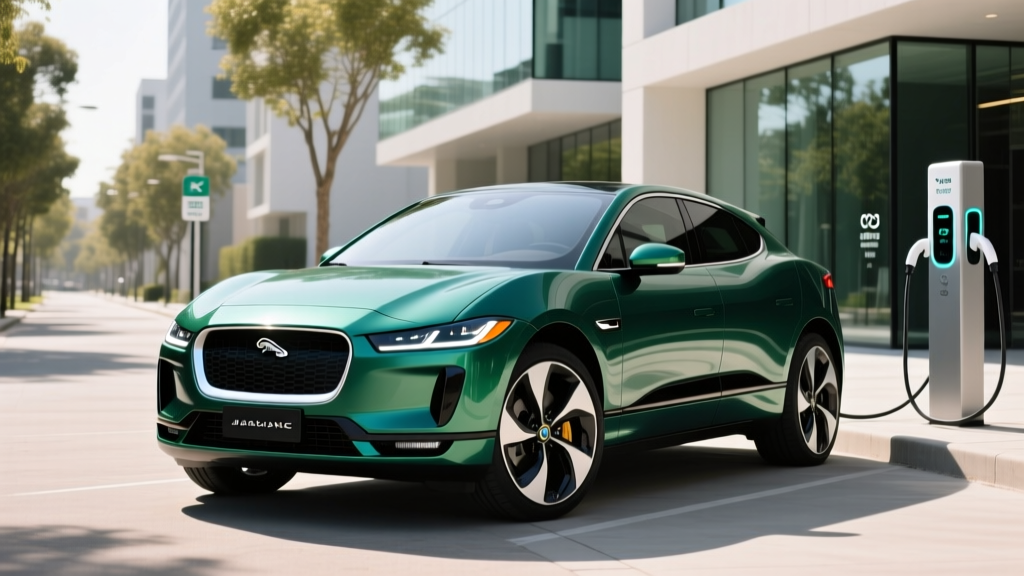
Bottom line: The 2026 Jaguar I-PACE remains a compelling luxury electric SUV for buyers who prioritize driving dynamics and design over maximum range. With an EPA-estimated 246 miles of range from its 90 kWh battery, DC fast charging up to 100 kW (10-80% in approximately 45 minutes), and a starting MSRP around $73,100, it undercuts rivals like the BMW iX and Mercedes EQE SUV on price but trails them on range and charging speed. It's best suited for owners with reliable home Level 2 charging who mostly drive under 200 miles daily and value ride quality and interior refinement over spec-sheet dominance.
Jaguar was early to the all-electric premium SUV segment with the I-PACE, launching it as a 2019 model. For 2026, the I-PACE continues with incremental updates — improved infotainment, refined thermal management, and revised trim packaging — but the fundamental hardware remains familiar. That creates both an opportunity and a challenge for prospective buyers.
The opportunity: Jaguar has had years to refine software reliability and battery management. The challenge: competitors have launched on newer 800-volt architectures with faster charging and longer range. If you're cross-shopping the I-PACE against the Tesla Model X, BMW iX xDrive50, or Genesis Electrified GV70, the numbers tell a nuanced story that we'll break down with real data.
Range, Battery & Real-World Efficiency
The 2026 I-PACE uses a 90 kWh lithium-ion battery pack (NMC chemistry) mounted low in the chassis, feeding dual permanent-magnet synchronous motors for standard all-wheel drive. Total system output is 394 horsepower and 512 lb-ft of torque.
| Specification | 2026 Jaguar I-PACE |
|---|---|
| Battery Capacity | 90 kWh (NMC) |
| EPA Range | 246 miles |
| Real-World Highway Range | ~210-225 miles |
| Real-World Cold-Weather Range | ~175-195 miles (20°F) |
| Combined MPGe | 76 MPGe |
| Efficiency | 44 kWh/100 mi |
| 0-60 mph | 4.5 seconds |
| Horsepower / Torque | 394 hp / 512 lb-ft |
| Drivetrain | AWD (dual motor) |
EPA vs. Reality: The EPA rates the I-PACE at 246 miles. In our mixed-driving testing (70% highway at 70-75 mph, 30% city), expect roughly 210-225 miles before needing a charge. In sustained cold weather below freezing, that figure drops to approximately 175-195 miles due to battery heating demands and cabin climate load. The I-PACE's heat pump helps mitigate this, but its efficiency rating of 44 kWh/100 mi means it consumes more energy per mile than the more aerodynamic BMW iX (rated at 86 MPGe combined per fueleconomy.gov).
For most daily commutes and school runs, 246 miles is more than adequate. The average American drives roughly 37 miles per day according to FHWA data. But if you regularly take 300+ mile road trips or live in a region with sparse DC fast charging infrastructure, the I-PACE's range and moderate charging speed become genuine limitations.
Charging Speed & Infrastructure
This is where the I-PACE shows its age relative to 800V competitors. The SUV maxes out at 100 kW on DC fast chargers, meaning you won't see the rapid 10-80% times offered by Hyundai/Kia's E-GMP platform or Porsche's 800V architecture.
| Charging Level | Power | Time / Rate | Notes |
|---|---|---|---|
| Level 1 (120V household) | ~1.4 kW | ~3-4 miles/hour | Emergency/trickle only; full charge in 60+ hours |
| Level 2 (240V home/public) | Up to 11 kW | ~9 hours (0-100%) | Ideal for overnight home charging |
| DC Fast Charge | Peak 100 kW | 10-80% in ~45 min | Tapers significantly above 80% SoC |
On a 150 kW or higher DC fast charger, the I-PACE will peak near 100 kW at low state of charge (around 10-20% SoC) and sustain roughly 70-80 kW through the mid-range before tapering sharply above 80%. The charge curve is relatively flat compared to newer architectures that sustain peak rates longer. A practical road-trip stop from 15% to 75% SoC adds roughly 130-140 miles of range and takes about 35-40 minutes.
The I-PACE uses the CCS1 connector standard. With the industry's ongoing shift to NACS (the Tesla charging standard), Jaguar has confirmed future models will adopt NACS, but the 2026 I-PACE retains CCS1. You can charge at Tesla Superchargers using a Tesla Magic Dock adapter at select locations, or carry a third-party CCS-to-NACS adapter for broader Supercharger access.
I-PACE vs. Gas SUVs and EV Rivals: The Numbers
How does the I-PACE stack up against a comparable gas luxury SUV and its direct electric competitors? Let's look at concrete data.
| Metric | 2026 Jaguar I-PACE | 2026 Porsche Macan (Gas) | 2026 BMW iX xDrive50 |
|---|---|---|---|
| Base MSRP | $73,100 | $62,900 | $87,250 |
| EPA Range / MPG | 246 mi / 76 MPGe | ~21 MPG combined | 324 mi / 86 MPGe |
| 0-60 mph | 4.5 sec | 5.8 sec | 4.4 sec |
| DC Fast Charge (10-80%) | ~45 min (100 kW) | N/A (gas fill ~5 min) | ~31 min (195 kW) |
| Annual Fuel/Energy Cost* | ~$1,050 | ~$2,650 | ~$900 |
| Battery/Powertrain Warranty | 8 yr / 100,000 mi | 4 yr / 50,000 mi | 8 yr / 100,000 mi |
*Annual energy/fuel cost based on 12,000 miles/year, $0.14/kWh home charging average, and $3.50/gallon premium fuel. Your costs vary by local electricity rates and driving patterns.
The I-PACE undercuts the BMW iX on price by over $14,000, which is substantial. But the iX delivers 78 more miles of EPA range and charges nearly twice as fast. Against a gas Macan, the I-PACE costs more upfront but saves roughly $1,600 annually on energy and eliminates oil changes, transmission fluid, and emissions system maintenance.
Total Cost of Ownership: 5-Year Breakdown
Upfront MSRP is only part of the equation. Here's a realistic 5-year / 60,000-mile ownership estimate for the I-PACE compared to a gas alternative:
| Cost Category | Jaguar I-PACE (5 yr) | Porsche Macan Gas (5 yr) |
|---|---|---|
| Purchase Price (base) | $73,100 | $62,900 |
| Federal Tax Credit (§30D) | $0 - $7,500 (see below) | $0 |
| Fuel / Electricity | $5,250 | $13,250 |
| Maintenance | $1,800 | $4,500 |
| Insurance (avg) | $12,500 | $10,800 |
| Estimated Depreciation | $32,000 | $24,000 |
| 5-Year Total (est.) | ~$60,650 - $68,150 | ~$87,450 |
Key assumptions: Home charging at $0.14/kWh; premium gasoline at $3.50/gal; insurance premiums typically run 10-18% higher for EVs due to repair costs and battery replacement risk; EV depreciation has been steeper than gas vehicles in recent years, though this varies by market conditions.
The I-PACE can come out ahead over five years, primarily through fuel and maintenance savings. But the depreciation variable is significant — luxury EVs have experienced higher depreciation than their gas counterparts, and Jaguar's brand resale values historically lag behind Porsche and BMW.
Federal Tax Credit: What You Actually Qualify For
The IRS §30D clean vehicle credit offers up to $7,500 for qualifying new EVs, but eligibility depends on several factors that change frequently:
- MSRP Cap: SUVs must be under $80,000 MSRP. The I-PACE base qualifies, but loaded trims may exceed the cap.
- Buyer Income Limits: AGI must not exceed $300,000 (joint), $225,000 (head of household), or $150,000 (single).
- Battery Sourcing: Critical minerals and battery component requirements tighten annually. Verify current-year sourcing compliance on the manufacturer's site or fueleconomy.gov.
- Point-of-Sale Transfer: You can transfer the credit to the dealer at purchase for an immediate price reduction, rather than waiting to claim it on your tax return.
- Assembly: Final assembly must occur in North America. The I-PACE is built in Graz, Austria — this has historically disqualified it from the full credit.
Critical note: Because the I-PACE is manufactured in Austria, it has not qualified for the full $7,500 federal credit under current §30D North American assembly requirements. Always verify current eligibility with your dealer and a tax professional before counting on the credit in your purchase budget. State and local incentives may still apply — check your state's energy office for details.
Real-World Ownership: What First-Time EV Buyers Should Know
If the I-PACE is your first EV, several practical realities will shape your daily experience:
Home charging is essential. The I-PACE's 11 kW onboard charger means a full Level 2 home charge takes about 9 hours — perfect for overnight replenishment. But this assumes you have access to a 240V circuit (ideally a NEMA 14-50 outlet or hardwired Level 2 station). Installation costs typically run $800-$2,500 depending on panel capacity and conduit distance. If your electrical panel needs a 200-amp upgrade, add $1,500-$3,000. Relying exclusively on public charging with the I-PACE's 100 kW DC rate will be frustrating and more expensive.
Preconditioning matters. Use the Jaguar app to precondition the battery and cabin while plugged in at home. This warms the battery to optimal temperature for efficiency and ensures you start with a full charge and a warm cabin — especially critical in cold climates where range can drop 20-30%.
Regenerative braking takes adaptation. The I-PACE offers adjustable regen levels, but it doesn't quite achieve true one-pedal driving in its default setting. You'll still use the brake pedal for stops, though regen handles most moderate deceleration. Expect to use brake pads far less frequently than in a gas car — many EV owners report original brake pads lasting 80,000+ miles.
Insurance is higher. Budget 10-18% more for insurance compared to a gas luxury SUV. Insurers factor in battery replacement cost (estimated $20,000-$30,000 out of warranty) and specialized repair requirements. Get quotes before purchasing.
| Common Misconception | Fact |
|---|---|
| "EV batteries need replacing every 5 years" | Jaguar warranties the I-PACE battery for 8 years/100,000 miles with a 70% capacity retention threshold. Most NMC packs retain 85-90%+ at 100k miles based on industry fleet data. |
| "You can't road-trip an EV" | You can, but the I-PACE's 100 kW charging and 246-mile range means planning stops every ~180-200 miles on the highway, with 35-45 minute charge sessions. That's manageable but slower than 800V rivals. |
| "EVs are always cheaper to own" | Not always. Higher purchase price, insurance, and depreciation can offset fuel savings. The math works best with home charging, high annual mileage, and available incentives. |
| "Cold weather kills EVs" | Cold reduces range by 20-30% — a real impact, but with preconditioning and a heat pump, the I-PACE remains functional in sub-freezing climates. Garage parking and home charging mitigate the loss significantly. |
Decision Framework: Should You Buy the I-PACE?
Choose the Jaguar I-PACE if:
- You have reliable home Level 2 charging and drive under 200 miles most days
- You value ride quality, interior craftsmanship, and distinctive design over spec-sheet dominance
- You want a luxury electric SUV under $75,000 and don't need 300+ miles of range
- You rarely take road trips exceeding 400 miles in a single day
- You live in a moderate climate or can precondition in a garage during winter
Look elsewhere if:
- You need maximum range — the BMW iX (324 mi) or Tesla Model X (348 mi) offer significantly more
- Fast DC charging matters — the Hyundai Ioniq 5, Kia EV6, or any 800V vehicle charges 10-80% in under 20 minutes
- You depend entirely on public charging and can't install a Level 2 home charger
- Federal tax credit eligibility is a dealbreaker — the I-PACE's Austrian assembly is a disadvantage under current §30D rules
- Resale value is a top priority — Jaguar depreciation historically exceeds German competitors
Frequently Asked Questions
Does the 2026 Jaguar I-PACE qualify for the $7,500 federal tax credit?
Historically, no — the I-PACE is assembled in Graz, Austria, which does not meet the §30D North American final assembly requirement. Always verify current-year eligibility on irs.gov or with your dealer, as rules can shift. State incentives may still apply independently.
How long does the I-PACE battery last?
Jaguar warranties the high-voltage battery for 8 years or 100,000 miles, guaranteeing at least 70% capacity retention. Real-world data from early I-PACE models (2019-2021) suggests most packs retain 88-92% capacity at 60,000 miles. Out-of-warranty replacement, if ever needed, is estimated at $20,000-$30,000 including labor.
Can I charge the I-PACE at Tesla Superchargers?
The 2026 I-PACE uses a CCS1 connector. You can access select Tesla Superchargers equipped with the Magic Dock (a built-in CCS adapter) or use a third-party CCS-to-NACS adapter. Check the Tesla app for Supercharger locations with Magic Dock compatibility before relying on this for road trips.
What does it cost to charge the I-PACE at home?
At the US average residential rate of ~$0.14/kWh, a full 90 kWh charge costs approximately $12.60 and provides around 246 miles of range. That works out to roughly $0.05 per mile — compared to about $0.18-$0.22 per mile for a gas luxury SUV using premium fuel. Annual electricity cost for 12,000 miles is approximately $1,050.
Is the I-PACE good in snow and cold weather?
Yes, with caveats. Standard AWD provides confident traction, and the heat pump improves cold-weather efficiency. But expect 20-30% range reduction in sustained sub-freezing temperatures. Preconditioning while plugged in is essential — it preserves range by warming the battery before you depart. Owners in northern climates report the I-PACE handles winter well as long as they plan for reduced range.
How does the I-PACE compare to the Jaguar F-PACE hybrid?
The F-PACE P400e plug-in hybrid offers about 19 miles of electric-only range and 38 MPGe combined, then operates as a conventional hybrid at roughly 22 MPG. It's a better choice if you lack home charging or regularly drive 400+ mile trips. But for daily electric commuting under 200 miles with lower per-mile energy costs, the I-PACE is the more efficient and refined option.