The Short Answer on Jaguar Electric Vehicles
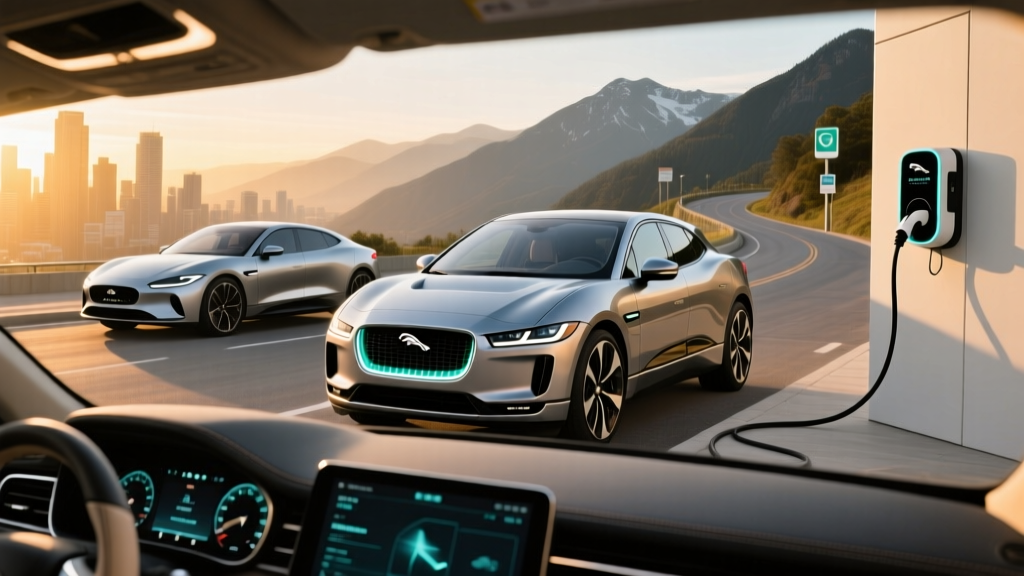
Jaguar's EV lineup in 2026 is in active transition. The I-Pace remains available as a used or certified pre-owned purchase — a 234-mile EPA range, 90 kWh battery, and 394 hp luxury SUV that pioneered the premium electric crossover segment. Jaguar's next-generation electric GT (often called the Type 00) is announced for late 2026/2027 with a targeted 400+ mile range, 800V architecture, and a starting price expected above $100,000. If you need a Jaguar EV today, the I-Pace is your option — and as a CPO buy, it can represent strong value. If you want the new platform, you'll need to wait and place a reservation.
Jaguar's Electric Lineup: Where Things Stand in 2026
Jaguar was an early mover in the luxury EV space, launching the I-Pace for the 2019 model year — beating rivals like the Audi e-tron and Mercedes EQC to market. Nearly eight years later, the brand is undergoing a dramatic reinvention. The I-Pace continues to be sold in select markets and remains widely available through Jaguar's certified pre-owned program in the US. Meanwhile, Jaguar has previewed its next-generation electric grand tourer, built on a bespoke Jaguar Electric Architecture (JEA) with an 800-volt powertrain and radically repositioned as an ultra-luxury marque competing closer to Bentley than BMW.
For buyers researching Jaguar electric vehicles, this creates a two-track decision: the proven, depreciated I-Pace you can drive today, or the high-end GT platform arriving soon. Here's the data on both.
I-Pace: Specs, Real-World Range, and What Ownership Actually Costs
| Spec | Value |
|---|---|
| EPA Range | 234 miles |
| Battery (Usable) | 84.7 kWh (NMC chemistry, 90 kWh gross) |
| Powertrain | Dual-motor AWD, 394 hp, 512 lb-ft torque |
| 0-60 mph | 4.5 seconds |
| Peak DC Fast Charge | 100 kW (CCS1) |
| 10-80% DC Charge Time | ~45 minutes |
| Level 2 AC Charge Rate | 11 kW (~7.5 hours 0-100%) |
| EPA Efficiency | 76 MPGe combined (44 kWh/100 mi) |
| Cargo Volume | 25.3 cu ft (rear seats up) / 51.0 cu ft (folded) |
| Battery/Powertrain Warranty | 8 years / 100,000 miles (battery ≥70% SoH) |
| Original MSRP (2024) | ~$73,100 (base) to ~$83,000 (loaded) |
Real-World Range Reality
The I-Pace's 234-mile EPA figure is conservative by modern standards. In real-world highway driving at 70-75 mph, expect 190-210 miles before needing to charge. In cold weather (below 30°F), range can drop to 160-180 miles due to cabin heating demands and reduced battery efficiency. The I-Pace lacks a heat pump — it uses resistive PTC heating, which draws significantly more energy in winter than heat-pump-equipped rivals like the BMW iX or Hyundai Ioniq 5.
Charging Speed: The I-Pace's Biggest Limitation
The I-Pace's 100 kW peak DC charge rate was competitive in 2019 but is now a notable weakness. Most modern luxury EVs charge at 150-350 kW. On a 150+ kW Electrify America or EVgo station, the I-Pace will peak around 95-100 kW and taper significantly above 60% state of charge. A 10-80% session takes roughly 45 minutes — compared to 18-25 minutes for vehicles on 800V platforms. The CCS1 connector is also worth noting: Jaguar's next-gen platform is expected to adopt NACS, aligning with Tesla Superchargers.
Ownership Cost Breakdown: I-Pace vs. Gas Equivalent
| Category | I-Pace (CPO ~$42,000) | F-Pace P250 (~$48,000 new) |
|---|---|---|
| Purchase Price | $42,000 | $48,000 |
| Fuel/Energy (5 yrs, 60k mi) | $3,600 (home charging @ $0.14/kWh) | $9,450 (24 MPG avg @ $3.50/gal) |
| Maintenance (5 yrs) | $2,200 | $5,500 |
| Insurance (5 yrs avg) | $11,500 | $9,800 |
| Estimated Depreciation | $14,000 | $18,000 |
| 5-Year Total | ~$73,300 | ~$90,750 |
The I-Pace wins on fuel and maintenance — electric motors have no oil changes, spark plugs, or transmission fluid. However, EV insurance premiums run 10-20% higher on average due to specialized repair costs and battery replacement exposure. Depreciation on the I-Pace has been steep (a plus for CPO buyers, a minus for original owners), but it stabilizes once the steepest initial drop has occurred.
Jaguar's Next-Gen Electric GT: What We Know (Announced Platform)
Jaguar has confirmed its reinvention as an all-electric ultra-luxury brand. The first vehicle on the new Jaguar Electric Architecture (JEA) is a four-door grand tourer previewed by the Type 00 concept. Here's what has been announced — with the caveat that final production specs may differ:
- Architecture: 800V JEA platform, enabling faster charging and lighter wiring
- Target Range: 400+ miles (WLTP); expect ~330-370 miles EPA equivalent
- Power: Confirmed well over 500 hp; some reports suggest up to 700+ hp in top trims
- Charging: Expected 300+ kW peak DC rate with NACS connector (Supercharger access)
- 10-80% Charge: Targeted under 15 minutes at peak rate
- Positioning: Ultra-luxury GT, starting price expected $100,000-$120,000+
- Availability: Reservations anticipated late 2026; deliveries likely 2027
This is a fundamentally different vehicle and brand positioning than the I-Pace. Jaguar is moving upmarket to compete with Porsche Taycan, Bentley, and high-end Mercedes-AMG electric offerings — not the Tesla Model Y or BMW iX. If your budget is under $80,000, the new Jaguar GT will not be in your range at launch.
EV vs. Gas vs. Hybrid: Where Does a Jaguar EV Fit?
| Factor | I-Pace (EV) | F-Pace P250 (Gas) | RR Sport P440e (PHEV) |
|---|---|---|---|
| EPA Range / MPG | 234 mi / 76 MPGe | 24 MPG combined | 51 mi electric + 350 mi gas |
| Energy Cost per Mile | ~$0.06 (home) | ~$0.16 | ~$0.08 (blended) |
| Home Charging Needed? | Yes (Level 2 ideal) | No | Recommended for EV mode |
| Cold-Weather Impact | 20-30% range loss | Minimal | Moderate (shorter EV range) |
| Road Trip Convenience | 45-min charge stops | 5-min gas stops | Gas backup, no range anxiety |
| Maintenance Complexity | Low | High | Highest (two powertrains) |
The I-Pace makes the most sense for drivers with home charging access, commutes under 100 miles round-trip, and occasional road trips where 45-minute DC fast charge stops are acceptable. The F-Pace gas model is simpler for apartment dwellers or those without reliable charging. The PHEV route (via Land Rover's Range Rover Sport) offers an electric commute with gas flexibility — but at higher mechanical complexity and maintenance cost.
Common Misconceptions About Jaguar EVs
| Myth | Fact |
|---|---|
| "The I-Pace battery won't last." | Jaguar warranties the battery for 8 years/100,000 miles at ≥70% capacity. Real-world NMC degradation data from early I-Pace owners shows ~8-12% loss over 5 years — within warranty threshold. Source: Jaguar USA. |
| "I can get the $7,500 federal tax credit on a new I-Pace." | The I-Pace does not qualify for the full §30D credit due to battery sourcing requirements and MSRP caps. Check current eligibility at IRS.gov. Used I-Pace purchases may qualify for up to $4,000 under the used-vehicle credit. |
| "Jaguar is abandoning EVs." | The opposite — Jaguar is going all-electric by 2025-2027. The brand is investing heavily in its JEA platform and repositioning as an EV-only luxury marque. |
| "Charging an I-Pace takes forever." | At 100 kW peak, 10-80% takes ~45 minutes. Slower than newer EVs, but practical for meal/rest stops on road trips. Home Level 2 charging overnight is the primary refueling method for most owners. |
| "EVs cost more to own than gas cars." | Fuel and maintenance savings are real — the I-Pace saves ~$5,850 in energy and ~$3,300 in maintenance over 5 years vs. the F-Pace. Higher insurance and purchase price partially offset this. See cost table above. |
Tax Credits and Incentives: What Applies to Jaguar EVs
Federal EV tax credit rules under IRS §30D are strict and change frequently. Here's how they apply to Jaguar electric vehicles as of 2026:
- New I-Pace: No longer available new in most US markets. When it was, battery critical-mineral and component sourcing requirements limited or eliminated the $7,500 credit.
- Used I-Pace (§25E credit): Up to $4,000 or 30% of sale price (whichever is less) for qualified used EVs. Vehicle must be priced at $25,000 or below, sold by a licensed dealer, and at least 2 model years old. Buyer income caps apply: $75,000 single / $150,000 joint. Verify at IRS.gov used vehicle credit page.
- Next-Gen Jaguar GT: The $7,500 credit has an MSRP cap of $55,000 for sedans and $80,000 for SUVs/vans. The GT is expected to start well above these caps, making it ineligible for the new-vehicle credit.
- State incentives: Vary widely. Check your state's energy office or AFDC incentive database for local rebates, HOV lane access, and utility charging discounts.
Note: Tax credit eligibility depends on individual income, vehicle sourcing, and current-year IRS rules. Consult a tax professional before making purchase decisions based on credits.
Decision Framework: Should You Buy a Jaguar EV?
Choose the Jaguar I-Pace (CPO) If:
- You have access to Level 2 home charging (240V, 40-amp circuit minimum)
- Your daily driving is under 150 miles and road trips are occasional
- You want a luxury electric SUV with distinctive styling at a depreciated price ($35,000-$50,000 CPO range)
- You value ride quality and interior refinement over cutting-edge tech or charging speed
- You live in a mild climate or accept 20-30% winter range loss
Wait for the Next-Gen Jaguar GT If:
- Your budget exceeds $100,000 and you want an ultra-luxury electric grand tourer
- You need 300+ miles of real-world range and sub-20-minute fast charging
- You want NACS/Supercharger access and 800V architecture
- You're willing to wait until 2027 for deliveries
Look at Alternatives If:
- You need a new vehicle under $70,000 today — consider the BMW iX, Audi Q8 e-tron, Genesis GV60, or Tesla Model X
- You lack home charging — a PHEV or gas vehicle avoids public-charging dependence
- You need 300+ miles of range now — the I-Pace's 234 EPA miles falls short for long-commute or frequent road-trip drivers
Frequently Asked Questions
Is the Jaguar I-Pace still being sold new in 2026?
Jaguar has largely wound down new I-Pace production as it transitions to its next-generation platform. Some remaining inventory may exist at dealers, but certified pre-owned is the primary way to purchase an I-Pace in the US market as of 2026.
What's the real-world range of the Jaguar I-Pace?
The EPA rates the I-Pace at 234 miles. In real-world mixed driving, expect 200-220 miles. Highway-only driving at 75 mph yields roughly 190-210 miles. Cold weather (below 30°F) can reduce range to 160-180 miles due to resistive heating and battery chemistry limitations.
How long does it take to charge the I-Pace at home?
On a Level 2 home charger (11 kW / 48 amp), a full 0-100% charge takes approximately 7.5 hours. Most owners plug in overnight and wake to a full battery. Level 1 (120V standard outlet) adds only about 3-4 miles per hour — impractical as a primary charging method.
Does the Jaguar I-Pace qualify for any tax credits?
The new-vehicle §30D credit was generally not available for the I-Pace due to battery sourcing rules. However, the used-vehicle credit (§25E) may provide up to $4,000 for qualifying purchases at $25,000 or below from a licensed dealer, subject to buyer income limits. Check IRS.gov for current rules.
What is Jaguar's next electric vehicle?
Jaguar has announced a next-generation electric grand tourer on its JEA 800V platform, previewed by the Type 00 concept. It targets 400+ miles of range (WLTP), 300+ kW charging, and positions Jaguar as an ultra-luxury brand with pricing expected above $100,000. Reservations are anticipated in late 2026 with deliveries in 2027.
How does the I-Pace compare to a Tesla Model Y or BMW iX?
The I-Pace offers a more traditional luxury interior and distinctive design but falls behind on range (234 vs. 300+ miles), charging speed (100 kW vs. 250+ kW), and software/OTA capabilities. The BMW iX and Tesla Model Y are more practical choices for tech-forward buyers who prioritize efficiency and fast charging. The I-Pace appeals to those who value Jaguar's design language and ride quality.
What should a first-time EV buyer know before purchasing a Jaguar I-Pace?
Three things: (1) Install a Level 2 home charger before or immediately after purchase — budget $800-$2,500 for equipment and electrician, and confirm your electrical panel has capacity. (2) Understand that DC fast charging at 100 kW means longer road-trip stops than newer EVs — plan accordingly. (3) Budget for higher insurance premiums (10-20% above gas equivalents) and verify CPO warranty coverage on the battery and powertrain.