Quick Answer: Is Isuzu Making an EV?
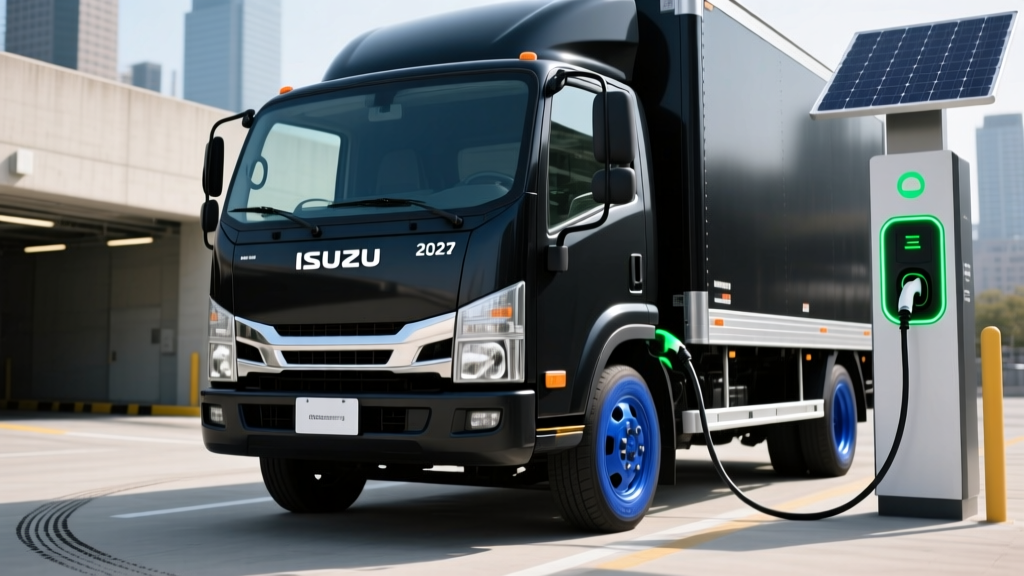
Yes — Isuzu's primary electric offering for the U.S. market is the NRR-EV, a Class 5 medium-duty cab-over truck targeting last-mile delivery and urban distribution. As of 2026, the NRR-EV is available in select markets with an estimated EPA range of ~150 miles, a ~110 kWh battery pack (NMC chemistry), and DC fast charging up to ~100 kW. Pricing starts in the $120,000–$140,000 range before incentives, though the federal Commercial Clean Vehicle Credit (§45W) can offset up to $40,000 for qualified fleet purchases. Isuzu does not currently sell a consumer passenger EV.
Isuzu's Electric Lineup: What's Actually Available
Isuzu is a commercial truck manufacturer first. Unlike Toyota or Hyundai, Isuzu doesn't sell consumer vehicles in the U.S. — their entire portfolio centers on medium- and heavy-duty work trucks. The EV strategy reflects that reality.
NRR-EV (Class 5 Medium-Duty)
The NRR-EV is Isuzu's flagship electric truck for the North American market. Built on the proven N-Series platform that dominates the U.S. cab-over segment, the NRR-EV targets vocational routes with predictable daily mileage: parcel delivery, food distribution, linen services, and municipal fleets.
| Spec | Isuzu NRR-EV (2026) |
|---|---|
| GVWR | 19,500 lbs (Class 5) |
| Battery Capacity | ~110 kWh (NMC lithium-ion) |
| EPA-Estimated Range | ~150 miles (varies by body/upfit) |
| DC Fast Charge (Peak) | ~100 kW (CCS1) |
| 10–80% DC Charge Time | ~75 minutes (estimated) |
| Level 2 AC Charging | ~19.2 kW (SAE J1772/CCS1) |
| Motor Output | ~255 kW (~342 hp) |
| Payload Capacity | ~9,000 lbs (varies by body config) |
| Base MSRP (Cab/Chassis) | ~$120,000–$140,000 |
| Warranty (Battery) | 5 years / unlimited miles (est.) |
Real-world range caveat: The ~150-mile EPA figure assumes a moderate payload and flat urban driving. Heavily loaded routes with frequent stops and regenerative braking recovery can sustain close to that number. Highway-speed operation, steep grades, and cold weather (below 30°F) can reduce effective range by 20–35%, bringing real-world range down to ~100–120 miles in adverse conditions. This matters enormously for route planning.
Other Isuzu Electrification Efforts
Isuzu has announced development of heavier-duty electric platforms (Class 6–7 FVR-EV concepts) and is collaborating with partners on hydrogen fuel cell technology through its global alliances. However, as of early 2026, none of these are commercially available in the U.S. — they remain announced/preliminary. For now, the NRR-EV is the buyable option.
Isuzu NRR-EV vs. Diesel NRR: Total Cost Breakdown
The upfront price gap between electric and diesel commercial trucks is substantial, but fleet economics depend on total cost of ownership (TCO), not sticker price. Here's a realistic 5-year comparison for a single truck running 15,000 miles/year on a last-mile delivery route:
| Cost Category (5-Year) | Isuzu NRR-EV | Isuzu NRR Diesel |
|---|---|---|
| Purchase Price (cab/chassis) | $130,000 | $65,000 |
| Federal §45W Credit | –$40,000 | $0 |
| Net Purchase After Credit | $90,000 | $65,000 |
| Fuel/Energy (75,000 mi total) | $9,400 ($0.125/mi @ $0.15/kWh) | $28,100 ($0.375/mi @ $4.20/gal, 8 mpg) |
| Maintenance (est.) | $4,500 | $12,000 |
| DEF / Emissions Service | $0 | $2,500 |
| Depreciation (est. residual) | $40,000 | $30,000 |
| 5-Year Total Cost | $63,900 | $77,600 |
| Cost Per Mile | $0.85 | $1.03 |
Key takeaway: After the §45W commercial credit, the NRR-EV reaches cost parity with diesel within approximately 3–4 years on a high-utilization route. The energy savings alone (~$18,700 over 5 years) nearly close the gap, and reduced maintenance (no oil changes, no DPF regeneration, no DEF fluid, fewer brake replacements due to regenerative braking) pushes the EV ahead. However, fleets running low annual miles or routes in areas with expensive commercial electricity rates (above $0.25/kWh) will see a longer payback.
The §45W Commercial Clean Vehicle Credit
Unlike the consumer §30D credit, the §45W Commercial Clean Vehicle Credit applies to businesses and tax-exempt organizations purchasing qualified clean vehicles. For vehicles with a GVWR above 14,000 lbs (which includes the NRR-EV at 19,500 lbs), the credit is up to $40,000 — calculated as the lesser of 30% of the purchase price or the incremental cost over a comparable ICE vehicle. Consult a tax professional for your specific situation; eligibility depends on your tax liability, the vehicle's battery sourcing compliance, and manufacturer certification.
Charging Infrastructure: The Real Bottleneck for Fleet EVs
Charging a commercial electric truck is fundamentally different from charging a passenger car. You're not pulling into an Electrify America station — you need depot charging infrastructure, and the cost and lead time are significant.
| Charging Method | Power (kW) | Miles Added/Hour | Use Case |
|---|---|---|---|
| Level 2 AC (Depot Overnight) | 19.2 kW | ~30–40 mi/hr | Nightly top-up, 6–8 hr dwell |
| DC Fast (Depot or Public) | Up to 100 kW | ~100–130 mi/hr | Mid-day opportunity charging |
Depot Charging Cost Estimates
Installing a single 19.2 kW Level 2 charger for a commercial truck typically costs $5,000–$12,000 (equipment + electrician + panel work + permitting). For a DC fast charger at 100 kW, expect $50,000–$120,000+ per unit including utility upgrades, switchgear, and trenching. Most fleets serving routes under 120 miles per day can operate exclusively on overnight Level 2 depot charging — eliminating the need for expensive DC infrastructure entirely.
Utility lead time warning: Commercial charging installations often require utility service upgrades. In many metro areas, the utility may need 6–18 months to bring additional transformer capacity to your depot. Factor this into your procurement timeline — order chargers and begin utility coordination before the trucks arrive.
Additionally, several states and utilities offer make-ready programs or rebates for commercial EV charging infrastructure. Check with your local utility and the Alternative Fuels Data Center for current incentive availability in your area.
Who Should Buy an Isuzu NRR-EV (and Who Shouldn't)
Actionable Decision Framework
- Choose the NRR-EV if:
- Your daily routes are under 120 miles with predictable stops
- You have depot parking with access to electrical infrastructure
- You operate in a metro area with commercial electricity rates below $0.20/kWh
- Your fleet qualifies for the §45W credit and/or state incentives
- You face local emissions regulations or clean-air-zone mandates
- You want to lock in lower per-mile operating costs over a 7–10 year vehicle life
- Stick with the diesel NRR if:
- Your routes regularly exceed 150 miles per day or vary unpredictably
- You operate in extreme cold climates (sustained temps below 15°F) without heated depot parking
- You lack depot charging access and cannot install infrastructure
- Your annual mileage is below 8,000 miles (insufficient fuel savings to justify the premium)
- Your route requires heavy PTO (power take-off) equipment not yet supported by the EV platform
Isuzu EV Misconceptions vs. Facts
| Myth | Fact |
|---|---|
| "Isuzu doesn't make electric vehicles" | The NRR-EV has been commercially available in select U.S. markets. Isuzu's EV strategy is focused on commercial trucks, not consumer cars. |
| "Electric trucks can't handle real payloads" | The NRR-EV carries up to ~9,000 lbs of payload depending on body configuration. Range decreases with heavier loads, but the truck is rated for genuine Class 5 work. |
| "Charging takes too long for fleet operations" | Most fleet trucks charge overnight on Level 2 (6–8 hours), returning to full charge by morning. DC fast charging at 100 kW adds ~100+ miles in about an hour for mid-day top-ups. |
| "The battery will need replacing in a few years" | NMC batteries in commercial applications are engineered for 2,000+ full cycles. At 15,000 miles/year, the pack should retain 80%+ capacity through 10+ years. Isuzu's battery warranty covers premature degradation. |
| "EV trucks are more expensive to own, period" | Higher sticker price, yes — but after the $40,000 §45W credit, lower energy costs, and reduced maintenance, the NRR-EV reaches TCO parity with diesel in 3–4 years on typical routes. |
Real-World Ownership Considerations for First-Time Fleet EV Buyers
Route Analysis Comes First
Before ordering a single truck, pull GPS telematics data from your existing diesel fleet. Map daily mileage, stop frequency, dwell times, and terrain. Routes that are under 100 miles with frequent stops (ideal for regenerative braking recovery) are the strongest EV candidates. Routes with long highway segments or steep grades will consume range faster than the EPA sticker suggests.
Cold-Weather Range Loss Is Real
NMC batteries lose 15–35% of effective range in sustained cold (below 30°F), and cabin/equipment heating draws additional energy from the traction pack. If your fleet operates in northern climates, size your routes for worst-case winter range — not the EPA sticker. Some fleets spec battery pre-conditioning systems or heated depot parking to mitigate this.
Insurance and Residual Value
Commercial EV insurance premiums currently run 10–25% higher than equivalent diesel trucks, driven by higher repair costs and limited actuarial data. Residual values for used commercial EVs remain uncertain — the market is young. Factor conservative depreciation into your TCO model.
Driver Training
Electric trucks drive differently: instant torque, one-pedal-capable regenerative braking, and no engine noise at low speeds. Budget for a half-day of driver orientation per shift. Most drivers adapt within a week and report preferring the EV's smoothness, but the transition is not automatic.
Isuzu EV Frequently Asked Questions
Does Isuzu sell an electric pickup truck or SUV for consumers?
No. Isuzu exited the U.S. consumer passenger vehicle market decades ago. Their current U.S. lineup is exclusively commercial trucks. If you're looking for an Isuzu-badged consumer EV, it doesn't exist. Isuzu does supply commercial vehicles globally, and some international markets may see different products, but U.S. buyers should look to other brands for personal EVs.
How does the Isuzu NRR-EV compare to competing electric trucks?
The NRR-EV competes with the Ford E-Transit (lighter, Class 2–3), the Lightning Electric Class 5, and the upcoming electric offerings from Hino and Freightliner. The NRR-EV's advantage is Isuzu's dominant cab-over platform — the N-Series has been the best-selling cab-over truck in the U.S. for decades, with extensive dealer and upfitter networks. Competitors may offer longer range or faster charging, but Isuzu's service infrastructure is a significant fleet advantage.
Can I charge an Isuzu NRR-EV at a public DC fast charger?
Technically yes — the NRR-EV uses a CCS1 connector, compatible with most public DC fast networks. However, most public chargers are designed for passenger vehicles and may have physical clearance issues with a Class 5 truck. Depot charging is the standard approach for commercial fleets.
What's the warranty coverage on the NRR-EV battery?
Isuzu provides a battery warranty estimated at 5 years with coverage against capacity degradation below a specified threshold (typically 70–80% state of health). Exact terms vary by model year — confirm current warranty specifics with your Isuzu dealer before purchase.
Are there state incentives beyond the federal §45W credit?
Yes, in many states. California's HVIP (Hybrid and Zero-Emission Truck and Bus Voucher Incentive Project), New York's NYTVIP, and similar programs in Colorado, New Jersey, and other states can provide $20,000–$60,000+ in additional point-of-sale vouchers for commercial electric trucks. Availability and amounts vary by jurisdiction and are subject to funding — check the Alternative Fuels Data Center state laws database for current programs in your area.