The used Tesla market in 2026 is larger and more varied than ever. Price cuts on new models, lease returns, and fleet turnover have flooded the secondary market with Model 3 sedans and Model Y crossovers at prices that rival mainstream gas cars. But a used EV purchase carries unique risks — battery degradation, expired warranties, shifting charging infrastructure, and tax-credit eligibility — that don't apply to a used Camry.
This guide cuts through the noise with hard numbers on range, charging, battery longevity, and total cost of ownership. We focus on the two models that dominate the used market: the Tesla Model 3 (2018–2025) and Tesla Model Y (2020–2025), with specific attention to what changes across model years.
Quick Verdict: Who Should Buy a Used Tesla?
A used Tesla makes sense if you meet three conditions: you can charge at home (Level 2), your daily commute is under 80 miles round-trip, and you can verify battery State of Health (SoH) before purchase. It's the wrong call if you lack reliable home charging, regularly drive 300+ miles in cold weather, or expect the federal used-EV tax credit without confirming eligibility first.
- You have home Level 2 charging (or can install it)
- You want access to the Supercharger network for road trips
- You're targeting a 2021+ Model 3 Long Range or Model Y for maximum battery warranty remaining
- You value OTA software updates and over-the-air feature additions
- You rely solely on public charging and live in a charging-desert area
- You need a vehicle for heavy towing (Model Y maxes at 3,500 lbs)
- You want traditional dealer service infrastructure nearby
- The specific vehicle shows below 90% battery SoH
Spec Comparison: Used Model 3 vs. Model Y at a Glance
| Spec | Model 3 LR (2021–2025) | Model Y LR (2021–2025) |
|---|---|---|
| EPA Range | 333–363 mi | 303–330 mi |
| Battery (usable) | ~75 kWh (NMC) / ~57.5 kWh (LFP RWD) | ~75 kWh (NMC) |
| Max DC Fast Charge | 250 kW (CCS/NACS) | 250 kW (CCS/NACS) |
| 10–80% DCFC Time | ~28 min | ~27 min |
| Level 2 Rate | 11.5 kW (~44 mi/hr) | 11.5 kW (~40 mi/hr) |
| 0–60 mph | 4.2 sec (LR AWD) | 4.8 sec (LR AWD) |
| Horsepower | 346 hp | 384 hp |
| Drivetrain | Dual-motor AWD | Dual-motor AWD |
| MPGe (combined) | 132 MPGe | 122 MPGe |
| Efficiency | 25 kWh/100 mi | 28 kWh/100 mi |
| Cargo Volume | 23 cu ft (trunk+frunk) | 76 cu ft (seats folded) |
| Rear Legroom | 35.2 in | 41.6 in |
| Battery Warranty | 8 yr / 120,000 mi | 8 yr / 120,000 mi |
| Towing Capacity | Not rated | 3,500 lbs |
Sources: EPA fueleconomy.gov, Tesla Warranty. Specs vary by exact model year and trim.
Real-World Range: What the EPA Sticker Doesn't Tell You
Model 3 Long Range (2023+): EPA 341 mi. Expect ~280–300 mi on highway road trips at 75 mph. In freezing temperatures (below 32°F), plan for 220–260 mi.
Model Y Long Range (2023+): EPA 330 mi. Expect ~260–280 mi highway, ~210–240 mi in cold weather.
Model 3 RWD (LFP, 2022+): EPA 272 mi. Expect ~220–240 mi highway, ~180–200 mi in cold weather.
Tesla's thermal management system is among the best in the industry — a heat pump became standard on all models starting in 2021, significantly reducing cold-weather range loss compared to earlier resistance-heating systems. But physics still applies: lithium-ion cells lose efficiency below freezing, and cabin heating draws from the same pack.
For a used buyer, the critical factor is battery degradation. Tesla's NMC packs (Long Range and Performance trims) typically show 5–8% degradation at 50,000 miles and 8–12% at 100,000 miles based on fleet data aggregated by sources like Teslanomics. LFP packs (RWD trims from 2022 onward) degrade more slowly — often just 3–5% at 50,000 miles — but start with less total capacity.
How to check before buying: Navigate to Settings → Software → Additional Vehicle Information on any Tesla to see the battery's build date. For a more precise SoH reading, use third-party tools like TeslaFi or Recurrent's battery health reports. A healthy used Tesla should show 90%+ SoH.
Charging Speed: Home, Destination, and DC Fast Charging
| Charging Level | Power | Model 3 (mi/hr) | Model Y (mi/hr) | Notes |
|---|---|---|---|---|
| Level 1 (120V) | ~1.4 kW | ~5 mi/hr | ~4 mi/hr | Emergency/trickle only |
| Level 2 (240V, 48A) | 11.5 kW | ~44 mi/hr | ~40 mi/hr | Standard home charging |
| DC Fast (V3 Supercharger) | Peak 250 kW | ~170 mi in 15 min | ~162 mi in 15 min | 10–80% in ~27–28 min |
| DC Fast (V4 Supercharger) | Peak 250–350 kW | Same (vehicle-limited) | Same (vehicle-limited) | Older Teslas can't use full V4 speed |
The 250 kW peak charge rate applies to 2021+ Model 3 and Model Y vehicles. Earlier models (2018–2020 Model 3) peak around 150–170 kW, meaning 10–80% takes closer to 35–40 minutes. This matters on road trips.
Charging curve reality: Teslas sustain peak kW only between roughly 10–30% State of Charge. Above 50%, the rate tapers significantly. Above 80%, it drops to under 40 kW. This is normal lithium-ion behavior, not a defect — but it means the "250 kW" headline number applies to a narrow SoC window.
Connector note: Teslas built before late 2024 use the proprietary Tesla connector (now standardized as NACS). All Superchargers natively support this. If you buy a 2020–2023 model, you'll need a CCS adapter ($175–$250) to use non-Tesla DC fast chargers like Electrify America. Teslas built from late 2024 onward ship with the NACS port, which is becoming the industry standard.
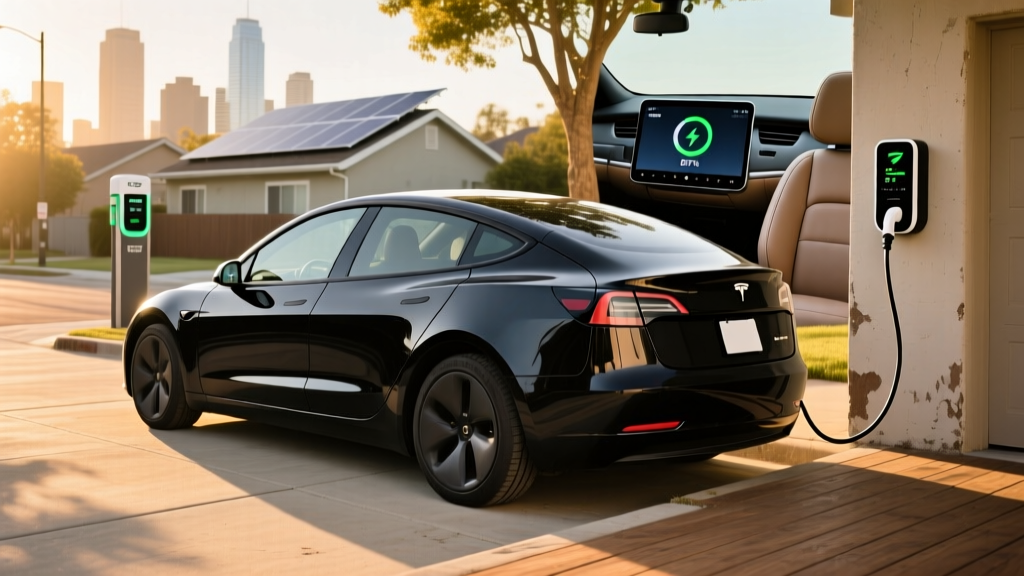
Home charging cost: At the US average electricity rate of $0.17/kWh (EIA), fully charging a Model 3 LR (75 kWh) costs about $12.75 — roughly equivalent to 3.5 gallons of gas. Annual fuel savings versus a 25 MPG gas car at $3.50/gallon run $1,200–$1,800 for a 12,000-mile driver.
Used Tesla Pricing and the Federal Tax Credit
Used Tesla prices have dropped significantly since 2023. As of early 2026, here's what you'll find on the market:
| Model / Year | Typical Used Price | Used-EV Credit (§25E) | Net Cost |
|---|---|---|---|
| 2019 Model 3 LR AWD | $18,000–$22,000 | Up to $4,000 | $14,000–$18,000 |
| 2021 Model 3 LR AWD | $24,000–$28,000 | Up to $4,000 | $20,000–$24,000 |
| 2022 Model 3 RWD (LFP) | $22,000–$26,000 | Up to $4,000 | $18,000–$22,000 |
| 2022 Model Y LR AWD | $27,000–$32,000 | Up to $4,000 | $23,000–$28,000 |
| 2024 Model Y LR AWD | $34,000–$39,000 | Up to $4,000 | $30,000–$35,000 |
Federal Used-EV Tax Credit (§25E) Rules
The used clean vehicle credit (IRS §25E, sometimes confused with the new-vehicle §30D credit) offers 30% of the sale price, up to $4,000, for qualifying used EVs. Key rules for 2026:
- Vehicle price cap: Sale price must be $25,000 or less
- Vehicle age: Must be at least 2 model years old (so 2024 or older in 2026)
- Buyer income caps: AGI ≤ $75,000 (single), $112,500 (head of household), $150,000 (joint)
- Dealer requirement: Must purchase from a licensed dealer (private-party sales excluded)
- One-time use: You can only claim this credit once every 3 years per buyer
- Point-of-sale transfer: Credit can be applied at purchase, reducing your out-of-pocket cost immediately
Source: IRS.gov Used Clean Vehicle Credit. Tax rules change — consult a tax professional for your specific situation.
Critical nuance: The $25,000 price cap means many 2022+ Model Y listings won't qualify. A 2021 Model 3 LR priced at $24,500 qualifies; the same car at $25,500 does not. Negotiate with the dealer on this threshold specifically.
Battery Longevity, Warranty, and Replacement Costs
Tesla's battery and drive unit warranty is one of the strongest in the industry: 8 years / 120,000 miles for Long Range and Performance models, and 8 years / 100,000 miles for RWD models. The warranty guarantees the battery will retain at least 70% of its original capacity during the coverage period.
For a used buyer, the math is straightforward:
- A 2021 Model 3 LR purchased in 2026 with 45,000 miles has ~3 years and 75,000 miles of battery warranty remaining.
- A 2019 Model 3 with 80,000 miles may have just 1–2 years of warranty left — or none if it crossed 120,000 miles.
- A 2023 Model Y with 20,000 miles has nearly 6 years and 100,000 miles remaining.
Out-of-warranty replacement cost: If the battery fails after warranty expires, a Tesla battery replacement runs $12,000–$16,000 for Model 3/Y, based on service center quotes and third-party EV repair shops. This is the single biggest financial risk of buying an older, high-mileage used Tesla.
LFP vs. NMC — which is better for used buyers?
| Factor | LFP (RWD models, 2022+) | NMC (LR/Performance) |
|---|---|---|
| Energy Density | Lower (shorter range) | Higher (longer range) |
| Cycle Life | 3,000+ cycles | 1,500–2,000 cycles |
| Degradation Rate | Slower (~3–5% at 50k mi) | Moderate (~5–8% at 50k mi) |
| Can Charge to 100% Daily? | Yes (recommended) | No (80% daily, 100% for trips) |
| Cold-Weather Performance | Worse (more range loss) | Better |
| Typical Used Price | Lower | Higher |
For a used buyer prioritizing longevity and lower cost, a 2022+ LFP Model 3 RWD is a compelling pick — the battery will likely outlast the car. For range and all-weather capability, NMC Long Range models remain the better choice.
Tech, Driver Assistance, and What's Missing
Every used Tesla comes with a 15-inch touchscreen (Model 3) or 15-inch center + optional rear screen (Model Y refresh), over-the-air software updates, and Tesla's app ecosystem. The infotainment system remains among the most responsive in the industry, with native navigation, streaming, and gaming.
Autopilot and FSD: Basic Autopilot (lane centering + adaptive cruise) is standard on all Teslas and is an SAE Level 2 driver-assist system — you must keep your hands on the wheel and eyes on the road. Full Self-Driving (FSD) Supervised, when equipped, adds automatic lane changes, traffic light recognition, and navigation-on-ramp-to-off-ramp capability, but remains Level 2. It is not autonomous driving.
Tesla's Full Self-Driving (Supervised) is an SAE Level 2 system. The driver is legally and practically responsible for the vehicle at all times. Do not purchase FSD on a used Tesla expecting hands-free, eyes-off operation. NHTSA continues to investigate Autopilot/FSD-involved incidents. Source: NHTSA.gov
FSD transferability: Tesla's policy on transferring FSD licenses to used-car buyers has shifted multiple times. As of 2026, FSD typically transfers with the vehicle when purchased through Tesla's used inventory, but may not transfer on third-party or private-party sales. Verify FSD status in the vehicle's Software menu before purchase — paying a premium for FSD that won't transfer is a costly mistake.
Notable drawbacks of used Teslas:
- No Apple CarPlay or Android Auto — Tesla's proprietary system is the only option
- Panel gaps and paint quality on 2018–2020 models are inconsistent
- Phantom braking (unexpected deceleration on Autopilot) is a documented complaint across model years
- Insurance costs are 20–40% higher than comparable gas sedans/SUVs in most states
- Service center wait times can stretch to weeks in less-populated areas
Pros, Cons, and Competitor Comparison
- Supercharger network access (the most reliable DC fast-charging network in North America)
- Industry-leading efficiency (25–28 kWh/100 mi)
- OTA updates continue adding features to older vehicles
- Strong battery longevity data (70%+ retention at 150k mi typical)
- Lower fuel and maintenance costs vs. gas equivalents
- Excellent safety ratings (IIHS Top Safety Pick+ for 2022+ Model Y)
- No CarPlay/Android Auto
- Insurance premiums significantly above average
- Out-of-warranty battery replacement costs $12k–$16k
- Service infrastructure still limited in rural areas
- FSD transferability uncertainty on third-party purchases
- Cold-weather range loss remains significant (20–35%)
Used Tesla vs. Key Competitors
How does a used Model 3 or Y stack up against other used EVs in the $20,000–$35,000 range?
- vs. Used Hyundai Ioniq 5 (2022–2024): The Ioniq 5 charges faster (10–80% in ~18 min on 350 kW chargers) and has CarPlay, but lacks the Supercharger network and has slightly lower efficiency. Comparable pricing.
- vs. Used Ford Mustang Mach-E (2021–2024): Similar range and price. The Mach-E offers a more traditional interior and CarPlay, but its charging network access (now NACS-compatible via adapter) is less seamless than Tesla's native experience.
- vs. Used Chevrolet Bolt EUV (2022–2023): The Bolt is significantly cheaper ($14,000–$18,000 after credit) but maxes out at 247 miles EPA and charges painfully slowly on DCFC (~55 kW peak). Great budget pick, not a road-trip car.
5-Year Ownership Cost Estimate
| Cost Category | Used Model 3 LR (2021) | Comparable Gas Sedan (2021) |
|---|---|---|
| Purchase Price (after credit) | $22,000 | $20,000 |
| Fuel/Energy (5 yr, 60k mi) | $4,500 | $8,400 |
| Maintenance (5 yr) | $1,200 | $3,500 |
| Insurance (5 yr) | $12,500 | $8,500 |
| Estimated Depreciation | $8,000 | $7,000 |
| Total 5-Year Cost | $48,200 | $47,400 |
The used Tesla's fuel and maintenance savings nearly offset its higher insurance costs over five years. The break-even point versus a gas car typically arrives around year 4–5, depending on local electricity rates and annual mileage.
Frequently Asked Questions
What is the real-world range of a used Tesla Model 3?
A 2021–2023 Model 3 Long Range (EPA 333–353 mi) delivers approximately 280–300 miles on highway road trips and 220–260 miles in freezing weather. Account for 5–10% battery degradation on higher-mileage examples, which reduces these figures proportionally.
How fast does a used Tesla charge at home and on the road?
At home on a Level 2 (240V, 48A) charger, a Model 3 or Y adds about 40–44 miles of range per hour — a full overnight charge from 20% to 80% takes roughly 4 hours. On a V3 Supercharger (250 kW DC), 10–80% takes approximately 27–28 minutes. Models from 2018–2020 charge more slowly, at 150–170 kW peak.
Does a used Tesla qualify for the federal EV tax credit?
Yes, under the §25E used clean vehicle credit — but only if the sale price is $25,000 or less, the vehicle is at least 2 model years old, the buyer meets income caps ($75k single / $150k joint), and the purchase is through a licensed dealer. The credit is 30% of the sale price, up to $4,000. Verify eligibility at IRS.gov before purchasing.
Is a used Tesla worth it versus a new affordable EV?
A 2021–2022 used Model 3 LR at $22,000–$26,000 (after credit) offers more range, better efficiency, and Supercharger access than most new EVs in the $30,000–$38,000 range. The trade-off is remaining warranty, potential battery replacement risk after year 8, and older interior hardware. If you prioritize value and can verify battery health, the used Tesla wins on total cost. If you want full warranty and the latest tech, a new Chevrolet Equinox EV or Hyundai Ioniq 5 may be preferable.
What should I check before buying a used Tesla?
Verify battery State of Health (target 90%+), check remaining warranty coverage (battery: 8 yr/120k mi from original in-service date), confirm whether FSD is included and transferable, inspect for panel gaps and suspension wear (common on 2018–2020 cars), and ensure the vehicle has no salvage or rebuilt title (which voids the battery warranty). A pre-purchase inspection at a Tesla Service Center costs about $200 and is strongly recommended.
How long do Tesla batteries actually last?
Tesla's 2024 impact report cited fleet data showing an average of ~12% battery degradation at 150,000 miles for Model 3/Y NMC packs. LFP packs degrade even more slowly. At that rate, a Tesla battery should remain functional well past 200,000 miles with 70%+ capacity — though individual results vary based on charging habits, climate, and Supercharger frequency.