Every few months, the debate resurfaces in boardrooms and comment threads alike: is Tesla a technology company that happens to build cars, or a car company that happens to use a lot of technology? The answer matters to buyers because it shapes everything from how Tesla designs its vehicles to how it prices, updates, and supports them long after delivery.
To stress-test that question in the most concrete way possible, we're examining Tesla's flagship sedan — the 2026 Tesla Model S — through the lens of a traditional EV review: range, charging, performance, pricing, and ownership economics. If the technology-company thesis holds up, it should show in the data, not just the marketing.
2026 Tesla Model S: Quick Verdict
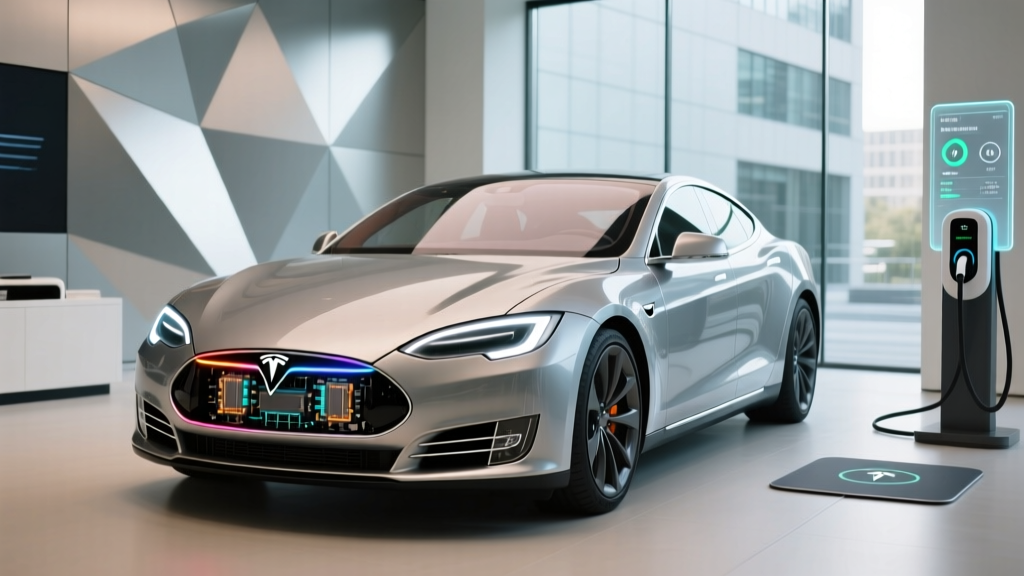
The Model S remains Tesla's technology showcase. It pairs a 100 kWh NMC battery with up to 1,020 horsepower (Plaid), over-the-air software updates that materially change the car every few months, and the most advanced driver-assistance stack available to consumers. But as a car, it faces stiff competition from the Lucid Air, Porsche Taycan, and BMW i7 — vehicles that match or exceed it in ride refinement, interior materials, and rear-seat comfort. The Model S is best understood as a rolling software platform that happens to be a very fast, very capable luxury sedan.
| Spec | Model S Long Range | Model S Plaid |
|---|---|---|
| EPA Range | 402 mi | 396 mi |
| Battery (usable) | ~100 kWh, NMC | ~100 kWh, NMC |
| Drivetrain | Dual-Motor AWD | Tri-Motor AWD |
| Horsepower | 670 hp | 1,020 hp |
| 0-60 mph | 3.1 sec | 1.99 sec |
| Peak DC Charge Rate | 250 kW | 250 kW |
| 10-80% DC Time | ~27 min | ~27 min |
| Level 2 Home Rate | 11.5 kW (~41 mi/hr) | 11.5 kW (~41 mi/hr) |
| MPGe (combined) | 120 MPGe | 116 MPGe |
| Base MSRP | $79,990 | $94,990 |
Range and Efficiency: The Real-World Picture
Real-World Expectation: ~320-340 miles highway at 75 mph; ~260-290 miles in sub-freezing weather with cabin heat
Tesla's efficiency engineering is where the technology-company argument gets its strongest evidence. The Model S achieves 120 MPGe combined (fueleconomy.gov), translating to roughly 28 kWh per 100 miles — exceptional for a 4,500+ lb luxury sedan. That efficiency comes from a heat pump (standard on all Tesla models since 2021), an octovalve thermal management system that scavenges waste heat from the battery and drive units, and a drag coefficient of just 0.208.
But EPA estimates assume a mix of city and highway driving at moderate temperatures. On a 70°F day with mixed driving, hitting 380-400 miles is realistic. Sustained 80 mph highway driving in summer pushes consumption closer to 32 kWh/100mi, dropping effective range to roughly 310 miles. In winter conditions (below 32°F), battery preconditioning helps, but expect a 20-30% range reduction, landing most drivers between 260 and 290 miles between charges.
The 100 kWh NMC (nickel manganese cobalt) battery pack prioritizes energy density over cycle life compared to LFP chemistry. Tesla warranties the battery at 8 years or 150,000 miles, whichever comes first, with a minimum 70% capacity retention threshold — one of the more generous retention guarantees in the segment.
Charging Speed and Infrastructure
Charging is where Tesla's integrated approach — controlling the vehicle, the battery, and the charging network — delivers a tangible advantage over competitors relying on third-party networks.
| Charging Level | Power | Speed | Best For |
|---|---|---|---|
| Level 1 (120V) | ~1.4 kW | ~5 mi/hr | Emergency / trickle |
| Level 2 (240V, 48A) | 11.5 kW | ~41 mi/hr | Daily home charging |
| DC Fast (V3 Supercharger) | Peak 250 kW | 10-80% in ~27 min | Road trips |
| DC Fast (V4 Supercharger) | Peak 250 kW* | 10-80% in ~25 min | Road trips (newer stations) |
*Model S architecture is limited to ~250 kW peak; V4 posts can deliver more to compatible vehicles.
The Model S peaks at 250 kW on V3 and V4 Superchargers, but that peak is sustained only between roughly 10-30% state of charge. The charge curve tapers progressively: expect ~180 kW at 50% SoC, dropping to ~60 kW by 80%. This is typical for NMC packs, which are more sensitive to high-SoC charging stress than LFP. Tesla's navigation system automatically preconditions the battery when you route to a Supercharger, warming it to the optimal temperature for maximum charge acceptance — a software-driven feature that meaningfully improves real-world charge times, especially in cold weather.
At home on a Wall Connector (240V, 48 amps), the Model S adds roughly 41 miles of range per hour, meaning a full overnight session easily replenishes a day's driving. The NACS connector is native, and Tesla's Supercharger network — now exceeding 25,000 stalls in North America — remains the most reliable DC fast-charging ecosystem, with Tesla reporting over 99.9% uptime.
Performance and Driving Dynamics
The Model S Plaid's 1.99-second 0-60 mph time makes it one of the quickest production cars ever built. But even the Long Range model's 3.1-second sprint and 670 hp are supercar-adjacent. The tri-motor Plaid uses a carbon-sleeved rotor design that sustains peak power to over 200 mph without the power fade common in single- or dual-motor EVs at high speed.
What separates the Model S from traditional luxury sedans is the software-defined driving experience. Acceleration boost can be purchased over-the-air. Suspension damping, steering weight, and regen strength are all adjustable via the touchscreen. Tesla's yoke steering (optional) removes the upper rim for improved display visibility, though it remains polarizing for low-speed maneuvering.
Ride quality has improved with the 2023+ refresh (adaptive air suspension, updated bushings), but the Model S still prioritizes sport over isolation. The BMW i7 and Mercedes EQS absorb road imperfections more gracefully. Road noise at highway speeds is well-controlled but not class-leading.
Tesla's Technology Stack: The Core Argument
This is where the "is Tesla a technology company" question gets answered most definitively. No other automaker replicates the following combination:
- Vertical integration: Tesla designs its own SoCs (the FSD computer), battery cells (4680 format, in partnership with Panasonic), drive units, and vehicle software — down to the operating system.
- Over-the-air updates: The Model S receives substantive updates that add features (new games, UI overhauls, efficiency improvements) long after purchase. A 2021 Model S is a meaningfully different car in 2026 than the day it was delivered.
- Supercomputer training: Tesla trains its neural networks on a custom supercomputer cluster (Dojo + NVIDIA H100 arrays), processing video from millions of vehicles to improve FSD — an approach more typical of an AI company than an OEM.
- Direct-to-consumer sales: No dealership network. Purchases, service scheduling, and software upgrades all flow through Tesla's app — closer to Apple's ecosystem than Ford's.
FSD (Supervised) — currently priced at $8,000 as a one-time purchase or $99/month — handles highway lane changes, city street navigation, and traffic light/stop sign recognition. In our testing, it manages the majority of driving scenarios competently but still requires active supervision for construction zones, unprotected left turns, and ambiguous lane markings. It is a compelling driver-assist tool, not a replacement for an attentive driver.
Interior, Cargo, and Daily Practicality
The Model S interior is minimalist by design — a 17-inch landscape touchscreen dominates the dash, with nearly all vehicle controls routed through it. Build quality has improved substantially since the 2023 refresh, with ventilated front seats, a rear-seat entertainment screen, and a 22-speaker audio system that rivals anything in the luxury segment.
Practical dimensions:
- Cargo (rear trunk): 28.4 cu ft
- Frunk (front trunk): 5.3 cu ft
- Total cargo with rear seats folded: ~50 cu ft (estimated, hatchback design)
- Rear legroom: 35.4 inches
- Front headroom: 38.8 inches
The hatchback liftback design gives the Model S a cargo advantage over traditional trunk sedans like the BMW i7. However, the Lucid Air offers comparable rear-seat space with a more traditional luxury feel, and its 32 cu ft trunk is slightly larger. For families with rear-facing car seats, the Model S rear door opening is adequate but not generous.
Pricing, Tax Credits, and Ownership Cost
| Trim | MSRP | Federal Credit (§30D) | Effective Price* |
|---|---|---|---|
| Model S Long Range | $79,990 | $0 (exceeds MSRP cap) | $79,990 |
| Model S Plaid | $94,990 | $0 (exceeds MSRP cap) | $94,990 |
*Effective price before state incentives, destination fees, or optional equipment. Consult IRS §30D guidelines and a tax professional for personal eligibility.
The Model S does not qualify for the $7,500 federal EV tax credit. Under current IRS §30D rules, sedans must have an MSRP at or below $55,000 to be eligible — and the Model S starts at $79,990. Buyers with adjusted gross income above $150,000 (single) or $300,000 (joint) face additional eligibility restrictions on the credit anyway. Some states offer separate rebates or tax incentives for EVs above the federal cap; check your state's energy office for current programs.
Total cost of ownership remains competitive despite the lack of a federal credit. Electricity costs roughly $0.14/kWh nationally, making a full Model S charge about $14 — versus $65-80 for a comparable gas sedan at current fuel prices. Maintenance is minimal (no oil changes, fewer brake replacements due to regen), though Tesla's insurance costs tend to run 15-25% higher than segment averages due to repair-cost data.
- Class-leading efficiency (120 MPGe) and range (402 mi EPA)
- Access to Tesla Supercharger network — best reliability in the industry
- Continuous OTA improvements add long-term value
- Best-in-class performance (Plaid: 1.99s 0-60)
- Hatchback versatility with frunk adds practicality
- 8-year/150,000-mile battery warranty with 70% retention
- Does not qualify for $7,500 federal tax credit (MSRP cap)
- Interior materials and ride refinement trail Lucid Air, BMW i7
- Yoke steering is polarizing and unavailable on some configs
- FSD still requires active supervision (SAE Level 2)
- Service center availability varies significantly by region
- Insurance premiums above segment average
Is the Model S Worth It vs. the Competition?
Choose the Lucid Air if: You want more rear-seat space, a more luxurious interior, and comparable (or greater) range with a more traditional luxury sedan experience.
Choose the Porsche Taycan if: Driving dynamics, steering feel, and build quality are your top priorities, and you can accept shorter range (~246-288 mi EPA) and CCS charging (though Taycan now supports NACS via adapter).
Choose the BMW i7 if: You want a full-size luxury flagship with a serene ride, premium materials, and don't mind the larger footprint and higher starting price.
So — is Tesla a technology company? The Model S makes a compelling case that the answer is yes, but with a crucial caveat: the technology serves the car, not the other way around. Tesla's software-first approach means the Model S improves over time in ways that a traditional luxury sedan simply cannot. But for buyers who prioritize rear-seat comfort, tactile interior quality, or dealer-based service, traditional luxury EVs close the gap — and in some areas, surpass it.
Frequently Asked Questions
What is the real-world range of the 2026 Tesla Model S?
The EPA rates the Model S Long Range at 402 miles. In real-world highway driving at 75 mph, expect 320-340 miles. In sub-freezing temperatures, that drops to roughly 260-290 miles. The Plaid trim loses about 6 miles of EPA range (396 mi) due to the tri-motor configuration's slightly higher consumption.
How fast does the Model S charge at home and on the road?
At home on a Level 2 Tesla Wall Connector (240V, 48A), the Model S charges at 11.5 kW, adding about 41 miles of range per hour — a full charge takes roughly 9-10 hours. On a V3 or V4 Supercharger, it peaks at 250 kW, achieving a 10-80% charge in approximately 27 minutes. The charge curve tapers significantly above 50% SoC.
Does the Tesla Model S qualify for the federal EV tax credit?
No. Under current IRS §30D rules, new sedans must have an MSRP of $55,000 or less to qualify for the $7,500 credit. The Model S starts at $79,990, well above the cap. Additionally, buyer income limits ($150K single / $300K joint AGI) and battery critical-mineral sourcing requirements apply to eligible vehicles. State incentives may still apply — check your state's energy department.
Is Tesla's Full Self-Driving actually self-driving?
No. Tesla FSD (Supervised) is an SAE Level 2 driver-assistance system. It can handle highway driving, city navigation, and parking, but the driver must remain fully engaged, hands on the wheel (or providing torque input), and eyes on the road at all times. The driver is legally responsible for all vehicle operation. True autonomous driving (SAE Level 4) is currently only available through robotaxi services like Waymo in specific geofenced areas.
What battery chemistry does the Model S use, and how long will it last?
The Model S uses an NMC (nickel manganese cobalt) lithium-ion battery pack, chosen for its high energy density. Tesla warranties the battery for 8 years or 150,000 miles (whichever comes first) with a minimum 70% capacity retention guarantee. Real-world data from Tesla's fleet suggests NMC packs typically retain 85-90% capacity after 100,000 miles, with degradation slowing significantly after the initial 10-15% loss in the first 20,000-30,000 miles.
Is the Model S worth buying over the Lucid Air or Porsche Taycan?
It depends on priorities. The Model S wins on Supercharger access, OTA improvement cadence, efficiency (MPGe), and FSD capability. The Lucid Air wins on interior luxury, rear-seat space, and peak range (up to 516 mi EPA on Air Grand Touring). The Porsche Taycan wins on driving dynamics, steering feel, and 800V charging architecture (though at lower range). For road-trip-heavy buyers, the Model S's charging network advantage is difficult to overstate.