Is the Tesla Model Y an SUV? The Short Answer
If you've typed "is Model Y an SUV" into a search bar, you're not alone. The Tesla Model Y sits in a gray area that confuses shoppers, insurers, and even the federal government. Tesla markets it as a "mid-size SUV," the EPA classifies it as a small sport utility vehicle, and automotive journalists routinely call it a crossover. So which is it?
The answer depends on which definition you apply. By the traditional body-on-frame standard — the kind that defines a Jeep Wrangler or Toyota 4Runner — the Model Y is not an SUV. It's a unibody, car-based crossover built on the same platform as the Model 3 sedan. But by the modern, consumer-facing definition that the EPA, NHTSA, and most buyers use, the Model Y qualifies as an SUV. It has a tall ride height, available all-wheel drive, a hatchback cargo area, and seating for up to seven (with the optional third row on certain trims).
Why does this classification matter? Because it affects your federal tax credit eligibility. Under IRS §30D rules, SUVs have a higher MSRP cap ($80,000) than sedans ($55,000). The Model Y's classification as an SUV is precisely what keeps it in the higher cap bracket, preserving its eligibility for the up-to-$7,500 federal EV tax credit. If the IRS reclassified it as a sedan, many trims would lose credit eligibility overnight.
Let's get into the full profile of the 2026 Tesla Model Y — range, charging, pricing, space, and whether it actually earns the SUV badge in practice.
2026 Tesla Model Y: Spec Snapshot
| Specification | Value |
|---|---|
| EPA Range | 320 miles (Long Range AWD) |
| Real-World Highway Range | ~270–290 mi (70+ mph); ~230–250 mi in cold weather |
| Battery Capacity | ~78 kWh usable (NMC chemistry, Long Range) |
| Drivetrain | Dual-motor AWD (Long Range / Performance); RWD (base) |
| Horsepower | ~384 hp (Long Range AWD); ~456 hp (Performance) |
| 0–60 mph | 4.8 sec (Long Range); 3.5 sec (Performance) |
| Max DC Fast Charge | 250 kW peak (V3 Supercharger) |
| 10–80% DC Charge Time | ~25–27 minutes |
| Level 2 Home Charge Rate | 11.5 kW (~44 mi/hr) |
| Efficiency | 122 MPGe combined / 28 kWh/100 mi |
| Cargo Volume | 30.2 cu ft (rear seats up); 72.1 cu ft (rear seats folded) |
| Seating | 5 standard; optional 7 (select trims) |
| Base MSRP | $44,990 (Long Range AWD, before destination) |
| Battery Warranty | 8 years / 120,000 miles |
Range and Efficiency: EPA vs. Reality
Real-World Expectation: Plan for 270–290 miles on highway road trips at 70–75 mph. In freezing temperatures (below 32°F), expect a 20–30% reduction — roughly 220–255 miles. City driving with regenerative braking can match or slightly exceed the EPA figure.
The Model Y Long Range AWD carries an EPA-estimated 320 miles of range, which remains one of the highest figures in the compact luxury crossover segment. But as with every EV, the sticker number tells only part of the story.
In EPA testing, the Model Y achieves 122 MPGe combined, translating to roughly 28 kWh per 100 miles. That efficiency figure is excellent — it's why Tesla can deliver 320 miles from a ~78 kWh battery, while competitors need 90+ kWh packs for similar range.
Highway reality: Sustained speeds above 70 mph increase aerodynamic drag substantially. On a 300-mile interstate trip at 75 mph in moderate temperatures, expect to arrive with roughly 30–50 miles of buffer — not the 100+ miles the EPA sticker might suggest. Plan charging stops accordingly.
Cold-weather reality: Lithium-ion batteries lose efficiency in cold temperatures, and cabin heating draws significant energy. The Model Y uses a heat pump (standard since the 2021 refresh), which helps — but in sub-freezing conditions, a 20–30% range reduction is normal. If you live in Minnesota or Maine, budget for ~230 miles of usable winter range.
Battery chemistry note: The Long Range and Performance trims use NMC (nickel manganese cobalt) chemistry, which offers higher energy density but is more sensitive to sustained 100% state-of-charge storage. Tesla recommends daily charging to 80–90% for NMC packs, reserving 100% for road trips. This means your daily usable range is closer to 256–288 miles.
Charging Speed: DC Fast, Level 2, and the Supercharger Advantage
| Charging Level | Power (kW) | Speed (miles/hr) | Notes |
|---|---|---|---|
| Level 1 (120V household) | ~1.4 kW | ~5 mi/hr | Emergency/trickle only |
| Level 2 (240V home, 48A) | 11.5 kW | ~44 mi/hr | Full charge overnight (~7–8 hrs) |
| DC Fast (Tesla V3 Supercharger) | 250 kW peak | ~1,000 mi/hr (peak) | 10–80% in ~25–27 min |
| DC Fast (CCS adapter, non-Tesla) | ~150–250 kW | Varies by station | Requires CCS adapter (included or ~$175) |
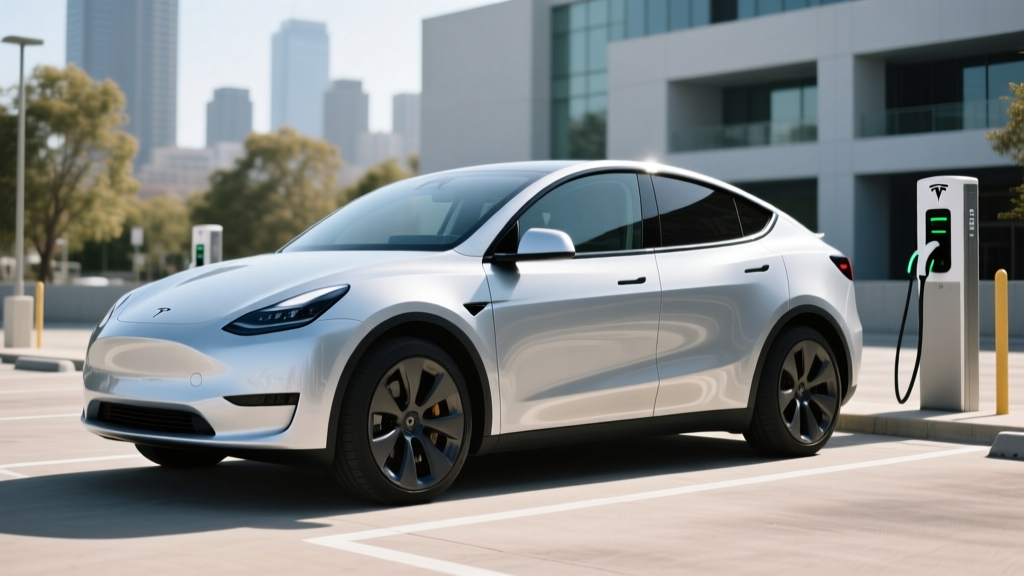
The Model Y's charging story is one of its strongest selling points, largely because of Tesla's Supercharger network. At a V3 Supercharger (250 kW), the Model Y Long Range can add roughly 175 miles of range in 15 minutes under ideal conditions. The 10–80% charge takes approximately 25–27 minutes.
However, charging speed isn't constant — it follows a charge curve. The 250 kW peak only holds at low states of charge (roughly 10–30%). As the battery fills, the rate tapers: expect ~150 kW around 50% SoC, and ~50 kW above 80%. This is why Tesla and most EV experts recommend charging to 80% on road trips rather than topping off — the last 20% can take as long as the first 60%.
Home charging: With a Tesla Wall Connector on a 60-amp circuit (48 amps continuous), the Model Y charges at 11.5 kW, adding about 44 miles of range per hour. A full charge from 10% takes roughly 7–8 hours — easily accomplished overnight. Installation costs for a 240V/60A circuit typically range from $500 to $2,000 depending on panel proximity and local electrician rates. If your home has a 100-amp electrical panel, you may need a panel upgrade ($1,500–$3,000) to support a dedicated 60-amp EV circuit.
Non-Tesla DC charging: The 2026 Model Y now ships with the NACS (North American Charging Standard) port natively. Tesla has opened portions of the Supercharger network to non-Tesla EVs, and conversely, Model Y owners can use CCS-equipped stations (Electrify America, EVgo) with a CCS-to-NACS adapter. Speeds on third-party chargers vary — expect 150–250 kW at modern stations, though reliability remains inconsistent compared to Superchargers.
Performance, Drivetrain, and What It Feels Like to Drive
The Model Y's performance depends on the trim:
- Long Range AWD: Dual-motor all-wheel drive, ~384 hp, 0–60 mph in 4.8 seconds. This is the volume seller and the best balance of range and performance.
- Performance: Dual-motor AWD, ~456 hp, 0–60 mph in 3.5 seconds. Sacrifices ~20 miles of range for substantially quicker acceleration, larger brakes, and a sport-tuned suspension.
- Base RWD (if available in your market): Single-motor rear-wheel drive with an LFP battery (~60 kWh). Lower range (~280 mi EPA), but the LFP chemistry can be charged to 100% daily without degradation concerns.
On the road, the Model Y drives more like a tall hatchback than a truck-based SUV. The low center of gravity (battery pack under the floor) gives it confident cornering, and the instant torque from the electric motors makes merging and passing effortless. The ride quality is firm — some would say too firm for rough pavement — and road noise is more noticeable than in luxury competitors like the Genesis Electrified GV70 or BMW iX.
Regenerative braking: Tesla's one-pedal driving mode is strong enough to bring the car to a complete stop without touching the brake pedal in most city driving. However, Tesla removed the user-adjustable regen setting in recent model years — it's always set to maximum, which some drivers find abrupt on the highway.
Interior, Cargo, and the SUV Practicality Test
This is where the "is it an SUV?" question gets practical. An SUV should offer elevated seating, generous cargo space, and family-friendly dimensions. The Model Y delivers on most fronts:
- Cargo behind rear seats: 30.2 cubic feet — competitive with compact SUVs like the Audi Q5 (25.8 cu ft) and larger than the BMW X3 (28.7 cu ft).
- Cargo with rear seats folded: 72.1 cubic feet — enough for a full sheet of plywood, which is genuine SUV territory.
- Front trunk (frunk): 4.1 cubic feet — useful for charging cables, groceries, or a small carry-on.
- Rear legroom: 41.6 inches — generous for adults on longer trips.
- Optional third row: Available on select trims, but the 22.3 inches of third-row legroom is best suited for children under 10. Adults will not be comfortable back there for more than a few minutes.
The interior design is minimalist to a fault. There's a single 15.4-inch touchscreen that handles everything — climate controls, glovebox release, mirror adjustment, speedometer. There are no physical buttons, no instrument cluster, and no heads-up display. Some buyers love the clean aesthetic; others find it distracting and frustrating, especially when trying to adjust the climate while driving.
Build quality has improved substantially since the early Fremont-built Model Ys. The 2026 version (now built primarily at Gigafactory Texas for the US market) features tighter panel gaps, acoustic glass, and ventilated front seats as standard on Long Range and Performance trims.
Pricing, Trims, and Federal Tax Credit Eligibility
| Trim | Base MSRP | §30D Credit Eligible? | Effective Price (with credit) |
|---|---|---|---|
| Long Range AWD | $44,990 | Yes (if income/sourcing rules met) | ~$37,490 |
| Performance AWD | $48,990 | Yes (if income/sourcing rules met) | ~$41,490 |
The Model Y is classified by the IRS as an SUV, which means it falls under the $80,000 MSRP cap for §30D tax credit eligibility (sedans are capped at $55,000). Both the Long Range and Performance trims clear this threshold comfortably.
However, MSRP is only one of several §30D requirements. To claim the full $7,500 federal tax credit, you must also meet:
- Income caps: Modified adjusted gross income (MAGI) below $150,000 (single filers), $225,000 (head of household), or $300,000 (joint filers).
- Battery sourcing rules: A percentage of critical minerals and battery components must be sourced from the US or free-trade-agreement countries. These percentages increase annually. Tesla has worked to localize its supply chain, but eligibility can shift — always verify on the IRS's official credit list before purchasing.
- Point-of-sale transfer: As of 2024, you can transfer the credit to the dealer at purchase, reducing your out-of-pocket cost immediately rather than waiting to claim it on your tax return. Tesla supports this at checkout.
Important caveat: Tax credit eligibility rules change frequently, and battery-sourcing compliance can vary by production batch. Always confirm current eligibility on IRS.gov or with a tax professional before basing your purchase decision on the credit.
Driver Assistance and Tech: Autopilot and FSD Reality Check
The Model Y comes standard with Basic Autopilot, which includes adaptive cruise control and lane-centering on highways. It works well on well-marked interstates but requires constant steering-wheel torque input to confirm driver attention.
The optional Full Self-Driving (Supervised) package ($8,000 as of 2026, or $99/month) adds automatic lane changes, navigation-on-autopilot (auto-exiting and merging on highways), traffic light and stop sign recognition, and an "Autosteer on city streets" feature. FSD has improved substantially through neural-network-based "end-to-end" software, but it still makes errors — particularly at construction zones, unusual intersections, and in heavy rain. Treat it as a fatigue-reduction aid, not a replacement for driving.
Other tech highlights:
- Over-the-air software updates that add features and improve performance monthly
- Sentry Mode (360° camera-based security recording while parked)
- Dog Mode (climate control for pets left in the vehicle)
- Theater mode (streaming on the main display while parked)
- No Apple CarPlay or Android Auto — Tesla's proprietary infotainment is the only option
Pros, Cons, and Who Should Buy the Model Y
Pros
- Class-leading range (320 mi EPA) and efficiency (122 MPGe)
- Access to Tesla Supercharger network — still the most reliable DC fast-charging network in the US
- Genuine SUV cargo space (72.1 cu ft max) with a flat load floor
- Strong performance (3.5–4.8 sec 0–60) without a performance-EV price premium
- Over-the-air updates keep the vehicle improving post-purchase
- Eligible for $7,500 federal tax credit (subject to income/sourcing rules)
- Excellent safety ratings (NHTSA 5-star)
Cons
- No Apple CarPlay/Android Auto — Tesla's UI is the only option
- Minimalist interior lacks physical controls; everything routes through the touchscreen
- Firm ride quality and noticeable road noise on rough surfaces
- FSD ($8,000) remains a Level 2 system, not true self-driving
- Optional third row is impractical for anyone over ~4'10"
- Insurance premiums tend to run 15–25% higher than comparable non-Tesla crossovers
- Cold-weather range loss (20–30%) is significant in northern climates
Who the Model Y Is Best For
- Commuters and daily drivers: 320 miles of range means most people charge once or twice a week at home, with zero gas station visits.
- Young families: Two car seats fit easily in the second row, with 30+ cu ft of cargo space for strollers and groceries.
- Road-trip enthusiasts: Supercharger coverage is unmatched. With 15-minute charging stops every 200–250 miles, cross-country trips are practical.
- Tech-forward buyers: If you want OTA updates, app-based vehicle control, and a software-defined car, Tesla leads the industry.
Who should look elsewhere: Buyers who need a true third row for teenagers, prefer physical buttons, want Apple CarPlay, or live in areas with no home-charging access should consider the Hyundai Ioniq 5, Kia EV6, or Ford Mustang Mach-E.
Frequently Asked Questions
Is the Tesla Model Y classified as an SUV or a car for tax credit purposes?
The IRS classifies the Model Y as a sport utility vehicle, which places it under the $80,000 MSRP cap for §30D credit eligibility (versus $55,000 for sedans). This classification is what allows both the Long Range ($44,990) and Performance ($48,990) trims to qualify for the up-to-$7,500 credit, assuming the buyer meets income and battery-sourcing requirements.
What is the real-world range of the Model Y on a road trip?
On a highway trip at 70–75 mph in moderate temperatures (60–80°F), expect roughly 270–290 miles from the Long Range AWD's 320-mile EPA rating. In cold weather (below freezing), plan for 220–255 miles. City driving with frequent regenerative braking can match or slightly exceed the EPA figure.
How fast does the Model Y charge at home and on the road?
At home on a 240V/48A Level 2 charger, the Model Y charges at 11.5 kW, adding about 44 miles of range per hour — a full overnight charge takes 7–8 hours. On a Tesla V3 Supercharger (250 kW peak DC), it charges from 10–80% in approximately 25–27 minutes, adding roughly 175 miles in the first 15 minutes.
Is the Model Y worth buying over the Hyundai Ioniq 5 or Ford Mustang Mach-E?
The Model Y wins on range (320 vs. ~300 mi), Supercharger network access, and software features. The Ioniq 5 wins on 800V ultra-fast charging capability (10–80% in ~18 min at a 350 kW charger), physical buttons, and a more comfortable ride. The Mach-E offers a more traditional interior layout and available CarPlay. If charging infrastructure access and maximum range are your top priorities, the Model Y has the edge. If ride comfort and interior ergonomics matter more, test-drive the Ioniq 5 and Mach-E before committing.
Does the Model Y qualify for the $7,500 federal EV tax credit in 2026?
Yes — with conditions. The Model Y is under the $80,000 SUV MSRP cap and Tesla has worked to meet battery-sourcing requirements. However, you must also fall under the income caps ($150K single / $300K joint MAGI) and the specific vehicle's battery must meet the current year's critical-mineral and component-sourcing thresholds. Always verify on IRS.gov before purchasing, as eligibility can change with supply-chain updates.
Can the Model Y tow? Is it a real SUV for outdoor use?
The Model Y has a 3,500-pound towing capacity (when equipped with the factory tow package), which is adequate for a small boat trailer, a pair of jet skis, or a lightweight camping trailer. It's not in the same league as a body-on-frame SUV like the Ford Bronco or Rivian R1S (7,700 lb), but it matches many unibody crossovers. Add the available roof rack and all-weather floor mats, and it handles ski trips and camping weekends competently — it just won't tackle serious off-road trails.
How long will the Model Y battery last?
Tesla warranties the battery for 8 years or 120,000 miles (whichever comes first), guaranteeing at least 70% capacity retention during that period. Real-world data from high-mileage Tesla owners suggests NMC packs typically retain 85–90% capacity at 100,000 miles when charged primarily to 80–90%. Battery replacement, if needed out of warranty, currently costs $12,000–$16,000 depending on the pack — but full replacements are rare within the first decade of ownership.