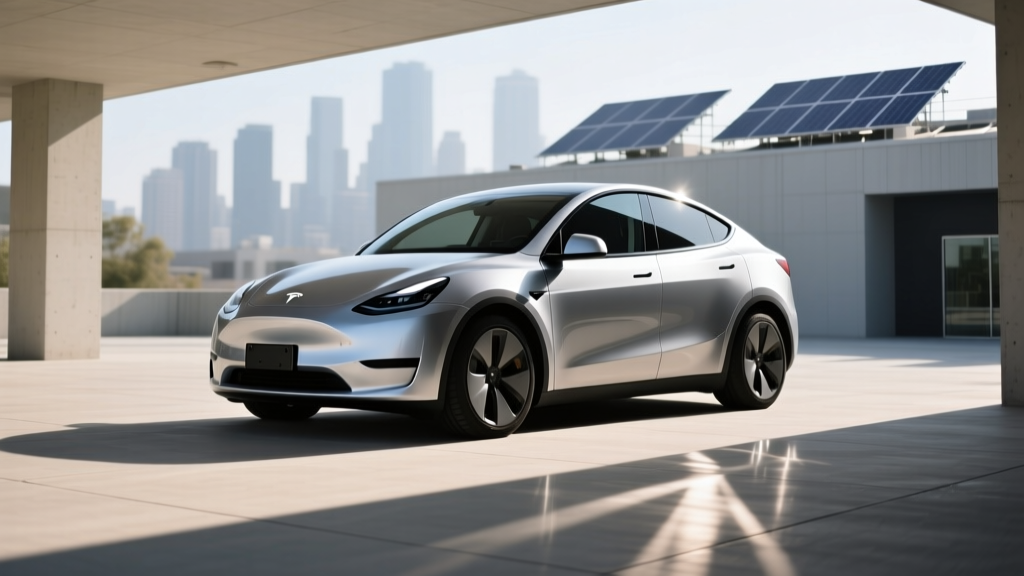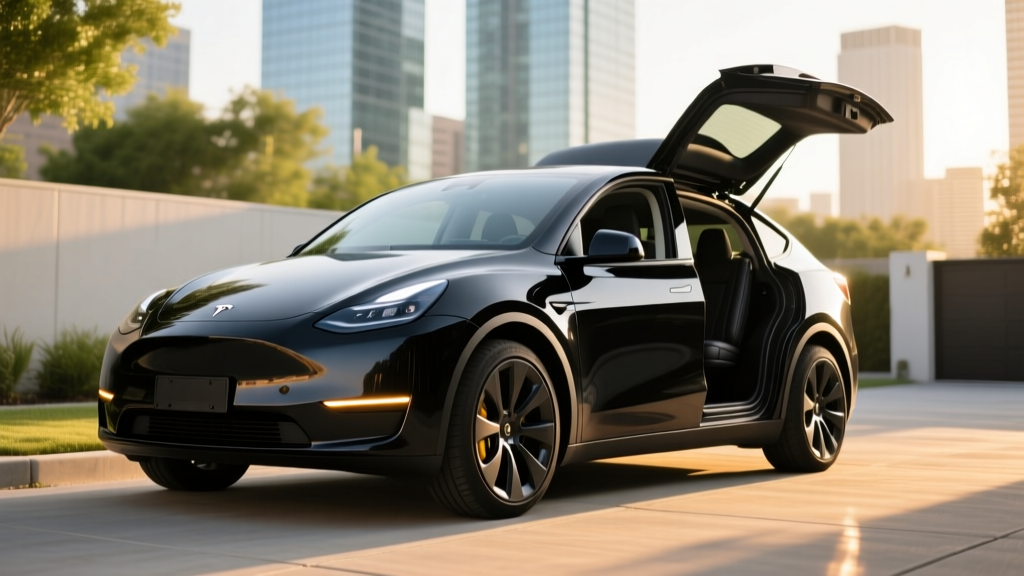
If you've browsed EV listings or debated with friends about vehicle categories, you've likely asked: is a Tesla Model Y an SUV? The short answer is yes — the U.S. Environmental Protection Agency classifies the Model Y as a small sport-utility vehicle, and the National Highway Traffic Safety Administration (NHTSA) treats it as a light truck for CAFE purposes. But the more useful question for buyers is what that classification actually means for cargo space, ground clearance, seating, and efficiency compared to traditional box-on-frame SUVs and sleek crossovers alike.
In this review, we'll dissect the 2026 Tesla Model Y — its real-world range, charging behavior, pricing after federal tax credits, and how it stacks up against competitors like the Hyundai Ioniq 5, Ford Mustang Mach-E, and Kia EV6. Whether you're cross-shopping for a family hauler or a commuter with cargo flexibility, this guide gives you the exact numbers to decide.
Classification: Crossover SUV, Not a Traditional Truck-Based SUV
The Tesla Model Y rides on a unibody platform shared with the Model 3 sedan. That makes it a crossover SUV — a car-based utility vehicle with a taller roofline, hatchback cargo area, and optional third-row seating, but without the body-on-frame construction of a traditional SUV like a Toyota 4Runner or Jeep Wrangler.
The EPA officially lists the Model Y under "Small Sport Utility Vehicle" on fueleconomy.gov. This matters for two reasons:
- Federal tax credit eligibility: Under IRS §30D rules, SUVs have a higher MSRP cap ($80,000) than sedans ($55,000), which keeps every Model Y trim eligible on price alone.
- Efficiency ratings: The EPA rates it using the combined city/highway cycle for light trucks, yielding its MPGe figure.
Ground clearance sits at approximately 6.6 inches — adequate for snow and gravel roads, but not designed for serious off-roading. Approach and departure angles are car-like, not truck-like. If you need genuine trail capability, the Model Y isn't the tool; if you need a daily driver with SUV-class utility, it fits the bill.
2026 Tesla Model Y Spec Table
| Attribute | Value |
|---|---|
| EPA Range | 320 miles |
| Battery (usable) | ~75 kWh, NMC chemistry |
| Drivetrain | Dual-motor AWD |
| Horsepower | 384 hp (combined) |
| 0–60 mph | 4.8 seconds |
| Peak DC Fast Charge | 250 kW |
| 10–80% DC Charge Time | ~27 minutes |
| Level 2 Home Charge Rate | 11.5 kW (~44 mi/hr) |
| Efficiency | 122 MPGe combined / 28 kWh/100 mi |
| Cargo (rear seats up) | 30.2 cu ft |
| Cargo (rear seats folded) | 72.1 cu ft |
| Legroom (front / rear) | 41.8 in / 37.3 in |
| Seating | 5 standard; optional 7-seat (small 3rd row) |
| Towing Capacity | 3,500 lbs |
| Battery Warranty | 8 years / 120,000 miles |
| Base MSRP (Long Range AWD) | $44,990 |
Real-World Range: What the EPA Number Doesn't Tell You
EPA sticker: 320 miles (Long Range AWD)
Real-world highway (70–75 mph, mild weather): ~265–285 miles
Real-world city/mixed driving: ~290–310 miles
Cold weather (below 32°F, highway): ~210–245 miles
The Model Y includes a heat pump, which reduces winter range loss compared to resistive-heater EVs, but expect a 20–30% hit in sub-freezing highway driving.
The Model Y Long Range AWD carries an EPA rating of 320 miles, placing it among the longest-range electric crossovers available. The base Rear-Wheel Drive trim (with an LFP battery) rates at approximately 260 miles EPA.
But EPA numbers are generated under controlled laboratory conditions. In real-world testing, highway driving at sustained speeds of 70–75 mph consumes more energy due to aerodynamic drag. On a 300-mile road trip from Denver to Grand Junction at 75 mph in 65°F weather, expect to arrive with roughly 15–20% state of charge remaining — achievable but tight. Preconditioning the battery before departure and using Tesla's built-in trip planner helps optimize energy use.
Cold weather compounds the loss. Lithium-ion batteries lose efficiency below freezing, and cabin heating draws significant power. The Model Y's standard heat pump is more efficient than resistive heating (used in some older EVs), but you should still plan for 210–245 miles of usable range on a 20°F winter highway drive. For commuters in northern states, this is manageable; for cross-country winter road trips, it requires more charging stops.
Charging Speed: DC Fast, Level 2, and the Supercharger Advantage
Charging speed is where the Model Y's ownership experience separates from much of the competition, largely due to Tesla's vertically integrated Supercharger network.
| Charging Level | Power | Miles Added per Hour | Notes |
|---|---|---|---|
| Level 1 (120V household) | ~1.4 kW | ~5 mi/hr | Emergency/trickle only |
| Level 2 (240V home wall connector) | 11.5 kW | ~44 mi/hr | Full overnight charge in ~7–8 hrs |
| DC Fast (Tesla Supercharger V3) | Up to 250 kW peak | ~175 mi in 15 min | 10–80% in ~27 min |
| DC Fast (CCS adapter, non-Tesla) | Up to 150–175 kW typical | Varies by station | Requires CCS adapter (included with newer models) |
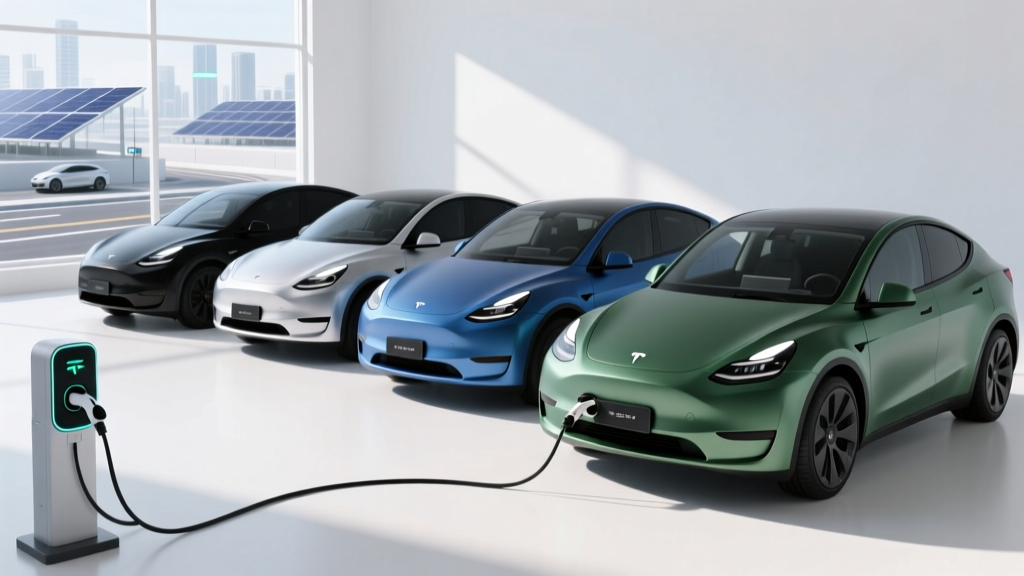
DC fast charging reality: The Model Y peaks at 250 kW on V3 Superchargers, but that peak only holds from roughly 10–30% state of charge. The charge curve tapers significantly above 50%, and drops sharply past 80%. This is normal for NMC lithium-ion chemistry — charging the final 20% can take as long as the first 60%. Tesla's navigation system automatically preconditions the battery when you route to a Supercharger, which is critical for achieving peak charge rates. Without preconditioning (e.g., arriving at a charger with a cold battery), peak rates may drop to 100–120 kW.
Home Level 2 charging: The Tesla Wall Connector delivers up to 11.5 kW on a 48-amp circuit, adding about 44 miles of range per hour. A full charge from 10% to 100% takes roughly 7–8 hours — ideal for overnight charging. Installation typically requires a NEMA 14-50 outlet or hardwired connection on a 60-amp breaker. Expect $500–$2,000 for professional installation depending on your electrical panel's capacity and distance from the panel to the garage. If your home has a 100-amp main panel, a panel upgrade to 200 amps may add $1,500–$3,000.
Non-Tesla networks: As of 2025–2026, Tesla has opened select Supercharger stalls to non-Tesla EVs, and Tesla vehicles can use CCS-equipped public chargers (Electrify America, EVgo) with an adapter. However, the Supercharger network remains the most reliable DC fast-charging option in the U.S., with over 6,000 stations and plug-and-charge billing — no app fumbling or payment failures at the stall.
Performance and Driving Dynamics
The 2026 Model Y Long Range AWD produces 384 combined horsepower from its dual-motor setup and sprints to 60 mph in 4.8 seconds. That's sports-sedan acceleration in a family crossover — a duality that defines the Model Y's appeal.
The dual-motor all-wheel-drive system provides instant torque to all four wheels without a mechanical driveshaft or transfer case. Traction in rain and light snow is excellent. The Performance trim (when available) drops the 0–60 time to approximately 3.5 seconds with 456 hp, at the cost of about 15–20 miles of range.
Ride quality has improved in the latest generation with revised suspension tuning that reduces the harshness over sharp bumps — a common complaint in pre-2024 models. Cabin noise levels are lower, though still not as hushed as a Genesis Electrified GV70 or BMW iX at highway speeds.
Towing: The Model Y is rated for 3,500 pounds when properly equipped. That handles a small utility trailer, a pair of jet skis, or a lightweight teardrop camper. It does not replace a full-size SUV for boat or horse-trailer duty. Towing also cuts range roughly in half — plan for 150–170 miles between charges when pulling near max capacity.
Interior, Cargo, and Technology
The Model Y's cabin follows Tesla's minimalist ethos: a single 15.4-inch touchscreen handles navigation, climate, media, and vehicle settings. There are no physical buttons, no instrument cluster, and no Apple CarPlay or Android Auto. For some buyers, this is refreshing simplicity; for others, it's a frustrating dependency on a single screen.
Cargo space: With the second row upright, you get 30.2 cubic feet — competitive with a Honda CR-V or Toyota RAV4. Fold the rear seats and capacity expands to 72.1 cubic feet, enough for furniture-hauling duty. The front trunk (frunk) adds roughly 4.1 cubic feet for charging cables, groceries, or a carry-on bag.
Optional third row: Tesla offers a $2,000 third-row seat option, bringing total capacity to seven. However, the third row is best suited for small children — legroom is extremely tight for anyone over about 5'4", and it eliminates most of the rear cargo area when deployed. Most buyers are better served by a dedicated three-row EV like the Kia EV9 or Hyundai Ioniq 9 if seven seats are a priority.
Driver assistance: Every Model Y ships with Tesla's Basic Autopilot, which includes adaptive cruise control and lane-centering. The optional Full Self-Driving (Supervised) package adds automated lane changes, traffic-light recognition, and city-street navigation. Per NHTSA and SAE classifications, FSD is a Level 2 system — the driver must remain fully engaged, hands on the wheel, and eyes on the road at all times. It is not autonomous driving.
Tesla's Autopilot and FSD (Supervised) are SAE Level 2 driver-assistance systems. They do NOT make the vehicle self-driving. The driver is legally and operationally responsible for all vehicle control at all times. FSD may make errors at construction zones, unmapped intersections, and in adverse weather. Never treat it as a substitute for attentive driving.
Pricing, Trims, and Federal Tax Credit Eligibility
| Trim | Base MSRP | Est. After §30D Credit | EPA Range |
|---|---|---|---|
| Long Range (RWD) | $42,990 | ~$35,490* | ~300 mi |
| Long Range AWD | $44,990 | ~$37,490* | 320 mi |
| Performance AWD | $48,990 | ~$41,490* | ~295 mi |
*Estimated price after the $7,500 federal tax credit, assuming full buyer and vehicle eligibility. Actual credit depends on individual circumstances.
The federal EV tax credit under IRS §30D offers up to $7,500 for qualifying new EVs. The Model Y benefits from the SUV MSRP cap of $80,000 (all trims fall well below this). However, eligibility is not automatic. Buyers must meet all of the following:
- Income caps: Modified adjusted gross income (MAGI) must not exceed $150,000 (single), $225,000 (head of household), or $300,000 (joint filers).
- Battery sourcing: The vehicle must meet critical-minerals and battery-component requirements that phase in annually. Tesla sources and manufactures battery cells domestically (via partnerships with Panasonic at Gigafactory Nevada/Texas), which has historically kept the Model Y eligible for the full $7,500. Verify current-year sourcing compliance on the IRS clean vehicle credit page before purchasing.
- Point-of-sale transfer: As of 2024, buyers can transfer the credit to the dealer at purchase, receiving the $7,500 as an immediate price reduction rather than waiting to claim it on their tax return. Tesla supports this at delivery.
Always confirm your personal eligibility with a tax professional. Rules change, and your specific income, filing status, and tax liability affect whether you can claim or transfer the full credit.
Model Y vs. Key Competitors
| Spec | Tesla Model Y LR AWD | Hyundai Ioniq 5 Limited AWD | Ford Mustang Mach-E Extended Range AWD | Kia EV6 GT-Line AWD |
|---|---|---|---|---|
| EPA Range | 320 mi | 290 mi | 305 mi | 282 mi |
| Battery | ~75 kWh NMC | 84 kWh NMC | 91 kWh NMC | 77.4 kWh NMC |
| Peak DC Charge | 250 kW | 238 kW | 150 kW | 233 kW |
| 10–80% Time | ~27 min | ~18 min | ~45 min | ~18 min |
| 0–60 mph | 4.8 sec | 5.1 sec | 5.6 sec | 5.1 sec |
| Cargo (rear up) | 30.2 cu ft | 27.2 cu ft | 29.7 cu ft | 24.4 cu ft |
| Base MSRP (AWD) | $44,990 | $52,600 | $48,995 | $51,900 |
| Charging Network | Supercharger (native) | NACS / CCS | NACS / CCS | NACS / CCS |
Where the Model Y wins: Range per dollar, cargo volume, Supercharger network access (still the most reliable DC network in the U.S.), and over-the-air software updates that add features post-purchase. The Ioniq 5 and EV6 charge faster from 10–80% thanks to their 800V architectures, but the Model Y's real-world Supercharger experience — with automatic billing and battery preconditioning — remains unmatched in convenience.
Where competitors win: The Ioniq 5 and EV6 offer 800V charging (faster 10–80% times), more traditional interior layouts with physical buttons, Apple CarPlay/Android Auto, and available vehicle-to-load (V2L) power. The Mach-E offers a more conventional dealership purchase and service experience. If you want a button-rich cabin or need V2L for camping, look at Hyundai/Kia.
- Class-leading 320-mi EPA range
- Supercharger network reliability
- Spacious 30.2 cu ft cargo area
- Quick 4.8-sec 0–60 mph (AWD)
- Strong OTA update track record
- Low operating cost (~$0.04–0.06/mi at home)
- No Apple CarPlay / Android Auto
- Everything routed through one touchscreen
- No V2L capability
- Third row is child-only
- Ride still firm on rough pavement
- Service center availability varies by region
Who Should Buy the Tesla Model Y?
Choose the Model Y if:
- You want the longest range per dollar in an electric crossover
- You road-trip frequently and value Supercharger network reliability
- You need maximum cargo volume in a compact footprint
- You're comfortable with a screen-centric, minimalist interior
- You can charge at home (Level 2) and want low daily operating costs
- You need genuine three-row seating for adults (consider Kia EV9)
- You require Apple CarPlay, Android Auto, or physical buttons
- You want V2L capability for camping or power outages (Ioniq 5/EV6)
- You prefer a traditional dealership service experience (Mach-E)
- You tow more than 3,500 lbs regularly (consider Rivian R1S or F-150 Lightning)
The Model Y is best understood as the default electric crossover for buyers who prioritize efficiency, range, and charging infrastructure over interior luxury or brand cachet. It's an outstanding commuter, a capable family hauler for households with two or fewer children, and one of the most practical EVs for multi-state road trips thanks to the Supercharger network. It is not a luxury SUV in the BMW iX sense, nor a genuine off-roader, nor a three-row people-mover.
Frequently Asked Questions
Is the Tesla Model Y classified as an SUV or a car?
The EPA classifies the Model Y as a "Small Sport Utility Vehicle." It is technically a crossover — a unibody, car-based platform with SUV-like cargo space and ride height. It does not have body-on-frame construction like a traditional truck-based SUV.
What is the real-world range of the Tesla Model Y?
The Long Range AWD model carries a 320-mile EPA rating. In real-world highway driving at 70–75 mph, expect 265–285 miles. In city and mixed driving, 290–310 miles is typical. Cold weather (below 32°F) reduces highway range to approximately 210–245 miles.
How fast does the Model Y charge at home and on the road?
At home on a Level 2 (240V) Tesla Wall Connector, the Model Y charges at up to 11.5 kW, adding about 44 miles of range per hour — a full overnight charge takes 7–8 hours. On a Tesla V3 Supercharger, it peaks at 250 kW and charges from 10–80% in approximately 27 minutes, though the rate tapers significantly above 50% state of charge.
Does the 2026 Tesla Model Y qualify for the $7,500 federal tax credit?
The Model Y qualifies on MSRP grounds (under the $80,000 SUV cap) and has historically met battery-sourcing requirements. However, buyer eligibility depends on income caps ($150K single / $300K joint MAGI) and current-year critical-mineral and battery-component rules. Verify eligibility on the IRS clean vehicle credit page and consult a tax professional before purchase.
Is the Model Y worth buying over the Hyundai Ioniq 5 or Ford Mach-E?
If range, cargo space, and charging-network reliability are your top priorities, the Model Y is the strongest pick. If you prefer faster 10–80% charging (Ioniq 5/EV6 with 800V), physical buttons, CarPlay, or V2L, those competitors are compelling alternatives. Test-drive all three — the cabin experience differs dramatically.
How long will the Model Y battery last?
Tesla warranties the Model Y's battery for 8 years or 120,000 miles (whichever comes first), guaranteeing at least 70% capacity retention. Real-world data from high-mileage Tesla owners suggests NMC batteries in the Model Y typically retain 85–90% capacity after 100,000 miles when charged primarily to 80–90% on Level 2 and DC fast-charged only for road trips. Battery replacement, if ever needed outside warranty, is estimated at $12,000–$16,000.
Can the Model Y tow a trailer?
Yes, the Model Y is rated to tow up to 3,500 pounds with the factory tow package. This covers small utility trailers, bike racks, and lightweight campers. Towing near maximum capacity will cut range roughly in half — plan charging stops accordingly.