The question "is Tesla luxury?" doesn't have a single answer. A Model 3 starts under $40,000 and competes with the Toyota Camry on price. A Model S Plaid cracks $90,000 and outruns a Porsche Taycan. Tesla's lineup spans the premium mainstream and the genuine luxury tier, and the distinction matters — especially when you're evaluating build quality, materials, ride refinement, and whether the federal tax credit applies to your purchase.
This review breaks down Tesla's current 2026 lineup through a luxury lens: specs, real-world range, charging performance, interior quality, and ownership economics. We'll help you decide which Tesla (if any) earns the luxury badge and which is better understood as a tech-forward premium appliance.
Tesla's 2026 Lineup: Where Luxury Begins
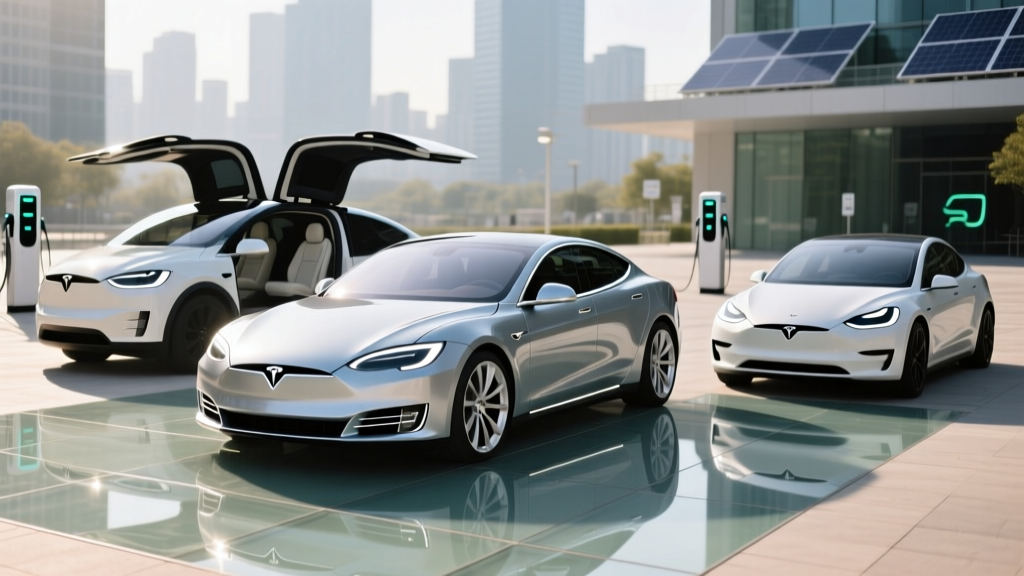
Tesla sells four core vehicles in the US for 2026: the Model 3 sedan, Model Y crossover, Model S luxury sedan, and Model X luxury SUV. The Cybertruck occupies its own category. For the luxury question, the relevant comparison is between the entry-level models (Model 3 and Model Y) and the flagship pair (Model S and Model X).
| Model | Body Style | Base MSRP | EPA Range | Segment |
|---|---|---|---|---|
| Model 3 RWD | Sedan | $38,990 | 272 mi | Premium mainstream |
| Model 3 Long Range AWD | Sedan | $45,490 | 341 mi | Premium mainstream |
| Model Y Long Range AWD | Crossover | $44,990 | 320 mi | Premium mainstream |
| Model S Long Range | Sedan | $79,990 | 402 mi | Luxury |
| Model S Plaid | Sedan | $94,990 | 359 mi | Performance luxury |
| Model X Long Range | SUV | $84,990 | 335 mi | Luxury |
The pricing gap is telling. The Model 3 RWD at $38,990 undercuts the BMW i4 eDrive35 ($52,200) and competes more directly with the Hyundai Ioniq 6 ($37,500) or even well-equipped gas sedans. The Model S Long Range at $79,990 lands squarely in the territory of the BMW i7, Mercedes EQS, and Lucid Air — vehicles with hand-stitched leather, adaptive air suspension, and executive rear seating.
Model S and Model X: Tesla's Luxury Argument
The Model S remains Tesla's flagship sedan and the strongest case for the brand's luxury credentials. The 2026 Long Range variant pairs a 100 kWh (usable) NMC battery with a dual-motor all-wheel-drive system producing 670 horsepower. The result is a 0-60 mph time of 3.1 seconds and an EPA-estimated 402 miles of range — the longest range of any Tesla and one of the longest of any production EV.
EPA estimate: 402 miles. In mixed highway/city driving at 70 mph, expect approximately 330-350 miles. In cold weather (below 32°F), range drops to roughly 280-310 miles due to battery resistance and cabin heating load. Tesla's heat pump mitigates some loss, but physics wins in deep winter.
The Model S interior received a significant refresh in 2021 (the "Palladium" update), adding a 17-inch landscape touchscreen, a rear-seat entertainment display, ventilated front seats, and improved sound deadening. Materials quality is a step above the Model 3 — genuine wood and aluminum trim, premium leather, and tighter panel gaps. But compared to a Mercedes EQS or Lucid Air Pure, the Model S cabin feels more minimalist than opulent. There's no massaging rear seat, no ambient lighting with 64 colors, no executive recline package. Tesla's luxury is performance and tech, not coddling comfort.
| Spec | Value |
|---|---|
| EPA Range | 402 miles |
| Battery (usable) | 100 kWh, NMC |
| Drivetrain | Dual-motor AWD |
| Horsepower | 670 hp |
| 0-60 mph | 3.1 seconds |
| Top Speed | 155 mph |
| Max DC Fast Charge | 250 kW (peak) |
| 10-80% DC Charge Time | ~27 minutes |
| Level 2 Home Charge | 11.5 kW (~44 mi/hr) |
| MPGe (combined) | 120 MPGe |
| Efficiency | 28 kWh/100 mi |
| Cargo (rear seats up) | 28 cu ft (hatchback + frunk) |
| Rear Legroom | 35.4 inches |
| Battery Warranty | 8 years / 150,000 miles |
| Base MSRP | $79,990 |
Model X: Luxury SUV with Falcon Wing Quirks
The Model X Long Range shares the Model S platform and powertrain, but the SUV body adds weight and aerodynamic drag. EPA range drops to 335 miles, and the 0-60 time lengthens to 3.8 seconds (still 670 hp). The defining feature remains the rear Falcon Wing doors — motorized gull-wing doors that open vertically, making third-row access easier in tight parking spots. They're a party trick and occasionally a reliability concern; early Model X owners reported sensor and hinge issues, though Tesla has improved the mechanism over successive model years.
Interior space is the Model X's advantage. With five seats, you get 88 cu ft of cargo volume (rear seats folded). The optional third row is best for children — adults will find it cramped on long trips. The yoke steering wheel is standard on both Model S and Model X, and it remains polarizing: great for visibility, awkward for three-point turns.
Model 3 and Model Y: Premium, Not Luxury
The Model 3 and Model Y are Tesla's volume sellers, and they compete in the premium mainstream segment — think Audi A4, BMW 3 Series, Lexus ES territory, but with EV powertrains and tech-forward interiors. Calling them "luxury" is a stretch by traditional definitions.
The 2026 Model 3 Long Range AWD (the "Highland" refresh) offers 341 miles of EPA range from a 79 kWh NMC battery, dual motors producing 346 hp, and a 4.2-second 0-60 time. The cabin is quieter than pre-2024 Model 3s, with acoustic glass and improved suspension tuning. Materials are vegan leather and soft-touch plastics — pleasant but not premium in the way a Genesis Electrified G80 or BMW i5 delivers.
EPA estimate: 341 miles. Highway driving at 75 mph yields approximately 280-300 miles. In freezing temperatures, expect 230-260 miles. The Model 3's smaller battery and lighter weight make it more efficient in city driving (regenerative braking recaptures more energy) than in sustained highway use.
The Model 3 RWD, at $38,990, uses a 60 kWh LFP (lithium iron phosphate) battery. LFP chemistry is less energy-dense than NMC, which is why the RWD model's range tops out at 272 miles despite a lighter curb weight. The trade-off: LFP batteries tolerate frequent 100% charging without degradation concerns, and they typically last longer (more charge cycles). For daily commuters who charge at home overnight, the RWD Model 3 is a pragmatic pick.
| Spec | Model 3 Long Range AWD | Model Y Long Range AWD |
|---|---|---|
| EPA Range | 341 mi | 320 mi |
| Battery | 79 kWh NMC | 79 kWh NMC |
| HP | 346 hp | 384 hp |
| 0-60 mph | 4.2 sec | 4.8 sec |
| Cargo | 23 cu ft | 76 cu ft (rear folded) |
| Rear Legroom | 35.3 in | 41.6 in |
| Base MSRP | $45,490 | $44,990 |
| Tax Credit Eligible? | Yes (§30D) | Yes (§30D) |
Charging Performance: Tesla's Supercharger Advantage
Charging speed is where Tesla's luxury claim gets complicated. The Model S and Model X peak at 250 kW on DC fast chargers, which is competitive but no longer class-leading. The Hyundai Ioniq 5 and Kia EV6 can hit 350 kW on compatible chargers, and the Lucid Air Grand Touring peaks at 300 kW. Tesla's advantage isn't peak speed — it's the Supercharger network, which offers reliable, plug-and-charge convenience across 6,000+ US stations.
| Charging Level | Model 3/Y | Model S/X |
|---|---|---|
| Level 1 (120V, 1.4 kW) | ~5 mi/hr | ~5 mi/hr |
| Level 2 (240V, 11.5 kW) | ~44 mi/hr | ~44 mi/hr |
| DC Fast Charge (peak) | 250 kW | 250 kW |
| 10-80% DC Time | ~25 min | ~27 min |
| Connector | NACS (native) | NACS (native) |
At a 250 kW Supercharger, the Model S Long Range adds roughly 200 miles of range in 15 minutes. But charging isn't linear: the battery management system tapers speed above 80% state of charge to protect cell longevity. A 10-80% charge takes about 27 minutes; an 80-100% top-off can add another 20-30 minutes. For road trips, plan stops at 15-20% remaining SoC and charge to 80% for the fastest turnaround.
Home charging on a Level 2 wall connector (48 amps, 11.5 kW) replenishes the Model S from empty to full in roughly 9 hours. Most owners charge overnight, waking to a full battery every morning — a luxury that gas car owners don't experience.
Tax Credits and Ownership Economics
Federal tax credit eligibility is a key differentiator between Tesla's lineup. Under IRS §30D rules, the Model 3 and Model Y qualify for up to $7,500 in federal tax credits (subject to buyer income caps and battery-sourcing requirements). The Model S and Model X do not qualify — their MSRPs exceed the §30D cap of $55,000 for sedans and $80,000 for SUVs/vans/pickups.
| Model | Base MSRP | §30D Credit | Effective Price |
|---|---|---|---|
| Model 3 RWD | $38,990 | Up to $7,500 | ~$31,490 |
| Model 3 Long Range AWD | $45,490 | Up to $7,500 | ~$37,990 |
| Model Y Long Range AWD | $44,990 | Up to $7,500 | ~$37,490 |
| Model S Long Range | $79,990 | $0 (over MSRP cap) | $79,990 |
| Model X Long Range | $84,990 | Up to $7,500* | ~$77,490* |
*The Model X Long Range at $84,990 is just above the $80,000 SUV cap, but certain configurations or manufacturer adjustments may bring it under. Verify with your tax professional and check the latest fueleconomy.gov listings.
Buyer income caps also apply: modified adjusted gross income (MAGI) cannot exceed $150,000 for single filers, $225,000 for head of household, or $300,000 for joint filers. The credit is now available as a point-of-sale transfer, meaning you can apply it directly to the purchase price rather than waiting for a tax refund.
Build Quality and the Luxury Gap
Tesla's historical weakness has been build quality — inconsistent panel gaps, paint imperfections, and interior rattles. The Fremont factory (where Model S and Model X are built) has improved significantly since 2021, and the Austin-built Model 3 and Model Y benefit from newer production lines. But compared to Mercedes, BMW, or Lucid, Tesla's fit and finish still lag.
The Model S and Model X ride on adaptive air suspension, which smooths highway imperfections and allows ride-height adjustment. The cabin is quiet at speed, and the 22-speaker audio system rivals anything from Burmester or Bowers & Wilkins. But the minimalist interior — no physical buttons, no traditional instrument cluster, a yoke instead of a wheel — feels more like a tech demo than a luxury lounge. Luxury buyers accustomed to massaging seats, ambient lighting with 64 colors, and rear-seat entertainment may find Tesla's approach austere.
Driver Assistance: Autopilot and FSD (Supervised)
All Teslas come standard with Autopilot, a Level 2 driver-assistance system that includes adaptive cruise control, lane-keeping, and automatic emergency braking. Full Self-Driving (Supervised) is an $8,000 option (or $99/month subscription) that adds automated lane changes, navigation-based routing, and traffic light/stop sign recognition.
Important clarity: FSD (Supervised) is not autonomous. The driver must remain engaged, hands on the wheel (or yoke), and eyes on the road. Tesla's camera-only vision system is capable but not infallible — it struggles in heavy rain, construction zones, and poorly marked roads. For 2026, FSD remains a convenience feature, not a replacement for an attentive driver.
Pros and Cons: Is Tesla Luxury?
- Class-leading range (402 mi Model S)
- Supercharger network reliability
- Over-the-air updates add features post-purchase
- Strong performance (3.1s 0-60 Model S)
- Spacious hatchback cargo (Model S)
- 8-year / 150,000-mile battery warranty
- No federal tax credit (Model S over MSRP cap)
- Build quality lags German competitors
- Yoke steering polarizing and not adjustable
- No massaging rear seats or executive packages
- FSD (Supervised) requires constant driver attention
- High insurance premiums in many states
- Up to $7,500 federal tax credit
- Strong efficiency (120+ MPGe)
- Excellent Supercharger access
- Responsive infotainment and app integration
- Good real-world range (280-300 mi highway)
- LFP battery option tolerates 100% daily charging
- Not luxury by traditional standards
- Rear visibility limited (Model 3)
- No physical buttons or knobs
- Road noise on rough pavement
- Insurance costs higher than segment average
- Model Y styling divisive
Who Should Buy a Tesla?
Choose Model S or Model X if: You want flagship Tesla performance and range, you value Supercharger convenience on road trips, you don't need traditional luxury amenities (massaging seats, ambient lighting), and you're comfortable paying $80,000+ without a federal tax credit.
Choose Model 3 or Model Y if: You want a tech-forward EV with strong range and charging speed, you qualify for the $7,500 federal tax credit, you prioritize efficiency and value over luxury materials, and you're comfortable with a minimalist interior.
Look elsewhere (Lucid Air, BMW i5, Mercedes EQS) if: You want traditional luxury — hand-stitched leather, executive rear seating, massaging functions, adaptive ambient lighting, and a cabin that feels like a lounge rather than a tech lab.
FAQ: Is Tesla Luxury?
Is Tesla considered a luxury brand?
Tesla occupies a unique space. The Model S and Model X compete in the luxury segment on price and performance, but they lack the traditional luxury amenities (massaging seats, executive rear packages, opulent materials) found in Mercedes, BMW, or Lucid. The Model 3 and Model Y are premium mainstream vehicles, competing with Audi A4 and BMW 3 Series on price but not on luxury refinement.
Does the Tesla Model S qualify for the federal tax credit?
No. The Model S Long Range at $79,990 exceeds the §30D MSRP cap of $55,000 for sedans. The Model X Long Range at $84,990 is just above the $80,000 SUV cap, though certain configurations may qualify. Always verify with fueleconomy.gov and your tax professional.
What is the real-world range of a Tesla Model S?
The EPA estimates 402 miles for the Model S Long Range. In mixed highway driving at 70 mph, expect 330-350 miles. In cold weather (below 32°F), range drops to 280-310 miles due to battery resistance and cabin heating.
How fast does a Tesla charge at home?
On a Level 2 wall connector (11.5 kW), all Teslas add approximately 44 miles of range per hour. A full charge from empty takes 8-10 hours depending on battery size. Most owners charge overnight and wake to a full battery.
Is Tesla's Full Self-Driving actually autonomous?
No. FSD (Supervised) is a Level 2 driver-assistance system. The driver must remain engaged, with hands on the wheel and eyes on the road. It does not replace an attentive driver and is not approved for autonomous operation.
How does Tesla's build quality compare to BMW or Mercedes?
Tesla's build quality has improved significantly since 2021, but it still lags German competitors in panel gap consistency, paint finish, and interior material richness. The Model S and Model X are better than the Model 3 and Model Y, but neither matches the fit and finish of a BMW i7 or Mercedes EQS.