The Short Answer: Tesla's Financial Position in 2026
If you've seen the headline "is Tesla going bankrupt" circulating on social media or forums, the data tells a different story. As of early 2026, Tesla holds roughly $33 billion in cash and cash equivalents, carries minimal long-term debt relative to its market capitalization, and continues to generate positive free cash flow quarter over quarter. The company delivered over 1.8 million vehicles globally in 2025 and has expanded manufacturing capacity across Texas, Berlin, and Shanghai.
That said, Tesla faces legitimate headwinds: intensifying competition from Hyundai, BYD, and legacy automakers; margin compression from price cuts; and political controversy affecting brand perception in some markets. These are real business challenges — but they are not indicators of imminent insolvency. For buyers considering a Tesla purchase in 2026, the company's financial footing is stable enough that long-term warranty support, Supercharger network maintenance, and software update pipelines remain secure.
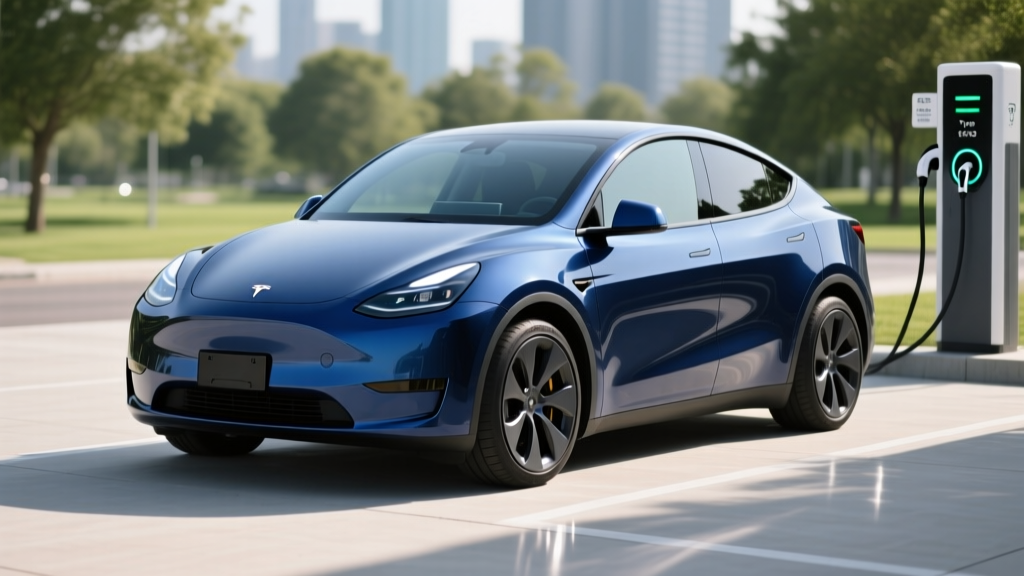
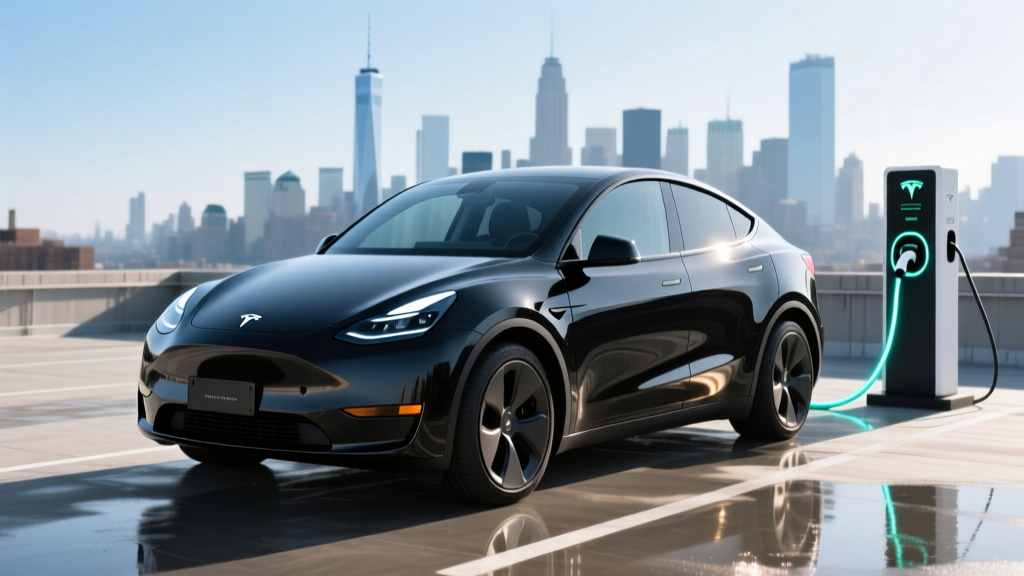
With that context established, let's evaluate the vehicle most buyers are actually cross-shopping: the 2026 Tesla Model Y Long Range AWD.
2026 Model Y Long Range: Core Specifications
| Spec | Value |
|---|---|
| EPA Range | 320 miles |
| Battery (usable) | ~75 kWh, NMC chemistry |
| Drivetrain | Dual-motor AWD |
| Horsepower | 384 hp (combined) |
| 0–60 mph | 4.8 seconds |
| Peak DC Fast Charge | 250 kW (CCS via NACS adapter or native NACS) |
| 10–80% DC Charge Time | ~27 minutes |
| Level 2 Home Charge Rate | 11.5 kW (~44 mi/hr) |
| EPA Efficiency | 122 MPGe combined / 28 kWh/100 mi |
| Cargo Volume | 30.2 cu ft (rear seats up), 72.1 cu ft (folded) |
| Base MSRP | $48,990 (before destination) |
| Battery Warranty | 8 years / 120,000 miles (min 70% retention) |
Real-World Range: What the EPA Sticker Doesn't Tell You
EPA Combined: 320 miles
Highway (70 mph, moderate climate): ~270–290 miles
Cold Weather (below 32°F, highway): ~220–250 miles
City / Stop-and-Go with Regen: ~310–330 miles
The Model Y Long Range's 320-mile EPA rating is achievable in mixed suburban driving with moderate temperatures and regenerative braking set to standard. However, sustained highway speeds above 70 mph reduce efficiency measurably — expect roughly 270–290 miles on a full charge during a road trip at 75 mph in 65°F weather.
Cold weather is the more significant variable. In sub-freezing conditions, the NMC battery experiences increased internal resistance, and cabin heating draws substantial energy (the Model Y uses a heat pump, which helps, but doesn't eliminate the penalty). Plan for 220–250 miles of usable range in winter highway driving. Preconditioning the battery while plugged in mitigates some of this loss and is essential before DC fast charging in cold conditions.
Compared to the Hyundai Ioniq 5 (EPA 305 mi, but with a larger 77.4 kWh battery and 800V architecture for faster charging), the Model Y trades a slight range advantage for a notably faster charge curve and access to the Supercharger network.
Charging Speed: DC Fast, Level 2, and the Supercharger Advantage
| Charging Level | Power / Rate | Time or Miles Added |
|---|---|---|
| Level 1 (120V household) | ~1.4 kW | ~5 miles per hour |
| Level 2 (240V, 48A home charger) | 11.5 kW | ~44 miles per hour; full charge in ~7 hours |
| DC Fast (250 kW peak, V3 Supercharger) | 250 kW peak | 10–80% in ~27 min; ~200 mi in 15 min |
| DC Fast (CCS station via adapter) | Up to 250 kW (station dependent) | Varies by network; Electrify America 350 kW stations limited to car's 250 kW ceiling |
Tesla's 250 kW peak charge rate is competitive but no longer class-leading. The Hyundai Ioniq 5 and Kia EV6, with their 800V architectures, can peak at 350 kW and complete a 10–80% charge in approximately 18 minutes — roughly 9 minutes faster than the Model Y. On a long road trip, that difference compounds.
Where Tesla retains an advantage is network reliability. The Supercharger network consistently delivers 95%+ uptime and plug-and-charge simplicity (no app activation, no payment fumbling). With Tesla opening Superchargers to NACS-equipped vehicles from Ford, GM, and Rivian in 2024–2025, the network is busier than before, but it remains the gold standard for DC fast charging infrastructure.
Charge curve reality: The Model Y peaks at 250 kW only between roughly 10–30% state of charge. From 30–60%, it sustains around 150–170 kW. Above 80%, the rate drops sharply to protect battery longevity — don't plan road-trip charging stops around 80–100% fills unless necessary.
Pricing, Trims, and Federal Tax Credit Eligibility
| Trim | MSRP (before destination) | Est. Price After §30D Credit |
|---|---|---|
| Long Range AWD | $48,990 | ~$41,490 (if eligible) |
| Performance AWD | $52,490 | ~$44,990 (if eligible) |
The 2026 Model Y Long Range starts at $48,990 (plus $1,390 destination), placing it under the IRS §30D MSRP cap of $55,000 for SUVs. However, qualifying for the full $7,500 federal tax credit depends on several buyer-specific and vehicle-specific factors:
- Buyer income caps: Modified AGI must not exceed $150,000 (single), $225,000 (head of household), or $300,000 (joint filers).
- MSRP cap: The Model Y qualifies as an SUV and must be under $80,000 MSRP — both trims clear this easily.
- Battery sourcing requirements: As of 2026, 100% of critical minerals and 100% of battery components must be sourced from the US or FTA partners to receive the full $7,500. Tesla's battery supply chain has diversified, but eligibility can shift based on IRS guidance updates. Always verify current sourcing compliance on the IRS eligible vehicles list before purchasing.
- Point-of-sale transfer: Since 2024, buyers can transfer the credit to the dealer at purchase, reducing the upfront cost rather than waiting for a tax refund. This is available regardless of tax liability.
Consult a tax professional for your specific situation. State incentives (California, Colorado, New York, etc.) may stack on top but vary by jurisdiction.
Interior, Cargo, and Daily Practicality
The Model Y's 30.2 cubic feet of cargo space behind the rear seats is competitive with the Ford Mustang Mach-E (29.7 cu ft) and slightly less than the Ioniq 5 (32.4 cu ft). Fold the rear seats and you get 72.1 cu ft — enough for camping gear, furniture runs, or two large dogs with room to spare.
Legroom is generous: 41.8 inches in front, 37.8 inches in the rear. The panoramic glass roof creates an airy feel, though it contributes to cabin heat in summer (the 2025+ refresh added a slightly tinted glass panel, but a sunshade remains an aftermarket necessity in hot climates).
The minimalist interior is a polarizing choice. There is no instrument cluster — all information routes through the 15.4-inch center touchscreen. Physical controls are essentially nonexistent: glovebox, mirrors, and even the wiper stalk are screen-activated. For some, this is elegantly simple; for others, it's frustratingly distracting while driving.
Technology, Driver Assistance, and Autopilot Reality
The Model Y ships with Tesla's Basic Autopilot (traffic-aware cruise control and lane centering) as standard. Full Self-Driving (Supervised) is an $8,000 add-on or $99/month subscription.
Both Basic Autopilot and FSD (Supervised) are SAE Level 2 driver-assist systems. The driver must remain engaged, hands on the wheel (or providing torque input), and eyes on the road at all times. This is not autonomous driving. Tesla's naming convention ("Full Self-Driving") is misleading — the system requires continuous supervision and will disengage in construction zones, heavy rain, or unclear lane markings.
In practice, FSD (Supervised) handles highway on-ramps, lane changes, and navigation-guided exits competently. City street performance varies widely by geography — well-marked suburban arterials in Phoenix behave differently from narrow, construction-heavy streets in Boston. It is a convenience feature, not a replacement for an attentive driver.
The infotainment system remains one of the fastest and most responsive in the industry, with Netflix/YouTube streaming while parked, a built-in browser, and over-the-air updates that add features incrementally. However, Apple CarPlay and Android Auto are not supported — a dealbreaker for buyers who prefer their phone's native navigation and music apps.
Is the Model Y Worth It vs. Key Competitors?
Choose Model Y If:
- Supercharger network access is your top priority for road trips
- You value OTA updates and a fast, phone-free infotainment system
- You want strong resale value and brand recognition
- Minimalist interior design appeals to you
Consider Alternatives If:
- You need faster DC charging (Ioniq 5 / EV6 at 350 kW, 18 min 10–80%)
- You want Apple CarPlay / Android Auto (Mach-E, Ioniq 5)
- You prefer physical buttons and a traditional instrument cluster
- Brand association with Tesla's CEO is a concern for you
The Hyundai Ioniq 5 (EPA 305 mi, $45,500 base) charges faster and offers CarPlay, but sacrifices Supercharger access unless you carry an adapter. The Ford Mustang Mach-E (EPA 320 mi Extended Range, $42,995 base) has a more traditional interior and CarPlay but a less reliable public charging experience. The Kia EV6 shares the Ioniq 5's 800V platform with a sportier design.
None of these competitors are going bankrupt either — all are backed by major automakers with deep balance sheets. The Model Y's edge remains the Supercharger network and software ecosystem, not financial stability concerns about rivals.
Warranty and Long-Term Ownership
Tesla covers the Model Y's battery and drive unit for 8 years or 120,000 miles, whichever comes first, with a minimum 70% capacity retention guarantee. The limited vehicle warranty is 4 years / 50,000 miles.
Battery degradation data from Tesla's 2025 Impact Report shows the average Model 3/Y battery retains approximately 85% of original capacity after 150,000 miles — well above the warranty threshold. NMC chemistry in the Long Range degrades slightly faster than the LFP batteries in the base RWD model, but the difference is marginal for typical ownership cycles of 5–8 years.
Insurance costs remain a consideration: the Model Y averages $1,800–$2,400/year for a 35-year-old driver with a clean record (varies significantly by state and carrier). This is 15–25% higher than comparable ICE SUVs due to repair complexity and parts cost.
Frequently Asked Questions
Is Tesla going bankrupt in 2026?
No. Tesla holds over $33 billion in cash, carries manageable debt, and continues to generate positive free cash flow. The company faces competitive and margin pressures, but these are normal business challenges — not insolvency indicators. Warranty support, Supercharger maintenance, and software updates remain secure for current and near-future buyers.
What is the real-world range of the 2026 Model Y Long Range?
EPA-rated at 320 miles, expect 270–290 miles on highway road trips at 75 mph, and 220–250 miles in sub-freezing winter conditions. City driving with regenerative braking can approach or slightly exceed the EPA estimate.
How fast does the Model Y charge at home and on DC fast chargers?
At home on a 240V/48A Level 2 charger, the Model Y adds ~44 miles per hour (full charge in ~7 hours). On a 250 kW V3 Supercharger, a 10–80% charge takes approximately 27 minutes. Peak charge rate is 250 kW, tapering significantly above 80%.
Does the 2026 Model Y qualify for the $7,500 federal EV tax credit?
It can, if you meet IRS §30D income caps ($150K single / $300K joint) and the vehicle's battery sourcing complies with current critical-mineral and component requirements. The MSRP is under the $80,000 SUV cap. Verify eligibility on the IRS eligible vehicles list at the time of purchase, as sourcing rules can change.
Is Full Self-Driving (Supervised) worth $8,000?
For most buyers, no. FSD (Supervised) is a Level 2 system requiring constant driver attention. It adds convenience on highway commutes but does not drive the car autonomously. The $99/month subscription is a lower-risk way to test it before committing. Basic Autopilot (included) handles most adaptive cruise and lane-centering needs adequately.
How does the Model Y compare to the Hyundai Ioniq 5 and Ford Mach-E?
The Ioniq 5 charges faster (350 kW, 18 min 10–80%) and includes CarPlay, but lacks native Supercharger access. The Mach-E offers a more conventional interior and lower starting price. The Model Y wins on Supercharger reliability, cargo space, and software — but its minimalist interior and lack of CarPlay are genuine trade-offs.