The Identity Question: Car Company or Tech Platform?
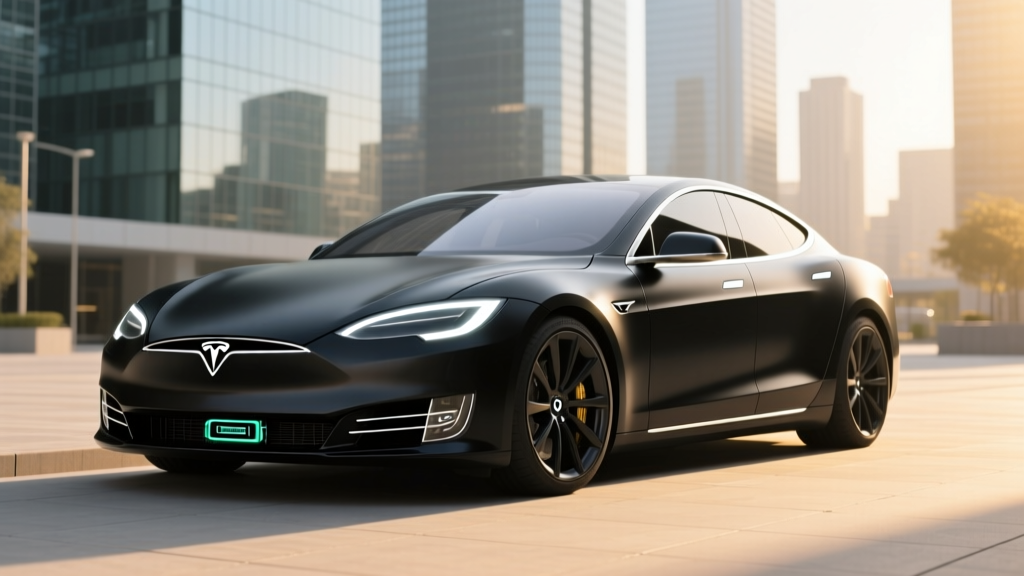
Search engines field a surprisingly persistent query: is Tesla a car company? The answer depends on what you value in a vehicle. Tesla sells cars — 1.8 million of them globally in 2024 — but prices them like software subscriptions, updates them over-the-air, and operates a proprietary charging network that doubles as an energy business. The 2026 Model S is the clearest test case. It is simultaneously one of the most capable sedans ever built and a rolling demonstration of why the "car company" label never quite fits.
This review treats the 2026 Tesla Model S as a vehicle first — range, charging, space, cost — while addressing the tech-company premium baked into its price and ownership experience.
Range, Efficiency, and the Real-World Gap
The 2026 Model S Long Range carries an EPA-estimated 402 miles of range on its 100 kWh (usable ~95 kWh) nickel-manganese-cobalt (NMC) battery pack. The tri-motor Plaid variant, with its performance-tuned powertrain, drops to an EPA 359 miles.
| Scenario | Long Range (EPA 402 mi) | Plaid (EPA 359 mi) |
|---|---|---|
| Mixed city/highway, moderate climate | ~360-380 mi | ~320-340 mi |
| Sustained 75 mph highway | ~330-350 mi | ~295-315 mi |
| Cold weather (below 32°F), highway | ~280-310 mi | ~250-275 mi |
Tesla's heat pump and battery preconditioning mitigate cold-weather losses better than most competitors, but physics is physics: expect a 20-30% reduction in freezing temperatures at highway speeds. Source: fueleconomy.gov.
Efficiency lands at 120 MPGe combined (Long Range), translating to roughly 28 kWh per 100 miles — competitive with the Lucid Air Pure (131 MPGe) and far better than the heavier BMW i7 xDrive60 (82 MPGe).
Charging: 250 kW Peaks, but the Curve Tells the Story
Tesla rates the 2026 Model S at a peak 250 kW on V3 Superchargers. In practice, the charge curve tapers meaningfully after 50% state of charge (SoC). Expect a 10-80% session in approximately 27-30 minutes, not the 15-minute marketing headline you might see on older materials.
| Charging Method | Power / Rate | Miles Added per Hour | Notes |
|---|---|---|---|
| Level 1 (120V outlet) | ~1.4 kW | ~3-4 mi/hr | Emergency/trickle only |
| Level 2 (240V, 48A Wall Connector) | 11.5 kW | ~34-38 mi/hr | Full charge in ~9 hours |
| DC Fast Charge (V3 Supercharger) | Peak 250 kW | ~200 mi in 15 min (to ~50%) | 10-80% in ~27-30 min |
| DC Fast Charge (V4 Supercharger) | Peak 250 kW (current Model S limit) | Similar to V3 | V4 hardware capable of more; Model S architecture caps at 250 kW |
Home charging on a Tesla Wall Connector (hardwired, 60A circuit, 48A delivery) adds roughly 34-38 miles per hour — enough to replenish a full day's driving overnight. Installation typically runs $800-$2,000 depending on panel proximity and local permitting. The Model S uses the NACS connector natively, which as of 2025 has been adopted by nearly every major automaker, giving Tesla owners access to the broadest fast-charging network in North America.
Performance and Drivetrain
| Spec | Model S Long Range | Model S Plaid |
|---|---|---|
| Drivetrain | Dual-Motor AWD | Tri-Motor AWD |
| Horsepower | 670 hp | 1,020 hp |
| 0-60 mph | 3.1 seconds | 1.99 seconds |
| Top Speed | 155 mph | 200 mph (with hardware) |
| Battery (usable) | ~95 kWh (NMC) | ~95 kWh (NMC) |
| EPA Range | 402 miles | 359 miles |
The Plaid's 1.99-second 0-60 time requires a prepared surface, rollout subtraction, and specific tire conditions — it is not a street-legal launch you'll replicate at a stoplight. The Long Range's 3.1 seconds is the more honest daily benchmark and already outpaces nearly every production sedan. Both variants use Tesla's permanent-magnet synchronous and induction motor combination for front/rear torque vectoring.
Interior, Space, and the Tech-Company Cabin
The 2026 Model S interior remains polarizing. The 17-inch center touchscreen handles nearly all vehicle functions — there are minimal physical buttons. A rear passenger touchscreen (6.4 inches) provides climate and entertainment controls. The yoke steering wheel remains standard, though a round wheel is now a no-cost option.
| Dimension | Model S | Competitor: Lucid Air |
|---|---|---|
| Front Legroom | 42.7 in | 41.3 in |
| Rear Legroom | 35.4 in | 37.6 in |
| Cargo (rear trunk) | 26.3 cu ft | 22.1 cu ft |
| Cargo (frunk) | 5.3 cu ft | 7.1 cu ft |
| Total Cargo | 31.6 cu ft | 29.2 cu ft |
The hatchback design gives the Model S a practicality edge over traditional sedans. Rear legroom, however, trails the Lucid Air and BMW i7 — a real consideration for families or ride-share use. Build quality has improved meaningfully since the 2021 refresh, with tighter panel gaps and upgraded materials, though it still falls short of Mercedes-Benz EQS-level luxury at this price point.
Pricing, Tax Credits, and Total Cost
| Trim | Base MSRP | Destination | Federal §30D Credit | Effective Price (if eligible) |
|---|---|---|---|---|
| Long Range | $74,990 | $1,390 | Up to $7,500 | ~$68,880 |
| Plaid | $89,990 | $1,390 | Up to $7,500 | ~$83,880 |
Tax credit caveats (IRS §30D, 2026 rules): The full $7,500 credit requires the buyer to meet income thresholds ($300,000 joint / $225,000 head of household / $150,000 individual MAGI), and the vehicle must satisfy critical-mineral and battery-component sourcing requirements that shift annually. The Model S qualifies as a sedan under the $55,000 MSRP cap — wait, it doesn't. The Model S is classified as a sedan, and the sedan MSRP cap under §30D is $55,000. At $74,990 base, the Model S does NOT qualify for the federal new-vehicle EV tax credit. Buyers should verify current rules at irs.gov and consult a tax professional.
This is precisely the kind of nuance that separates a car-company purchase from a tech-company one: Tesla's pricing strategy has never aligned neatly with government incentive structures, and the Model S has spent most of its lifespan above credit caps.
Warranty, Reliability, and Long-Term Ownership
Tesla provides an 8-year / 150,000-mile battery and drive unit warranty (whichever comes first), with a minimum 70% capacity retention guarantee over that period. The basic vehicle limited warranty covers 4 years / 50,000 miles.
Battery degradation data from fleet studies (including Tesla's own Impact Report) suggests the Model S NMC pack retains approximately 88-90% capacity at 100,000 miles under normal use — consistent with industry averages for liquid-cooled NMC chemistry. LFP packs (used in Model 3/Y Standard Range) degrade more slowly but are not offered in the Model S.
Driver Assistance: Autopilot and FSD (Supervised)
Tesla Autopilot and Full Self-Driving (Supervised) are Level 2 driver-assist systems. The driver must remain engaged, hands on or near the wheel, and eyes on the road at all times. This is not autonomous driving. Only Level 4 services like Waymo operate without a human driver in geofenced areas.
The 2026 Model S ships with Basic Autopilot (traffic-aware cruise control, lane centering). FSD (Supervised) remains an $8,000 option or $99/month subscription, adding automatic lane changes, navigate-on-autopilot, traffic light/stop sign recognition, and city street steering. FSD's real-world performance varies dramatically by geography and road complexity — it excels on well-marked suburban arterials and struggles in construction zones, unmapped roads, and adverse weather. Safety data from NHTSA continues to show that Level 2 systems reduce certain crash types but introduce new risk profiles around driver complacency.
Pros, Cons, and Who Should Buy
- 402-mile EPA range (Long Range) — among the highest of any production EV
- Access to Tesla Supercharger network (19,000+ stalls in North America)
- Class-leading performance (Plaid's 1,020 hp, 1.99s 0-60)
- Hatchback practicality with 31.6 cu ft total cargo
- Over-the-air updates continuously add features
- NACS connector is now the North American standard
- $74,990+ base price — no federal tax credit eligibility (above $55K sedan cap)
- Rear legroom (35.4 in) trails Lucid Air and BMW i7
- Yoke steering divisive; round wheel is a no-cost option but not default
- Minimal physical controls — everything funnels through the touchscreen
- FSD (Supervised) is an expensive option that still requires full driver attention
- 250 kW peak DC charge rate lags newer 350+ kW architectures (Hyundai E-GMP, Lucid)
Best for: Tech-forward buyers who prioritize range and Supercharger access over rear-seat luxury; solo commuters and couples who road-trip frequently; performance enthusiasts (Plaid). Consider alternatives if: you need generous rear-seat space for family or car seats, you want a traditional luxury interior, or you're counting on the $7,500 federal credit to make the math work.
So — Is Tesla a Car Company?
The 2026 Model S is a genuinely excellent vehicle: 402 miles of range, sub-3.1-second 0-60, best-in-class charging infrastructure, and continuous software improvement. But the buying experience — the MSRP that overshoots tax credit caps, the subscription-model FSD, the direct-to-consumer sales, the energy and robotics divisions sharing a balance sheet — reflects a company that treats car manufacturing as one revenue stream among many.
If "car company" means building excellent cars, Tesla qualifies. If it means operating like Ford or Toyota — dealer networks, incentive-optimized pricing, physical controls, and a singular focus on automotive hardware — Tesla is something else entirely. The Model S is the product of that difference, for better and worse.
Frequently Asked Questions
What is the real-world range of the 2026 Tesla Model S?
The EPA rates the Long Range at 402 miles and the Plaid at 359 miles. In mixed real-world driving, expect 360-380 miles (Long Range) and 320-340 miles (Plaid). Sustained highway speeds and cold weather reduce this further — plan for ~280-310 miles in freezing highway conditions.
How fast does the Model S charge at home and on the road?
At home on a Tesla Wall Connector (11.5 kW), the Model S adds ~34-38 miles per hour, reaching a full charge in about 9 hours. On a V3 Supercharger (peak 250 kW), a 10-80% session takes approximately 27-30 minutes. The 250 kW peak is not sustained — the charge curve tapers significantly above 50% SoC.
Does the 2026 Model S qualify for the federal EV tax credit?
No. Under current IRS §30D rules, sedans must have an MSRP at or below $55,000 to qualify. The Model S starts at $74,990, well above the cap. Always verify current rules at irs.gov and consult a tax professional for your specific situation.
How does the Model S compare to the Lucid Air?
The Lucid Air Pure offers comparable range (419 mi EPA) at a lower starting price (~$69,900) and more rear legroom (37.6 in). The Model S counters with Supercharger network access, faster 0-60 performance, hatchback cargo flexibility, and more mature software. Both are excellent; the decision hinges on charging network preference and interior priorities.
Is FSD (Supervised) worth the $8,000 cost?
For most buyers, no. FSD (Supervised) is a Level 2 system that still requires your full attention. It reduces fatigue on long highway drives and handles some city streets, but performance is inconsistent in construction zones and adverse weather. The $99/month subscription is a lower-risk way to test it before committing.
What is the battery warranty on the 2026 Model S?
Tesla covers the battery and drive unit for 8 years or 150,000 miles (whichever comes first), guaranteeing a minimum of 70% capacity retention. Fleet data suggests NMC packs in the Model S typically retain 88-90% capacity at 100,000 miles under normal charging habits.