Tesla dominates U.S. EV sales, but the question "is Tesla an American car?" goes deeper than a Fremont, California headquarters. Buyers want to know where the vehicles are actually assembled, where the batteries come from, and whether that origin story affects everything from federal tax credit eligibility to long-term serviceability. This profile answers the manufacturing question, then delivers the hard numbers on Tesla's current lineup: EPA range, real-world efficiency, charging curves, pricing, and the IRS §30D credit rules that hinge on exactly those sourcing details.
Where Tesla Vehicles Are Actually Built
Tesla operates two major U.S. vehicle assembly plants: the original Fremont Factory in California (Model S, Model X, Model 3, Model Y) and Gigafactory Texas in Austin (Model Y, Cybertruck). The company also runs Gigafactory Shanghai (China, serving Asia/Europe) and Gigafactory Berlin (Germany, serving Europe). For U.S. buyers, the vehicles on dealer lots — or rather, delivered directly to driveways — are overwhelmingly assembled in Fremont or Austin.
According to the NHTSA American Automobile Labeling Act (AALA) reports, the Tesla Model Y assembled in Austin typically carries a U.S./Canadian parts content rating above 70%, with final assembly and engine (motor) origin listed as the United States. The Model 3 built in Fremont similarly reports high domestic content. By the Kogod School of Business American University "Made in America" auto index, Tesla models consistently rank at or near the top for domestic content among all vehicles sold in the U.S.
However, "American car" in 2026 also means battery sourcing, and that's where the picture gets more nuanced — and directly impacts your wallet via the federal tax credit.
2026 Tesla Lineup: Range, Battery & Efficiency Specs
Below is a consolidated spec table for Tesla's core 2026 U.S. lineup. Battery chemistry varies by trim, which affects not just range but longevity and charging behavior.
| Model / Trim | EPA Range | Battery (kWh usable) | Chemistry | MPGe (combined) | Drivetrain | 0-60 mph |
|---|---|---|---|---|---|---|
| Model 3 RWD | 272 mi | ~57.5 kWh | LFP | 132 MPGe | RWD | 5.8 sec |
| Model 3 Long Range AWD | 363 mi | ~75 kWh | NMC | 134 MPGe | Dual-Motor AWD | 4.2 sec |
| Model Y Long Range AWD | 320 mi | ~75 kWh | NMC | 123 MPGe | Dual-Motor AWD | 4.8 sec |
| Model S Long Range | 402 mi | ~95 kWh | NMC | 120 MPGe | Dual-Motor AWD | 3.1 sec |
| Cybertruck AWD | 340 mi | ~123 kWh | NMC | 70 MPGe | Tri-Motor AWD | 4.1 sec |
Charging Speed: DC Fast Charge, Home Level 2 & the NACS Advantage
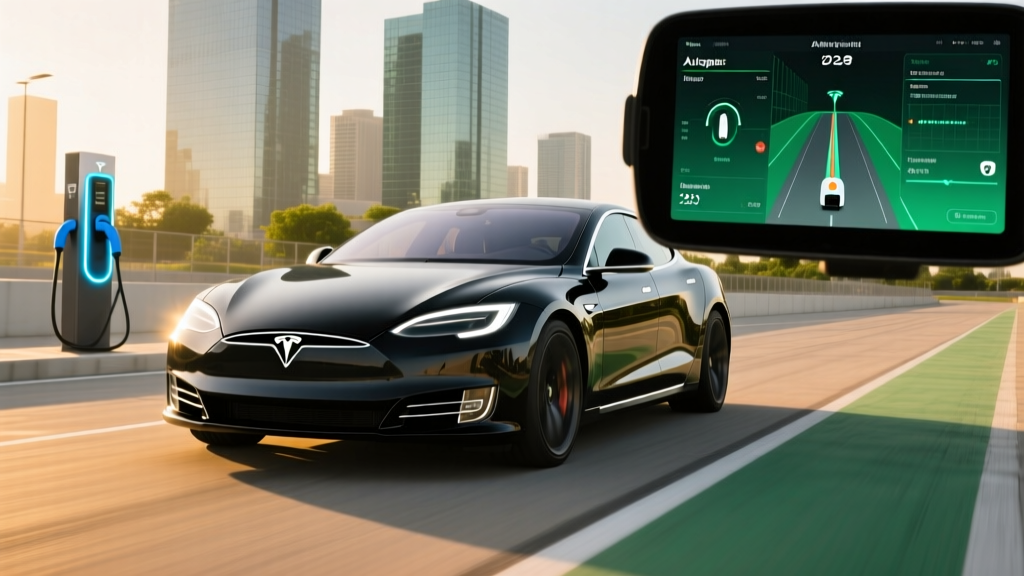
Charging speed is where Tesla's vertical integration shows its strongest advantage. All 2026 Tesla vehicles use the North American Charging Standard (NACS) connector natively — the same connector Tesla opened to competitors starting in 2024. This means Teslas access the full Supercharger network (now exceeding 30,000 stalls in North America) without adapters.
| Charging Method | Power / Rate | Time or Miles Added | Notes |
|---|---|---|---|
| DC Fast Charge (V3 Supercharger) | Peak 250 kW | 10–80% in ~25–30 min | Charge curve tapers significantly above 60%; precondition via nav for max speed |
| DC Fast Charge (V4 Supercharger) | Peak 250–350 kW (vehicle-dependent) | Model 3/Y: similar to V3; future architectures may use higher | V4 stalls have cabinet-level power sharing |
| Home Level 2 (Tesla Wall Connector) | 11.5 kW (48A) | ~30–44 mi/hr depending on model | Requires 60A circuit; NEMA 14-50 at 40A yields ~9.6 kW / ~30 mi/hr |
| Level 1 (120V household) | ~1.4 kW | ~3–5 mi/hr | Emergency/trickle only |
Charging curve reality: The "250 kW peak" figure is not sustained. A Model 3 Long Range at a V3 Supercharger will ramp to ~250 kW between roughly 5–20% State of Charge (SoC), then taper progressively: ~150 kW by 50%, ~70 kW by 70%, and under 40 kW above 85%. This is why the 10–80% metric matters more than peak kW. Always navigate to a Supercharger using the car's built-in navigation to trigger battery preconditioning — arriving cold can add 10–15 minutes to your session.
Pricing, Trims & Federal Tax Credit Eligibility
Tesla's pricing has fluctuated significantly over recent years. As of early 2026, here are the base MSRPs and the critical tax credit question.
| Model / Trim | Base MSRP | §30D Federal Credit | Effective Price (before state incentives) |
|---|---|---|---|
| Model 3 RWD | $38,990 | Up to $7,500 (if eligible) | ~$31,490 |
| Model 3 Long Range AWD | $45,490 | Up to $7,500 (if eligible) | ~$37,990 |
| Model Y Long Range AWD | $44,990 | Up to $7,500 (if eligible) | ~$37,490 |
| Model S Long Range | $79,990 | $0 (exceeds MSRP cap) | $79,990 |
| Cybertruck AWD | $79,990 | $0 (exceeds MSRP cap for trucks) | $79,990 |
- MSRP caps: Vans/SUVs/pickups ≤ $80,000; sedans/other ≤ $55,000. Model S and Cybertruck exceed these caps.
- Buyer income limits: AGI ≤ $150,000 (single), $225,000 (head of household), $300,000 (joint). Check your modified AGI against IRS guidelines.
- Battery component sourcing: For the full $7,500, battery components must be manufactured or assembled in North America (percentage thresholds increase annually). Critical minerals must be sourced from the U.S. or FTA partners.
- Point-of-sale transfer: Eligible buyers can transfer the credit to the dealer (Tesla) at purchase, reducing the purchase price directly rather than waiting for a tax refund.
- FEOC restriction: Vehicles with battery components from a Foreign Entity of Concern (certain Chinese entities post-2024, critical minerals post-2025) are disqualified. Tesla's LFP cells in the Model 3 RWD have faced scrutiny under this rule — confirm current-year eligibility at purchase.
Always verify eligibility on fueleconomy.gov and consult a tax professional. Rules change annually and Tesla's sourcing has shifted across model years.
Interior Space, Cargo & Daily Practicality
Tesla's cabin philosophy is minimalist — a single central touchscreen handles nearly all controls, which draws polarized reactions. Here are the concrete dimensions buyers need:
- Model 3: 23 cu ft trunk (including rear sub-trunk); ~42.3" front legroom, ~35.2" rear legroom. The Highland refresh improved rear seat cushioning and added rear-seat ventilation and a small rear screen.
- Model Y: 30 cu ft behind the second row (76 cu ft with seats folded); available 7-seat configuration (third row is child-only). ~41.8" front legroom, ~41.6" rear legroom. This is the family crossover benchmark for cargo volume in the EV segment.
- Model S: 28 cu ft trunk + front trunk (frunk) ~3.1 cu ft; premium interior with yoke or round steering wheel option, rear passenger screen.
- Cybertruck: 6.5-foot bed with motorized tonneau, ~120 cu ft total enclosed volume including frunk and under-bed storage. Towing rated up to 11,000 lbs (though range drops dramatically when towing — expect 150–180 miles loaded).
Warranty, Battery Longevity & Service Network
Tesla's warranty structure is straightforward and competitive with the segment:
- Basic vehicle: 4 years / 50,000 miles
- Battery & drive unit (Model 3 RWD, LFP): 8 years / 100,000 miles, minimum 70% capacity retention
- Battery & drive unit (Long Range / Model S / Model Y AWD): 8 years / 120,000 miles, minimum 70% capacity retention
- Cybertruck: 8 years / 120,000 miles battery & drive unit
In practice, Tesla's NMC packs have demonstrated strong longevity. Data aggregated from owner fleet reports shows typical degradation of ~8–12% over 100,000 miles, with the steepest drop occurring in the first 20,000 miles before leveling off. LFP packs (Model 3 RWD) tolerate regular 100% charging — Tesla recommends daily 100% for LFP — and exhibit slower calendar degradation, though they are heavier and offer lower energy density (hence the shorter range in the same physical platform).
Service remains a common ownership pain point. Tesla has expanded its mobile service fleet (which handles many software-related and minor hardware fixes at your home) and opened more physical service centers, but wait times for bodywork and major repairs in high-population areas can still stretch to several weeks.
Autopilot, FSD & Standout Technology
Tesla's tech stack remains a key purchase driver:
- Autopilot (standard): Adaptive cruise control + lane centering on highways. Competent but not class-leading compared to GM's Super Cruise or Ford's BlueCruise on mapped highways.
- FSD Supervised ($8,000 option or $99/mo subscription): Adds city-street navigation, stop-sign/light recognition, and automatic turns. Impressive in capability but requires constant supervision. Regulatory scrutiny has increased following NHTSA investigations into Autopilot-involved crashes.
- Over-the-air updates: Tesla's most underappreciated advantage. Feature additions, efficiency tweaks, and UI improvements arrive wirelessly, sometimes materially improving the car post-purchase.
- Supercharger network: The most reliable and extensive DC fast-charging network in North America, with plug-and-charge billing that eliminates app fragmentation.
- Sentry Mode & Dashcam: Continuous camera recording when parked, accessible via the app — a genuine security feature competitors still lack at this integration level.
Who Should Buy a Tesla — and Who Shouldn't
Choose Tesla if:
- You want access to the Supercharger network for stress-free road trips
- You prioritize OTA software updates and tech-forward ownership
- You value domestic assembly (Fremont/Austin) with high U.S. parts content
- Your daily commute or family logistics fit within the 250–350 real-world mile envelope
Look elsewhere if:
- You need a traditional dealer service experience with loaner cars and walk-in appointments
- You prefer physical buttons, stalks, and instrument clusters over touchscreen-only controls
- You need a sub-$30,000 EV (the Model 3 RWD starts at ~$38,990 before credits)
- You want hands-free driving on mapped highways (GM Super Cruise or Ford BlueCruise offer a more relaxed Level 2 experience on compatible roads)
- Supercharger network is the gold standard for reliability and coverage
- Class-leading efficiency (kWh/100mi) across the lineup
- Strong domestic assembly and high U.S. parts content
- OTA updates continuously add features post-purchase
- LFP option on Model 3 RWD offers excellent long-term battery durability at lower cost
- Service center wait times remain an issue in metro areas
- Touchscreen-only controls (no stalks on refreshed Model 3/Y) frustrate some drivers
- FSD costs $8,000 and still requires full driver supervision
- Model S and Cybertruck priced out of federal tax credit eligibility
- LFP batteries in Model 3 RWD lose more range in extreme cold vs. NMC
FAQ: Tesla Ownership Questions Answered
Is Tesla an American car?
Yes, for U.S. buyers. Tesla's Model 3 and Model Y sold in the U.S. are assembled in Fremont, California or Austin, Texas, with U.S./Canadian parts content typically exceeding 70%. Battery cell sourcing varies — NMC cells are produced domestically (including at Tesla's Nevada Gigafactory with Panasonic), while some LFP cells have been sourced from CATL in China, which can affect §30D tax credit eligibility under FEOC rules.
What is the real-world range of a Tesla?
Expect 10–15% below EPA on sustained highway driving and 20–30% below EPA in freezing weather. A Model Y Long Range (EPA 320 mi) delivers roughly 275–290 miles on a summer highway trip and 220–250 miles in winter. City driving with regenerative braking often matches or slightly exceeds the EPA sticker.
How fast does a Tesla charge at home and on the road?
At home with a Tesla Wall Connector on a 60A circuit (11.5 kW), a Model Y gains ~37 miles of range per hour — a full overnight charge from 20% to 90% takes about 7 hours. On a V3 Supercharger (250 kW peak), 10–80% takes approximately 25–30 minutes with proper battery preconditioning.
Does the Tesla Model Y qualify for the $7,500 federal tax credit?
It can, but eligibility depends on your income (AGI ≤ $300,000 joint), the vehicle's MSRP (under $80,000 for SUVs — the Model Y qualifies), and battery component/critical mineral sourcing per current-year IRS rules. The Model Y has qualified for the full $7,500 in recent years, but FEOC sourcing restrictions tighten annually. Verify at purchase on fueleconomy.gov and confirm the point-of-sale transfer option with Tesla.
Is a Tesla worth it vs. a Hyundai Ioniq 5 or Ford Mustang Mach-E?
It depends on your priorities. Tesla wins on Supercharger access, efficiency (lower kWh/100mi means cheaper fueling), and software. The Ioniq 5 charges faster on non-Tesla DC networks (up to 350 kW on 800V architecture, 10–80% in ~18 minutes) and offers a more traditional interior. The Mach-E provides a more engaging driving feel and BlueCruise for hands-free highway driving on mapped routes. If you road-trip frequently, Tesla's charging network remains the decisive advantage in 2026.
How long will a Tesla battery last before needing replacement?
Tesla warranties its battery packs for 8 years / 100,000–120,000 miles (depending on trim) with a minimum 70% capacity retention guarantee. Real-world fleet data suggests most packs retain 85–90% capacity at 100,000 miles. Full battery replacement outside warranty currently costs approximately $12,000–$16,000 depending on the model, though most owners will never need one within typical ownership periods.