If you have ever watched a Tesla navigate a rural highway and wondered how it streams music and updates traffic data where cell service dies, you are not alone. The question is Starlink part of Tesla trends every time SpaceX launches a new satellite batch, and the answer in 2026 is more nuanced than a simple yes or no. While Starlink and Tesla share a founder in Elon Musk and occasionally collaborate on in-vehicle connectivity, they are legally and financially separate companies — and understanding that distinction matters for anyone shopping for a new Tesla or planning to rely on its connected features.
The Corporate Relationship: Separate Companies, Shared DNA
Starlink operates as a subsidiary of SpaceX, the aerospace manufacturer founded by Musk in 2002. Tesla, Inc. is an independently traded automaker (NASDAQ: TSLA) that went public in 2010. Musk serves as CEO of both, and he holds significant equity in each, but there is no parent-subsidiary relationship between them. Tesla does not own Starlink satellites, and Starlink does not manufacture vehicles.
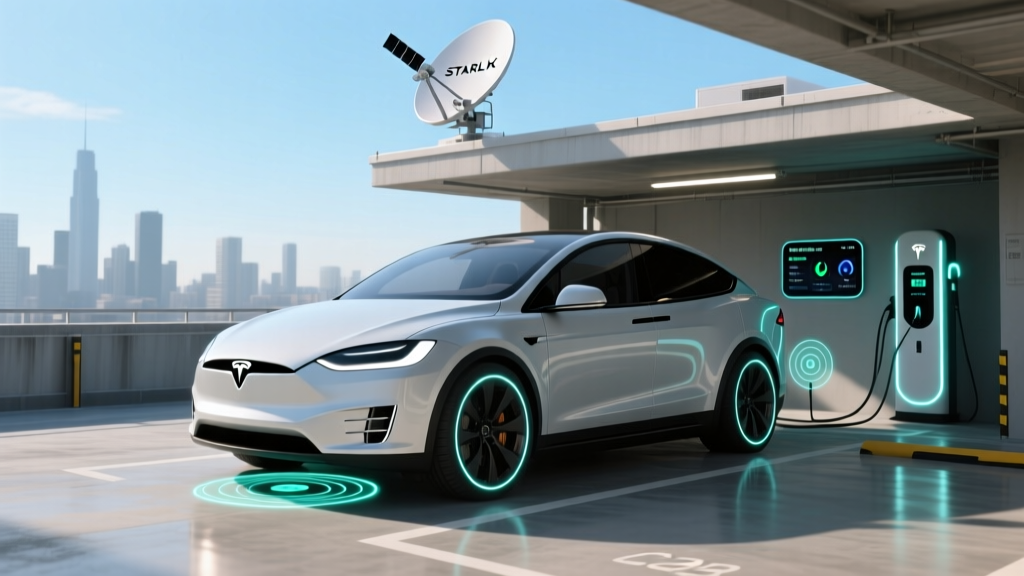
Where the two intersect is connectivity. Tesla vehicles rely primarily on cellular networks (AT&T and regional partners in the U.S.) for over-the-air updates, navigation, streaming, and remote commands via the Tesla app. Starlink has been discussed as a future fallback for areas without cell coverage, and Musk has publicly teased direct-to-cell Starlink integration. As of the 2026 model year, however, Tesla's production vehicles still use LTE/5G cellular modems as their primary data link, not a Starlink terminal on the roof.
How Tesla Connectivity Actually Works in 2026
Every new Tesla ships with a built-in cellular modem. Owners get Standard Connectivity for free, which covers basic maps, navigation, traffic-based routing, and over-the-air software updates over Wi-Fi. Premium Connectivity, currently priced at $9.99 per month or $99 annually, adds satellite-view maps, live traffic visualization, in-car streaming (Spotify, YouTube, Netflix while parked), a web browser, and Caraoke.
The confusion about Starlink often stems from Tesla's "satellite-view maps" feature. Those high-resolution map tiles are pulled from conventional satellite imagery providers (similar to Google Earth), not from Starlink's internet-beaming constellation. When your Model Y buffers a Netflix episode in a Walmart parking lot, that data is traveling over a cell tower, not a low-earth-orbit satellite.
Where Starlink Could Matter for Tesla Owners
Starlink's direct-to-cell service, which began limited deployment in 2025 using T-Mobile's spectrum, is the bridge most likely to connect the two companies in practice. T-Mobile has announced that Starlink direct-to-cell will provide text coverage first, with voice and low-bandwidth data to follow. If Tesla eventually integrates this as a fallback modem, owners could see basic connectivity in places like Death Valley, Glacier National Park, or rural stretches of I-10 in West Texas where AT&T coverage is spotty.
For now, the practical workarounds Tesla owners use in dead zones are familiar to any EV road-tripper:
- Download offline maps and route plans before leaving cell coverage
- Use a passenger's phone as a hotspot when the car's modem drops
- Pre-cache music and podcasts to the car's internal storage
- Plan charging stops around locations with known Wi-Fi (hotels, cafés, Supercharger lounges)
2026 Tesla Lineup: Quick Connectivity and Spec Snapshot
Since the "is Starlink part of Tesla" question usually arises during a purchase decision, here is how the current 2026 lineup stacks up on the specs buyers actually compare. Figures reflect the most popular trims as of early 2026.
| Model / Trim | EPA Range | Battery (kWh / Chem.) | Peak DC kW | 10-80% Time | 0-60 mph | Base MSRP |
|---|---|---|---|---|---|---|
| Model 3 Long Range AWD | 363 mi | 79 kWh / NMC | 250 kW | ~25 min | 4.2 s | $47,740 |
| Model Y Long Range AWD | 320 mi | 79 kWh / NMC | 250 kW | ~27 min | 4.8 s | $48,630 |
| Cybertruck AWD | 340 mi | 123 kWh / NMC | 250 kW | ~35 min | 4.1 s | $79,990 |
| Model S Long Range | 402 mi | 100 kWh / NMC | 250 kW | ~30 min | 3.1 s | $79,990 |
Tax Credit Eligibility: What Tesla Buyers Need to Know
The federal EV tax credit under IRS §30D remains a major purchase factor in 2026, but eligibility is far from automatic. As of the current tax year, the credit is up to $7,500 for new qualifying vehicles, subject to three gates that trip many Tesla buyers:
- MSRP cap: Vans, SUVs, and pickups (Model Y, Cybertruck) must be under $80,000; sedans (Model 3, Model S) under $55,000. Most Model 3 trims qualify; the Model S does not.
- Buyer income cap: Modified AGI of $150,000 (single), $225,000 (head of household), or $300,000 (joint).
- Battery sourcing: Critical minerals and battery components must meet phased-in thresholds from U.S. or free-trade-agreement partners. Tesla has localized much of its supply chain, but exact eligibility varies by build month and VIN — always verify with your delivery specialist and a tax professional.
The point-of-sale transfer option lets qualified buyers apply the credit as an instant discount at delivery rather than waiting to claim it at tax time. Confirm current-year rules at IRS.gov before signing.
Tesla vs. Key Competitors: Is the Connectivity Edge Real?
The Starlink association gives Tesla a perceived connectivity advantage, but rivals have closed the gap on the metrics that matter daily. Here is how the Model Y Long Range AWD — Tesla's best-seller — compares to two mainstream alternatives.
| Spec | Tesla Model Y LR AWD | Hyundai Ioniq 5 Limited AWD | Ford Mustang Mach-E Premium AWD ER |
|---|---|---|---|
| EPA Range | 320 mi | 305 mi | 312 mi |
| Peak DC Charge | 250 kW | 235 kW | 150 kW |
| 10-80% Time | ~27 min | ~18 min (800V) | ~41 min |
| 0-60 mph | 4.8 s | 5.0 s | 5.1 s |
| Cargo (rear seats up) | 30.2 cu ft | 27.2 cu ft | 29.7 cu ft |
| Battery Warranty | 8 yr / 120,000 mi | 10 yr / 100,000 mi | 8 yr / 100,000 mi |
| Base MSRP | $48,630 | $54,200 | $48,995 |
| Cellular Modem | LTE/5G built-in | LTE + Bluelink | 4G LTE + FordPass |
The Ioniq 5's 800-volt architecture gives it a meaningful edge in 10-80% charge time, even though its peak kW is slightly lower. The Mach-E trails on charging speed but matches Tesla on range and cargo. None of these vehicles use Starlink; all rely on cellular modems with similar coverage footprints.
Biggest Pros and Cons of the Tesla Connectivity Story
Pros
- Supercharger network remains the most reliable DC fast-charging ecosystem in North America, now open to NACS-equipped rivals
- OTA updates frequently add features post-purchase without dealer visits
- Premium Connectivity is inexpensive at $99/year versus rival subscription bundles
- Future Starlink direct-to-cell fallback could fill rural dead zones first for Tesla if integrated
- Strong resale values relative to most EV peers, per Kelley Blue Book
Cons
- No native Starlink terminal in any production Tesla today — marketing hype aside
- Model 3 and Model Y interior materials lag rivals at similar price points
- Reliance on touchscreen for nearly all controls frustrates some drivers
- FSD (Supervised) remains a Level 2 driver-assist system, not autonomous driving — driver attention is legally required
- Service center wait times in high-growth metros can stretch weeks for bodywork
Who Should Buy a Tesla in 2026 (and Who Should Look Elsewhere)
Tesla remains the default choice for buyers who prioritize Supercharger access, software iteration speed, and a minimalist cabin. It is particularly strong for suburban commuters with home Level 2 charging and tech-forward road trippers who plan routes around Superchargers. The Cybertruck fits niche truck buyers who want EV performance and don't need a traditional bed.
Buyers who value conventional controls, dealership service, longer battery warranties, or ultra-fast 800V charging should cross-shop the Ioniq 5, Kia EV6, and Genesis Electrified GV70. Families needing three usable third-row seats will find Tesla's options limited; the Model X is aging and priced well above $80,000, pushing it out of the §30D MSRP cap.
Frequently Asked Questions
Can I install a Starlink dish on my Tesla for internet?
Not practically. Starlink's Standard Actuated Kit draws roughly 50-100 watts and requires a clear view of the sky, which a vehicle roof only provides while stationary. Some Cybertruck owners have mounted Starlink Mini dishes on bed racks for campsite use, but this is an aftermarket accessory, not a Tesla integration, and it does not feed the car's native infotainment system.
Does Tesla use Starlink for over-the-air updates?
No. As of the 2026 model year, Tesla OTA updates download over the car's cellular modem or via Wi-Fi when parked at home or a hotel. Starlink is not part of Tesla's production data pipeline.
Will Starlink direct-to-cell work with my Tesla in the future?
T-Mobile's Starlink direct-to-cell service operates on standard LTE spectrum and is designed to work with unmodified smartphones. If Tesla updates its modem firmware to roam onto T-Mobile's Starlink-backed coverage, basic telemetry and text-like data (app commands, location pings) could work in dead zones. Streaming and large OTA updates will still require conventional cellular or Wi-Fi due to bandwidth limits.
Is Premium Connectivity worth $99 per year?
If you regularly use satellite-view maps, stream music without tethering your phone, or want live traffic visualization on commutes, yes. If you mostly drive locally with Apple CarPlay-style phone projection (which Tesla does not natively support) or pre-download media, Standard Connectivity is sufficient.
Which 2026 Tesla models qualify for the $7,500 federal tax credit?
Eligibility depends on MSRP cap, buyer income, and battery sourcing. Most Model 3 trims and the base Model Y fall under the cap; the Model S and most Cybertruck trims exceed it. Always verify the specific VIN's eligibility at the time of delivery using the IRS portal and consult a tax professional — rules can shift mid-year based on supply-chain audits. See current guidance at fueleconomy.gov.
Bottom Line
Starlink is not part of Tesla — they are separate companies with a shared CEO and occasional connectivity collaboration. Today's Tesla vehicles rely on cellular modems like every other EV on the road, and the "satellite" features in the infotainment system are conventional map imagery, not Starlink internet. For 2026 buyers, the real decision is less about satellite branding and more about the Model Y's 320-mile EPA range, 250 kW Supercharger peak, $48,630 starting price, and whether your income and the vehicle's battery sourcing clear the §30D tax credit hurdles. If rural connectivity is your priority, a Starlink Mini in the trunk for campsite Wi-Fi will do more for you today than any roof-mounted integration Tesla currently offers.