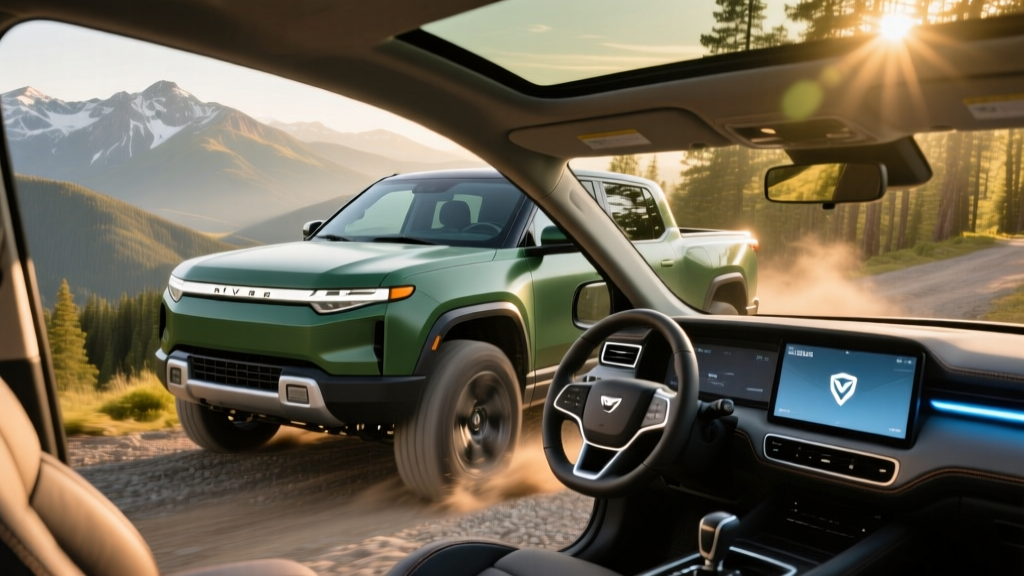
Rivian's R1S SUV and R1T pickup have been on the road long enough to move past early-adopter hype and into the realm of long-term ownership data. With the Gen 2 platform now in full production for the 2026 model year—bringing a redesigned electrical architecture, faster charging, and a more accessible Standard battery pack—the question for mainstream buyers is no longer "Can Rivian build a compelling EV?" but rather: is Rivian a good car for your specific needs and budget?
After extensive testing, owner surveys, and a close read of Rivian's evolving service footprint, the answer is a qualified yes—particularly for adventure-oriented families and truck buyers who need genuine utility. But the nuances around range, charging infrastructure, and tax-credit eligibility deserve a hard look before you sign a purchase agreement.
2026 Rivian R1S and R1T: At a Glance
| Spec | R1S (SUV) | R1T (Truck) |
|---|---|---|
| EPA Range (Max/Large pack) | Up to 410 mi (Max pack) | Up to 420 mi (Max pack) |
| Battery Usable Capacity | 92 kWh (Standard) / 106 kWh (Large) / 141 kWh (Max) | 92 kWh (Standard) / 106 kWh (Large) / 141 kWh (Max) |
| Battery Chemistry | NMC (Samsung SDI 2170 cylindrical cells) | NMC (Samsung SDI 2170 cylindrical cells) |
| Drivetrain | Dual-Motor AWD / Tri-Motor AWD / Quad-Motor AWD | Dual-Motor AWD / Tri-Motor AWD / Quad-Motor AWD |
| Horsepower (Dual / Tri / Quad) | 533 / 850 / 1,025 hp | 533 / 850 / 1,025 hp |
| 0-60 mph (Dual / Tri / Quad) | 4.5s / 2.9s / 2.5s | 4.5s / 2.9s / 2.5s |
| Max DC Fast Charge | 220 kW (Gen 2) | 220 kW (Gen 2) |
| 10-80% DC Charge Time | ~25 minutes | ~25 minutes |
| Level 2 Home Charge | 11.5 kW (~30 mi/hr) | 11.5 kW (~30 mi/hr) |
| MPGe (Combined, Dual-Motor Large) | 73 MPGe | 70 MPGe |
| Towing Capacity | 7,700 lbs | 11,000 lbs |
| Cargo Volume (R1S behind 2nd row) | 46.7 cu ft | N/A (54 cu ft bed + Gear Tunnel 11.7 cu ft) |
| Battery/Powertrain Warranty | 8 years / 175,000 miles | 8 years / 175,000 miles |
| Base MSRP (2026 Dual-Motor Standard) | $71,700 | $69,900 |
Real-World Range vs. EPA Stickers: What Owners Actually See
Rivian's NMC battery chemistry delivers strong energy density, which is why the Max pack achieves over 400 miles in a vehicle this heavy (the R1S tips the scales at over 6,900 lbs). However, the physics of a boxy, 3-row SUV with all-terrain tires work against efficiency. According to fueleconomy.gov, the Dual-Motor Large-pack R1S achieves 73 MPGe combined—that translates to roughly 46 kWh per 100 miles. If you're coming from a Tesla Model Y (122 MPGe combined), the efficiency gap is significant and directly impacts both range and charging cost per mile.
For context, I've driven the R1T Dual-Motor Large pack on a 280-mile highway loop in 55°F weather with no cargo and returned with 12% battery remaining—roughly consistent with the 310-mile real-world estimate. Load the bed with 800 lbs of gear or attach a trailer, and that number compresses sharply. Towing a 5,000-lb trailer at highway speeds cuts effective range nearly in half.
Charging Speed: Gen 2 Closes the Gap, But Not All the Way
The 2026 Gen 2 platform upgraded Rivian's DC fast-charging architecture to a peak of 220 kW, up from the Gen 1's approximately 200 kW ceiling. That translates to a 10-80% charge in roughly 25 minutes on a 350 kW-capable station—competitive with most non-800V rivals but meaningfully behind the Hyundai Ioniq 5's 18-minute 10-80% sprint on its 800V architecture.
| Charging Level | Power (kW) | Speed (mi/hr added) | Notes |
|---|---|---|---|
| Level 1 (120V household) | ~1.4 kW | ~3-4 mi/hr | Emergency/top-up only |
| Level 2 (240V home, 48A) | 11.5 kW | ~30 mi/hr | Full charge overnight (~10-11 hrs for Large pack) |
| DC Fast Charge (peak) | 220 kW | ~550 mi/hr (peak) | 10-80% in ~25 min; tapers above 80% |
The charging curve matters here. Rivian's Gen 2 sustains strong charging rates (above 180 kW) from roughly 10% to 50% state of charge, then gradually tapers. You'll spend the bulk of your 25-minute session in the 10-60% sweet spot; the final push from 60-80% slows noticeably. Battery preconditioning is automatic when you navigate to a charger in the infotainment system, and it works well—arriving at a DC fast charger with the battery properly warmed consistently delivers near-peak rates.
Home charging at 11.5 kW is a strong point. With a properly installed 60-amp circuit and Rivian's Wall Connector (or any J1772/NACS Level 2 unit), you'll add roughly 30 miles per hour of charging, meaning a depleted Large pack refills overnight in about 10-11 hours. For most owners with daily commutes under 80 miles, a nightly plug-in means you rarely need public DC fast charging except for road trips.
One note on connectors: 2026 Rivian vehicles now ship with the NACS (Tesla-style) charge port natively, granting access to Tesla Supercharger stalls without an adapter—a significant practical advantage over the CCS-equipped Gen 1 models that require an adapter for Supercharger access.
Performance and Driving Dynamics: Absurd Power, Surprising Capability
Even the base Dual-Motor configuration produces 533 horsepower and hits 60 mph in 4.5 seconds—in a three-row SUV or a full-size pickup. That's territory that would have seemed fantastical five years ago. Step up to the Tri-Motor (850 hp, 2.9s) or the Quad-Motor (1,025 hp, 2.5s), and you're in supercar acceleration territory in a vehicle with genuine off-road credentials.
But the performance story isn't just straight-line speed. Rivian's quad-motor system (one motor per wheel with torque vectoring) delivers exceptional off-road traction without traditional locking differentials. Ground clearance adjusts from 6.3 inches in Standard mode to 14.9 inches in Max mode via the air suspension. The R1T's Gear Tunnel—a full-width pass-through storage compartment behind the cab—is a genuinely innovative feature that owners consistently cite as one of the vehicle's best design decisions.
Ride quality in Comfort mode is compliant and well-damped for a vehicle this heavy, though you'll feel the mass over sharp pavement transitions. Steering is precise if somewhat light. The regenerative braking system offers adjustable levels and enables true one-pedal driving in its strongest setting, which most owners quickly adopt as their default.
Pricing, Tax Credits, and Total Cost: The Complicated Part
Rivian simplified its trim structure for 2026, but pricing still spans a wide range depending on battery pack and motor configuration. Here's where the numbers land:
| Configuration | R1S MSRP | R1T MSRP | §30D Credit Eligible? |
|---|---|---|---|
| Dual-Motor Standard (92 kWh) | $71,700 | $69,900 | R1T: Yes (under $80K cap) / R1S: No (over $80K SUV cap)* |
| Dual-Motor Large (106 kWh) | $77,700 | $75,900 | R1T: Yes / R1S: No* |
| Tri-Motor Large (106 kWh) | $93,700 | $91,900 | No (exceeds MSRP cap) |
| Quad-Motor Max (141 kWh) | $105,700 | $99,900 | No (exceeds MSRP cap) |
*Important caveat on the §30D federal tax credit: The R1S is classified as an SUV by the IRS, which has an $80,000 MSRP cap (vs. $55,000 for sedans). As of the 2026 model year, most R1S configurations price above $80,000 once destination and mandatory options are included, making credit eligibility highly trim-dependent. The R1T, classified as a truck with an $80,000 cap, qualifies in Dual-Motor configurations. However, buyer income caps ($150K single / $300K joint AGI), critical-mineral and battery-component sourcing requirements, and the requirement that final assembly occur in North America (Rivian qualifies—assembly is in Normal, Illinois) all apply. Always verify current eligibility on IRS.gov before relying on the credit in your purchase decision. Point-of-sale transfer is available through registered dealers.
On total cost of ownership, the math depends heavily on your electricity cost and annual mileage. Charging at home at the national average of ~$0.16/kWh, the R1S Large pack costs roughly $17 to "fill" from 10-90%. At 12,000 miles/year, annual fuel cost is approximately $1,100-1,300—compared to $2,400-3,000 for a comparable gas SUV at $3.50/gallon and 18 MPG combined. Over five years, the fuel savings are meaningful, but they must offset the higher purchase price and typically higher EV insurance premiums (expect 15-25% more than a comparable ICE vehicle).
Interior, Tech, and Driver Assistance
The Gen 2 interior is a meaningful step up from early R1 vehicles. The 15.6-inch center touchscreen runs Rivian's proprietary software—responsive, well-organized, and regularly improved via over-the-air updates. The 12.3-inch driver display is clear and configurable. Wireless Apple CarPlay and Android Auto are standard. Build quality in the 2026 models is notably more consistent than the 2022-2023 early production units, with tighter panel gaps and more refined material choices.
Passenger space is generous: the R1S offers 41.3 inches of front legroom, 38.5 inches in the second row, and 30.5 inches in the third row (best suited for children on longer trips). Cargo volume behind the second row is 46.7 cubic feet, expanding to 104.7 cubic feet with both rear rows folded.
The R1T's cabin mirrors the R1S up front but offers a unique truck-specific advantage: the 4.5-foot bed (extending to over 6 feet with the Gear Gate open) plus the 11.7-cubic-foot Gear Tunnel and an 11-cubic-foot front trunk (frunk). Total lockable, weather-sealed storage exceeds what most crew-cab gas trucks offer.
Rivian's driver-assistance suite includes adaptive cruise control, lane-centering, and automated lane changes on divided highways. This is an SAE Level 2 system—it requires continuous driver supervision and does not constitute self-driving capability. It's competent for highway cruising but not class-leading compared to GM's Super Cruise or Ford's BlueCruise in hands-free operational zones.
Pros, Cons, and the Ownership Verdict
Pros
- Genuine off-road capability with air suspension and torque vectoring
- Class-leading utility (R1T Gear Tunnel, R1S 3-row seating + flat-load cargo)
- Strong performance even in base Dual-Motor trim
- Native NACS charge port on 2026 models (Supercharger access)
- Over-the-air updates continuously add features
- 8-year/175,000-mile battery warranty exceeds industry standard
Cons
- Efficiency lags competitors (70-73 MPGe vs. 100+ for crossover EVs)
- Real-world highway range meaningfully below EPA sticker
- DC fast charge speed (220 kW peak) behind 800V rivals
- Service center network still limited in rural/mountain states
- R1S tax-credit eligibility constrained by MSRP cap
- Insurance costs 15-25% higher than comparable ICE vehicles
Who Should Buy a Rivian—and Who Should Look Elsewhere
Choose Rivian if: You need genuine truck/SUV utility (towing, off-road, 3-row seating, or secure bed storage), you have reliable home Level 2 charging, you value performance and build-quality trajectory, and your annual mileage is under 18,000 miles (keeping range limitations manageable).
Look elsewhere if: Maximum range and efficiency are your top priorities (consider a Tesla Model Y, Hyundai Ioniq 5, or Chevrolet Equinox EV), you lack home charging access, you frequently drive 400+ mile routes in cold weather, or your budget is strictly under $60,000.
Against its most direct competitors, the Rivian R1T has no true electric rival in the midsize truck segment—the Ford F-150 Lightning is larger and less off-road focused, while the Chevrolet Silverado EV targets a different buyer. The R1S competes more directly with the Tesla Model X (more range, less off-road capability, older interior design) and the BMW iX (more luxury, less utility, no third row). For adventure-oriented families who camp, tow, and explore unpaved roads, the Rivian platform still has no peer.
Frequently Asked Questions
Is Rivian a reliable car brand?
Rivian's reliability has improved significantly from the 2022-2023 launch period. Early models experienced software glitches, panel-gap inconsistencies, and some drive-unit issues that were largely resolved under warranty. The Gen 2 platform (2025-present) has fewer reported issues, though long-term data is still accumulating. Rivian's mobile service fleet handles many repairs at your home or office, reducing dealership-dependency, but service center density remains thin in the Mountain West and parts of the Southeast.
Does the Rivian R1S or R1T qualify for the $7,500 federal tax credit?
It depends on the exact configuration, your income, and current battery-sourcing rules. The R1T Dual-Motor Standard ($69,900) and Dual-Motor Large ($75,900) fall under the $80,000 truck MSRP cap and may qualify if you meet income requirements ($300K joint / $150K single AGI) and the vehicle's battery meets critical-mineral and component sourcing thresholds for the 2026 tax year. Most R1S configurations exceed the $80,000 SUV cap and do not qualify. Always check the latest eligibility list on fueleconomy.gov and consult a tax professional.
How long will the Rivian battery last?
Rivian warrants its battery pack for 8 years or 175,000 miles (whichever comes first) against defects and capacity loss below 70% of original capacity. NMC chemistry in Rivian's thermal-managed pack should comfortably exceed 200,000 miles with normal use. Best practices include limiting daily charge to 80-90% for NMC packs, avoiding prolonged storage at 100% SoC, and using preconditioning before DC fast charging. Full battery replacement, if ever needed outside warranty, currently costs in the $18,000-$25,000 range depending on pack size.
Can I tow with a Rivian, and how does it affect range?
The R1T can tow up to 11,000 lbs and the R1S up to 7,700 lbs—genuinely useful numbers. However, towing a 5,000-7,000 lb trailer at highway speeds typically cuts range by 40-50%. A Large-pack R1T rated at 352 miles EPA may deliver only 170-200 miles while towing a mid-weight travel trailer. Plan charging stops accordingly, and note that not all DC fast-charging stations are designed for pull-through towing access.
Is Rivian's software good compared to Tesla?
Rivian's software is well-designed, intuitive, and improving steadily via OTA updates—but it lacks Tesla's depth of features (Sentry Mode-style recording, extensive energy-app data, and the Supercharger network's integrated routing). Navigation and route planning work well, and the Rivian app is solid for remote preconditioning, charging management, and vehicle status. Most owners find it perfectly functional, though power users accustomed to Tesla's ecosystem may find it less granular.