Where Are Rivian Vehicles Built? The American EV Truck and SUV Story
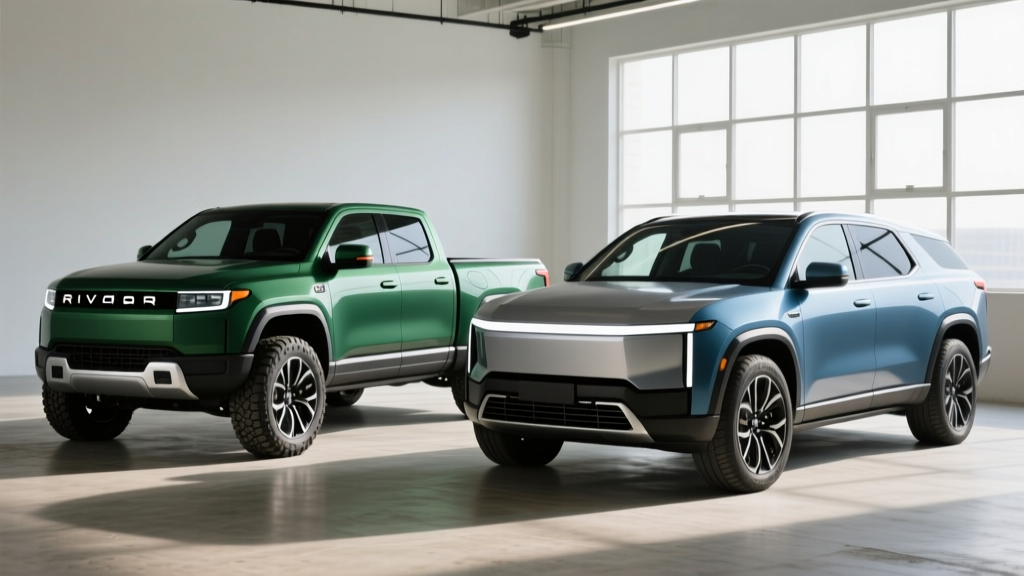
If you've been asking "is Rivian made in the USA?" — the answer is a definitive yes. Every Rivian R1T pickup and R1S SUV rolls off the assembly line at the company's manufacturing plant in Normal, Illinois, a repurposed Mitsubishi factory that Rivian acquired and retooled starting in 2017. This facility is where Rivian designs, engineers, stamps, welds, paints, and assembles its vehicles, making it one of the few fully integrated American EV production sites outside of Tesla's footprint.
Unlike several EV startups that outsource production or assemble from imported knock-down kits, Rivian's Normal plant handles body-in-white fabrication, battery pack assembly, and final vehicle integration under one roof. As of the 2025 model year, Rivian has also begun sourcing its second-generation battery packs with a higher percentage of domestically produced and recycled critical minerals — a shift that directly affects federal tax credit eligibility under IRS §30D rules.
This review covers the full Rivian lineup — the R1T Dual-Motor and Tri-Motor pickup and the R1S Dual-Motor and Tri-Motor SUV — with a focus on real-world range, charging performance, pricing after incentives, and whether these American-made EVs earn their premium sticker prices against competitors like the Ford F-150 Lightning, Tesla Cybertruck, and Chevrolet Silverado EV.
2025 Rivian R1T and R1S: Spec Table at a Glance
| Spec | R1T Dual-Motor (Std) | R1T Tri-Motor | R1S Dual-Motor (Std) | R1S Tri-Motor |
|---|---|---|---|---|
| EPA Range | 270 mi | ~320 mi (Max Pack) | 260 mi | ~315 mi (Max Pack) |
| Battery (usable) | ~95 kWh (NMC) | ~141 kWh (NMC) | ~95 kWh (NMC) | ~141 kWh (NMC) |
| Horsepower | 533 hp | 850 hp | 533 hp | 850 hp |
| 0-60 mph | 4.5 sec | ~3.0 sec | 4.6 sec | ~3.1 sec |
| Drivetrain | AWD (Dual-Motor) | AWD (Tri-Motor) | AWD (Dual-Motor) | AWD (Tri-Motor) |
| Max DC Charge | ~200 kW | ~220 kW | ~200 kW | ~220 kW |
| 10-80% DC Time | ~28 min | ~40 min | ~28 min | ~40 min |
| Towing Capacity | 11,000 lbs | 11,000 lbs | 7,700 lbs | 7,700 lbs |
| Base MSRP | $69,900 | $99,900 | $74,900 | $104,900 |
Real-World Range: What the EPA Sticker Doesn't Tell You
The R1T Dual-Motor Standard carries an EPA-estimated 270 miles of range. In real-world highway driving at 70-75 mph, expect 220-245 miles depending on temperature, payload, and terrain. In cold weather (below 32°F), range drops an additional 15-25%, putting winter highway range closer to 180-210 miles on the Standard pack.
The R1S, with its slightly heavier body and less aerodynamic SUV profile, loses roughly 10-15 miles compared to equivalent R1T configurations.
Rivian offers three battery tiers for the 2025 model year: the Standard Pack (~95 kWh usable), the Large Pack (~128 kWh usable), and the Max Pack (~141 kWh usable). All current Rivian packs use NMC (nickel manganese cobalt) chemistry, which provides higher energy density than LFP but requires more careful state-of-charge management for longevity — Rivian recommends daily charging to 80-85% and only charging to 100% before long trips.
Efficiency varies significantly by configuration. The R1T Dual-Motor Standard achieves approximately 73 MPGe combined (per fueleconomy.gov), translating to roughly 46 kWh per 100 miles. The Tri-Motor variants, with their additional front motor and heavier curb weight, drop to around 64-68 MPGe. If you plan to tow frequently, real-world efficiency can plummet to 80-100+ kWh/100mi, cutting effective range nearly in half.
Charging Speed: DC Fast Charging and Home Level 2
Rivian's second-generation vehicles (2025 model year onward) feature an upgraded electrical architecture with improved DC fast-charging capability. Here's what you can expect at the plug:
| Charging Level | Power / Rate | Speed | Notes |
|---|---|---|---|
| Level 1 (120V) | ~1.4 kW | ~3-4 mi/hr | Emergency/trickle only |
| Level 2 (240V, 48A) | ~11.5 kW | ~25-28 mi/hr | Home Wall Charger; full charge in ~9-10 hrs (Std Pack) |
| DC Fast Charge (Std Pack) | Peak ~200 kW | 10-80% in ~28 min | Curve tapers significantly above 80% |
| DC Fast Charge (Max Pack) | Peak ~220 kW | 10-80% in ~40 min | Larger battery = longer session despite higher peak |
Rivian uses the CCS1 connector for DC fast charging on 2025 models, though the company has confirmed a transition to the NACS (Tesla-style) connector for future production. Current Rivian owners can access the Tesla Supercharger network using a Rivian-provided NACS adapter, which is included with new vehicles. At Electrify America and other CCS networks, Rivian owners report reliable plug-and-charge sessions, though peak rates are typically sustained only between 15-55% SoC before tapering begins.
For home charging, Rivian's Wall Connector delivers up to 11.5 kW on a 60-amp circuit (48A continuous). Most Standard Pack owners can achieve a full overnight charge. Max Pack owners should budget 12-14 hours for a full 0-100% Level 2 session — though in practice, most owners charge between 20-80% daily and rarely need a full cycle.
Performance, Capability, and Drivetrain
Rivian's dual-motor AWD system provides independent torque vectoring to each axle, while the Tri-Motor configuration adds a second rear motor for a combined 850 horsepower and a sub-3.1-second 0-60 time in the R1T. That puts the Tri-Motor R1T in supercar territory for acceleration — a remarkable feat for a 7,000-pound pickup.
The R1T's 11,000-pound towing capacity matches or exceeds many full-size gas trucks, and the quad-motor air suspension provides adjustable ride height from 7.9 to 14.9 inches of ground clearance — making it genuinely capable off-road. The R1T's 4.5-foot bed (54 inches) is shorter than traditional full-size trucks, but the innovative Gear Tunnel — a full-width pass-through storage compartment behind the cab — adds 11.7 cubic feet of lockable, weather-sealed cargo space unique to Rivian.
The R1S offers three rows of seating for up to seven passengers, with 105.4 cu ft of total cargo volume behind the first row (seats folded) and 46.7 cu ft behind the second row. Third-row legroom is 30.4 inches — adequate for children but tight for adults on longer trips.
Pricing, Trims, and Federal Tax Credit Eligibility
Rivian positions the R1T and R1S as premium adventure vehicles, and pricing reflects that. Here's the current lineup:
| Model / Config | Base MSRP | As-Tested (Typical) | §30D Credit Eligible? | Effective Price (w/ Credit) |
|---|---|---|---|---|
| R1T Dual-Motor Standard | $69,900 | $74,000-$78,000 | Partial — see below | ~$66,150 (if $3,750) |
| R1T Dual-Motor Large | $75,900 | $80,000-$85,000 | Partial — see below | ~$72,150 (if $3,750) |
| R1T Tri-Motor Max | $99,900 | $105,000-$115,000 | No (exceeds MSRP cap) | $99,900+ |
| R1S Dual-Motor Standard | $74,900 | $79,000-$84,000 | Partial — see below | ~$71,150 (if $3,750) |
| R1S Tri-Motor Max | $104,900 | $110,000-$120,000 | No (exceeds MSRP cap) | $104,900+ |
- MSRP Cap: Pickup trucks (R1T) must be under $80,000 MSRP; SUVs (R1S) under $80,000. The R1T Standard and Large qualify on MSRP; Tri-Motor Max does not. The R1S Standard qualifies; Tri-Motor Max does not.
- Income Cap: Buyer AGI must not exceed $150,000 (single), $225,000 (head of household), or $300,000 (joint).
- Battery Sourcing: As of 2025, 100% of critical minerals must be sourced from the US or FTA partners, and 100% of battery components must be manufactured or assembled in North America. Rivian's evolving supply chain means some configurations qualify for the full $7,500, while others qualify for $3,750 or $0 depending on the battery pack and production date.
- Point-of-Sale Transfer: Eligible buyers can transfer the credit to the dealer at purchase, reducing the out-of-pocket cost immediately.
Check the latest eligibility details on IRS.gov before purchasing — sourcing requirements tighten annually.
Tech, Driver Assistance, and Interior
Rivian's infotainment system runs on a custom 15.6-inch landscape touchscreen with a clean, tile-based interface. Wireless Apple CarPlay and Android Auto are not offered — Rivian's native system handles navigation, media, and vehicle controls directly, with OTA updates adding features regularly. The digital driver display and optional head-up display round out the cockpit.
The Rivian Driver+ suite includes adaptive cruise control, lane centering, and automatic lane changes on divided highways. This is an SAE Level 2 driver-assistance system — the driver must keep hands on or near the wheel and remain fully engaged at all times. It is not autonomous driving. In our testing, Driver+ performs competently on interstate highways but can be conservative in merge situations and occasionally requests steering-wheel input more frequently than competing systems like GM's Super Cruise or Ford's BlueCruise.
Standout features include the Camp Kitchen option (a slide-out induction cooktop and sink that mounts in the Gear Tunnel), built-in air compressor, and a vehicle-to-load (V2L) capability that can power devices and small appliances from the truck's battery — a genuine differentiator for camping and job-site use.
Warranty and Ownership Costs
Rivian provides the following warranty coverage:
- Battery & Drive Units: 8 years / 175,000 miles (whichever comes first), with a capacity retention threshold of 70%
- Limited Vehicle Warranty: 5 years / 60,000 miles bumper-to-bumper
- Roadside Assistance: 5 years / 60,000 miles
The battery warranty is notably generous on mileage (175,000 vs. the industry-standard 100,000), reflecting confidence in the NMC pack's thermal management system. However, the 5-year bumper-to-bumper coverage is shorter than Hyundai/Kia's 10-year offering and on par with most American and European competitors.
Insurance costs for Rivian vehicles tend to run 15-30% higher than comparable gas-powered trucks, reflecting repair costs, parts availability, and the vehicle's premium price. Average annual premiums for the R1T range from $2,200-$3,400 depending on state, driving record, and coverage level.
Rivian R1T and R1S: Pros and Cons
- Genuinely American-made (Normal, IL plant)
- Class-leading off-road capability with air suspension
- Innovative Gear Tunnel and Camp Kitchen options
- Tri-Motor performance (850 hp, ~3.0s 0-60)
- 11,000-lb towing capacity (R1T)
- Strong battery warranty (8yr/175,000mi)
- Active OTA update program adding features
- Premium pricing — most configs exceed $80K tax credit cap
- Real-world highway range significantly below EPA on Max Pack
- No Apple CarPlay or Android Auto
- Driver+ system trails Super Cruise/BlueCruise in hands-free capability
- R1S third row is cramped for adults
- Insurance costs run 15-30% above gas truck averages
- Service center network still expanding in rural areas
Who Should Buy a Rivian — And Who Should Look Elsewhere?
Choose Rivian if: You want a premium, American-built electric adventure vehicle with genuine off-road chops, need a pickup bed or three-row SUV, value unique features like the Gear Tunnel and V2L, and can absorb premium pricing. The R1T is ideal for outdoor enthusiasts who tow boats or trailers on weekends and want daily-driver refinement during the week. The R1S fits active families who need seven seats and want EV running costs without sacrificing ground clearance.
Look elsewhere if: Your budget is strictly under $60,000 (consider the Ford F-150 Lightning XLT or Chevy Silverado EV Work Truck), you need a full-size 6.5-foot bed for commercial use, you prioritize hands-free highway driving (GM's Super Cruise is more mature), or you live in a region with no nearby Rivian service center.
Frequently Asked Questions
Is Rivian made in the USA?
Yes. All Rivian R1T and R1S vehicles are manufactured at the company's plant in Normal, Illinois. Battery packs are also assembled at this facility, and Rivian has been increasing its domestic sourcing of critical minerals and components to meet federal tax credit requirements.
What is the real-world range of the Rivian R1T?
The R1T Dual-Motor Standard Pack has an EPA-estimated 270 miles. In real-world highway driving at 70-75 mph, expect 220-245 miles in moderate temperatures. Cold weather (below 32°F) reduces this further to approximately 180-210 miles. The Max Pack configuration extends EPA range to approximately 320 miles, with real-world highway figures around 260-285 miles.
How fast does the Rivian R1T charge?
On a DC fast charger, the Standard Pack peaks at approximately 200 kW and charges from 10-80% in about 28 minutes. The Max Pack peaks at ~220 kW but requires roughly 40 minutes for 10-80% due to its larger capacity. At home on Level 2 (11.5 kW), a Standard Pack charges fully in about 9-10 hours.
Does the Rivian R1T qualify for the $7,500 federal tax credit?
It depends on the configuration, your income, and battery sourcing. The R1T Dual-Motor Standard ($69,900 MSRP) falls under the $80,000 truck cap, making it potentially eligible. However, the full $7,500 credit depends on meeting 2025 critical-mineral and battery-component sourcing rules, which vary by production batch. Some R1T configurations currently qualify for $3,750. Tri-Motor Max configurations exceed the MSRP cap and are not eligible. Verify current status at fueleconomy.gov before purchasing.
How does the Rivian R1T compare to the Ford F-150 Lightning?
The F-150 Lightning starts significantly lower (~$55,000) and offers a larger 5.5-6.5 foot bed, making it more practical for commercial use. The R1T offers superior off-road capability (air suspension, 14.9" ground clearance), the unique Gear Tunnel, and faster Tri-Motor performance — but at a $15,000-$30,000 premium. If budget and bed size are priorities, the Lightning wins. If adventure capability and innovation matter more, the R1T is the stronger choice.
Is the Rivian R1S a good family SUV?
For active families, yes — the R1S offers three rows, excellent safety ratings, strong efficiency for its size, and genuine off-road and towing ability. The main compromise is third-row space (30.4" legroom), which is best suited for children. Families needing regular adult-capable third-row seating should consider the Kia EV9 or a three-row PHEV like the Toyota Grand Highlander Hybrid.