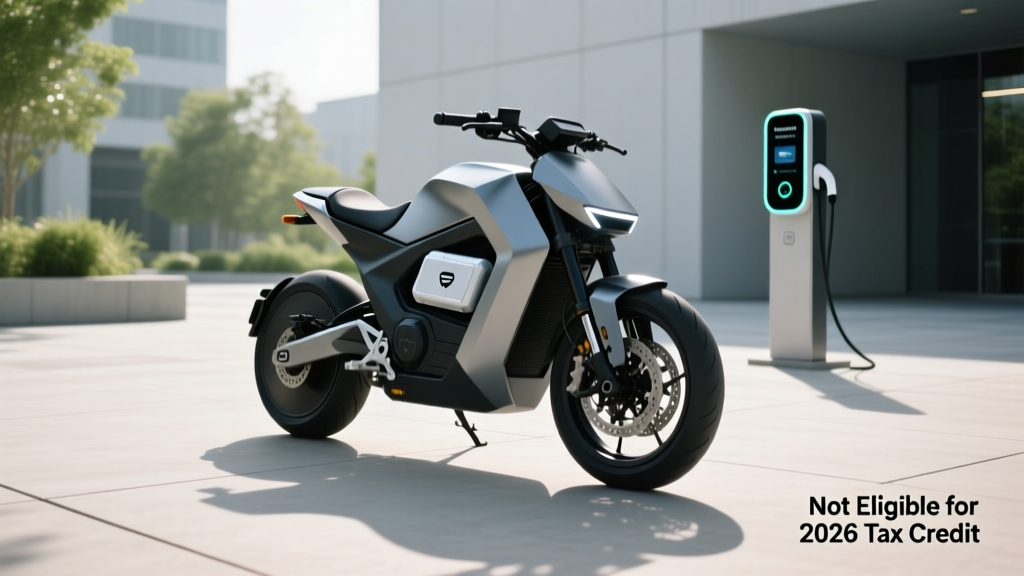
If you've been searching for cruiser style electric bikes and wondering whether they qualify for the same federal EV tax credits that make electric cars more affordable, the direct answer is no. Under current IRS §30D rules, electric bicycles — including cruiser-style e-bikes with pedal-assist or throttle — do not meet the definition of a qualified plug-in electric vehicle. The federal Clean Vehicle Credit applies exclusively to four-wheeled motor vehicles with a gross vehicle weight rating (GVWR) under 14,000 pounds that meet specific battery-sourcing, MSRP, and buyer-income requirements.
That doesn't mean cruiser e-bikes are a bad purchase. In fact, their total cost of ownership often undercuts both gas cars and electric cars for short urban commutes. But conflating e-bike incentives with EV incentives leads to costly surprises at tax time. Here's what you actually need to know before buying.
What Are Cruiser Style Electric Bikes?
Cruiser style electric bikes are a category of pedal-assist or throttle-equipped bicycles designed for upright, relaxed riding geometry — wide saddles, swept-back handlebars, and balloon tires optimized for paved paths and boardwalks rather than trails. Most fall into one of three classifications recognized by most U.S. states:
- Class 1: Pedal-assist only, motor cuts off at 20 mph, no throttle.
- Class 2: Throttle-equipped, motor cuts off at 20 mph.
- Class 3: Pedal-assist only, motor cuts off at 28 mph.
Typical cruiser e-bike specs in 2026 include battery capacities of 0.4–0.7 kWh (400–700 Wh), hub motors rated at 250–750 watts, and real-world ranges of 20–50 miles per charge depending on assist level, rider weight, and terrain. Popular models from brands like Rad Power Bikes, Lectric, Heybike, and Aventon generally retail between $1,200 and $2,800.
Why E-Bikes Don't Qualify for §30D EV Tax Credits
The IRS §30D Clean Vehicle Credit is explicit in its definitions. A "qualified vehicle" must be a four-wheeled motor vehicle primarily for use on public streets, roads, or highways. E-bikes have two or three wheels and are classified as consumer products under the Consumer Product Safety Commission (CPSC), not as motor vehicles under the Department of Transportation.
E-Bike vs. Electric Car: A Real Cost Comparison
For urban commuters traveling under 15 miles round-trip, a cruiser e-bike can be dramatically cheaper than any electric car — even without federal tax credits. Here's a side-by-side look at realistic first-year and five-year costs.
| Category | Cruiser E-Bike | 2026 Chevy Equinox EV (base) | 2026 Honda Civic (gas) |
|---|---|---|---|
| Purchase price (MSRP) | $1,800 | $33,600 | $25,000 |
| Federal tax credit | $0 | Up to $7,500* | $0 |
| Net purchase cost | $1,800 | $26,100 | $25,000 |
| Annual fuel/energy cost (5,000 mi) | $12 | $540 | $1,125 |
| Annual insurance | $120 (optional) | $1,800 | $1,400 |
| Annual maintenance | $80 | $300 | $650 |
| 5-year total cost | $2,860 | $39,300 | $40,625 |
*§30D credit eligibility depends on buyer income, battery sourcing, and MSRP caps. Consult a tax professional and see IRS guidelines. E-bike energy cost assumes $0.16/kWh average electricity. Gas cost assumes $3.50/gal at 30 MPG combined. EV efficiency assumes 3.0 mi/kWh. All assume 5,000 miles/year — appropriate for e-bike-range commuting.
The math is stark: even with a full $7,500 tax credit, the EV costs nearly 14× more over five years for short-range commuting. But this comparison only holds if an e-bike can actually replace your car trips — which depends on distance, weather, cargo needs, and local infrastructure.
State and Local E-Bike Incentives That Do Exist
While the federal government doesn't incentivize e-bikes through the tax code, a growing number of states and municipalities offer their own rebate programs. These change frequently, but as of early 2026, notable programs include:
- Colorado: The state's e-bike rebate program offers up to $450 for standard e-bikes and up to $1,200 for cargo and adaptive e-bikes, income-adjusted.
- California: Various air quality districts (e.g., Bay Area, San Joaquin Valley) have offered point-of-purchase rebates of $300–$1,000, though funding availability fluctuates.
- Hawaii: A state tax credit of up to $200 has been available for e-bike purchases.
- Various utility companies: Some electric utilities (e.g., Portland General Electric, Xcel Energy) offer $100–$400 rebates for e-bikes as part of demand-management programs.
These are jurisdiction-specific and subject to funding availability. Always verify current program status with your state energy office or local air quality management district before counting on a rebate.
Common Misconceptions About Cruiser E-Bikes and EV Incentives
| Myth | Fact |
|---|---|
| "All electric vehicles qualify for the $7,500 federal tax credit." | Only four-wheeled plug-in vehicles meeting battery-sourcing, MSRP, and buyer-income thresholds qualify. E-bikes, e-scooters, and electric motorcycles are excluded. |
| "My e-bike battery is the same chemistry as a Tesla." | Most cruiser e-bikes use NMC (nickel manganese cobalt) lithium-ion cells, similar to some EVs. But e-bike batteries are typically 0.4–0.7 kWh vs. 60–100 kWh in a car, and lack active thermal management. Expect 3–5 years / 500–800 charge cycles before noticeable degradation. |
| "E-bikes don't need insurance." | Most states don't require e-bike insurance, but your homeowner's or renter's policy may not cover theft or liability for a motorized bicycle. Dedicated e-bike insurance (e.g., Velosurance, Sundays Insurance) runs $100–$300/year. |
| "A 500W motor means my e-bike goes 30 mph." | Federal law (CPSC) limits e-bike motors to 750W and a motor-powered top speed of 20 mph (Class 1/2). Class 3 e-bikes can reach 28 mph under pedal-assist only. Actual speed depends on rider input, terrain, and weight. |
Real-World Ownership: What First-Time E-Bike Buyers Should Know
Charging Is Simple, But Slow Compared to EVs
A typical cruiser e-bike battery (0.5 kWh) charges from a standard 120V outlet using the included charger, usually rated at 2 amps (roughly 0.12 kW). A full charge takes 4–6 hours. There's no Level 2 or DC fast charging infrastructure for e-bikes — and none is needed. You charge at home, at a desk, or at a café outlet. The "refueling" cost is negligible: at the U.S. average electricity rate of $0.16/kWh, fully charging a 0.5 kWh battery costs about $0.08.
Cold Weather Cuts Range — Just Like EVs
Lithium-ion batteries lose capacity in cold temperatures. At 32°F (0°C), expect 20–35% less range from your e-bike — a 40-mile rated range might drop to 25–30 miles. This mirrors what EV owners experience, though the absolute numbers are smaller. Storing your battery indoors and charging at room temperature helps preserve long-term battery health.
Battery Replacement Is the Big-Ticket Item
Most cruiser e-bike batteries are rated for 500–800 full charge cycles before capacity drops to roughly 80% of original. For a daily commuter charging once per day, that's 2–3 years of heavy use before noticeable range loss. Replacement batteries typically cost $300–$600 — a significant fraction of the bike's original price. Some brands (Rad Power, Aventon) sell direct replacements; others require third-party rebuild services.
Decision Framework: Is a Cruiser E-Bike Right for You?
Choose a cruiser e-bike if:
- Your daily round-trip commute is under 15–20 miles on relatively flat terrain
- You have secure storage at home and at your destination (e-bike theft is a major issue)
- You live in a climate with at least 7–8 rideable months per year
- You want to eliminate car trips for errands, not just commuting
- Your budget is under $3,000 and you don't need to carry passengers or heavy cargo
Choose an electric car or PHEV instead if:
- Your commute exceeds 20 miles or involves highways
- You regularly carry passengers, groceries for a family, or bulky items
- You live in an area with harsh winters and no safe cycling infrastructure
- You need climate control, crash protection, and all-weather capability
- You can install a Level 2 home charger and qualify for the §30D credit
Frequently Asked Questions
Can I claim any federal tax deduction for buying a cruiser e-bike?
As of 2026, there is no federal tax credit or deduction specifically for e-bike purchases for personal use. A previous legislative proposal (the E-BIKE Act) would have introduced a 30% credit up to $1,500, but it has not passed Congress. If you use an e-bike for business purposes (e.g., delivery, courier work), you may be able to deduct it as a business expense — consult a tax professional.
Do I need a license or registration for a cruiser-style e-bike?
In most U.S. states, Class 1 and Class 2 e-bikes (20 mph max) do not require a driver's license, registration, or insurance. Class 3 e-bikes (28 mph) may have additional restrictions — some states require a helmet or prohibit riders under 16. Always check your specific state's e-bike laws, as they vary significantly.
How long do cruiser e-bike batteries last?
Expect 500–800 full charge cycles from a quality NMC lithium-ion e-bike battery before it degrades to ~80% capacity. In real-world terms, that's roughly 2–4 years for daily riders, or 4–6 years for weekend-only riders. Storing the battery at 40–60% charge when not in use, avoiding extreme heat, and not regularly draining to 0% will extend lifespan.
What's the difference between a 500W and 750W e-bike motor?
A 500W motor provides adequate power for flat terrain and lighter riders, maintaining 15–18 mph on pedal-assist. A 750W motor (the federal maximum) delivers noticeably better hill-climbing ability and acceleration, and can sustain 20 mph with heavier riders or cargo. For cruiser-style riding on mostly flat paths, 500W is usually sufficient. If you have hills or weigh over 200 lbs, the 750W option is worth the premium.
Are cruiser e-bikes street-legal on bike paths?
Class 1 and Class 2 e-bikes are generally allowed on most bike paths and multi-use trails, though local ordinances can override this. Class 3 e-bikes are sometimes restricted from shared-use paths. Some municipalities prohibit throttle-equipped (Class 2) e-bikes on certain trails. Always check posted signage and local regulations for the specific paths you plan to ride.