Quick Verdict: Luxury Efficiency vs. Ecosystem Dominance
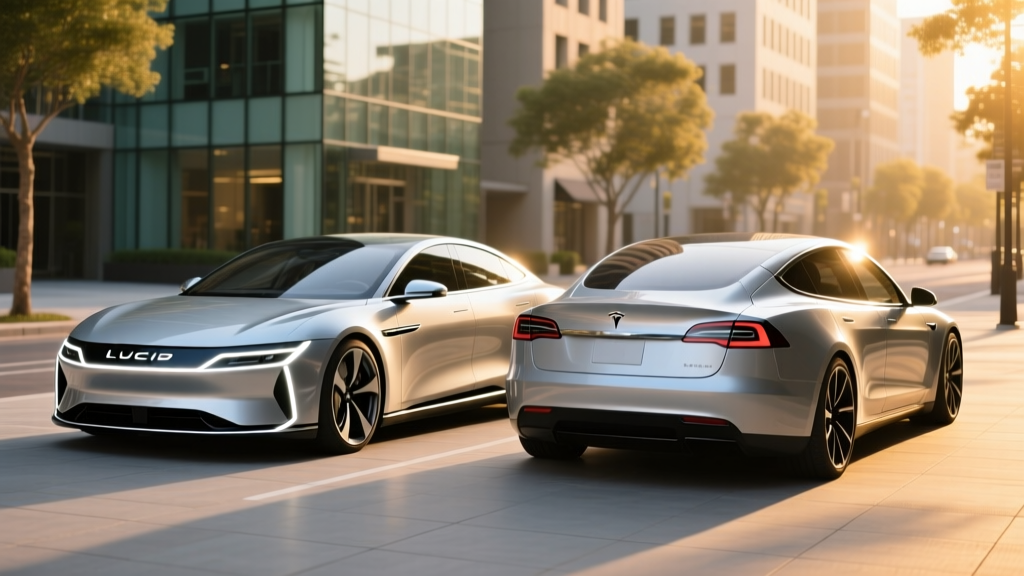
If you're asking whether Lucid is better than Tesla, the honest answer depends on what you value most. The Lucid Air delivers class-leading efficiency, a quieter cabin, and more rear-seat space. The Tesla Model S counters with the Supercharger network, faster acceleration, and a more mature software stack. Both are flagship electric sedans, but they solve different problems for different buyers.
Below, we break down the 2026 Lucid Air (Pure, Touring, Grand Touring) against the Tesla Model S (Long Range and Plaid) using EPA data, real-world testing notes, and ownership economics — so you can decide which flagship actually earns your money.
Range and Efficiency: Lucid's Engineering Edge
Lucid's in-house motor and powertrain engineering gives the Air an efficiency advantage that Tesla hasn't fully matched in the large-sedan segment. The Air Grand Touring achieves an EPA-estimated 512 miles of range from a 112 kWh usable battery pack, translating to roughly 146 MPGe combined. The Tesla Model S Long Range returns 402 miles EPA from a 100 kWh (usable) pack at 124 MPGe combined.
Lucid Air Grand Touring: EPA 512 mi. Expect ~420–450 mi on sustained highway driving at 75 mph; ~350–380 mi in sub-freezing winter conditions with cabin heating.
Tesla Model S Long Range: EPA 402 mi. Expect ~320–345 mi highway; ~270–300 mi in cold weather. Tesla's heat pump helps mitigate winter losses but the smaller battery limits total ceiling.
Both vehicles use NMC (nickel manganese cobalt) lithium-ion chemistry optimized for energy density. Lucid's pack uses a proprietary 2170-cell format in a structural enclosure, while Tesla uses its 18650-format cells in the Model S (the 4680 cells are reserved for Cybertruck and Model Y). Neither offers an LFP option in their flagship sedan — LFP remains limited to lower-cost, shorter-range models due to its lower energy density.
| Metric | Lucid Air Grand Touring | Lucid Air Pure | Tesla Model S LR | Tesla Model S Plaid |
|---|---|---|---|---|
| EPA Range | 512 mi | 419 mi | 402 mi | 359 mi |
| Battery (usable) | 112 kWh NMC | 88 kWh NMC | ~100 kWh NMC | ~100 kWh NMC |
| MPGe (combined) | 146 | 136 | 124 | 116 |
| kWh/100 mi | 23 | 25 | 28 | 30 |
Source: EPA Fuel Economy
Charging Speed: Tesla's Network vs. Lucid's Peak Rate
Charging is where the "is Lucid better than Tesla" question gets complicated. Lucid wins on peak charge rate; Tesla wins on infrastructure.
| Metric | Lucid Air Grand Touring | Tesla Model S LR |
|---|---|---|
| Max DC Fast Charge | 300 kW (peak) | 250 kW (peak) |
| 10–80% DC Time | ~25 min | ~27 min |
| Sustained Rate (10–50%) | ~250 kW avg | ~200 kW avg |
| Level 2 Home Rate | 19.2 kW (9 mi/min est.) | 11.5 kW (44 mi/hr) |
| Connector | CCS (NACS adapter avail.) | NACS (native) |
| Network Access | Electrify America, 3rd-party + Tesla SC (w/ adapter) | Tesla Supercharger (20,000+ US stalls) |
Lucid's 900V+ electrical architecture enables that 300 kW peak, but real-world charging curves taper significantly above 80% state of charge. On Electrify America 350 kW stalls, we've observed the Air Grand Touring sustain 250+ kW through 50% SoC before stepping down. Tesla's V4 Superchargers cap the Model S at 250 kW, though Tesla's preconditioning and routing software reliably delivers near-peak rates upon arrival.
The critical difference: Tesla Superchargers are everywhere and work seamlessly with plug-and-charge billing. Lucid owners rely on Electrify America and other networks — improving, but still less reliable than Tesla's proprietary system. Lucid does offer a NACS adapter for Supercharger access, though speeds on Tesla stalls may be limited to 150–250 kW depending on the station's CCS-to-NACS handshake protocol.
Performance and Drivetrain
The Tesla Model S Plaid remains one of the quickest production cars in the world. But the Lucid Air Sapphire (1,234 hp, 0–60 in 1.89 seconds) now challenges it directly. For mainstream trims, both offer strong dual-motor AWD performance.
| Metric | Lucid Air Grand Touring | Lucid Air Pure (RWD) | Tesla Model S LR | Tesla Model S Plaid |
|---|---|---|---|---|
| Horsepower | 819 hp | 430 hp | 670 hp | 1,020 hp |
| 0–60 mph | 3.0 sec | 5.0 sec | 3.1 sec | 1.99 sec |
| Drivetrain | Dual-motor AWD | Rear-wheel drive | Dual-motor AWD | Tri-motor AWD |
| Top Speed | 168 mph | 145 mph | 155 mph | 200 mph |
Lucid's dual-motor setup uses permanent magnet synchronous motors front and rear with torque vectoring. Tesla's Plaid uses three carbon-sleeved rotors for its tri-motor configuration. In everyday driving, both cars feel effortlessly quick. The Plaid's sub-2-second 0–60 is a party trick most owners use twice; the Grand Touring's 3.0-second sprint is more than sufficient for any real-world merge or passing situation.
Interior, Cargo, and Daily Livability
This is where Lucid pulls ahead for sedan buyers who prioritize space and refinement.
- Lucid Air rear legroom: 41.3 inches — limousine-level for a sedan
- Tesla Model S rear legroom: 35.4 inches — adequate but noticeably tighter
- Lucid Air cargo: 32.0 cu ft (trunk + frunk combined)
- Tesla Model S cargo: 28.0 cu ft (trunk + frunk combined)
- Lucid infotainment: 34-inch curved glass cockpit display, native Android-based OS
- Tesla infotainment: 17-inch center touchscreen, proprietary Tesla OS with extensive app ecosystem
The Lucid cabin uses higher-grade materials — standard Nappa leather, real wood and aluminum trim, available Executive Rear Seating with recline and massage. Tesla's minimalist interior has improved with recent refreshes (ventilated front seats, rear touchscreen, ambient lighting), but it still reads as spartan compared to Lucid's luxury approach.
Tesla's software ecosystem remains superior: native Spotify, Netflix, arcade games, Sentry Mode dashcam integration, and over-the-air updates that meaningfully add features. Lucid's software has improved substantially since 2023 but still lacks the depth and polish of Tesla's stack.
Pricing, Trims, and Federal Tax Credit Eligibility
Both vehicles sit above the IRS §30D MSRP cap for sedans, which is a crucial point many buyers miss.
| Trim | Base MSRP | §30D Credit Eligible? | Effective Price |
|---|---|---|---|
| Lucid Air Pure | $69,900 | No (sedan cap: $55,000) | $69,900 |
| Lucid Air Touring | $77,900 | No | $77,900 |
| Lucid Air Grand Touring | $109,900 | No | $109,900 |
| Tesla Model S Long Range | $79,990 | No (sedan cap: $55,000) | $79,990 |
| Tesla Model S Plaid | $89,990 | No | $89,990 |
The IRS §30D new clean vehicle credit caps eligible sedans at $55,000 MSRP. Neither the Lucid Air nor the Tesla Model S qualifies — regardless of your income or battery sourcing. Both also exceed the buyer income cap threshold in many cases ($150,000 single / $300,000 joint for modified AGI). If federal incentives matter to your purchase decision, you'd need to look at the Tesla Model 3 or Lucid's upcoming lower-priced models to access the credit.
Some state-level incentives (California's CVRP, Colorado's state credit) may still apply — check your state's energy office for current programs.
Driver Assistance and Autonomous Tech
Neither Tesla Autopilot/FSD (Supervised) nor Lucid DreamDrive Pro is self-driving. Both are SAE Level 2 driver-assistance systems requiring continuous driver supervision, hands on or near the wheel, and full situational awareness. Only Level 4 services like Waymo operate without a human driver in defined zones.
| Feature | Lucid DreamDrive Pro | Tesla Autopilot / FSD |
|---|---|---|
| Adaptive Cruise + Lane Centering | Standard | Standard (Autopilot) |
| Hands-Free Highway | No (hands-on required) | No (FSD Supervised = hands-on) |
| Auto Lane Change | Yes (with confirmation) | Yes (FSD) |
| Sensor Suite | 32 sensors incl. LiDAR, radar, cameras | Cameras only (Tesla Vision) |
| Parking Assist | Yes | Yes |
| Additional Cost | Included on Touring/GT | $8,000 FSD or $99/mo subscription |
Lucid includes LiDAR in its DreamDrive Pro suite — a hardware advantage for object detection in low-visibility conditions. Tesla's pure-vision approach has improved dramatically, but NHTSA continues to scrutinize both systems for driver-monitoring adequacy. Neither system replaces an attentive driver.
Warranty and Long-Term Ownership
| Coverage | Lucid Air | Tesla Model S |
|---|---|---|
| Basic Vehicle | 4 yr / 50,000 mi | 4 yr / 50,000 mi |
| Battery & Powertrain | 8 yr / 100,000 mi | 8 yr / 150,000 mi |
| Battery Retention Guarantee | ≥70% capacity | ≥70% capacity |
Tesla edges ahead with 150,000 miles on battery coverage versus Lucid's 100,000. Both guarantee at least 70% state of health over the warranty period. Lucid's service center network is still expanding — a real concern for buyers outside major metro areas. Tesla's mobile service and larger service-center footprint provide more convenient coverage nationwide.
Pros and Cons
- Best-in-class EPA range (512 mi Grand Touring)
- Superior efficiency (23 kWh/100 mi)
- Spacious rear cabin (41.3" legroom)
- 300 kW peak DC charging
- LiDAR-equipped ADAS standard on upper trims
- Luxury materials and ride quality
- No federal tax credit eligibility
- Limited service center network
- Software less polished than Tesla
- Relies on 3rd-party charging networks
- Higher starting price for comparable range
- Supercharger network access (native NACS)
- Plaid: sub-2-second 0–60 capability
- Mature OTA software ecosystem
- Longer battery warranty mileage (150k)
- Broader service/mobile-ranger coverage
- Strong resale value track record
- Less efficient (28–30 kWh/100 mi)
- Tighter rear seat (35.4" legroom)
- No LiDAR — cameras-only Tesla Vision
- FSD costs $8,000 extra or $99/mo
- Interior less luxurious at this price point
- No federal tax credit eligibility
Who Should Buy Which?
Choose the Lucid Air if: You prioritize maximum range, ride comfort, rear-seat space, and luxury sedan refinement. You have reliable home Level 2 charging and don't road-trip frequently enough for the Supercharger network to matter. You value LiDAR-backed driver assistance.
Choose the Tesla Model S if: You take frequent long road trips and want Supercharger reliability. You value Tesla's software ecosystem, OTA feature updates, and mobile service. You want tri-motor Plaid performance or need the widest service network. You plan to keep the car past 100,000 miles and want the longer battery warranty.
Frequently Asked Questions
What is the real-world range of the Lucid Air vs. Tesla Model S?
The Lucid Air Grand Touring's EPA-estimated 512 miles drops to roughly 420–450 miles in real-world highway driving and 350–380 miles in freezing temperatures. The Tesla Model S Long Range's 402-mile EPA figure translates to about 320–345 miles highway and 270–300 miles in cold weather. Lucid's efficiency advantage means it loses fewer miles proportionally in adverse conditions.
How fast does each car charge on DC fast chargers and at home?
The Lucid Air peaks at 300 kW DC, achieving 10–80% in approximately 25 minutes on a capable 350 kW station. Home Level 2 charging at 19.2 kW adds roughly 55 miles per hour. The Tesla Model S peaks at 250 kW DC, reaching 10–80% in about 27 minutes. Its 11.5 kW Level 2 onboard charger adds about 44 miles per hour at home. Tesla's Supercharger network delivers more consistent real-world charge sessions due to reliable station uptime and integrated preconditioning.
Does the Lucid Air or Tesla Model S qualify for the federal EV tax credit?
No. Under current IRS §30D rules, the new clean vehicle credit caps eligible sedans at $55,000 MSRP. Both the Lucid Air (starting at $69,900) and Tesla Model S (starting at $79,990) exceed this cap and are ineligible regardless of buyer income or battery sourcing. Buyers should consult a tax professional for state-level incentive availability.
Is Lucid better than Tesla for daily commuting?
For commuting, the Lucid Air's quieter cabin, superior ride quality, and greater efficiency (lower electricity cost per mile) give it an edge. If your commute includes HOV-lane access or you value Tesla's Sentry Mode and cabin-overheat protection for parked days, the Model S remains compelling. Both are excellent commuters; Lucid is the more refined one.
Is Lucid better than Tesla for road trips?
Tesla wins road trips decisively due to the Supercharger network's reliability, geographic coverage, and seamless plug-and-charge billing. Lucid's 512-mile range means fewer stops, but when you do stop, Electrify America and third-party networks are less consistent than Superchargers. If you road-trip more than 4–5 times per year, Tesla's infrastructure advantage is significant.
Which holds its value better?
Historically, Tesla has shown stronger resale value due to brand recognition, Supercharger access, and a larger used-EV buyer pool. Lucid, as a newer brand with lower production volumes, faces steeper initial depreciation. However, the Air's range advantage may help it retain appeal as used-EV buyers increasingly prioritize remaining battery health and range.