The Iowa EV Incentive Landscape: What Buyers Actually Get in 2026
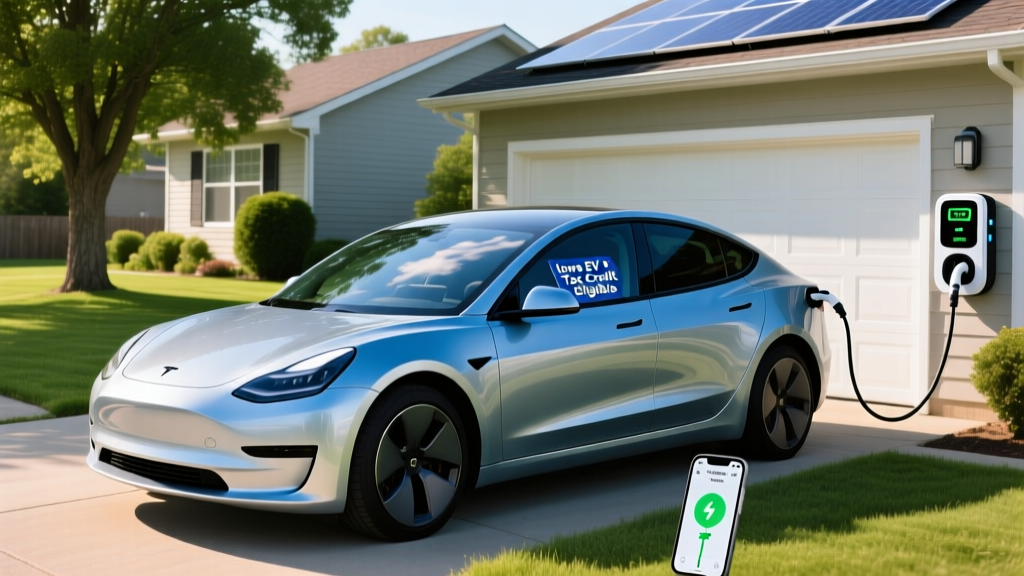
Iowa is not a state that rolls out the red carpet for electric vehicle buyers — at least not through direct purchase incentives. Unlike states such as Colorado, California, or Massachusetts, Iowa does not currently offer a state-level EV tax credit or purchase rebate for new electric vehicles. In fact, Iowa imposes an additional annual registration fee on EVs and plug-in hybrids to offset lost gas tax revenue. But that doesn't mean Iowa EV buyers are out of luck. The federal IRS §30D Clean Vehicle Credit remains available and can knock up to $7,500 off the purchase price — if you and the vehicle qualify.
This guide walks through every layer of EV ownership cost for Iowa drivers in 2026: the federal credit's real eligibility hurdles, Iowa's EV-specific fees, utility rebates that partially fill the state incentive gap, and a ground-up five-year total cost of ownership comparison. If you're searching for an "Iowa EV tax credit," here's the full picture.
Federal §30D Clean Vehicle Credit: The Incentive That Matters Most
Since Iowa offers no state purchase incentive, the federal §30D credit is the primary financial lever for Iowa EV buyers. Under current 2026 rules, qualifying buyers can claim up to $7,500 on a new EV or up to $4,000 on a qualifying used EV (the §25E credit). Since January 1, 2024, the credit can also be transferred at the point of sale, meaning the dealer applies it as a down payment reduction rather than waiting for a tax refund at filing time.
But eligibility is far from universal. The credit is governed by a web of requirements that trip up many buyers:
§30D New EV Credit Eligibility Checklist (2026)
- MSRP cap: Vans, SUVs, and pickup trucks must have an MSRP ≤ $80,000. Sedans and other vehicles must be ≤ $55,000.
- Buyer income cap (MAGI): $300,000 for joint filers, $225,000 for heads of household, $150,000 for all other filers.
- Battery sourcing — critical minerals: A specified percentage of critical minerals must be extracted or processed in the U.S. or a free-trade-agreement country (phasing up annually through 2027). Worth up to $3,750 of the credit.
- Battery sourcing — components: A specified percentage of battery components must be manufactured or assembled in North America (phasing up annually). Worth up to $3,750 of the credit.
- Final assembly: Vehicle must undergo final assembly in North America.
- Foreign entity of concern (FEOC) exclusion: Beginning 2024 for critical minerals and 2025 for battery components, vehicles with FEOC-sourced materials are disqualified entirely.
- Vehicle type: Must be a new plug-in EV or fuel cell vehicle with a battery capacity of at least 7 kWh. Plug-in hybrids (PHEVs) can qualify if they meet all criteria.
The FEOC rules have been the biggest disruptor. Several popular models that qualified in 2023 lost eligibility in 2024 or 2025 as the supply-chain restrictions tightened. Before committing to a vehicle, always verify current eligibility on fueleconomy.gov's tax credit page, which the DOE maintains with IRS coordination.
Point-of-Sale Transfer: How It Works in Iowa
Starting in 2024, you can elect to transfer the credit to the dealer at purchase. The dealer must be registered with the IRS Energy Credits Online portal. You receive the credit as an immediate price reduction (or cash if you've already paid), and the dealer claims it from the government. This is particularly valuable for Iowa buyers who might not have enough tax liability to use a non-refundable credit — the point-of-sale transfer effectively makes it refundable at purchase.
Iowa's EV Fees: The Offset You Should Budget For
Iowa charges an additional annual registration fee on electrified vehicles to compensate for lost fuel tax revenue:
- Battery Electric Vehicles (BEVs): ~$130 additional annual fee (as of 2025–2026 registration cycles)
- Plug-in Hybrid Vehicles (PHEVs): ~$65 additional annual fee
Over a five-year ownership period, that's roughly $650 extra for a BEV and $325 for a PHEV compared to a gas vehicle's standard registration. This is important context: while some states offer rebates that offset purchase price, Iowa's policy framework is revenue-neutral at best, and slightly punitive at worst, for EV adopters.
Iowa Utility Rebates: Check Your Provider
While the state itself doesn't offer purchase incentives, some Iowa utilities offer rebates for home charger installation or discounted EV charging rates. MidAmerican Energy has historically offered rebates for Level 2 home charger equipment (up to ~$500 in past programs). Alliant Energy and rural electric cooperatives may offer similar programs or time-of-use (TOU) rates that reduce charging costs. These programs change annually — contact your utility directly or check the Alternative Fuels Data Center for current Iowa incentives by ZIP code.
Five-Year Total Cost of Ownership: EV vs Gas in Iowa
To give you a concrete picture, let's compare a popular EV against a comparable gas vehicle over five years and 75,000 miles of driving. We'll use the 2026 Hyundai Ioniq 5 SEL (a strong value pick with an MSRP around $45,500 and federal credit eligibility) against the 2026 Toyota RAV4 XLE AWD (MSRP ~$33,000, EPA combined 29 MPG).
| Cost Category | 2026 Hyundai Ioniq 5 SEL (BEV) | 2026 Toyota RAV4 XLE AWD (Gas) |
|---|---|---|
| Purchase Price (MSRP) | $45,500 | $33,000 |
| Federal Tax Credit (§30D) | −$7,500 | $0 |
| Effective Purchase Price | $38,000 | $33,000 |
| Fuel/Energy (75k miles) | $3,375 (home L2, $0.135/kWh) | $7,759 (29 MPG, $3.00/gal) |
| Maintenance | $1,800 | $3,750 |
| Insurance (5 years) | $10,500 | $8,250 |
| Registration (Iowa EV surcharge) | $1,650 (base + $130/yr EV fee) | $1,000 |
| Estimated Depreciation | $18,000 (~47% of effective price) | $12,500 (~38% of MSRP) |
| 5-Year Total | $73,325 | $66,259 |
Key takeaways: The Ioniq 5 narrows the gap substantially after the federal credit, and it saves roughly $6,334 in fuel and maintenance over five years. However, higher insurance premiums and steeper depreciation (a known issue across the EV segment) leave it roughly $7,000 more expensive over five years in this comparison. The math improves if you have access to cheaper electricity (solar, TOU rates below $0.10/kWh) or if you keep the vehicle longer than five years, allowing fuel savings to compound while depreciation flattens.
Charging vs Gas: Iowa's Per-Mile Cost Reality
Iowa has some of the lowest residential electricity rates in the country — typically around $0.12–$0.14 per kWh, with some rural co-ops even lower. This is a genuine advantage for Iowa EV owners who charge at home.
| Vehicle / Scenario | Energy Source | Rate | Efficiency | Cost Per Mile |
|---|---|---|---|---|
| Hyundai Ioniq 5 (home Level 2) | Electricity | $0.135/kWh | 3.5 miles/kWh (120 MPGe) | $0.039 |
| Hyundai Ioniq 5 (DC fast charging) | Electricity | $0.38/kWh (avg public) | 3.5 miles/kWh | $0.109 |
| Toyota RAV4 AWD | Gasoline | $3.00/gallon | 29 MPG combined | $0.103 |
| Chevrolet Equinox EV | Electricity (home) | $0.135/kWh | 3.2 miles/kWh (108 MPGe) | $0.042 |
At home on Level 2, the Ioniq 5 costs about 4 cents per mile — roughly 60% cheaper than the RAV4 on gas. But note the DC fast charging row: if you rely heavily on public chargers at $0.35–$0.45/kWh, the cost-per-mile advantage shrinks dramatically or disappears entirely. Iowa's public charging infrastructure is improving (Electrify America, ChargePoint, and Tesla Superchargers along I-80 and I-35), but rural stretches remain sparse. Home charging is where the economics work best.
Maintenance Savings: Where EVs Quietly Win
| Service Item | Gas Vehicle (RAV4) | BEV (Ioniq 5) |
|---|---|---|
| Oil changes (5–7 at $50–$80 each) | $350–$560 | $0 |
| Transmission fluid | $150–$250 | $0 (single-speed reducer) |
| Brake pads (front + rear) | $600–$1,000 | $0–$200 (regen braking reduces wear significantly) |
| Engine air filter | $100–$150 | $0 (cabin filter only) |
| Spark plugs | $200–$400 | $0 |
| Coolant flush | $150–$200 | $100–$150 (battery thermal loop, longer intervals) |
| Tire rotation + replacement | $1,200–$1,600 | $1,400–$1,800 (EVs are heavier; tires wear faster) |
| Cabin air filter | $100–$150 | $100–$150 |
| Total Estimated | $2,850–$4,310 | $1,600–$2,300 |
The EV maintenance advantage is real but not infinite. You'll save $1,500–$2,000 over five years primarily by eliminating oil, spark plugs, and most brake work. Regenerative braking is the unsung hero here — one-pedal driving means you barely touch the friction brakes, and rotors/pads can last 100,000+ miles. The offset: EVs are 500–800 lbs heavier than comparable gas vehicles, and that extra mass accelerates tire wear. Budget for one extra set of tires over a five-year cycle.
Insurance: The Cost That Catches Iowa EV Buyers Off Guard
EV insurance premiums in Iowa typically run 15–30% higher than equivalent gas vehicles. For the Ioniq 5 vs RAV4 comparison, expect roughly $2,100/year vs $1,650/year — a $2,250 gap over five years.
Why the premium?
- Higher repair costs: EV battery packs are expensive to replace if damaged, and high-voltage systems require specialized technicians.
- Higher vehicle values: Even after the tax credit, the insured value is often based on pre-credit MSRP.
- Parts scarcity: EV-specific body panels, sensors, and battery modules can have longer lead times, increasing rental-car and labor costs per claim.
- Crash data: EVs' instant torque and heavier weight correlate with slightly different claim severity profiles.
Shop quotes from multiple carriers. Insurers like GEICO, Progressive, and USAA have become more competitive on EV rates, and some offer specific EV discounts. State Farm and Allstate may price differently depending on your Iowa ZIP code.
Depreciation: The Elephant in the EV Resale Room
EV depreciation has been the most volatile ownership variable in recent years. After aggressive price cuts by Tesla in 2023–2024 and a wave of new competition, used EV values dropped sharply. According to industry data from iSeeCars and Kelley Blue Book, three-year-old EVs lost 45–55% of their value on average in 2024–2025, compared to roughly 35–40% for gas vehicles.
Factors driving steeper EV depreciation:
- Rapid technology advancement makes older models feel outdated faster
- Consumer anxiety about battery longevity (even though most batteries outlast their warranties)
- Federal credit effectively lowers the "real" new price, compressing used values
- Increasing model availability reduces scarcity premiums
However, the picture isn't uniformly bleak. Vehicles with strong brand loyalty (Porsche Taycan, Rivian R1T), proven battery durability data, and high demand segments (compact crossovers) hold value better. And if you plan to keep your EV for 8–10 years, depreciation becomes less relevant — you're driving it into the ground, and fuel savings have more time to accumulate.
Bottom line for Iowa: If you sell or trade after 3–5 years, expect to absorb higher depreciation than a gas equivalent. If you drive 8+ years, the fuel and maintenance savings largely compensate, and the depreciation gap narrows as both vehicles approach their floor values.
Iowa EV Ownership: The Decision Framework
Choose an EV in Iowa if:
- You can install a Level 2 home charger (240V, 32–48A) and your utility rate is under $0.15/kWh
- You qualify for the full or partial §30D federal credit ($7,500 or $3,750)
- You drive 12,000+ miles per year (higher mileage = faster fuel payback)
- You plan to keep the vehicle 6+ years (amortizes higher insurance and depreciation)
- Your daily commute is under 80 miles round-trip (well within any modern EV's range, even with Iowa winter losses of 20–30%)
Consider a PHEV or gas vehicle if:
- You rent or can't install home charging (public-only charging erodes cost savings)
- You don't qualify for §30D due to income or the vehicle's sourcing/MSRP
- You frequently drive 300+ mile rural routes where Iowa's DC fast charging gaps are a concern
- You plan to trade in after 3 years (depreciation will hurt more)
Frequently Asked Questions
Does Iowa have a state EV tax credit or rebate in 2026?
No. Iowa does not currently offer a state-level tax credit, rebate, or purchase incentive for new electric vehicles. Iowa EV buyers rely on the federal §30D Clean Vehicle Credit (up to $7,500) and any local utility rebates for home charging equipment. Some Iowa utilities like MidAmerican Energy have offered Level 2 charger rebates in the past — check with your provider for current programs.
How much does it really cost to own an EV in Iowa over 5 years?
Based on our comparison of a Hyundai Ioniq 5 SEL vs a Toyota RAV4 XLE AWD over 75,000 miles, the EV costs approximately $73,000 all-in (after the $7,500 federal credit) compared to $66,000 for the gas vehicle. The EV saves about $6,300 in fuel and maintenance but gives it back in higher insurance (~$2,250 more), steeper depreciation (~$5,500 more), and Iowa's EV registration surcharge (~$650 more). The math improves significantly with higher annual mileage, cheaper electricity (solar or TOU rates), and longer ownership periods.
Do I qualify for the $7,500 federal EV tax credit?
Eligibility depends on three factors: your income (MAGI must be under $150K single / $300K joint), the vehicle's MSRP (under $55K for sedans, $80K for SUVs/trucks/vans), and the vehicle's battery sourcing (critical minerals and components must meet escalating U.S./FTA-country thresholds, and cannot involve foreign entities of concern). Not every EV qualifies. Verify specific model eligibility at fueleconomy.gov before purchasing. The credit can now be transferred at the point of sale as a down payment reduction.
How much do Iowa EV owners save on fuel?
With Iowa's average residential electricity rate of ~$0.135/kWh and a typical EV efficiency of 3.0–3.5 miles/kWh, home charging costs about $0.04–$0.05 per mile. A comparable gas SUV at 29 MPG with $3.00/gallon fuel costs about $0.10 per mile. Over 15,000 miles per year, that's roughly $900–$1,000 in annual fuel savings for the EV. Over five years, expect to save $4,000–$5,000 — but only if you charge primarily at home. Public DC fast charging at $0.35–$0.45/kWh narrows this gap considerably.
Are EVs more expensive to insure in Iowa?
Yes, typically 15–30% more expensive. For a vehicle in the $40K–$50K range, expect to pay $300–$500 more per year in insurance compared to a gas equivalent. Higher repair costs (battery damage, specialized technicians), higher insured values, and EV-specific parts scarcity drive the premium. Always get insurance quotes before purchasing — the difference between carriers on EV policies can be substantial.
How well do EVs hold their resale value?
EV depreciation has been steeper than gas vehicles in recent years, with 3-year-old EVs losing 45–55% of value vs 35–40% for gas vehicles. Price wars, rapid tech advancement, and battery anxiety contribute. However, if you plan to own your EV for 8+ years, depreciation becomes less impactful as both vehicle types approach floor values and your cumulative fuel savings grow. Vehicles from brands with strong loyalty and proven battery durability (Porsche, Tesla, Rivian) tend to depreciate less than average.
Does Iowa's EV registration fee offset the savings?
Iowa charges an additional ~$130/year for BEVs and ~$65/year for PHEVs. Over five years, that's $650 or $325 respectively. While not trivial, it's a small fraction of the $4,000–$5,000 you'll save on fuel over the same period. The fee exists to replace gas tax revenue that EVs don't contribute to — it's a policy choice, not a dealbreaker for ownership economics.