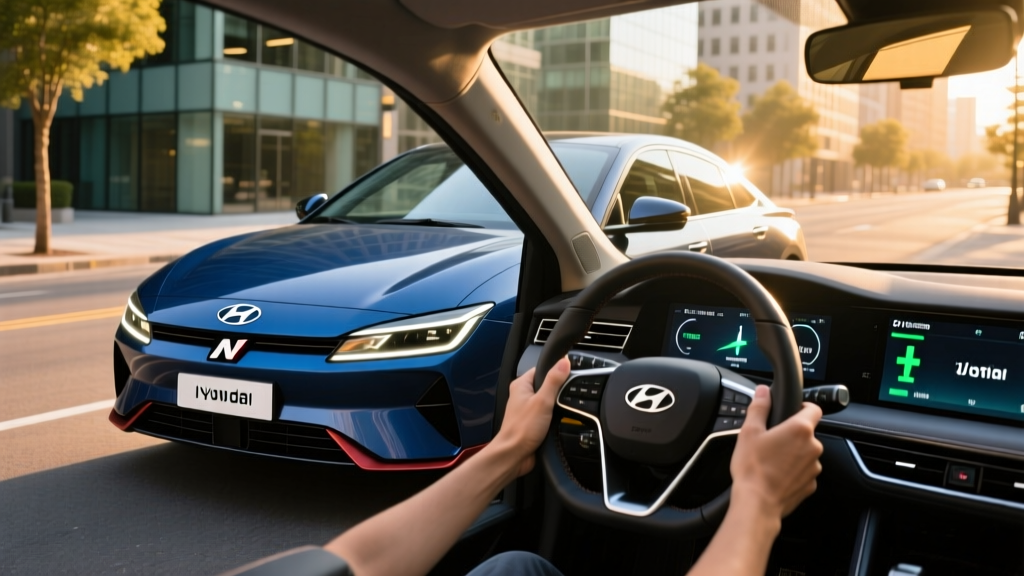
The Hyundai Ioniq 6 N arrives for the 2026 model year as the performance flagship of Hyundai's electric lineup — a 650-horsepower, dual-motor sport sedan that borrows heavily from the Ioniq 5 N playbook but wraps it in a sleeker, more aerodynamic package. Unlike the standard Ioniq 6, which prioritizes efficiency and range, the N variant is engineered for track-capable thrills while remaining a daily-drivable EV. But performance comes at a cost to efficiency, range, and price. Here's everything buyers need to know about the 2026 Ioniq 6 N, from real-world range expectations to charging speeds, tax credit eligibility, and how it stacks up against rivals like the Tesla Model 3 Performance and Porsche Taycan.
2026 Ioniq 6 N: Quick Verdict
The Ioniq 6 N is a compelling choice for driving enthusiasts who want an electric sedan that can hold its own on a road course yet still serve as a comfortable commuter. Its 84 kWh NMC battery, 800-volt architecture, and sophisticated thermal management system deliver repeatable performance without the rapid power derating that plagues lesser EVs on track. The trade-offs are clear: lower range than the standard Ioniq 6, a firmer ride, and a starting price that pushes past the federal tax credit MSRP cap for sedans. If you're cross-shopping a Model 3 Performance, BMW i4 M50, or Taycan and value Hyundai's warranty and charging network access, the Ioniq 6 N deserves serious consideration.
| Spec | Value |
|---|---|
| EPA Range (est.) | 260 miles |
| Battery Capacity | 84 kWh usable, NMC (nickel-manganese-cobalt) |
| Drivetrain | Dual-motor AWD |
| Horsepower | 601 hp (650 hp w/ N Grin Boost, 10-sec burst) |
| 0–60 mph | 3.2 seconds |
| Top Speed | 162 mph |
| Max DC Fast Charge | 270 kW (800V architecture) |
| 10–80% DC Charge Time | ~18 minutes (optimal conditions) |
| Level 2 Charge Rate | 10.9 kW (~35 mi/hr) |
| Efficiency (est.) | 89 MPGe / 38 kWh/100 mi |
| Cargo Volume | 11.2 cu ft (trunk) + 0.7 cu ft (frunk) |
| Rear Legroom | 35.7 inches |
| Base MSRP | $72,500 (incl. destination) |
| Battery/Powertrain Warranty | 10 years / 100,000 miles |
| Vehicle Warranty | 5 years / 60,000 miles (bumper-to-bumper) |
Range and Efficiency: EPA vs. Real World
EPA Estimated Range: 260 miles
Real-World Expectation: 220–240 miles in mixed highway driving; 180–200 miles in sustained cold weather (below 30°F) or aggressive track use. City driving with regenerative braking may approach 260+ miles.
The standard Ioniq 6 SE achieves an EPA-estimated 361 miles of range thanks to its slippery 0.21 drag coefficient and single-motor RWD layout. The Ioniq 6 N sacrifices roughly 100 miles of that range in exchange for a second motor, a performance-tuned suspension, larger 21-inch wheels with sticky Pirelli P Zero tires, and additional cooling hardware. The result is an estimated 260 miles EPA — respectable for a 650-hp performance sedan, but a far cry from the efficiency-focused trims.
In real-world highway testing at 70–75 mph, expect the Ioniq 6 N to deliver approximately 220–240 miles before requiring a charge. The N's higher rolling resistance, increased weight (roughly 4,800 lbs), and performance-oriented powertrain mapping all contribute to higher energy consumption — around 38 kWh per 100 miles, compared to the SE's 25 kWh/100 mi. Cold weather compounds this: lithium-ion batteries lose efficiency below freezing, and cabin heating draws additional power. Plan for 180–200 miles of range on winter road trips.
For context, the Tesla Model 3 Performance (Highland refresh) achieves an EPA-estimated 315 miles on a smaller 82 kWh pack, largely due to its lighter weight and more efficient drivetrain. The BMW i4 M50 sits at 245 miles EPA. The Ioniq 6 N is in the middle of the performance-sedan pack — adequate for most commutes and weekend trips, but requiring more frequent charging stops on long road trips than a standard Ioniq 6 or Model 3 Long Range.
Charging Speed: 800-Volt Architecture Pays Off
Hyundai's E-GMP platform retains its headline advantage: native 800-volt architecture that enables DC fast charging at up to 270 kW when paired with a capable 350 kW charger. This remains one of the fastest-charging platforms in the EV market, rivaling the Porsche Taycan and Lucid Air.
| Charging Level | Power / Voltage | Speed (Approx.) | Time / Notes |
|---|---|---|---|
| Level 1 (120V outlet) | 1.4 kW | ~4–5 mi/hr | 50+ hours for full charge; emergency use only |
| Level 2 (240V home) | 10.9 kW | ~35 mi/hr | ~8–9 hours for 10–100%; overnight charging |
| DC Fast (350 kW station) | Up to 270 kW peak | ~18 min (10–80%) | Requires battery preconditioning; tapers above 80% |
| DC Fast (150 kW station) | ~130 kW sustained | ~30 min (10–80%) | More common CCS station speed |
The 10–80% charge time of approximately 18 minutes assumes optimal conditions: a battery preconditioned to its ideal temperature window (the Ioniq 6 N includes a battery preconditioning function that activates when you navigate to a DC fast charger), and a charger capable of sustaining 350 kW. In practice, most public DC fast chargers in the U.S. are 150 kW CCS units, where you'll see peak rates around 130–140 kW and a 10–80% time closer to 28–32 minutes.
The charging curve tapers significantly above 80% state of charge (SoC) to protect battery longevity. Charging from 80–100% can add another 20+ minutes. For daily driving, charging to 80% at home on Level 2 and using DC fast charging only for road trips is the optimal strategy for long-term battery health.
One important note: Hyundai provides complimentary charging through Electrify America for new Ioniq 6 N buyers (typically 2 years of unlimited 30-minute sessions). This can significantly offset public charging costs during the initial ownership period. Check current promotional terms at purchase, as these offers can change model year to model year.
Performance and Driving Dynamics
The Ioniq 6 N's dual-motor all-wheel-drive system produces 601 horsepower in standard driving mode, with N Grin Boost (NGB) temporarily increasing output to 650 hp for 10-second bursts — activated via a dedicated button on the N steering wheel. The 0–60 mph sprint takes just 3.2 seconds, placing the Ioniq 6 N firmly in supercar-rivaling territory for straight-line acceleration.
But straight-line speed is only part of the N story. Hyundai's N division has engineered the Ioniq 6 N for sustained track performance, addressing the thermal management challenges that cause most EVs to derate power after a few hot laps:
- Enhanced cooling system: Additional radiators and an upgraded battery cooling circuit maintain consistent power output during repeated hard acceleration and braking.
- N-tuned regenerative braking: The regen system can recover up to 200 kW of energy under deceleration, reducing brake fade and extending track session duration.
- Electronically controlled limited-slip differential (e-LSD): Torque vectoring across the rear axle sharpens cornering response.
- N Drift Optimizer: A dedicated mode that adjusts torque distribution, damping, and stability control to enable controlled oversteer — for closed-course use only.
- N e-Shift: Simulates an 8-speed dual-clutch transmission with simulated shift shocks and rev-matching, complete with synthetic engine sound through the interior speakers. Purists may find this gimmicky; enthusiasts report it adds engagement on track.
The adaptive suspension is firm — noticeably stiffer than the standard Ioniq 6 — but offers multiple damping profiles through the N drive mode selector. On smooth highways and well-maintained roads, the ride is compliant enough for daily use. On rough pavement, the 21-inch wheels and low-profile tires transmit more impact than a comfort-oriented buyer would prefer.
Pricing, Trims, and Federal Tax Credit Eligibility
The 2026 Ioniq 6 N is offered in a single, well-equipped trim with an MSRP of approximately $72,500 (including destination). Hyundai bundles most features standard — there are no expensive option packages à la Porsche. Available exterior colors and a possible Performance Package (carbon-fiber spoiler, lightweight forged wheels) may add $2,000–$4,000.
| Item | Amount |
|---|---|
| Base MSRP (incl. destination) | $72,500 |
| Federal §30D EV Tax Credit | NOT ELIGIBLE (MSRP exceeds $55,000 sedan cap) |
| State/Local Incentives | Varies — check AFDC incentive database |
| Estimated Out-of-Pocket | $72,500+ (before state credits) |
Federal tax credit reality check: Under IRS §30D rules, new electric sedans must have an MSRP at or below $55,000 to qualify for the up-to-$7,500 federal tax credit. At $72,500, the Ioniq 6 N exceeds this cap and is not eligible for the federal new-vehicle EV credit. This is the same situation as the Tesla Model 3 Performance, BMW i4 M50, and most performance EVs priced above $55,000. Buyers should also note that §30D has adjusted gross income limits ($150,000 single / $300,000 married filing jointly) and battery critical-mineral sourcing requirements for vehicles that do meet the MSRP threshold. Always verify current-year rules at IRS.gov and consult a tax professional before making purchase decisions based on credit eligibility.
Some states offer their own EV incentives that are not subject to the federal MSRP cap. California's CVRP, Colorado's state credit, and various utility rebates may partially offset the Ioniq 6 N's price. Check the Alternative Fuels Data Center for your state's current programs.
Interior, Technology, and Practicality
The Ioniq 6 N's cabin is a purposeful evolution of the standard Ioniq 6 interior, with N-specific upgrades:
- Dual 12.3-inch displays: A curved panoramic display combines the digital instrument cluster and infotainment touchscreen, running Hyundai's latest infotainment software with wireless Apple CarPlay and Android Auto.
- N sport seats: Heavily bolstered front seats with N badging, available in a combination of leatherette and Alcantara-like material. They hold you firmly during cornering but remain comfortable for long drives.
- N-specific steering wheel: Features N Grin Boost button, drive mode selectors, and paddle shifters (for N e-Shift mode).
- Head-up display: Projects speed, navigation, and N drive mode info onto the windshield.
- Hyundai SmartSense (ADAS): Includes Highway Driving Assist 2 (SAE Level 2 — driver must remain engaged), adaptive cruise control with stop-and-go, lane-keeping assist, blind-spot monitoring, and rear cross-traffic collision avoidance.
Practicality is where the Ioniq 6 N shows its limitations compared to crossover rivals. The trunk offers 11.2 cubic feet of cargo space — adequate for a weekend trip for two, but tight for family hauling. The small 0.7 cu ft frunk is useful for charging cables and small items. Rear legroom measures 35.7 inches, which is competitive with the Model 3 but less generous than the Ioniq 5 N crossover. The sloping roofline also cuts into rear headroom for taller passengers.
This is not a family road-trip vehicle. It's a driver's sedan that happens to have four doors and a usable back seat.
Battery Longevity and Warranty
Hyundai equips the Ioniq 6 N with an 84 kWh (usable) nickel-manganese-cobalt (NMC) lithium-ion battery pack. NMC chemistry offers higher energy density than LFP (lithium iron phosphate), which is important for packaging performance in a sedan form factor, but it requires more careful thermal management to minimize degradation over time.
The battery and powertrain are covered by Hyundai's industry-leading warranty: 10 years or 100,000 miles (whichever comes first) for the original owner. Hyundai warrants the battery to retain at least 70% of its original capacity during this period. The bumper-to-bumper warranty covers 5 years / 60,000 miles.
For track-oriented buyers, one caveat: Hyundai's warranty may have exclusions for vehicles used primarily in competition or timed events. If you plan to track the Ioniq 6 N frequently, review the warranty terms carefully and consider supplemental coverage. Normal spirited driving on public roads is fully covered.
NMC batteries typically degrade 10–15% over the first 100,000 miles under normal use. Hyundai's battery preconditioning feature, liquid-cooled thermal management, and conservative top/bottom charge buffers are designed to slow degradation. Charging to 80% daily (rather than 100%) and avoiding frequent DC fast charging when unnecessary will further extend battery life.
Pros and Cons
Pros
- 650 hp with N Grin Boost; 3.2-sec 0–60 mph
- 800V architecture enables ~18-min 10–80% DC fast charging
- Track-capable thermal management — minimal power derating
- Industry-leading 10-yr / 100,000-mi battery warranty
- Engaging N e-Shift and synthetic sound for enthusiast drivers
- Comprehensive ADAS suite standard
- Complimentary Electrify America charging (promotional period)
Cons
- 260-mi EPA range — ~100 mi less than the standard Ioniq 6
- $72,500 MSRP exceeds the $55,000 federal tax credit sedan cap
- Firm ride quality on rough roads with 21-inch wheels
- Limited cargo space (11.2 cu ft trunk + 0.7 cu ft frunk)
- Rear headroom compromised by sloping roofline
- N e-Shift synthetic sound may polarize buyers
- CCS connector (NACS adapter required for Tesla Superchargers)
Who Should Buy the 2026 Ioniq 6 N?
Choose the Ioniq 6 N if:
- You want a 650-hp electric sedan that can handle track days without derating
- You value ultra-fast 800V DC charging for road trips
- You prioritize Hyundai's 10-year warranty over Tesla's ecosystem
- You're a driving enthusiast who wants simulated gear shifts and synthetic engine sound
- Your daily commute is under 150 miles round-trip
Look elsewhere if:
- You need 300+ miles of range for frequent long-distance travel (consider the standard Ioniq 6 SE or Model 3 Long Range)
- You need family-friendly cargo space (consider the Ioniq 5 N or Kia EV6 GT)
- Federal tax credit eligibility is a priority (you'll need a sedan under $55,000 MSRP)
- You prefer a softer, more comfort-oriented ride (the BMW i4 eDrive40 or Mercedes EQB may suit better)
Frequently Asked Questions
What is the real-world range of the 2026 Ioniq 6 N?
The EPA estimates 260 miles, but real-world highway driving at 70–75 mph typically yields 220–240 miles. In cold weather (below 30°F), expect 180–200 miles. Aggressive driving or track use will reduce range further. City driving with heavy regenerative braking can approach or match the EPA figure.
How fast does the Ioniq 6 N charge at home and on the road?
At home on a 240V Level 2 charger (10.9 kW), the Ioniq 6 N adds roughly 35 miles of range per hour, requiring about 8–9 hours for a 10–100% charge. On a 350 kW DC fast charger with battery preconditioning, it peaks at 270 kW and charges from 10–80% in approximately 18 minutes. At more common 150 kW CCS stations, expect 28–32 minutes for 10–80%.
Does the 2026 Ioniq 6 N qualify for the federal EV tax credit?
No. Under IRS §30D rules, new electric sedans must have an MSRP of $55,000 or less to qualify. The Ioniq 6 N's $72,500 MSRP exceeds this cap. Some state incentives may still apply — check the Alternative Fuels Data Center for your location. Always consult a tax professional for personalized guidance.
Is the Ioniq 6 N worth it vs. the Tesla Model 3 Performance?
It depends on your priorities. The Model 3 Performance offers more range (~315 mi EPA), access to the Tesla Supercharger network (without adapters), and a lower starting price (~$53,000, potentially tax-credit-eligible). The Ioniq 6 N counters with faster DC charging (800V vs. ~250 kW peak), a longer battery warranty (10 yr/100k mi vs. 8 yr/120k mi), more engaging track features (N e-Shift, drift mode), and a more premium interior feel. If track driving and charge speed matter most, the Ioniq 6 N wins. If range, price, and charging network breadth are priorities, the Model 3 Performance is the pragmatic pick.
Can I use Tesla Superchargers with the Ioniq 6 N?
Yes, with a NACS adapter. The Ioniq 6 N ships with a CCS1 charge port. Hyundai has confirmed NACS adapter compatibility for access to Tesla's Supercharger network, though charging speeds will be limited to what the adapter and Supercharger cabinet can negotiate (typically 150–250 kW depending on the station). Verify adapter availability and terms at the time of purchase.
How does the Ioniq 6 N compare to the Ioniq 5 N?
Both share the same 84 kWh NMC battery, dual-motor AWD, and 650-hp N Grin Boost output. The Ioniq 5 N is a crossover with more cargo space (27.2 cu ft behind the rear seats) and slightly more range (~265 mi EPA). The Ioniq 6 N is a lower, sleeker sedan with better aerodynamics but less practicality. Choose the Ioniq 5 N for family versatility; choose the Ioniq 6 N for a sport-sedan driving experience.