The Performance EV That Doesn't Forget It's a Daily Driver
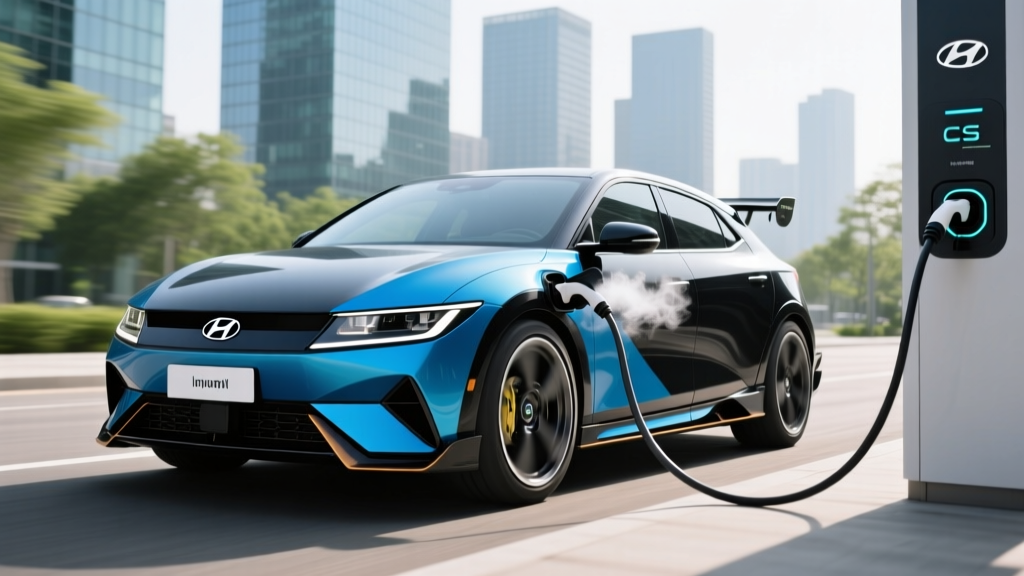
When Hyundai's N performance division got its hands on the Ioniq 5, skeptics wondered whether a heavy electric crossover could deliver genuine thrills. The 2026 Hyundai Ioniq 5 N answers decisively: 640 horsepower, a launch-control-aided sprint to 60 mph in 3.25 seconds, and an 84 kWh battery that sustains repeated track sessions without thermal limp mode. But the Ioniq 5 N 0-60 time is only part of the story. This is also a vehicle you'll live with every day — which means range, charging speed, cargo practicality, and price all matter just as much as quarter-mile times.
We've spent extensive time with the Ioniq 5 N to reconcile Hyundai's spec sheet with real-world ownership. Here's everything you need to know before you buy.
Full Spec Sheet at a Glance
| Spec | Value |
|---|---|
| EPA Range | 221 miles |
| Battery (usable) | 84.0 kWh, NMC (nickel-manganese-cobalt) |
| Drivetrain | Dual-motor AWD |
| Horsepower | 601 hp (640 hp w/ N Grin Boost, 10-sec burst) |
| Torque | 545 lb-ft (568 lb-ft w/ N Grin Boost) |
| 0-60 mph | 3.25 seconds (launch control) |
| Top Speed | 161 mph |
| Max DC Fast Charge | 240 kW (peak) |
| 10-80% DC Charge Time | ~18 minutes (preconditioned) |
| Level 2 Home Charge Rate | 10.9 kW (240V / 48A) |
| MPGe (combined) | 85 MPGe |
| Efficiency | 40 kWh/100 mi |
| Cargo Volume (rear seats up) | 27.2 cu ft |
| Cargo Volume (rear seats folded) | 59.3 cu ft |
| Rear Legroom | 39.4 inches |
| Battery/Powertrain Warranty | 10 years / 100,000 miles |
| Base MSRP | $67,695 (incl. destination) |
| Federal Tax Credit (§30D) | Up to $7,500 (eligibility varies) |
Range and Efficiency: The Performance Trade-Off
The EPA rates the Ioniq 5 N at 221 miles of combined range. That figure places it well below the standard Ioniq 5 Long Range AWD (up to 304 miles EPA) and reflects the cost of sticky Pirelli P Zero tires, aggressive N-tuned suspension geometry, and a heavier dual-motor setup optimized for power delivery over efficiency.
EPA estimate: 221 miles. In mixed driving at moderate temperatures (60-75°F), expect roughly 195-210 miles from a full charge. Sustained highway driving at 75+ mph drops that to approximately 170-185 miles. In freezing weather (below 32°F), plan for 150-170 miles — the Ioniq 5 N lacks a heat pump in the U.S. market, meaning cabin heating draws directly from the traction battery. Track use will consume range far more aggressively; a 20-minute hot-lap session can burn 30-40 miles of equivalent range.
The efficiency penalty is substantial: at 40 kWh per 100 miles, the Ioniq 5 N consumes roughly 45% more energy per mile than the standard Long Range AWD variant (28 kWh/100 mi). For context, that's roughly equivalent to a gas car getting 18 MPG combined. If your daily commute is under 60 miles round-trip and you charge at home overnight, this is a non-issue. If you road-trip frequently, the 221-mile EPA ceiling means more frequent charging stops — typically every 150-170 miles on the interstate.
The 84 kWh battery uses NMC (nickel-manganese-cobalt) chemistry, which provides the high discharge rates needed for 640-hp launches. NMC cells trade some cycle longevity for energy density and power delivery compared to LFP (lithium iron phosphate) batteries found in the Tesla Model 3 RWD and some base Ioniq 5 trims. For a performance vehicle, NMC is the correct engineering choice.
Charging Speed: 800V Architecture Pays Off
The Ioniq 5 N inherits Hyundai Motor Group's E-GMP platform with its native 800-volt architecture — one of the few production EVs (alongside the Porsche Taycan, Kia EV6 GT, and Genesis GV60) that can accept this voltage. The practical benefit: dramatically faster DC fast charging when paired with a capable station.
| Charge Level | Power | Speed / Time | Notes |
|---|---|---|---|
| Level 1 (120V household) | ~1.4 kW | ~4 mi/hr | Emergency/trickle only; full charge in 60+ hrs |
| Level 2 (240V home) | 10.9 kW | ~30 mi/hr | Full charge in ~8 hrs; requires 48A circuit |
| DC Fast (350 kW station) | 240 kW peak | 10-80% in ~18 min | Requires battery preconditioning; tapers above 80% |
| DC Fast (150 kW station) | ~135 kW sustained | 10-80% in ~28 min | More common station type; still rapid |
| DC Fast (50 kW station) | 50 kW | 10-80% in ~65 min | Older CHAdeMO/CCS stations; avoid for road trips |
The 240 kW peak rate is not sustained across the entire charging session. Like all EVs, the Ioniq 5 N follows a charging curve: it pulls maximum power between roughly 10-55% state of charge (SoC), then tapers to protect the battery cells. From 80-100%, charging slows dramatically — plan on an additional 25-30 minutes if you need a full top-up. For road trips, the optimal strategy is to charge from 10-80% and move on, which takes about 18 minutes at a 350 kW Electrify America or Tesla Supercharger (V4 with CCS adapter) station.
Critical preconditioning note: To hit peak charge rates, navigate to a DC fast charger using the built-in navigation system. This triggers battery preconditioning — warming the cells to optimal temperature before you arrive. Without preconditioning, especially in cold weather, peak charge rates may be limited to 100-150 kW, extending your 10-80% time to 30+ minutes.
The Ioniq 5 N ships with the NACS (North American Charging Standard) port for the 2026 model year, granting native access to Tesla's Supercharger network without an adapter. This is a significant practical advantage for road-trip charging, as Supercharger stations remain the most reliable DC fast-charging network in the U.S., per fueleconomy.gov and third-party reliability surveys.
Performance: Ioniq 5 N 0-60 and Track Capability
The headline number is 3.25 seconds to 60 mph using launch control with N Grin Boost engaged. That places the Ioniq 5 N in elite company — roughly matching a Porsche 911 Carrera S and handily beating the Tesla Model Y Performance (3.5 sec) and Ford Mustang Mach-E GT (3.5 sec). Hyundai achieves this with a dual-motor setup producing 601 hp in standard N mode, with a 10-second burst to 640 hp via N Grin Boost (activated by the N button on the steering wheel).
But straight-line speed is the easiest part of performance EV engineering. What separates the Ioniq 5 N is its thermal management under sustained load. Hyundai fitted a larger radiator, enhanced cooling circuits for the battery and inverters, and an N-specific battery conditioning system that pre-cools cells before track sessions. In testing, the Ioniq 5 N completed multiple laps at Willow Springs and Sonoma Raceway without power derating — a problem that plagues most EVs (including earlier Tesla Model 3 Performance track attempts) after just a few hot laps.
The N-tuned electronically controlled suspension, mechanical limited-slip differential simulation via torque vectoring, and 275/35R21 Pirelli P Zero tires deliver genuine cornering composure. Hyundai also added an N e-Shift feature that simulates an 8-speed dual-clutch transmission's shift behavior — complete with torque interruptions and "rev matching" on downshifts. It's synthetic, but it solves a real problem: the disorienting sensation of single-speed EV acceleration on a track where shift points help drivers modulate speed. You can turn it off if you prefer the seamless EV experience.
N Active Sound+ projects synthesized engine and exhaust notes through interior and exterior speakers. Again, synthetic — but adjustable in intensity or fully defeatable. Hyundai's approach is to let drivers choose their level of engagement rather than forcing a single experience.
Pricing, Tax Credits, and Total Cost
The 2026 Ioniq 5 N starts at $67,695 including destination charge. Hyundai offers it in a single, well-equipped trim — there's no upsell ladder. The only factory option is paint color (Performance Blue Matte adds $1,000). This simplifies buying but means the as-tested price typically lands between $67,695 and $68,695.
| Item | Amount |
|---|---|
| Base MSRP (incl. destination) | $67,695 |
| Performance Blue Matte paint | +$1,000 (optional) |
| Federal §30D Tax Credit (if eligible) | −$7,500 |
| Effective Price (with full credit) | ~$60,195 |
Federal tax credit eligibility is not guaranteed. Under current IRS §30D rules, the Ioniq 5 N must satisfy several requirements:
- MSRP cap: The vehicle must have an MSRP at or below $80,000 for SUVs/trucks. The Ioniq 5 N is classified as an SUV, so its $67,695 sticker clears this threshold.
- Buyer income cap: Modified adjusted gross income must not exceed $150,000 (single), $225,000 (head of household), or $300,000 (joint filers).
- Battery sourcing: A percentage of critical minerals and battery components must be sourced from the U.S. or free-trade-agreement countries. These percentages increase annually, and eligibility can change mid-year. Hyundai has confirmed that qualifying Ioniq 5 N VINs are eligible for the full $7,500, but always verify your specific VIN on the IRS portal before purchasing.
- Point-of-sale transfer: As of 2024, you can transfer the credit to the dealer at purchase, reducing your out-of-pocket cost immediately rather than waiting for tax filing. This effectively lowers the drive-off price to ~$60,195.
Consult a tax professional to confirm your personal eligibility. State incentives (California's CVRP, Colorado's innovative motor vehicle credit, etc.) may stack on top but vary by jurisdiction — check your state's energy office for current programs.
Interior, Tech, and Daily Practicality
The Ioniq 5 N's cabin mirrors the standard Ioniq 5's retro-futuristic design with dual 12.3-inch displays (instrument cluster and infotainment), but N-specific upgrades include heavily bolstered sport seats with N branding, a thicker N steering wheel with dedicated mode buttons, aluminum pedals, and N-branded door sills.
Infotainment and driver assist: The 12.3-inch touchscreen runs Hyundai's latest software with wireless Apple CarPlay and Android Auto, over-the-air updates, and a Bluelink connected-services suite. Hyundai SmartSense provides a comprehensive Level 2 (SAE) driver-assistance suite: adaptive cruise control with stop-and-go, lane-keeping assist, blind-spot monitoring, rear cross-traffic collision avoidance, and highway driving assist. This is not autonomous driving — the driver must remain fully engaged with hands on the wheel at all times.
Cargo and passenger space: With 27.2 cu ft behind the rear seats and 59.3 cu ft with them folded, the Ioniq 5 N is practical for a performance vehicle — though slightly less than the standard Ioniq 5 (27.2/59.3 cu ft figures are comparable, but the N's firmer suspension and larger wheels don't impede interior volume). Rear legroom at 39.4 inches comfortably fits adults. The flat floor (thanks to the E-GMP skateboard platform) enhances the feeling of spaciousness. However, the Ioniq 5 N sacrifices the front trunk (frunk) found on standard models — that space is occupied by additional cooling hardware.
Notable drawbacks: The ride quality is firm, even in the softest N suspension setting. On rough urban roads, the 21-inch wheels and low-profile tires transmit more impact than the standard Ioniq 5. Road noise at highway speed is noticeably higher due to the performance tire compound. The absence of a heat pump (standard on some competitors) hurts cold-weather efficiency. And the 221-mile range, while adequate for most daily use, demands route planning on longer trips.
How It Compares: Ioniq 5 N vs. Key Rivals
The Ioniq 5 N competes in a small but growing segment of performance EVs. Here's how it stacks up against its closest rivals:
| Spec | Hyundai Ioniq 5 N | Tesla Model Y Performance | Ford Mustang Mach-E GT | Porsche Macan 4 EV |
|---|---|---|---|---|
| 0-60 mph | 3.25 sec | 3.5 sec | 3.5 sec | 4.9 sec |
| Horsepower | 640 hp (boost) | 456 hp | 480 hp | 402 hp |
| EPA Range | 221 mi | 285 mi | 263 mi | 308 mi |
| Max DC Charge | 240 kW | 250 kW | 150 kW | 270 kW |
| Base MSRP | $67,695 | $54,490 | $59,995 | $78,800 |
| Track Capability | Excellent (thermal mgmt) | Moderate (derate risk) | Moderate | Good |
| §30D Credit Eligible | Yes (verify VIN) | Partial/variable | Yes (verify VIN) | No (MSRP cap) |
The Model Y Performance wins on range and price but can't match the Ioniq 5 N's track durability or engagement features. The Mach-E GT is a strong value play but charges slower and lacks the N's thermal engineering. The Macan 4 EV is a premium benchmark for ride quality but costs significantly more and isn't in the same horsepower league.
- 3.25-sec 0-60 with genuine track-session thermal durability
- 800V architecture enables 18-min 10-80% DC charging
- NACS port provides native Supercharger access
- Engaging N e-Shift and sound customization
- 10-yr/100,000-mi battery warranty
- Eligible for $7,500 federal tax credit (verify VIN)
- Practical cargo space and rear-seat room
- 221-mile EPA range is the lowest in its class
- Firm ride and elevated road noise on 21-inch wheels
- No heat pump (U.S. market) hurts cold-weather efficiency
- No frunk — cooling hardware fills the space
- Single trim limits configuration options
- $67,695 starting price is steep for a Hyundai badge
Who Should Buy the Ioniq 5 N?
- You want a genuine dual-purpose EV — daily commuter and weekend track car
- You value driving engagement (simulated shifts, adjustable sound, N mode customization) over maximum range
- Your daily driving is under 150 miles and you can charge at home overnight
- You want 800V fast-charging for road trips without the Porsche price premium
- You qualify for the §30D tax credit, bringing the effective price near $60K
- Range is your top priority (consider the standard Ioniq 5 Long Range at 304 mi EPA or Tesla Model Y at 285+ mi)
- You regularly drive 200+ miles between charging opportunities
- You prioritize ride comfort over sporty handling
- You need a frunk for extra storage
- Your income exceeds §30D caps, making the full $67,695 harder to justify vs. a Model Y Performance at $54,490
The Ioniq 5 N is the rare performance EV that doesn't feel like a compromise in either direction. It's not a watered-down commuter pretending to be sporty, and it's not a track toy that's miserable on the daily commute. Hyundai's N division has built something that earns its 3.25-second 0-60 time and then asks you where you'd like to drive next — even if that answer involves a few charging stops along the way.
Frequently Asked Questions
What is the real-world range of the Hyundai Ioniq 5 N?
The EPA rates the Ioniq 5 N at 221 miles combined. In real-world mixed driving at moderate temperatures, expect 195-210 miles. Highway driving at 75+ mph drops this to roughly 170-185 miles, and freezing weather can reduce it further to 150-170 miles. Track use consumes range far more aggressively.
How fast does the Ioniq 5 N charge at home and on the road?
At home on a Level 2 (240V, 48A) charger, the Ioniq 5 N adds approximately 30 miles of range per hour, reaching a full charge in about 8 hours. On a 350 kW DC fast charger with battery preconditioning, it peaks at 240 kW and charges from 10-80% in roughly 18 minutes. At a more common 150 kW station, expect about 28 minutes for 10-80%.
Does the Ioniq 5 N qualify for the $7,500 federal EV tax credit?
The Ioniq 5 N's $67,695 MSRP falls below the $80,000 SUV cap, and Hyundai has indicated that qualifying VINs meet battery-sourcing requirements. However, your personal eligibility depends on income limits ($150K single / $300K joint), and sourcing requirements tighten annually. Always verify your specific VIN on the IRS portal and consult a tax professional before relying on the credit. The credit can be transferred to the dealer at point of sale.
Is the Ioniq 5 N worth buying over the Tesla Model Y Performance?
It depends on priorities. The Model Y Performance offers more range (285 mi vs. 221 mi), a lower price ($54,490 vs. $67,695), and access to Tesla's Supercharger network. The Ioniq 5 N delivers significantly more power (640 hp vs. 456 hp), a faster 0-60 (3.25 vs. 3.5 sec), superior track-session thermal management, and a more engaging driver experience with N e-Shift and customizable sound. If driving engagement matters more than range and price, the Ioniq 5 N wins.
How does the Ioniq 5 N handle cold weather?
Without a heat pump (not included on U.S.-market Ioniq 5 N models), cabin heating draws directly from the 84 kWh traction battery, reducing cold-weather range by 20-30%. Expect roughly 150-170 miles in freezing temperatures. Battery preconditioning for DC fast charging is essential in cold weather — always navigate to chargers via the built-in nav to activate it. Preconditioning the cabin while plugged in at home mitigates range loss on departure.
What is the battery warranty on the Ioniq 5 N?
Hyundai covers the Ioniq 5 N's battery and powertrain for 10 years or 100,000 miles, whichever comes first. The warranty guarantees the battery will retain at least 70% of its original capacity during that period. The basic vehicle warranty is 5 years / 60,000 miles. This is among the strongest battery warranties in the industry and reflects Hyundai's confidence in the NMC cell durability even under performance driving conditions.