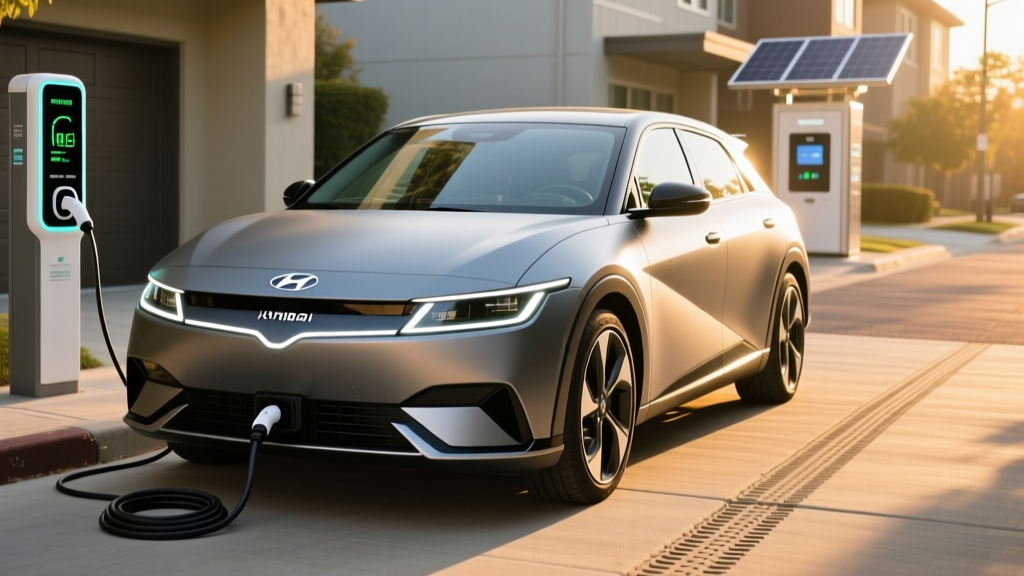
The Hyundai Ioniq 5 has been one of the most talked-about electric crossovers since its debut, and for 2026, it remains a top pick for buyers asking a critical question: does the Ioniq 5 qualify for the federal EV tax credit? With the IRS tightening battery-sourcing and critical-mineral requirements under §30D, the answer isn't a simple yes or no — it depends on your income, how you buy, and which trim you choose. In this review, we'll walk through the 2026 Ioniq 5's real-world range, charging speed, pricing after incentives, and whether it earns its spot against rivals like the Tesla Model Y and Ford Mustang Mach-E.
Does the Hyundai Ioniq 5 Qualify for the Federal EV Tax Credit?
The short answer: yes, the 2026 Hyundai Ioniq 5 qualifies for up to $7,500 in federal EV tax credits under IRS §30D — but only if you meet specific income, MSRP, and battery-sourcing requirements. Hyundai's U.S.-built Ioniq 5 (assembled at the Ellabell, Georgia plant since late 2024) meets the North American final-assembly rule, and Hyundai has worked to secure compliant battery-cell and critical-mineral supply chains.
However, eligibility is not universal. Here's the full checklist you need to verify before you buy:
- MSRP cap: The Ioniq 5 must have a base MSRP at or below $80,000 (SUVs/crossovers). All 2026 Ioniq 5 trims clear this threshold.
- Buyer income limits: Modified adjusted gross income (MAGI) must not exceed $150,000 (single), $225,000 (head of household), or $300,000 (married filing jointly).
- Battery sourcing: A percentage of battery components must be manufactured or assembled in North America, and critical minerals must be sourced from the U.S. or a free-trade-agreement country. Hyundai's Georgia-built models with SK On cells have met these thresholds for 2026, but always confirm via the IRS clean vehicle credit page and the dealer's point-of-sale documentation.
- Point-of-sale transfer: Since 2024, you can transfer the credit to the dealer at purchase, receiving the $7,500 as a down-payment reduction — even if you owe no federal tax. This is a major advantage over the old nonrefundable credit.
Pro tip: Ask your dealer for the IRS Seller Report at the time of purchase. This document confirms the vehicle's VIN has been registered as credit-eligible. If you're leasing, the credit technically goes to the lessor (the financing company), but many pass it through as a capitalized-cost reduction — confirm this in writing before signing.
2026 Ioniq 5 Pricing and What You'll Actually Pay
| Trim | Drivetrain | MSRP | After $7,500 Credit | Est. With Destination |
|---|---|---|---|---|
| SE Standard Range | RWD | $42,600 | $35,100 | $36,485 |
| SE | RWD | $47,100 | $39,600 | $40,985 |
| SE | AWD | $51,000 | $43,500 | $44,885 |
| SEL | AWD | $54,500 | $47,000 | $48,385 |
| Limited | AWD | $59,400 | $51,900 | $53,285 |
Destination adds approximately $1,385. State incentives may stack on top — California's CVRP, Colorado's $5,000 credit, and various utility rebates can push effective pricing well below the figures above. Check your state's energy office for current programs, as these vary by jurisdiction and funding availability.
EPA Range vs. Real-World Range: What to Actually Expect
| Spec | SE/SEL RWD | SE/SEL/Limited AWD | Standard Range RWD |
|---|---|---|---|
| EPA Range | 303 mi | 260 mi (Limited: 245 mi) | 240 mi |
| Battery (usable) | 77.4 kWh (NMC) | 77.4 kWh (NMC) | 58.0 kWh (NMC) |
| MPGe (combined) | 117 MPGe | 110 MPGe | 114 MPGe |
| kWh/100 mi | 29 | 31 | 29 |
The Ioniq 5 uses NMC (nickel-manganese-cobalt) lithium-ion cells supplied by SK On. NMC offers higher energy density than LFP (lithium iron phosphate), which is why Hyundai fits a 77.4 kWh usable pack into a relatively compact floor. The trade-off: NMC prefers you avoid routinely charging to 100% — set your daily limit to 80% for optimal long-term health and save 100% for road trips.
Charging Speed: DC Fast, Level 2, and the 800V Advantage
The Ioniq 5's E-GMP platform runs on an 800-volt architecture — one of the few mainstream EVs (alongside the Kia EV6 and Porsche Taycan) to do so. This translates directly to faster DC fast-charging speeds when paired with a 350 kW charger.
| Charging Level | Power (kW) | Speed / Time | Connector |
|---|---|---|---|
| Level 1 (120V household) | ~1.4 kW | ~4 mi/hr | NACS (2026) |
| Level 2 (240V home, 48A) | 10.9 kW | ~36 mi/hr; full charge in ~7.5 hr | NACS (2026) |
| DC Fast (350 kW station) | Peak 238 kW | 10–80% in ~18 min | NACS (2026) |
| DC Fast (150 kW station) | ~150 kW sustained | 10–80% in ~25 min | NACS (2026) |
Charging-curve reality: The 238 kW peak only holds between roughly 10–55% state of charge. Above 60%, the curve tapers to protect the battery, dropping to around 100 kW by 75% and below 50 kW past 85%. This is normal for NMC chemistry with active thermal management, but it means a 10–90% session takes closer to 28–32 minutes, not 18. Plan your road-trip stops for 10–80% sessions to maximize time efficiency.
For 2026, Hyundai has transitioned the Ioniq 5 to the NACS (North American Charging Standard) port, giving native access to Tesla's Supercharger network — now the largest and most reliable DC network in the U.S. — without an adapter. This is a significant practical upgrade over the CCS1 port on 2022–2025 models.
Home charging setup: A 48-amp Level 2 wallbox on a 60-amp circuit delivers the Ioniq 5's full 10.9 kW onboard rate. Budget $800–$1,500 for a quality charger (ChargePoint Home Flex, Emporia Level 2, or Hyundai's own branded unit) plus $500–$2,500 for electrician installation depending on panel proximity and whether a 200-amp service upgrade is needed.
Performance, Drivetrain, and Daily Driving Dynamics
| Spec | RWD Long Range | AWD Long Range | Standard Range RWD |
|---|---|---|---|
| Horsepower | 168 hp | 320 hp | 168 hp |
| Torque | 258 lb-ft | 446 lb-ft | 258 lb-ft |
| 0–60 mph | 7.2 sec | 4.5 sec | 8.3 sec |
| Top Speed | 115 mph | 115 mph | 115 mph |
| Drivetrain | Rear motor | Dual motor (front + rear) | Rear motor |
| Towing Capacity | — | 2,300 lbs | — |
The AWD dual-motor Ioniq 5 is genuinely quick — 4.5 seconds to 60 mph puts it in hot-hatch territory, and the instant torque delivery makes highway merging effortless. The RWD version is adequate for commuting but feels noticeably leisurely at highway on-ramp speeds. If you're weighing the range-vs-power trade-off, consider this: the AWD gives you 152 more horsepower for roughly 40 miles less EPA range and about $3,900 more. For most buyers in snow-belt states, the AWD premium is worth it.
Ride quality is composed and slightly firm — Hyundai tuned the suspension for confidence over cloud-like softness. Road noise is well-managed, and the low center of gravity (battery pack under the floor) keeps body roll minimal through corners. The Ioniq 5 is not a sports SUV, but it's one of the more engaging drives in the mainstream EV crossover segment.
Interior Space, Cargo, and Tech That Matters
The Ioniq 5's flat floor and stretched wheelbase (118.1 inches — longer than a Tucson) create genuinely generous interior volume:
- Front legroom: 41.7 inches
- Rear legroom: 39.4 inches — adults sit comfortably for long trips
- Cargo (rear seats up): 27.2 cu ft
- Cargo (rear seats folded): 59.3 cu ft
- Front trunk (frunk): 0.85 cu ft (RWD) / 0.35 cu ft (AWD) — enough for charging cables, not groceries
The dual 12.3-inch displays (cluster + infotainment) run Hyundai's latest software with native NACS Supercharger routing, wireless Apple CarPlay/Android Auto, and over-the-air updates. The center console slides fore and aft ("Universal Island"), and the cabin uses recycled materials and eco-process leather on higher trims.
Vehicle-to-load (V2L): The Ioniq 5 can output up to 3.6 kW of AC power through an interior outlet and an exterior V2L adapter — enough to run a campsite, power tools at a job site, or keep a refrigerator running during an outage. This is a feature the Model Y doesn't offer and one of the Ioniq 5's most underappreciated differentiators.
Driver assistance: Hyundai SmartSense includes Highway Driving Assist 2 (HDA2), which provides adaptive cruise + lane-centering on divided highways. This is an SAE Level 2 system — you must keep your hands on the wheel and eyes on the road. It's competent and less aggressive than some competitors, but it does not offer hands-free driving like GM's Super Cruise or Ford's BlueCruise on approved highways.
Warranty Coverage and Long-Term Battery Outlook
| Coverage | Term |
|---|---|
| New Vehicle Limited | 5 years / 60,000 miles |
| EV Battery | 10 years / 100,000 miles (capacity ≥ 70%) |
| EV Powertrain Components | 10 years / 100,000 miles |
| Roadside Assistance | 5 years / unlimited miles |
| Complimentary Maintenance | 3 years / 36,000 miles |
Hyundai's 10-year/100,000-mile battery warranty is one of the longest in the segment and guarantees the pack will retain at least 70% of its original capacity during the coverage period. Real-world degradation data from 2022–2024 Ioniq 5 owners suggests approximately 5–8% capacity loss over the first 60,000 miles — well within the warranty buffer. NMC chemistry with the Ioniq 5's liquid-cooled thermal management has proven durable, but longevity is best served by avoiding repeated 100% charges and minimizing DC fast-charging in extreme heat.
How the Ioniq 5 Stacks Up Against Key Competitors
| Spec | 2026 Ioniq 5 AWD | 2026 Tesla Model Y LR AWD | 2026 Ford Mach-E Premium AWD |
|---|---|---|---|
| EPA Range | 260 mi | 320 mi | 250 mi |
| Battery | 77.4 kWh NMC | ~78 kWh NMC | 72 kWh NMC |
| DC Fast Peak | 238 kW | 250 kW | 150 kW |
| 10–80% Time | ~18 min | ~22 min | ~34 min |
| 0–60 mph | 4.5 sec | 4.8 sec | 5.1 sec |
| Cargo (seats up) | 27.2 cu ft | 30.2 cu ft | 29.7 cu ft |
| Base MSRP (AWD) | $51,000 | $48,990 | $50,995 |
| Federal Credit | Up to $7,500 | Up to $7,500 | Up to $7,500 |
| V2L Capability | Yes (3.6 kW) | No | No |
| Native Supercharger | Yes (NACS) | Yes | Yes (NACS) |
Pros, Cons, and the Final Verdict
Pros
- Ultra-fast 800V DC charging (18 min 10–80%)
- Native NACS port — no adapter for Superchargers
- Federal tax credit eligible at all trims (up to $7,500)
- V2L power output (3.6 kW) for camping/emergencies
- Class-leading 10-year/100k-mile battery warranty
- Spacious rear seat and flat floor
- Distinctive retro-futuristic design
Cons
- AWD range (260 mi) trails Model Y by ~60 mi
- Small frunk, especially on AWD trims
- No hands-free driving mode (HDA2 requires hands on wheel)
- Cargo volume slightly behind Model Y and Mach-E
- Infotainment learning curve for first-time Hyundai EV owners
- Limited towing (2,300 lbs AWD only)
Look at the Model Y instead if: Maximum range and cargo space are your top priorities, or you want the most mature Supercharger routing experience. The Mach-E is a solid pick if you prefer Ford's dealership network and BlueCruise hands-free capability on approved highways.
Frequently Asked Questions
Does the 2026 Ioniq 5 qualify for the full $7,500 federal tax credit?
Yes, all 2026 Ioniq 5 trims qualify for up to $7,500 under IRS §30D, provided you meet the income caps ($300k joint / $150k single) and the vehicle's battery sourcing meets current-year critical-mineral and component requirements. Hyundai's Georgia-built Ioniq 5 has met these thresholds. Confirm via the IRS clean vehicle credit page and your dealer's Seller Report before purchase.
Can I get the tax credit as a point-of-sale discount?
Yes. Under current rules, you can transfer the credit to the dealer at purchase, receiving it as an immediate price reduction — even if your federal tax liability is less than $7,500. This effectively makes the credit a rebate rather than a traditional nonrefundable credit.
What is the real-world highway range of the Ioniq 5 AWD?
Expect approximately 220–240 miles at sustained 70–75 mph highway speeds in moderate temperatures. In cold weather (below 30°F), that drops to roughly 185–210 miles. The RWD Long Range fares better at ~255–275 miles highway in mild conditions.
How fast does the Ioniq 5 charge at home?
On a 48-amp Level 2 home charger (10.9 kW), the Ioniq 5 gains approximately 36 miles of range per hour, going from empty to full in about 7.5 hours for the Long Range battery. A standard 120V outlet adds only ~4 miles per hour — useful for topping off, not for primary charging.
Is the Ioniq 5 good for road trips?
Yes, with planning. The 18-minute 10–80% DC fast-charge time and native NACS/Supercharger access make it one of the more road-trip-friendly EVs. The AWD's 260-mile EPA range means stops every 200–220 real-world miles on the highway, which aligns well with rest-stop and meal breaks.
Does the Ioniq 5 have a heat pump?
Yes. All 2026 Ioniq 5 trims include a standard heat pump, which improves cold-weather cabin heating efficiency and reduces the range penalty of winter driving compared to resistive heating systems.
Is the Ioniq 5 safe?
The Ioniq 5 earned the IIHS Top Safety Pick+ award (for prior model years with equivalent structure) and a 5-star overall NHTSA rating. Refer to NHTSA.gov for the latest 2026 crash-test data when available.
The 2026 Hyundai Ioniq 5 remains one of the most well-rounded EV crossovers on the market, and its full federal tax credit eligibility makes the effective pricing hard to beat. If your income qualifies and you verify sourcing compliance at the dealer, the post-credit price lands the Ioniq 5 SE RWD near $39,600 — a compelling entry point for a fast-charging, spacious, warranty-backed electric crossover.