Quick Answer: Should You Buy an Infiniti Electric?
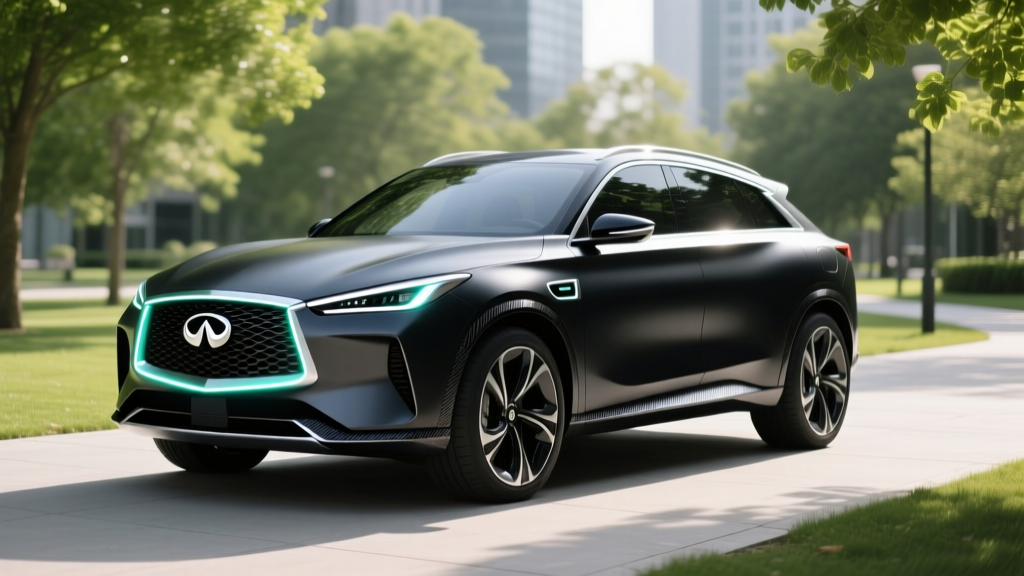
As of early 2026, Infiniti has no electric vehicles currently on sale in the US market. The brand has announced the QX60 EV (expected late 2026/early 2027) and hinted at additional electric models, but none are available for purchase today. If you need an electric luxury SUV now, consider the Genesis Electrified GV70, BMW iX, or Tesla Model X. If you're committed to the Infiniti brand, you'll need to wait—or explore their hybrid options.
Infiniti's Electric Vehicle Status: What's Actually Available?
Unlike its parent company Nissan (which offers the Ariya and Leaf), Infiniti has been notably slow to bring electric vehicles to market. The brand's electric strategy has shifted multiple times since 2019, when it first promised an electric lineup by 2021. As of 2026, here's where things stand:
Announced: QX60 EV (Expected 2027 Model Year)
- Status: Announced, preliminary specifications only
- Expected release: Late 2026 as a 2027 model
- Platform: Likely shared with Nissan's upcoming electric SUV architecture
- Estimated range: 280-320 miles EPA (preliminary, unconfirmed)
- Estimated price: $65,000-$80,000 (based on current QX60 pricing + EV premium)
These figures are estimates only. Infiniti has not released official specifications, battery capacity, charging speeds, or pricing. Any source claiming definitive specs is speculating.
Current Reality: No EVs, Limited Hybrids
Infiniti's current US lineup consists entirely of gasoline vehicles (Q50, QX50, QX55, QX60, QX80) with no hybrid or plug-in hybrid options as of 2026. This puts the brand behind competitors like:
- Genesis: Electrified GV70 (236-mile range, $66,450)
- BMW: iX xDrive50 (324-mile range, $87,100)
- Mercedes-Benz: EQE SUV (279-mile range, $77,900)
- Cadillac: Lyriq (314-mile range, $57,190)
Why Wait for Infiniti Electric? The Case for Patience
If you're loyal to the Infiniti brand or prefer its design language and dealership experience, waiting for the QX60 EV might make sense—but only if you can delay your purchase 12-18 months and accept the risks of buying a first-generation EV from a brand new to electrification.
Potential Advantages of Waiting
Brand familiarity: You know Infiniti's interior quality, dealership service, and ProPILOT Assist technology. Transitioning to their EV may feel less disruptive than switching brands.
Later-generation battery tech: A 2027 model will likely use more advanced battery chemistry than 2023-2024 EVs. Expect NMC (nickel-manganese-cobalt) cells with higher energy density, potentially enabling 300+ mile range without excessive weight.
Charging standard: By 2027, the QX60 EV will almost certainly use the NACS (North American Charging Standard) connector, giving native access to Tesla Superchargers without adapters—a significant advantage over current CCS-equipped luxury EVs.
The Case Against Waiting: Buy an EV Now
Waiting 12-18 months for an unproven product from a brand with no EV track record carries real risks:
Risk Factors
First-generation problems: Every automaker's first EV has teething issues—software bugs, battery management quirks, charging compatibility problems. BMW's iX, Mercedes' EQE, and Genesis' Electrified GV70 are now in their second or third model year with most issues resolved.
Delayed timeline: Infiniti has missed EV deadlines before. The QX60 EV could slip to 2028, especially given Nissan's own EV delays globally.
Opportunity cost: Every month you drive a gas QX60 (EPA 24 MPG combined) instead of an electric SUV, you're spending roughly $200-$300 more on fuel and maintenance (based on 1,000 miles/month, $3.50/gallon gas, $0.14/kWh electricity).
Cost Comparison: Gas QX60 vs. Electric Luxury SUV Competitors
Let's compare the real-world ownership costs of the current Infiniti QX60 (gasoline) against available electric alternatives over 5 years and 60,000 miles:
| Vehicle | Purchase Price | Fuel/Energy Cost | Maintenance | Insurance (est.) | Total 5-Year |
|---|---|---|---|---|---|
| 2026 Infiniti QX60 Luxe (gas) | $54,200 | $8,750 (gas @ $3.50/gal, 24 MPG) | $3,200 | $9,500 | $75,650 |
| 2026 Genesis Electrified GV70 | $66,450 | $2,520 (elec @ $0.14/kWh, 2.5 mi/kWh) | $1,800 | $10,800 | $81,570 |
| 2026 Cadillac Lyriq Luxury | $57,190 | $2,800 (elec @ $0.14/kWh, 2.3 mi/kWh) | $1,900 | $10,200 | $72,090 |
| 2026 BMW iX xDrive50 | $87,100 | $2,640 (elec @ $0.14/kWh, 2.4 mi/kWh) | $2,100 | $12,500 | $104,340 |
Key takeaway: The Cadillac Lyriq offers the lowest total cost, $3,560 less than the gas QX60 over 5 years, despite similar luxury positioning. The Genesis Electrified GV70 costs $5,920 more upfront but saves $6,230 in fuel and maintenance, nearly breaking even.
Note: These estimates exclude federal tax credits. The Lyriq currently qualifies for up to $7,500 under IRS §30D rules (subject to income caps, MSRP limits, and battery sourcing requirements), which would bring its effective price to ~$49,690—making it $15,000+ cheaper than the QX60 over 5 years.
What First-Time EV Buyers Should Know
If you're considering any electric vehicle—whether you wait for Infiniti or buy a competitor now—understand these fundamentals:
Home Charging Is Essential (For Most Owners)
Over 80% of EV charging happens at home. Without access to a garage, driveway, or dedicated parking spot where you can install a Level 2 charger (240V, 32-48 amps, adding 25-35 miles of range per hour), EV ownership becomes significantly more challenging.
Level 2 installation costs:
- Charger hardware: $400-$700 (ChargePoint Home Flex, Wallbox Pulsar Plus, or Tesla Universal Wall Connector)
- Electrician labor: $800-$2,000 (depends on panel capacity, distance from breaker box to garage)
- Permit fees: $50-$200 (varies by municipality)
- Total typical cost: $1,250-$2,900
If your home has a 200-amp electrical panel with spare capacity, expect the lower end. If you need a panel upgrade (common in older homes), add $1,500-$3,000.
Real-World Range vs. EPA Estimates
EPA range figures assume mixed driving at moderate temperatures. In reality:
- Highway driving (70+ mph): Expect 15-25% less range than EPA (aerodynamic drag increases exponentially with speed)
- Cold weather (below 40°F): Expect 20-40% range loss (battery chemistry slows, cabin heating draws power)
- Hot weather (above 90°F): Expect 10-15% loss (air conditioning load)
A luxury EV with a 300-mile EPA rating might deliver only 220-240 miles on a 75°F highway day, and 180-200 miles in 20°F winter conditions. Plan your road trips around these realities, not the sticker number.
Charging Speed Matters More Than Peak kW
Automakers advertise peak charging rates (e.g., "up to 200 kW"), but batteries can't sustain peak speed throughout a session. The charge curve tapers as the battery fills to protect cell health:
- 10-50% SoC: Near peak speed (e.g., 180-200 kW)
- 50-80% SoC: Moderate taper (e.g., 100-150 kW)
- 80-100% SoC: Severe taper (e.g., 30-50 kW) to prevent overheating
This is why manufacturers quote "10-80% charging time" rather than "0-100%". A typical luxury EV with a 100 kWh battery might charge 10-80% in 25-30 minutes at a 150+ kW DC fast charger, but 80-100% could take another 40-50 minutes.
Decision Framework: Should You Wait for Infiniti or Buy Now?
Wait for the Infiniti QX60 EV if:
- You're deeply loyal to the Infiniti brand and dislike switching
- Your current vehicle is reliable and you can comfortably wait 12-18 months
- You have home charging access and drive mostly under 250 miles/day
- You're willing to accept first-generation EV risks (software bugs, limited charging network optimization)
- You value NACS native Supercharger access (likely standard by 2027)
Buy an electric luxury SUV now if:
- You need a vehicle within 6 months
- You want proven reliability from a brand with 2+ years of EV production
- You want to take advantage of current federal tax credits before rules potentially tighten
- You're open to brands like Genesis, Cadillac, or BMW that offer competitive luxury EVs today
- You want to start saving on fuel and maintenance costs immediately
Stick with gas (for now) if:
- You lack home charging access and public charging infrastructure is sparse in your area
- You regularly drive 400+ miles in a single day (towing, remote areas)
- You live in an apartment/condo with no charging options and no plans to move
- You're uncomfortable with the upfront EV price premium (even after tax credits)
Common Misconceptions About Infiniti and EVs
| Myth | Fact |
|---|---|
| "Infiniti already has an electric SUV—I saw the QX60 e-POWER." | The e-POWER system (available in Japan/China) is a series hybrid, not a plug-in EV. The gas engine generates electricity but never directly drives the wheels. It cannot be plugged in and has no electric-only range. It's not sold in the US. |
| "The Infiniti QX60 EV will definitely launch in 2026." | As of early 2026, Infiniti has not confirmed a release date. Industry sources suggest late 2026 at the earliest, more likely early 2027 as a 2027 model year. Delays are common in EV launches. |
| "I can't buy an electric luxury SUV without spending $80,000+." | The 2026 Cadillac Lyriq starts at $57,190 (eligible for $7,500 tax credit = ~$49,690 effective). The Genesis Electrified GV70 starts at $66,450. Premium EVs under $70k exist. |
| "Electric vehicles are more expensive to own than gas cars." | Over 5 years, EVs typically save $4,000-$8,000 in fuel and maintenance (no oil changes, fewer brake replacements due to regenerative braking). Higher insurance and upfront cost can offset this, but tax credits often tip the balance. |
| "I'll need to replace the EV battery after 100,000 miles." | Modern EV batteries are warranted for 8 years/100,000 miles (10 years/150,000 miles in California and CARB states) to retain at least 70% capacity. Real-world data shows most batteries retain 85-90% capacity at 100,000 miles. Full replacement is rare and costs $8,000-$20,000 if needed out of warranty. |
Frequently Asked Questions
Will the Infiniti QX60 EV qualify for the $7,500 federal tax credit?
It's too early to know. The IRS §30D credit requires the vehicle to meet battery sourcing and critical mineral requirements, stay under MSRP caps ($80,000 for SUVs), and the buyer must meet income limits ($300,000 joint / $150,000 single). By the time the QX60 EV launches (likely 2027), these rules may change. Consult a tax professional before assuming eligibility.
How does Infiniti's electric strategy compare to Nissan's?
Nissan (Infiniti's parent) offers the Ariya electric crossover (up to 304-mile range, $39,590) and has committed to 15 new EVs by 2030. Infiniti has been slower, with no EVs on sale as of 2026. This divergence suggests Infiniti is positioning for a premium electric launch rather than volume, but execution remains uncertain.
Should I buy a used Infiniti QX60 (gas) now and upgrade to the EV later?
This could be a smart strategy if you find a 2-3 year old QX60 at a significant discount ($35,000-$42,000). You'll have a reliable luxury SUV while waiting for the EV to launch and for early-production issues to surface. Just factor in that you'll pay more in fuel during ownership.
What are the best electric luxury SUV alternatives to the Infiniti QX60?
For similar size and price: Cadillac Lyriq (314-mile range, $57,190, tax-credit eligible), Genesis Electrified GV70 (236-mile range, $66,450), BMW iX xDrive50 (324-mile range, $87,100). For larger three-row needs, the Tesla Model X (348-mile range, $79,990) is the only current option, though the Rivian R1S and upcoming electric SUVs from Mercedes and Audi will compete.
Is it worth waiting for solid-state batteries before buying an EV?
No. Solid-state batteries (promising faster charging, longer range, improved safety) are not expected in mass-market vehicles until 2028-2030 at the earliest. Current lithium-ion technology is mature, reliable, and cost-effective. Waiting for solid-state means delaying your EV purchase 4+ years with no guarantee of availability or affordability.
Bottom Line: Patience Has a Cost
Infiniti's electric future remains uncertain. The QX60 EV is announced but not imminent, and the brand has a history of delayed electrification promises. If you need a luxury electric SUV in 2026, competitors like Cadillac, Genesis, and BMW offer proven products with competitive pricing, real-world range, and available tax credits.
Waiting for Infiniti means accepting the risk of delays, first-generation reliability issues, and continued fuel/maintenance expenses on your current vehicle. For most buyers, the pragmatic choice is to explore available electric options now—unless brand loyalty outweighs the financial and practical benefits of switching today.