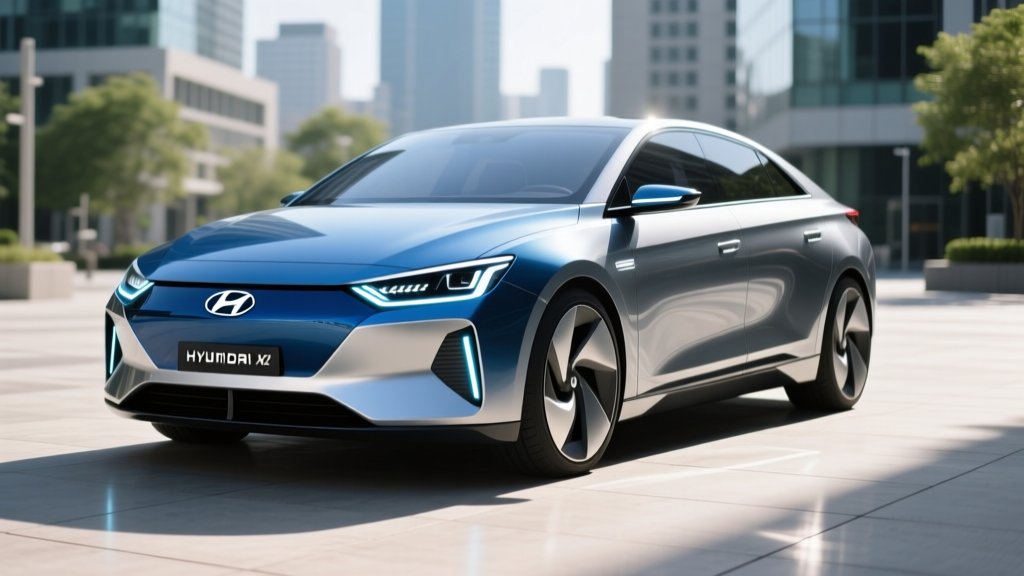
Over the past several months, camouflaged prototypes bearing Hyundai's Ioniq sub-brand badging have been spotted testing on public roads in South Korea, Germany, and the American Southwest. Enthusiasts and automotive photographers have taken to calling the mystery vehicle the "Hyundai Venus Ioniq"—a nickname that has gained traction on forums and social media despite Hyundai never officially confirming a model by that name. The "Venus" label appears to stem from early spy-shot metadata and internal project code speculation, but as of early 2026, Hyundai Motor Company has not announced any production vehicle called the Ioniq Venus.
What we do have are high-resolution spy photos, supply-chain leaks, platform filings, and Hyundai's own Ioniq roadmap announcements. Below, I've assembled everything credible about the prototype the EV community has dubbed the Hyundai Venus Ioniq, clearly separating confirmed facts from informed speculation. If you've searched for Hyundai Venus Ioniq spotted and want to know what's real and what's rumor, this is the most comprehensive breakdown available.
What Has Actually Been Spotted on the Road
Beginning in mid-2025, heavily camouflaged test mules were photographed near Hyundai's Namyang R&D center in Hwaseong, South Korea, and later at the Mojave Desert proving grounds in California. The prototypes share the Ioniq family design language—a cab-forward silhouette, short overhangs, and the distinctive "Parametric Pixel" lighting signature—but with proportions that don't match any current production Ioniq model.
Key observations from the spy shots:
- Wheelbase: Appears longer than the Ioniq 5 (118.1 in) but shorter than the Ioniq 9 (123.2 in), suggesting a mid-size crossover or fastback sedan.
- Roofline: Sleeker than the boxy Ioniq 5, with a sloping rear hatch that hints at a sportback or shooting-brake form factor.
- Charging port: Located on the rear quarter panel (driver's side, North American spec), consistent with Hyundai's E-GMP and next-generation eM platform architecture.
- Wheel size: Test mules fitted with 20-inch aero wheels, suggesting a performance or long-range variant in early testing.
- Sensor array: Roof-mounted LiDAR pod and additional radar units visible under camouflage, indicating advanced ADAS testing—potentially Hyundai's next-gen Highway Driving Assist 3 or higher.
Platform and Powertrain: What the eM Architecture Tells Us
Hyundai Motor Group has been transitioning from its first-generation Electric Global Modular Platform (E-GMP)—which underpins the Ioniq 5, Ioniq 6, Kia EV6, and Genesis GV60—to its next-generation eM platform, which debuted with the Ioniq 9 three-row SUV. Industry analysts and Korean media (Korea Herald) have reported that at least two additional Ioniq models are in development on eM derivatives, slated for reveal between late 2026 and 2028.
If the spotted prototype is indeed an upcoming Ioniq product, here's what the eM platform suggests about its engineering:
| Specification | Estimated Value | Basis |
|---|---|---|
| Platform | eM (next-gen E-GMP evolution) | Ioniq 9 precedent |
| Voltage Architecture | 800V nominal (supports 350 kW+ DC) | E-GMP/eM standard |
| Battery Chemistry | NMC (likely 5th-gen cells) or LFP for base trim | Hyundai supplier CATL/SK On roadmaps |
| Drivetrain Options | RWD single-motor / AWD dual-motor | Ioniq family pattern |
| Estimated Battery Pack | 77–110 kWh usable | Ioniq 5 to Ioniq 9 range |
Hyundai's battery supply chain includes SK On (NMC pouch cells, South Korea and US production) and CATL (LFP prismatic cells). The Ioniq 5 refresh already introduced an 84.0 kWh NMC pack. For a mid-size model slotted between the Ioniq 5 and Ioniq 9, a ~84–100 kWh usable battery in NMC chemistry is the most probable configuration for Long Range trims, with a potential LFP Standard Range option around 60–65 kWh for price-competitive markets.
Estimated Range, Efficiency, and Real-World Expectations
Without official EPA testing data, any range figure is speculative. However, we can model estimates using the eM platform's known efficiency characteristics and Hyundai's recent aerodynamic improvements.
EPA Est. (projected): ~310–370 miles (Long Range RWD, ~100 kWh pack)
Real-World Highway: Expect ~260–310 mi at 70–75 mph sustained
Cold Weather (below 32°F): Expect 20–30% range reduction (~215–295 mi)
Efficiency (projected): ~27–29 kWh/100 mi / ~115–125 MPGe combined
Note: These are analyst estimates based on platform data. Official EPA figures will be published on fueleconomy.gov only after the vehicle enters production and certification.
Hyundai's 800V architecture and heat pump system (standard on most Ioniq models since the Ioniq 5) give the brand an edge in cold-weather efficiency compared to competitors without active battery preconditioning. If the Venus prototype uses the same integrated thermal management system seen in the Ioniq 9, winter range penalty should stay closer to 20% rather than the 30–40% losses some competing EVs suffer.
Charging Speed Projections: DC Fast and Home Level 2
One of the strongest arguments for the eM platform is its carryover 800V electrical architecture, which enables exceptionally fast DC charging on compatible infrastructure. Here's what we can reasonably project:
| Charging Level | Power / Rate | Time / Recovery |
|---|---|---|
| DC Fast Charge (Peak) | ~250–350 kW (on 350 kW station) | 10–80% in ~16–20 min (est.) |
| DC Fast Charge (Sustained Avg.) | ~170–200 kW average to 80% | Charge curve tapers above 60% SoC |
| Level 2 (240V, 48A home charger) | 11.5 kW onboard charger | ~35–40 mi/hr of range added |
| Level 1 (120V household) | ~1.4 kW | ~4–5 mi/hr (emergency/trickle only) |
A critical detail many buyers overlook: peak kW is not sustained kW. A 350 kW peak rating means the vehicle can accept that rate only at low state-of-charge (typically 10–30% SoC) under ideal thermal conditions. As the battery fills, the charge rate tapers to protect cell health. Hyundai's 800V system is among the best in the industry at sustaining higher rates deeper into the curve—the Ioniq 5 sustains above 200 kW through roughly 55% SoC before tapering. If the Venus prototype uses an updated eM thermal management system, expect similar or slightly improved curve behavior.
For home charging, Hyundai equips its Ioniq vehicles with an 11.5 kW onboard charger (some markets get 10.9 kW). On a properly installed 48-amp Level 2 home charger (requiring a 60-amp circuit), you'll recover roughly 35–40 miles of range per hour of charging—enough to fully replenish overnight for most daily driving needs.
Performance Estimates and Driving Dynamics
Hyundai has established a clear performance hierarchy across the Ioniq lineup, and the prototype's proportions suggest it will slot between the Ioniq 5 and Ioniq 9 in both size and output.
| Variant | Powertrain | Horsepower | 0–60 mph (est.) |
|---|---|---|---|
| Standard Range RWD | Single rear motor | ~215 hp | ~7.0 sec |
| Long Range RWD | Single rear motor | ~225–255 hp | ~6.5 sec |
| Long Range AWD | Dual motor | ~320–340 hp | ~4.8 sec |
| N Performance (if offered) | Dual motor, N-tuned | ~600+ hp | ~3.3 sec |
The Ioniq 5 N has proven Hyundai can build a genuinely thrilling EV in the N performance sub-brand. If the spotted prototype receives an N variant, expect dual-motor AWD with torque vectoring, an N-specific battery cooling system for sustained track use, and simulated gear shifts via Hyundai's N e-Shift software—a feature that has been polarizing but undeniably engaging.
Pricing, Trims, and Federal Tax Credit Eligibility
Hyundai has not published pricing for any vehicle called the Ioniq Venus. However, based on current Ioniq lineup positioning and market segment analysis, here are projected MSRP ranges:
| Trim (Projected) | Est. Base MSRP | Est. As-Tested |
|---|---|---|
| SE Standard Range | ~$40,000–$43,000 | ~$44,000 |
| SEL Long Range RWD | ~$47,000–$50,000 | ~$52,000 |
| Limited AWD | ~$54,000–$57,000 | ~$59,000 |
| N Performance | ~$65,000–$70,000 | ~$72,000+ |
Federal Tax Credit: §30D Eligibility
Under current IRS §30D rules, the new clean vehicle credit offers up to $7,500—split into $3,750 for critical minerals sourcing and $3,750 for battery component sourcing—but eligibility is subject to multiple conditions:
- MSRP Cap: SUVs, vans, and pickups must be under $80,000; sedans and other body styles under $55,000. If the Venus prototype is classified as an SUV, most trims would fall under the cap. If it's a sedan/fastback, the Limited and N trims could exceed $55,000 and lose eligibility.
- Buyer Income Cap: Modified AGI must not exceed $150,000 (single), $225,000 (head of household), or $300,000 (joint).
- Battery Sourcing: Critical minerals and battery components must meet phased-in domestic/free-trade-agreement sourcing thresholds. Hyundai has been working to shift battery production to US-based SK On and LG Energy Solution plants, but full $7,500 eligibility depends on the specific model year and manufacturing origin.
- Point-of-Sale Transfer: As of 2024, buyers can transfer the credit to the dealer for an upfront price reduction, but the dealer must be registered with the IRS Energy Credits Online system.
- Final Assembly: The vehicle must undergo final assembly in North America. Hyundai's Metaplant America in Ellabell, Georgia, is the likely production site for US-market Ioniq models.
Interior, Cargo, and Technology (Projected)
Based on the prototype's exterior dimensions and Hyundai's current interior design trajectory, the Venus Ioniq would likely offer:
- Passenger Volume: ~105–112 cu ft (mid-size, between Ioniq 5's 106.5 cu ft and Ioniq 9's larger cabin)
- Rear Legroom: ~38–41 inches (eM platform's flat floor enables generous second-row space)
- Cargo (behind 2nd row): ~27–32 cu ft
- Cargo (seats folded): ~60–70 cu ft
- Frunk (front trunk): ~1.5–2.0 cu ft (RWD models; AWD may have reduced or no frunk)
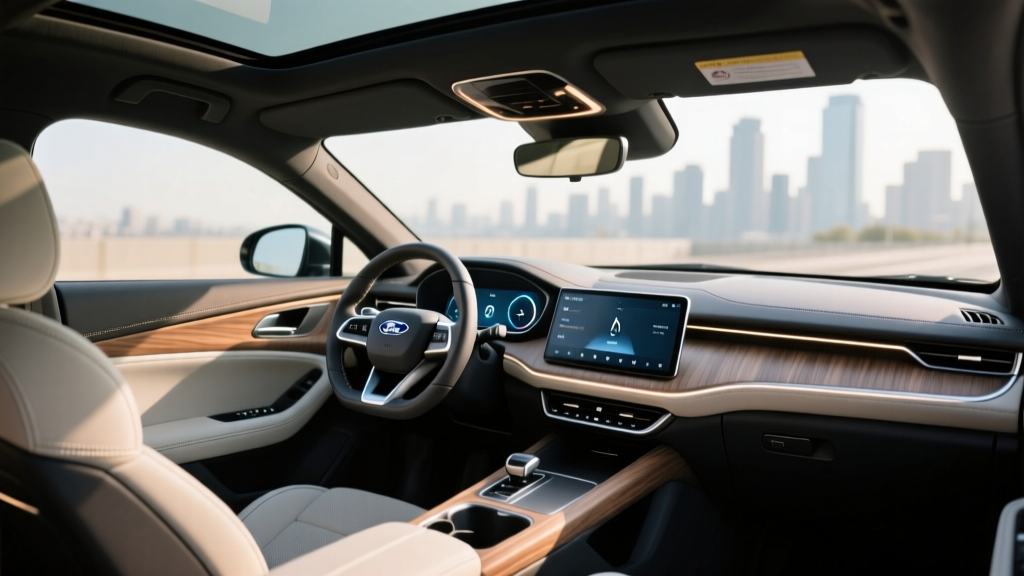
On the technology front, expect Hyundai's latest infotainment system with a 12.3-inch digital cluster and a 12.3-inch (or potentially larger 14-inch) center touchscreen running the newest ccNC (Connected Car Navigation Cockpit) software. Wireless Apple CarPlay and Android Auto should be standard across all trims, along with over-the-air update capability.
For driver assistance, the prototype's visible sensor suite (roof LiDAR, multiple radar units) suggests Hyundai is testing Highway Driving Assist 3 (HDA 3) or a more advanced system. This would be an SAE Level 2 or Level 2+ system—meaning the driver must remain attentive and keep hands on or near the wheel at all times. It is not a Level 4 autonomous system like Waymo's robotaxi service.
Warranty Coverage (Expected)
Hyundai currently offers one of the strongest EV warranties in the industry, and there's no reason to expect a reduction for a new Ioniq model:
- Battery: 10 years / 100,000 miles (capacity retention above 70% of original)
- Powertrain: 10 years / 100,000 miles
- New Vehicle (bumper-to-bumper): 5 years / 60,000 miles
- Roadside Assistance: 5 years / unlimited miles
- Complimentary Maintenance: 3 years / 36,000 miles (on select models)
The 10-year battery warranty is a significant advantage over competitors like Tesla (8 years/120,000 mi for Model Y), Ford (8 years/100,000 mi), and Volkswagen (8 years/100,000 mi). For buyers concerned about long-term battery degradation and replacement cost, Hyundai's coverage provides meaningful peace of mind.
Competitive Landscape: How Would It Stack Up?
✅ Projected Pros
- 800V architecture for class-leading DC fast charging
- Strong projected range (310–370 mi LR)
- Industry-leading 10-yr/100K-mi battery warranty
- Hyundai's improving ADAS with potential LiDAR integration
- US production at Metaplant Georgia (tax credit eligibility)
- Heat pump standard for cold-weather efficiency
⚠️ Projected Cons
- Not yet officially announced—timeline uncertain
- Potential MSRP cap issues for higher trims if classified as sedan
- Hyundai's dealer experience varies widely by region
- No confirmed NACS connector (may still launch with CCS + adapter)
- LiDAR-equipped trims likely to carry a significant price premium
- Real-world range and charging data unavailable until production
If the Venus Ioniq enters production as a mid-size crossover or sportback, its primary competitors would include the Tesla Model Y, Ford Mustang Mach-E, Chevrolet Equinox EV, and potentially the upcoming Toyota bZ5X. Hyundai's advantages in charging speed and warranty coverage are well-documented, but Tesla's Supercharger network access (now opening to NACS-equipped competitors) and Ford's aggressive pricing on the Mach-E remain formidable challenges.
Who Should Wait for This EV—and Who Shouldn't
Wait for the Hyundai Venus Ioniq if:
- You want 800V fast charging without paying Porsche/Taycan prices
- You prioritize a long battery warranty and proven Hyundai reliability
- You're shopping in the $45K–$55K range and can wait until late 2026–2027
- You want a sportback or mid-size crossover with a premium interior but not a luxury badge
- You need a vehicle in the next 3–6 months (this model isn't on sale)
- You want confirmed specs, EPA data, and real-world reviews before committing
- You prefer the established Supercharger network experience today (Tesla Model Y)
- You need three-row seating (Ioniq 9 or Kia EV9 are available now)
Frequently Asked Questions
Is the Hyundai Venus Ioniq a real car I can buy?
No. As of early 2026, Hyundai has not officially announced a production model called the Ioniq Venus. The name originated from spy-shot community speculation about camouflaged prototypes. Hyundai has confirmed additional Ioniq models are coming through 2028, but the official name, specs, and release date remain unconfirmed.
When might this vehicle be available?
If the spotted prototype follows Hyundai's typical 12–18 month testing-to-production timeline, a reveal could come in late 2026 or early 2027, with US deliveries starting in the 2027 or 2028 model year. This is speculative and subject to change.
Will it use NACS or CCS for charging?
Hyundai has announced it will adopt the NACS (Tesla-style) connector for future EVs in North America, but the transition timeline varies by model. If the Venus prototype launches in 2027+, it may ship with NACS natively. If earlier, it will likely use CCS1 with a NACS adapter for Supercharger access.
What will the real-world range be?
Based on platform estimates, a Long Range RWD variant could achieve 310–370 miles EPA. Real-world highway driving at 70–75 mph typically reduces EPA range by 10–15%, and cold weather (below 32°F) can reduce it by 20–30%. Until official EPA testing is published on fueleconomy.gov, all range figures remain projections.
Does it qualify for the $7,500 federal EV tax credit?
Eligibility cannot be confirmed until the vehicle is officially released with a finalized MSRP and battery sourcing documentation. Under current §30D rules, if the MSRP stays under the applicable cap ($55,000 for sedans, $80,000 for SUVs), the buyer meets income limits, and the battery meets critical mineral and component sourcing requirements, the credit could apply. Always verify at irs.gov before purchasing.
Where will it be built?
Most likely at Hyundai's Metaplant America in Ellabell, Georgia, which currently produces the Ioniq 5 for the North American market. US production is a requirement for §30D tax credit eligibility.