The Tesla Cybercab Trademark Issue: What's Happening
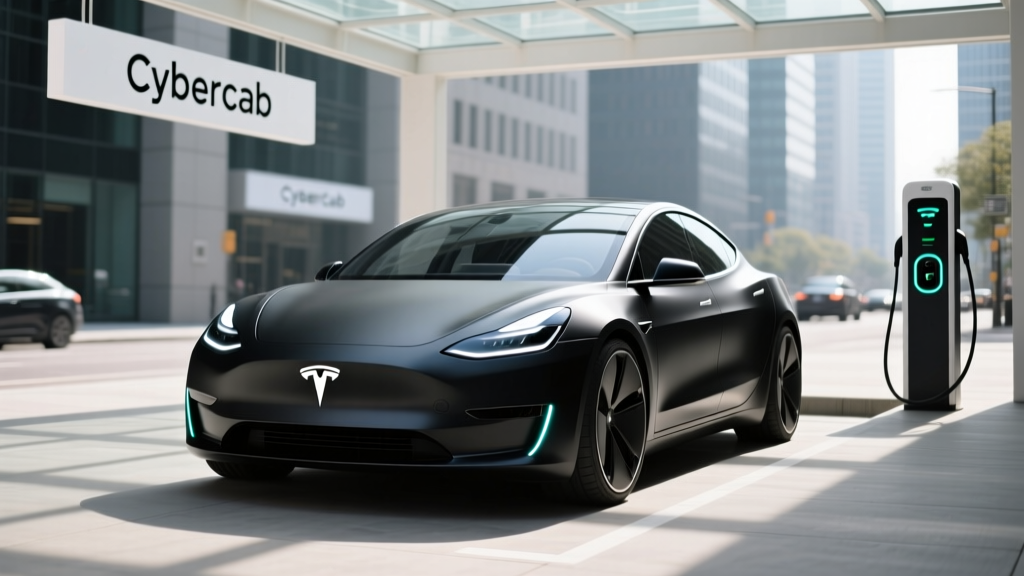
When Tesla unveiled its two-seat autonomous robotaxi concept in October 2024, the company leaned heavily on the name "Cybercab." But a trademark dispute has surfaced that could reshape how the vehicle reaches the market — or force a rebrand before volume production begins. The Tesla Cybercab trademark issue centers on whether Tesla can secure exclusive rights to the name in key international and domestic classifications, with competing filings and prior-use claims creating uncertainty.
For prospective buyers and fleet operators evaluating Tesla's robotaxi ambitions, the naming dispute matters less than the underlying vehicle's capabilities. Below, we break down everything confirmed about the Cybercab platform, separate what's announced from what's buyable, and explain how the trademark situation could affect availability.
Cybercab Specifications: What Tesla Has Confirmed
Tesla has shared preliminary specifications across multiple earnings calls and its 2024 "We, Robot" event. Because the vehicle is not yet in production, these figures represent Tesla's engineering targets rather than EPA-certified values.
| Attribute | Target / Estimate |
|---|---|
| EPA Range (estimated) | ~250 miles (unconfirmed by EPA) |
| Battery Capacity | ~50 kWh usable (estimated, chemistry unconfirmed — likely LFP for cost optimization) |
| DC Fast Charge Peak | ~150 kW (estimated, no official figure released) |
| 10–80% Charge Time | ~25 minutes (projected) |
| Level 2 Home Charging | Not applicable — no manual driving controls; fleet depot charging expected |
| 0–60 mph | Not disclosed (irrelevant for robotaxi duty cycle) |
| Horsepower / Drivetrain | Single motor RWD likely; HP unconfirmed |
| Seating | 2 passengers |
| Cargo Volume | Minimal — designed for passenger transport, not cargo |
| Base Price (Target) | <$30,000 (manufacturing cost target, not consumer MSRP) |
| Federal Tax Credit (§30D) | Unlikely to qualify — no steering wheel or manual controls may disqualify it as a "motor vehicle" under IRS definitions |
| Battery/Powertrain Warranty | Not announced |
| Autonomy Level | SAE Level 4 (targeted, geofenced) |
Range Reality: What 250 Miles Means for a Robotaxi
Tesla CEO Elon Musk stated the Cybercab would target approximately 250 miles of range. For a purpose-built robotaxi operating in dense urban environments, that figure is adequate for a full shift with a mid-day charge. But buyers evaluating this number should understand the context.
The Cybercab's smaller estimated battery (~50 kWh) reflects Tesla's bet that urban robotaxi routes don't require the 300+ mile range consumers demand in personal vehicles. This also reduces vehicle weight, improving efficiency and tire wear — critical for fleet economics.
Charging Infrastructure: How the Cybercab Stays on the Road
Unlike consumer EVs that rely on home Level 2 chargers and public DC fast-charging networks, the Cybercab is designed for Tesla-operated fleet depots. Tesla has not published detailed charging specifications, but based on the estimated ~50 kWh battery and a projected 150 kW peak DC charge rate:
- 10–80% DC fast charge: ~25 minutes (estimated)
- Charging model: Inductive (wireless) charging pads at fleet depots, per Tesla's "We, Robot" event demonstration
- Consumer home charging: Not applicable — the Cybercab has no steering wheel or pedals and is not intended for private ownership in its initial deployment
Wireless inductive charging eliminates the need for manual plug-in, which is essential for a driverless vehicle. However, inductive charging typically operates at lower power levels (50–100 kW) than wired DC fast charging, meaning depot turnaround times may be longer than Tesla's projections suggest.
The Trademark Dispute: What Could Change
The Tesla Cybercab trademark issue involves competing claims to the "Cybercab" name in automotive and ride-hailing service classifications. While Tesla filed trademark applications in multiple jurisdictions, prior filings by other entities and potential descriptive-use challenges (the term "cab" being generic for taxi services) could force Tesla to:
- Rebrand the vehicle before volume production — potentially to "Tesla Robotaxi" or a new name entirely
- Limit marketing in certain regions where the trademark is contested
- Face delays if litigation extends into 2026–2027, though Tesla could proceed under a provisional name
For consumers, the practical impact is minimal. The underlying vehicle platform, autonomy hardware, and deployment timeline are unaffected by naming disputes. Tesla has historically navigated trademark challenges (the "Model 3" was briefly "Model E" due to a Ford dispute) without delaying product launches.
Autonomy: SAE Level 4, Not Level 2 Driver-Assist
Tesla plans to deploy the Cybercab through its own ride-hailing network, competing directly with Waymo's Level 4 robotaxi service currently operating in Phoenix, San Francisco, and Los Angeles. However, Tesla has not received regulatory approval for driverless operation in any U.S. jurisdiction as of early 2026. The National Highway Traffic Safety Administration (NHTSA) and state-level regulators (notably California's DMV and Public Utilities Commission) must certify the system before commercial deployment.
Pricing, Tax Credits, and Ownership Model
Tesla has stated a manufacturing cost target of under $30,000 per vehicle. However, the Cybercab is not intended for consumer purchase — at least not initially. Tesla's business model positions the Cybercab as a fleet vehicle operated through a Tesla-owned ride-hailing platform, similar to how Waymo operates its fleet.
| Factor | Status |
|---|---|
| Consumer MSRP | Not applicable (fleet-only deployment planned) |
| Federal §30D Tax Credit | Unlikely to qualify — the IRS defines eligible vehicles as having "4 wheels" and being "primarily for use on public streets, roads, and highways." A vehicle with no manual driving controls may not meet the statutory definition of a "motor vehicle" under IRS §30D rules. |
| Commercial Clean Vehicle Credit (§45W) | Potentially eligible for fleet operators, but untested for driverless vehicles |
| Ride Cost to Consumer | Tesla has suggested $0.20–$0.30 per mile (unverified) |
Who Should Pay Attention to the Cybercab
The Cybercab is not a vehicle you can buy, charge at home, or drive yourself. It's a purpose-built robotaxi designed for Tesla's planned ride-hailing network. The audiences who should track its development include:
- Urban commuters in cities where Tesla may launch service (likely Phoenix, Austin, or Las Vegas first) who want a lower-cost alternative to Uber/Lyft
- Investors evaluating Tesla's autonomy revenue potential vs. Waymo's established operations
- Fleet operators and municipalities considering autonomous vehicle partnerships
If you're shopping for a personal EV you can buy today, the Cybercab is irrelevant. Consider the EPA's list of current electric vehicles for models with confirmed range, charging, and tax-credit eligibility.
Cybercab vs. Waymo: The Robotaxi Landscape in 2026
Waymo currently operates the only scaled Level 4 robotaxi service in the U.S., with over 100,000 paid rides per week across Phoenix, San Francisco, and Los Angeles. Tesla's Cybercab, if it reaches production, would need to:
- Obtain regulatory approval in each deployment state
- Demonstrate safety performance comparable to Waymo's published metrics (Waymo reports fewer insurance claims per million miles than human benchmarks)
- Scale manufacturing to thousands of units — Tesla's historical production ramp challenges with the Cybertruck suggest this won't be instantaneous
The trademark dispute, while newsworthy, is a minor factor compared to these regulatory and manufacturing hurdles.
Frequently Asked Questions
Can I buy a Tesla Cybercab in 2026?
No. The Cybercab is an announced vehicle with no confirmed production start date or consumer purchase option. Tesla plans to operate it as a fleet vehicle through its own ride-hailing network.
Will the trademark issue delay the Cybercab launch?
Unlikely to cause significant delays. Tesla can proceed under a working name or rebrand before launch. The more critical path items are regulatory approval for driverless operation and manufacturing scale-up.
Does the Cybercab qualify for the $7,500 federal EV tax credit?
Almost certainly not. The IRS §30D credit applies to vehicles purchased for personal use that meet specific definitions. A driverless robotaxi with no manual controls likely falls outside the statutory definition of an eligible "new clean vehicle." Consult a tax professional for guidance on commercial fleet credits under §45W.
What is the real-world range of the Cybercab?
Tesla targets ~250 miles, but this is not EPA-certified. In urban robotaxi duty cycles (low-speed, stop-and-go), actual range may exceed the estimate. Cold weather and highway segments would reduce it to ~170–220 miles.
How is the Cybercab different from Tesla's FSD (Supervised)?
FSD (Supervised) is an SAE Level 2 driver-assist system requiring a human driver to remain engaged. The Cybercab targets SAE Level 4 — fully driverless in geofenced areas, with no steering wheel or pedals. These are fundamentally different systems with different regulatory requirements.
Should I wait for the Cybercab instead of buying an EV now?
No. The Cybercab is not a personal vehicle and has no confirmed timeline. If you need an EV for commuting, family use, or road trips, current models like the Tesla Model Y, Hyundai Ioniq 5, or Chevrolet Equinox EV offer confirmed specs, immediate availability, and tax-credit eligibility.