The Short Answer on the 2026 Santa Fe EV
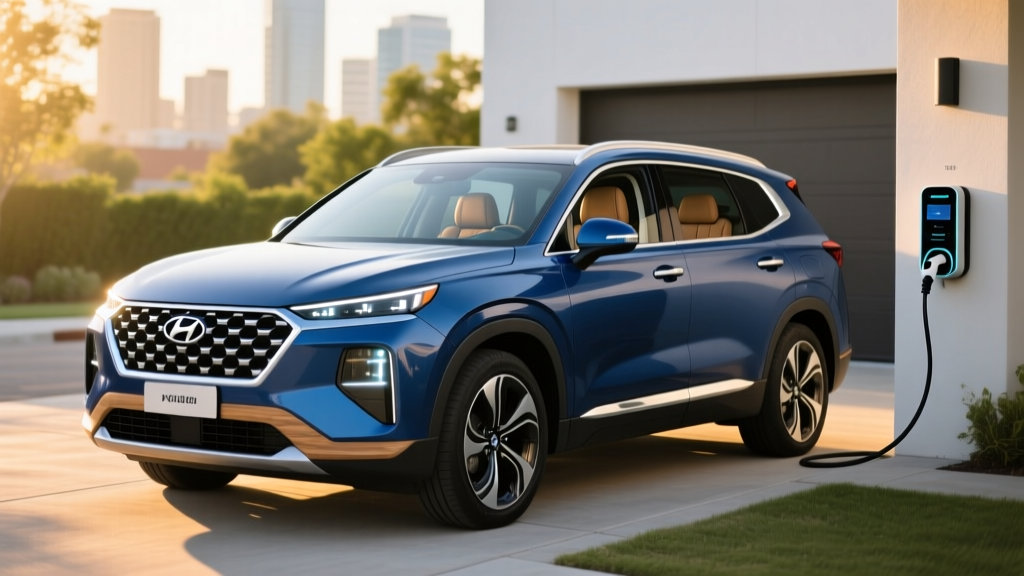
The 2026 Hyundai Santa Fe EV (officially the Ioniq 5 N-based three-row electric SUV sold under the Santa Fe nameplate in select markets and as a next-generation Ioniq 7/Three-Row EV in the U.S.) is a midsize electric family hauler targeting buyers who want three rows, roughly 280–310 miles of EPA range, and fast 800-volt-class DC charging. Expect a starting MSRP in the $46,000–$48,000 range before incentives, with available AWD, up to ~379 horsepower, and 10–80% DC fast charging in approximately 20–25 minutes at a 350 kW charger. Federal §30D tax credit eligibility depends on battery-sourcing compliance, MSRP caps, and buyer income limits — always verify on IRS.gov before purchasing.
What the Santa Fe EV Actually Is for 2026
Hyundai's electric three-row SUV sits on the E-GMP platform (shared with the Ioniq 5 and Ioniq 6), stretched to accommodate a third row and larger cargo area. The vehicle is marketed in some regions as the Santa Fe EV, while U.S. buyers may see it badged under the Ioniq sub-brand. Regardless of badge, the mechanical package is what matters: an 84–100 kWh usable battery pack (NMC chemistry), 800V architecture enabling ultra-fast DC charging, single-motor RWD or dual-motor AWD configurations, and Hyundai's latest ADAS suite.
This is not a lifted hatchback. It's a genuine three-row family vehicle designed to compete with the Kia EV9, Volkswagen ID.4 (in spirit, if not size), and the upcoming wave of midsize electric SUVs. If you've been watching the Santa Fe's gas and hybrid variants and wondering when the fully electric version arrives with comparable space, this is it.
Range, Efficiency, and the Real-World Reality
The EPA-estimated range for the 2026 Santa Fe EV is expected to land between 280 miles (AWD, larger wheels) and 310 miles (RWD, aero wheels). But the sticker number only tells part of the story.
EPA vs. Real-World Range: What to Actually Expect
| Scenario | Estimated Range |
|---|---|
| EPA Combined (RWD) | ~310 miles |
| Highway 75 mph, 70°F | ~255–275 miles |
| Highway 70 mph, 30°F (cold) | ~210–240 miles |
| City/Suburban mixed, 65°F | ~290–305 miles |
Highway speeds and cold temperatures are the two biggest range killers in any EV. The Santa Fe EV's boxy SUV shape creates more aerodynamic drag than a sedan, meaning highway efficiency drops more sharply than in an Ioniq 6. Cold weather reduces battery chemical efficiency and increases cabin heating load — expect 20–30% range loss in sub-freezing conditions without a heat pump engaged.
The Santa Fe EV comes equipped with a heat pump (standard on most trims), which mitigates cold-weather loss compared to resistive heating. Preconditioning the battery while plugged in — a feature accessible through Hyundai's app — warms the pack before departure, preserving range and enabling faster DC charging at your first stop.
Charging Speed: 800V Architecture in Practice
The headline spec is 800-volt DC fast charging capability, which allows the Santa Fe EV to accept up to ~250 kW at a compatible 350 kW charger. Here's what that means in real charging sessions:
| Charging Level | Power | Miles Added per Hour | Notes |
|---|---|---|---|
| Level 1 (120V household) | ~1.4 kW | ~4–5 miles | Emergency/trickle only |
| Level 2 (240V home) | 7.2–11.5 kW | ~22–35 miles | Overnight full charge (~8–12 hrs) |
| DC Fast (350 kW station) | Peak ~250 kW | ~150+ miles in 15 min | 10–80% in ~20–25 min |
| DC Fast (150 kW station) | ~150 kW | ~100 miles in 15 min | 10–80% in ~30–35 min |
| DC Fast (50 kW station) | ~50 kW | ~35 miles in 15 min | 10–80% in ~70+ min |
A critical concept: kW is power (how fast energy flows), while kWh is energy (how much the battery holds). The Santa Fe EV's battery holds roughly 84–100 kWh of energy. A 250 kW charger can push energy in quickly, but only until about 50–60% state of charge, after which the charge curve tapers to protect the battery. You'll see peak speeds early in the session, dropping to ~100 kW or less past 70%. This is normal battery physics, not a defect.
At home, a Level 2 wallbox (7.2 kW or 11.5 kW, depending on your electrical panel) will fully replenish the battery overnight. Most owners charge daily to 80% and only go to 100% before long trips — this extends long-term battery health.
Santa Fe EV vs. Gas vs. Hybrid: The Numbers
How does the electric Santa Fe stack up against its gas and hybrid siblings? Let's compare the real costs over five years of ownership.
| Metric | Santa Fe EV (AWD) | Santa Fe Hybrid (AWD) | Santa Fe Gas (AWD) |
|---|---|---|---|
| Base MSRP (est.) | $47,500 | $40,000 | $37,500 |
| Fed. Tax Credit (§30D) | Up to $7,500* | Up to $3,500* | $0 |
| Effective Price After Credit | ~$40,000 | ~$36,500 | $37,500 |
| EPA Efficiency | ~85 MPGe | ~36 MPG combined | ~25 MPG combined |
| Fuel/Energy Cost per Year** | ~$650 | ~$1,650 | ~$2,400 |
| 5-Year Fuel/Energy Cost | ~$3,250 | ~$8,250 | ~$12,000 |
| Estimated Maintenance (5 yr) | ~$1,200 | ~$2,800 | ~$3,500 |
| 5-Year Total (Price + Fuel + Maint.) | ~$44,450 | ~$47,550 | ~$53,000 |
* §30D tax credit eligibility requires meeting battery-sourcing, MSRP cap, and buyer income requirements. Verify current-year rules at IRS.gov. Credit may be transferred to the dealer at point of sale.
** Based on 15,000 miles/year, $3.50/gal gas, $0.14/kWh national average electricity. Your local rates will vary — check your utility.
The EV wins on operating cost, often decisively. Over five years, the fuel and maintenance savings can offset the higher sticker price — especially if you qualify for the full federal credit and any state incentives. But the math depends heavily on your electricity rate, driving volume, and whether you can charge at home.
Real-World Ownership: What First-Time EV Buyers Must Know
Buying an EV isn't like buying a gas car. The infrastructure and daily habits differ. Here's what actually matters:
Home Charging Access Is Non-Negotiable for Most Buyers
If you can install a Level 2 (240V) home charger, EV ownership is effortless — you wake up every morning with a full "tank." A typical Level 2 installation costs $500–$1,500 for the wallbox plus $800–$2,500 for electrician labor and permits, depending on your panel capacity. If your home has a 200-amp panel, you're likely fine. Older homes with 100-amp service may need a panel upgrade ($1,500–$3,000+).
If you live in an apartment, condo, or street-parking situation with no charging access, an EV becomes significantly harder to live with. Public DC fast charging works for road trips, but relying on it daily is expensive ($0.35–$0.55/kWh at many networks), time-consuming, and hard on long-term battery health. Be honest about your situation before buying.
Climate and Driving Patterns Matter
The Santa Fe EV's ~310-mile range is comfortable for most daily driving and weekend trips. But if you regularly drive 250+ miles in freezing weather, tow a trailer, or live in a charging-desert region, you'll need to plan more carefully. Route planning apps (A Better Routeplanner, PlugShare, Hyundai's built-in nav) make this manageable, but it's a real adjustment from the "fill up anywhere in 5 minutes" gas paradigm.
Insurance and Depreciation
EV insurance premiums run 15–25% higher than comparable gas vehicles, driven by higher repair costs and battery replacement risk. Get a quote before you buy. Depreciation for EVs has been volatile — early adopters took hits as prices dropped and new models flooded the market. Hyundai's strong 10-year/100,000-mile battery warranty provides some protection, but expect the Santa Fe EV to depreciate similarly to other midsize electric SUVs.
Common Misconceptions About the Santa Fe EV
| Myth | Fact |
|---|---|
| "The battery will need replacing in 5 years." | Modern NMC batteries degrade ~10–15% over 8–10 years. Hyundai warranties the battery for 10 years/100,000 miles against dropping below 70% capacity. |
| "EVs are worse in the cold." | Range drops 20–30% in freezing temps, but EVs start instantly (no cold cranking), and preconditioning while plugged in eliminates most daily impact. |
| "I'll never take a road trip again." | With 10–80% charging in ~25 min at 350 kW stations, a 600-mile trip adds ~45–60 minutes of charging — comparable to gas stops for food and rest. |
| "The tax credit is $7,500 for everyone." | §30D has MSRP caps ($80K for SUVs), buyer income limits ($150K single / $300K joint), and battery critical-mineral sourcing requirements. Many buyers qualify; not all do. |
| "Public charging is always broken." | Networks like Tesla Supercharger (now open to NACS-equipped Hyundais), Electrify America, and ChargePoint have improved uptime significantly. Plan with PlugShare and have a backup. |
Battery, Warranty, and Long-Term Costs
The Santa Fe EV uses an NMC (nickel manganese cobalt) lithium-ion battery pack, chosen for its high energy density in a large vehicle. LFP (lithium iron phosphate) batteries offer longer cycle life but lower energy density — Hyundai reserves those for smaller models where range demands are lower.
Hyundai's battery warranty covers 10 years or 100,000 miles, guaranteeing the pack retains at least 70% of original capacity. If it drops below that threshold, Hyundai replaces or refurbishes it at no cost. Full battery replacement out of warranty currently runs $12,000–$18,000 for a pack this size, though prices continue to decline as the supply chain matures.
Maintenance on the Santa Fe EV is minimal: tire rotations, cabin air filter, brake fluid check, and wiper blades. Regenerative braking means brake pads last 100,000+ miles in most driving. No oil changes, no spark plugs, no transmission fluid.
Pricing, Trims, and Tax Credit Eligibility
Expected 2026 Santa Fe EV trim pricing:
- SE (RWD): ~$46,000 MSRP
- SEL (AWD): ~$49,500 MSRP
- Limited (AWD): ~$54,000 MSRP
- Calligraphy (AWD): ~$58,000 MSRP
All trims fall under the §30D MSRP cap of $80,000 for SUVs. The federal tax credit of up to $7,500 is available if:
- Your modified adjusted gross income is ≤ $150,000 (single) or ≤ $300,000 (joint)
- The vehicle's battery meets critical-mineral and battery-component sourcing thresholds (updated annually — verify at purchase)
- The vehicle is assembled in a qualifying manner per current IRS rules
- You elect to transfer the credit to the dealer at point of sale for an immediate price reduction, or claim it on your tax return
Many states offer additional rebates ($1,000–$5,000+) on top of federal credits. Check your state energy office or fueleconomy.gov for current programs.
Decision Framework: Should You Buy the Santa Fe EV?
Choose the Santa Fe EV If:
- You have reliable Level 2 home charging (or can install it)
- You drive 15,000+ miles per year (the fuel savings compound)
- You qualify for the federal tax credit (bringing effective price close to the hybrid)
- You want three rows, low running costs, and minimal maintenance
- You take 1–3 road trips per year and can plan charging stops
Choose the Santa Fe Hybrid Instead If:
- You can't install home charging (apartment, condo, street parking)
- You regularly drive 300+ miles in remote areas with sparse charging
- You tow frequently (the hybrid has fewer range penalties under load)
- You want the lowest upfront price and don't mind higher fuel costs
- Your annual mileage is under 10,000 (savings don't offset the price premium quickly)
Wait If:
- You need to verify §30D battery-sourcing compliance for the specific build you want
- Your local utility offers time-of-use rates you haven't explored yet
- You're within 12 months of a major life change (moving, job shift) that could alter your charging access
Frequently Asked Questions
What is the real-world range of the 2026 Santa Fe EV?
The EPA estimate is approximately 280–310 miles depending on drivetrain and wheel size. In real-world highway driving at 75 mph in moderate temperatures, expect 255–275 miles. In freezing weather, that drops to 210–240 miles. Preconditioning and heat pump use help mitigate cold-weather loss.
How long does it take to charge the Santa Fe EV at home?
On a Level 2 (240V) home charger at 11.5 kW, a full 0–100% charge takes roughly 8–10 hours. Most owners charge from 20% to 80% overnight, which takes about 5–6 hours. A standard 120V outlet (Level 1) adds only 4–5 miles per hour — useful for emergencies, not daily use.
Does the Santa Fe EV qualify for the $7,500 federal tax credit?
It may, but eligibility depends on current-year §30D rules including battery critical-mineral sourcing, buyer income limits, and MSRP caps. The Santa Fe EV's MSRP falls under the $80,000 SUV cap, but you must verify sourcing compliance at the time of purchase. Check IRS.gov for the latest list of qualifying vehicles.
Is the Santa Fe EV good for road trips?
Yes, with planning. Its 10–80% DC fast charging time of ~20–25 minutes at a 350 kW station means you'll add 150+ miles of range during a typical rest stop. The NACS adapter (or native NACS port on newer builds) grants access to Tesla Supercharger stations, vastly expanding the available network. Use route-planning tools to identify chargers along your route.
What's the battery warranty and replacement cost?
Hyundai covers the high-voltage battery for 10 years or 100,000 miles, guaranteeing at least 70% capacity retention. Out-of-warranty replacement is estimated at $12,000–$18,000, though prices are declining. Real-world data from similar E-GMP vehicles shows degradation of roughly 8–12% over the first 5 years with normal use.
How does the Santa Fe EV compare to the Kia EV9?
Both ride on the E-GMP platform with 800V architecture and similar battery sizes. The EV9 launched earlier with a slightly larger footprint and more established pricing. The Santa Fe EV competes on interior design, Hyundai's ADAS tuning, and potentially more aggressive pricing on base trims. Drive both before deciding — the differences are in details, not fundamentals.