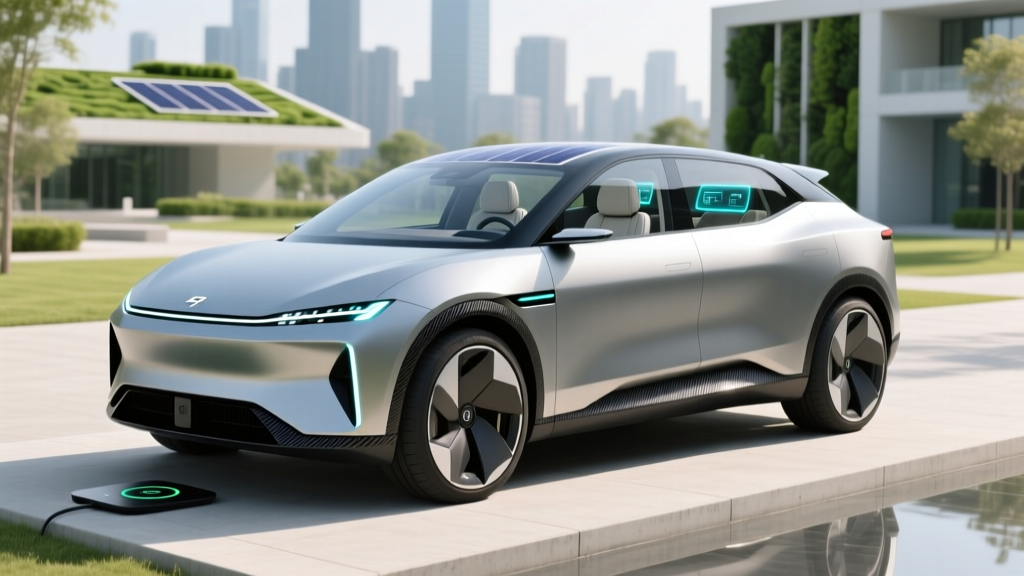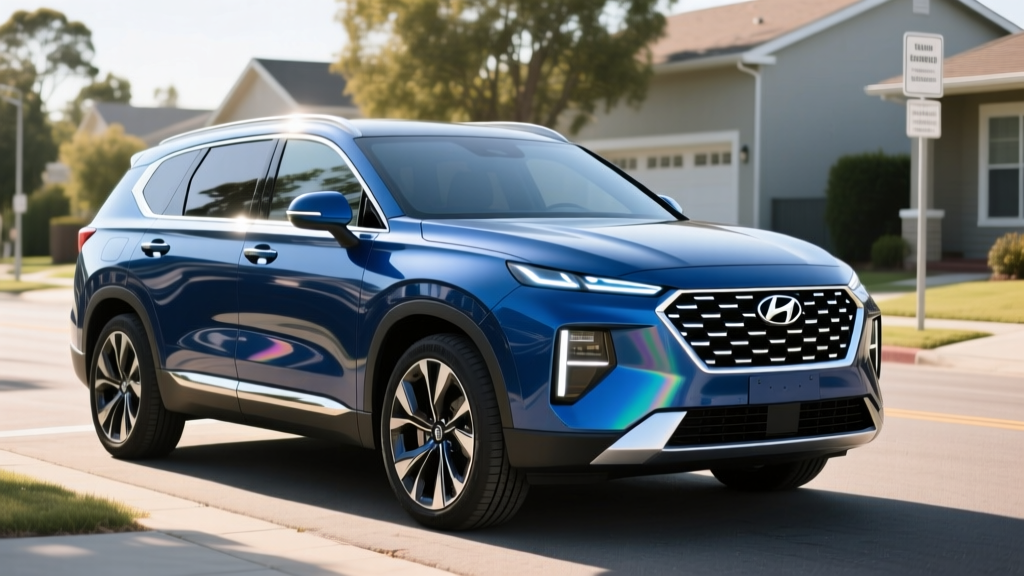
Hyundai has been caught testing a range-extended electric variant of its popular Santa Fe SUV, and the spy shots circulating from winter testing grounds in Sweden and Death Valley heat runs confirm what we've suspected: an EREV (Extended-Range Electric Vehicle) Santa Fe is heading to North American showrooms. Unlike a plug-in hybrid that blends gas and electric power to the wheels, an EREV uses its gasoline engine exclusively as a generator — the electric motors always drive the wheels, giving it the smooth, instant-torque character of a battery-electric vehicle with the range safety net of an onboard fuel tank.
Because this model is still in pre-production testing and has not been officially unveiled by Hyundai, every specification below is based on spy-shot analysis, supply-chain leaks, platform data from the Hyundai Motor Group's EREV architecture, and comparable vehicles already on sale. We will clearly label what is confirmed, what is strongly estimated, and what remains unknown. This article will be updated once Hyundai releases official specs.
What the Hyundai Santa Fe EREV Spy Shots Reveal
The camouflaged mules photographed over the past several months share the current-generation Santa Fe's boxy, squared-off silhouette but carry several telltale EREV modifications:
- Charge port on the driver-side front fender — consistent with Hyundai's PHEV/EREV packaging, separate from the fuel filler on the rear quarter panel.
- Larger rear underbody packaging — spy photographers have noted a reinforced subframe area consistent with a compact inline-four range-extender engine and exhaust routing, alongside a mid-mounted traction battery.
- No traditional transmission tunnel hump — suggesting a skateboard-style electric drive layout with the engine-generator module mounted in the rear or under the cargo floor, rather than a conventional transaxle.
- Badging placeholders and sensor arrays — the test mules carry Hyundai's latest Highway Driving Assist 2 (HDA2) radar and camera hardware, plus what appears to be a revised digital instrument cluster tuned for EREV-specific energy-flow displays.
Hyundai's EREV strategy was first outlined in the company's 2024 CEO Investor Day presentation, where executives confirmed plans to offer range-extended variants across multiple SUV nameplates for markets where charging infrastructure remains uneven. The Santa Fe, as a high-volume family hauler, is a logical first candidate for North America.
Estimated Battery, Range, and Efficiency Specs
Based on platform data from Hyundai Motor Group and the battery supplier pipeline (LG Energy Solution and SK On), here is our best estimate of the Santa Fe EREV's powertrain specifications. These are preliminary figures and subject to change at official launch.
| Specification | Estimated / Confirmed |
|---|---|
| Battery capacity (usable) | ~30–35 kWh (NMC chemistry, estimated) |
| EV-only EPA range | Est. 60–75 miles |
| Total range (EV + gas generator) | Est. 500+ miles combined |
| Range-extender engine | Est. 1.5L turbocharged inline-4, generator-only |
| Fuel tank capacity | Est. 13–15 gallons |
| Drive motors | Dual-motor AWD (est. front 160 kW + rear 70 kW) |
| Combined system horsepower | Est. 300–340 hp |
| 0–60 mph | Est. 6.0–6.8 seconds |
| MPGe (charge-sustaining / gas-only) | Est. 30–34 MPG combined (generator mode) |
| kWh/100 mi (EV mode) | Est. 34–38 kWh/100 mi |
The EPA sticker will likely show 60–75 miles of electric-only range, but real-world results will vary significantly by driving conditions. Expect roughly 50–60 miles on the highway at 70+ mph (where EV efficiency drops sharply), and potentially 40–50 miles in sub-freezing winter weather without preconditioning, as the battery must share energy with cabin heating. Around town at lower speeds with regen braking active, you may exceed the EPA estimate by 5–10 miles. Once the range-extender engine engages, total range depends on the fuel tank size — a 14-gallon tank at 32 MPG yields roughly 450 additional miles.
Battery chemistry note: Hyundai is expected to use NMC (nickel-manganese-cobalt) cells in the Santa Fe EREV rather than LFP (lithium iron phosphate). NMC offers higher energy density — critical in a midsize SUV where packaging space is shared with the range-extender engine and fuel tank. The trade-off is that NMC cells degrade slightly faster over time if routinely held at 100% state of charge. We recommend daily charging to 80–90% for longevity, reserving full charges for days when you need maximum EV-only range.
Charging Speed: DC Fast, Level 2, and Level 1
Charging speed is often the make-or-break factor for electrified vehicle ownership. Because the Santa Fe EREV has a smaller battery than a full BEV, its charging requirements are more modest — but that also means it can top up remarkably quickly.
| Charging Level | Power (kW) | Time (10–80%) | Miles of EV Range Added per Hour |
|---|---|---|---|
| Level 1 (120V household) | ~1.4 kW | ~14–16 hours (full) | ~4–5 mi/hr |
| Level 2 (240V, 32A home charger) | ~7.7 kW | ~3.5–4 hours (full) | ~22–26 mi/hr |
| Level 2 (240V, 48A charger) | ~11.5 kW | ~2.5–3 hours (full) | ~32–38 mi/hr |
| DC Fast Charge (est. peak) | ~80–100 kW (est.) | ~22–28 min (10–80%) | N/A (session-based) |
Charging-curve reality check: With a ~30–35 kWh battery, the Santa Fe EREV will not sustain peak DC charge rates for long. Expect peak speeds (80–100 kW) only between roughly 10–50% state of charge, after which the curve tapers significantly. Above 80%, charge speed drops to protect battery health — this is standard across all lithium-ion chemistries and is why we quote 10–80% times rather than 0–100%.
For daily use, a home Level 2 charger is the practical baseline. A 32-amp unit (7.7 kW) will fully replenish the battery overnight in under four hours — ample for a commuter who drives 30–50 miles round-trip and wants to start each morning on a full battery. DC fast charging is best reserved for road trips where you want to maximize EV-mode miles before the generator kicks in.
Interior Space, Cargo, and Practicality
The current-generation Santa Fe (redesigned for the 2024 model year) offers a boxy, upright interior that maximizes headroom and cargo volume. The EREV variant is expected to retain the same passenger dimensions, with the battery pack mounted low in the chassis and the range-extender module packaged under the cargo floor or rear subframe.
- Seating: Expected to offer both 5-passenger (2-row) and 7-passenger (3-row) configurations, consistent with the current Santa Fe lineup.
- Cargo volume (behind 2nd row): Est. 37–40 cu ft (5-passenger mode). The range-extender packaging may reduce under-floor storage slightly compared to the standard hybrid.
- Cargo volume (behind 3rd row): Est. 12–14 cu ft — adequate for groceries but tight for luggage with all seats in use.
- Cargo volume (max, seats folded): Est. 72–79 cu ft.
- Second-row legroom: Est. 40–42 inches (current Santa Fe measures 41.3 inches).
- Third-row legroom: Est. 30–32 inches — best suited for children on short trips.
One packaging question to watch at official launch: whether the EREV's rear-mounted generator module intrudes on the spare-tire well or eliminates it entirely. Many electrified SUVs substitute a tire-inflator kit, which matters if you plan to venture into areas with poor cell coverage and no roadside-assistance options.
Pricing, Trim Levels, and Federal Tax Credit Eligibility
Hyundai has not announced official pricing, but based on the current Santa Fe lineup and the premium associated with EREV powertrain components, we estimate the following MSRP structure:
| Trim (Estimated) | Est. Base MSRP | Est. As-Tested (AWD, options) | §30D Tax Credit Eligibility |
|---|---|---|---|
| SE (base) | $42,000–$44,000 | $44,500–$46,500 | Potentially up to $7,500 (see below) |
| SEL / Limited | $47,000–$50,000 | $51,000–$55,000 | Potentially up to $7,500 |
| Calligraphy (top) | $52,000–$55,000 | $56,000–$60,000 | Potentially up to $7,500 |
Federal tax credit (IRS §30D) — critical caveats:
The Santa Fe EREV, as a plug-in vehicle with a sufficient battery capacity (≥7 kWh), should qualify as a "new clean vehicle" under IRS §30D rules, provided it meets all current-year requirements:
- MSRP cap: SUVs must have an MSRP at or below $80,000 — the Santa Fe EREV clears this easily.
- Buyer income cap: Modified adjusted gross income must not exceed $150,000 (single), $225,000 (head of household), or $300,000 (joint filing).
- Battery component sourcing: A percentage of battery components must be manufactured or assembled in North America, and critical minerals must be sourced from the U.S. or FTA partners. These percentages increase each year. If Hyundai sources cells from SK On's U.S. plants (likely), partial or full credit is achievable — but this must be verified at launch.
- Point-of-sale transfer: Buyers can transfer the credit to the dealer at purchase, reducing the purchase price directly rather than waiting for a tax refund.
Bottom line: Not every buyer will qualify for the full $7,500. Consult a tax professional and check the fueleconomy.gov credit lookup once the Santa Fe EREV is officially listed. Battery-sourcing rules change annually and can shift mid-year.
After a potential $7,500 credit, the effective starting price of the Santa Fe EREV could drop to roughly $34,500–$36,500 for qualifying buyers — competitive with many non-electrified midsize SUVs once fuel savings are factored in.
Technology, Driver Assists, and Standout Features
The Santa Fe EREV is expected to inherit Hyundai's latest technology suite, with several EREV-specific additions:
- Infotainment: Dual 12.3-inch displays (instrument cluster + center touchscreen) running Hyundai's latest ccNC (Connected Car Navigation Cockpit) software, with wireless Apple CarPlay and Android Auto.
- EREV-specific displays: Real-time energy-flow visualization showing battery-to-motor, engine-to-generator, and regen pathways. A dedicated "EV Priority" mode button to force battery-only driving in low-emission zones or quiet neighborhoods.
- Highway Driving Assist 2 (HDA2): Hyundai's Level 2 driver-assist system combining adaptive cruise control with stop-and-go, lane-centering, and lane-change assist. This is not autonomous driving — the driver must remain engaged with hands on the wheel at all times.
- Digital key: NFC-based smartphone-as-key, plus Ultra-Wideband (UWB) for passive entry on upper trims.
- V2L (Vehicle-to-Load): Expected to include an interior 120V outlet and exterior V2L adapter, capable of powering camping equipment, tools, or emergency home appliances at up to 3.6 kW.
- Heat pump: Likely standard, which preserves EV-only range in cold weather by efficiently heating the cabin without relying solely on resistive elements.
Hyundai's HDA2 is an SAE Level 2 driver-assistance system. It can maintain speed, follow distance, and center the lane, but it cannot navigate construction zones, respond to all traffic-sign changes, or handle unmapped roads. You are the driver. Eyes on the road, hands on the wheel — always. Do not confuse Level 2 assist with Level 4 autonomous driving (which is currently limited to geofenced robotaxi services like Waymo).
Warranty Coverage and Battery Longevity
Hyundai offers one of the strongest warranty packages in the industry, and the Santa Fe EREV should follow suit:
- Battery warranty: 10 years / 100,000 miles (standard for Hyundai electrified vehicles sold in the U.S.). This covers capacity loss below a specified threshold — typically 70% of original capacity for Hyundai's PHEV/EV batteries.
- Powertrain warranty: 10 years / 100,000 miles, covering the electric drive motors, range-extender engine, generator, and associated power electronics.
- New-vehicle limited warranty: 5 years / 60,000 miles bumper-to-bumper.
- Roadside assistance: 5 years / unlimited miles.
The 10-year battery warranty is a significant confidence signal. In practice, NMC batteries in Hyundai/Kia products have shown degradation rates of approximately 1.5–2.5% per year under normal use patterns, meaning you can expect roughly 85–90% capacity retention after five years. Keeping daily state of charge between 20–80% and avoiding repeated DC fast-charging sessions will further slow degradation.
How It Compares: Santa Fe EREV vs. Key Competitors
The EREV segment in North America is small but growing. Here's how the Santa Fe EREV stacks up against the most relevant alternatives:
- BMW X5 xDrive50e (PHEV): ~38 miles EV range, ~80 MPGe, ~$67,000 base. More premium, shorter EV range, significantly more expensive. The Santa Fe EREV will undercut it by $20,000+ and offer nearly double the electric-only miles.
- Toyota RAV4 Prime (PHEV): 42 miles EV range, 94 MPGe, ~$44,000 base. Proven reliability, but smaller, 5-passenger only, and less EV range. The Santa Fe EREV offers 3-row seating and ~50% more electric miles.
- Mazda CX-70 PHEV: ~26 miles EV range, ~56 MPGe, ~$41,000 base. Sporty driving dynamics but short EV range and no third row.
- Ford Escape PHEV: ~37 miles EV range, ~105 MPGe, ~$40,000 base. Efficient but compact and 5-passenger only.
Choose the Santa Fe EREV if: You want 60+ miles of daily electric commuting with the ability to drive 500+ miles on a road trip without charging stops, you need three-row seating, and you don't have reliable access to DC fast charging for long trips.
Consider a full BEV instead if: You have home Level 2 charging, rarely drive more than 250 miles in a day, want zero tailpipe emissions, and want to eliminate all engine maintenance (oil changes, spark plugs, exhaust).
Consider the RAV4 Prime or CX-70 PHEV if: You don't need a third row, want a proven powertrain with years of reliability data, or prefer a lower starting price.
Pros, Cons, and Final Assessment
- Est. 60–75 miles EV-only range covers most daily commutes without gas
- 500+ mile total range eliminates road-trip charging anxiety
- Dual-motor AWD with 300+ hp — genuinely quick for a family SUV
- 3-row seating in an electrified package (rare in this price range)
- 10-year / 100,000-mile battery and powertrain warranty
- V2L capability for camping, tailgating, and emergency backup
- Likely qualifies for up to $7,500 federal tax credit (check eligibility)
- Still requires gas-engine maintenance (oil, filters, coolant)
- DC fast-charge speed (~80–100 kW) is modest vs. full BEVs at 200+ kW
- EREV powertrain complexity adds weight and potential long-term service costs
- Third row remains tight for adults
- Not zero-emission — tailpipe CO₂ when generator runs
- Unconfirmed specs — official details pending Hyundai's formal reveal
The Hyundai Santa Fe EREV occupies a compelling middle ground for families who want electric daily driving without the infrastructure dependency of a full BEV. If the estimated 60–75 miles of EV range holds at official launch, it will cover the vast majority of American commutes (the FHWA reports the average U.S. driver travels ~37 miles per day) on electricity alone, while the range-extender engine ensures cross-country trips remain effortless.
We will update this analysis with confirmed specifications, pricing, and tax-credit eligibility once Hyundai formally unveils the production Santa Fe EREV. Until then, treat all figures above as informed estimates grounded in platform data, supply-chain reporting, and Hyundai's stated EREV strategy.
Frequently Asked Questions
What is the real-world range of the Hyundai Santa Fe EREV?
We estimate 60–75 miles of EPA-rated EV-only range, translating to roughly 50–60 highway miles and 40–50 miles in freezing weather. Once the range-extender engine activates, total range should exceed 500 miles combined, depending on fuel tank size and driving style.
How fast does the Santa Fe EREV charge at home and on DC fast chargers?
On a 32-amp Level 2 home charger (7.7 kW), expect a full charge in about 3.5–4 hours. On a DC fast charger, the estimated peak rate of 80–100 kW should deliver a 10–80% charge in roughly 22–28 minutes, with tapering above 80% state of charge.
How much does the Santa Fe EREV cost after the federal tax credit?
Estimated base MSRP is $42,000–$44,000. If you qualify for the full $7,500 §30D credit (subject to income, MSRP, and battery-sourcing rules), the effective price drops to roughly $34,500–$36,500. Verify eligibility at irs.gov and with a tax professional before purchasing.
Is the Santa Fe EREV worth buying over a RAV4 Prime or a full BEV?
It depends on your use case. If you need three rows, want 60+ electric miles for commuting, and take frequent road trips where charging infrastructure is sparse, the Santa Fe EREV fills a gap no current PHEV matches. If you don't need a third row and want proven reliability, the RAV4 Prime remains excellent. If you have home charging and rarely exceed 250 miles, a full BEV like the Hyundai Ioniq 5 or Kia EV9 eliminates engine maintenance entirely.
Does the Hyundai Santa Fe EREV qualify for the $7,500 federal EV tax credit?
It is expected to qualify as a new clean vehicle under §30D, given its battery capacity exceeds the 7 kWh minimum and its MSRP is well under the $80,000 SUV cap. However, eligibility depends on battery-component sourcing requirements (which tighten annually), buyer income limits, and final assembly location. Check fueleconomy.gov once the model is listed for a definitive answer.
When will the Hyundai Santa Fe EREV go on sale?
Hyundai has not confirmed an on-sale date. Based on the testing timeline visible in spy shots and typical Hyundai product cadence, a late-2026 reveal with early-2027 showroom arrivals is our best estimate. This article will be updated when official timing is announced.