The Quick Take on Leasing a Hyundai Kona Electric in 2026
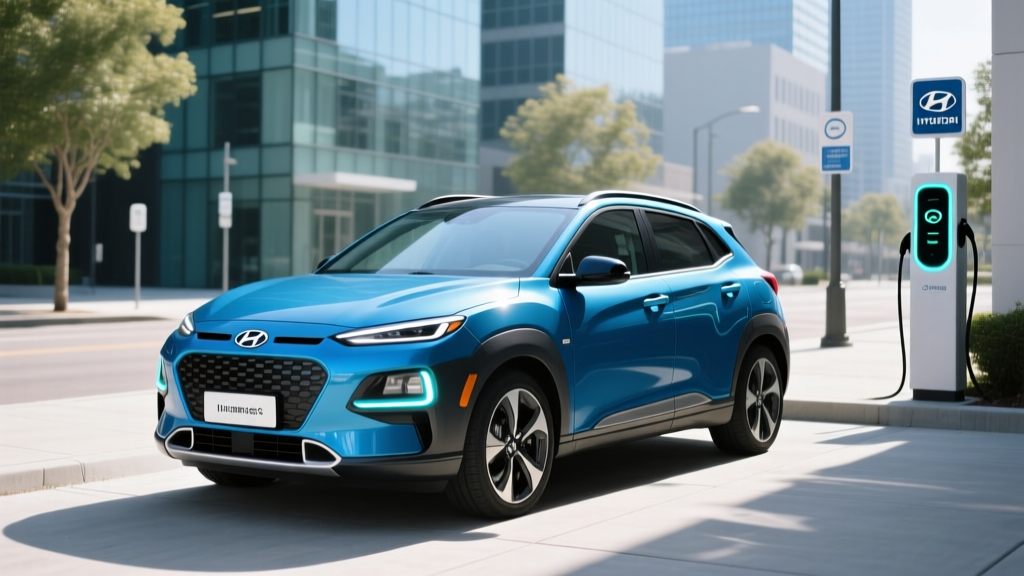
If you've been eyeing a Hyundai Kona Electric lease, the math might surprise you — in both directions. The 2026 Kona Electric starts around $32,975 (SE trim), delivers an EPA-estimated 261 miles of range from its 64.8 kWh NMC battery, and qualifies as one of the most affordable long-range EVs on the market. But leasing an EV involves a web of incentives, charging costs, insurance premiums, and depreciation dynamics that differ significantly from a gas-car lease.
Below, we break down every cost layer of owning a 2026 Kona Electric over five years — whether you buy or lease — so you can decide if this compact crossover fits your budget and driving habits.
| Spec | Value |
|---|---|
| EPA Range | 261 miles (SE/SEL); expect ~220–240 mi real-world highway, ~190–210 mi in cold weather) |
| Battery | 64.8 kWh usable, NMC chemistry |
| DC Fast Charging | Peak ~100 kW (10–80% in ~43 min) |
| Level 2 Charging | 10.9 kW onboard charger (~7 hrs 0–100%) |
| Motor Output | 201 hp / 188 lb-ft torque (FWD) |
| 0–60 mph | ~7.4 seconds |
| EPA Efficiency | 113 MPGe combined (30 kWh/100 mi) |
| Starting MSRP | $32,975 (SE) / $36,475 (Limited) |
| Battery Warranty | 10 years / 100,000 miles |
5-Year Total Cost of Ownership: The Full Picture
Any honest EV cost analysis must include the expenses that enthusiasts sometimes gloss over: insurance, depreciation, and the purchase price itself. Here's a realistic five-year projection for a 2026 Hyundai Kona Electric SEL (MSRP ~$34,475), driven 12,000 miles per year.
| Cost Category | Kona Electric SEL | Gas Crossover Baseline (~$33K, 28 MPG) |
|---|---|---|
| Purchase Price (after incentives) | ~$27,475 (after $7,500 credit) | $33,000 |
| Depreciation (5 yr) | ~$15,200 (44% of net cost) | ~$14,850 (45%) |
| Fuel / Charging (60,000 mi) | ~$2,880 (home L2 at $0.16/kWh) | ~$7,714 ($3.60/gal, 28 MPG) |
| Maintenance (5 yr) | ~$1,600 | ~$3,750 |
| Insurance (5 yr) | ~$9,600 ($160/mo avg) | ~$7,800 ($130/mo avg) |
| Tax / Registration | ~$2,100 | ~$1,800 |
| Total 5-Year Cost | ~$31,380 | ~$35,914 |
Net 5-year savings: roughly $4,500. That gap widens if you charge primarily on off-peak utility rates or have solar. It narrows if you rely heavily on public DC fast charging (which can run $0.35–$0.48/kWh) or if your state imposes an EV registration surcharge.
Federal Tax Credit: Do You Qualify for §30D?
The federal EV tax credit under IRS §30D can reduce your effective purchase price by up to $7,500 — but eligibility depends on several requirements that changed significantly under recent legislation. Here's the current checklist:
- MSRP Cap: Vehicle must have an MSRP at or below $55,000 for sedans, or $80,000 for SUVs/trucks/vans. The Kona Electric qualifies (max MSRP ~$36,475).
- Buyer Income Limits: Modified Adjusted Gross Income (MAGI) must not exceed $150,000 (single), $225,000 (head of household), or $300,000 (joint filers).
- Battery Sourcing: $3,750 of the credit requires a percentage of critical minerals sourced from the U.S. or FTA partners; the other $3,750 requires battery components manufactured or assembled in North America. These percentages increase annually.
- Foreign Entity of Concern (FEOC): Vehicles with battery components or critical minerals from designated FEOCs are disqualified.
- Point-of-Sale Transfer: As of 2024, you can transfer the credit to the dealer at purchase, reducing your out-of-pocket cost immediately — rather than waiting to claim it on your tax return.
For the Kona Electric specifically: Hyundai has been working to localize battery sourcing for U.S.-market vehicles. However, the exact credit amount ($7,500, $3,750, or $0) depends on the specific battery pack's supply chain at the time of your purchase. Always verify current eligibility on fueleconomy.gov before signing any paperwork.
Leasing caveat: When you lease a Kona Electric, the §30D credit technically goes to the lessor (the leasing company), not to you. Many manufacturers pass this savings through as a "lease cash" reduction — Hyundai has historically done this — but it's not guaranteed. Always ask the dealer whether the lease money factor and capitalized cost reflect the federal credit.
State, Local, and Utility Incentives
Beyond the federal credit, dozens of states, municipalities, and electric utilities offer additional rebates and perks for EV purchases and home charger installations.
Some utilities also offer time-of-use (TOU) electricity plans that make overnight home charging significantly cheaper — sometimes as low as $0.06–$0.08/kWh — which dramatically improves the Kona Electric's fuel-cost advantage.
Charging vs. Gas: The Per-Mile Math
This is where EVs shine — but the savings depend heavily on how and where you charge. The Kona Electric's EPA-rated efficiency is 30 kWh per 100 miles (113 MPGe combined).
| Charging Scenario | Cost/kWh or Gal | Cost Per Mile | Annual Cost (12K mi) |
|---|---|---|---|
| Home L2 — National Avg ($0.16/kWh) | $0.16/kWh | $0.048 | $576 |
| Home L2 — Off-Peak TOU ($0.08/kWh) | $0.08/kWh | $0.024 | $288 |
| Public DC Fast Charging ($0.40/kWh) | $0.40/kWh | $0.120 | $1,440 |
| Gas Crossover (28 MPG, $3.60/gal) | $3.60/gal | $0.129 | $1,543 |
Key takeaway: Home charging at average rates saves roughly $1,000/year over gas. Off-peak TOU rates push savings to $1,250+/year. But if you rely exclusively on public DC fast charging, your fuel costs approach — and can occasionally exceed — what you'd pay for gasoline. Home charging access is the single biggest variable in EV ownership economics.
Maintenance: Where EVs Quietly Win
The Kona Electric has no engine oil, no transmission fluid, no spark plugs, no timing belt, and no exhaust system. Regenerative braking significantly reduces brake pad wear — many EV owners report original brake pads lasting 80,000+ miles.
| Service Item | Kona Electric | Gas Crossover |
|---|---|---|
| Oil Changes | $0 | ~$600 (10 changes) |
| Brake Pads | ~$0–$150 (regen reduces wear) | ~$400–$600 |
| Cabin Air Filter | ~$120 | ~$120 |
| Tire Rotation | ~$250 | ~$250 |
| Coolant / Fluids | ~$80 | ~$200 |
| Transmission Service | $0 (single-speed reducer) | ~$200 |
| EV-Specific (battery check, software) | ~$150 | N/A |
| Total Estimated | ~$1,600 | ~$3,750 |
One often-overlooked EV maintenance cost: tires. The Kona Electric's instant torque and ~3,700 lb curb weight can accelerate tire wear compared to a lighter gas crossover. Budget for a tire replacement around 35,000–45,000 miles (~$600–$900 for a set of EV-rated tires).
Insurance: The EV Premium Reality
EV insurance costs are typically 15–25% higher than comparable gas vehicles. For the Kona Electric, expect average premiums around $150–$170/month (varies heavily by state, driving record, and coverage level), compared to roughly $120–$140/month for a gas subcompact crossover.
Why EVs cost more to insure:
- Higher repair costs: Battery pack damage from even minor collisions can require expensive module replacement or full pack replacement.
- Specialized labor: Fewer body shops have EV-certified technicians, driving up labor rates.
- Higher vehicle cost: The Kona Electric's MSRP is comparable to gas alternatives, but the total-loss threshold calculation factors in battery replacement cost.
- Parts availability: EV-specific body panels and structural components can have longer lead times.
Shop quotes from at least three insurers — some carriers (like GEICO, Progressive, and Tesla Insurance where available) have become more competitive on EV premiums. Bundling home and auto or maintaining a clean record can close the gap substantially.
Depreciation and Resale Value
EV depreciation has been a moving target. The Kona Electric's resale trajectory reflects broader market trends:
- Pre-2023: Early Kona Electrics held value reasonably well due to limited EV supply.
- 2023–2025: Aggressive price cuts from Tesla and increased competition compressed used EV values across the board. The Kona Electric saw 3-year depreciation of roughly 40–50% of original MSRP.
- 2026 outlook: As the market matures and battery confidence grows, depreciation for affordable, proven EVs like the Kona Electric is stabilizing. Expect roughly 40–45% depreciation over 5 years — competitive with many gas crossovers.
Leasing advantage: If you lease, depreciation is the lessor's problem. You lock in a residual value at signing, and if the market drops further, you simply return the car. If you buy and plan to keep the Kona Electric 8–10 years, depreciation becomes less relevant since the battery warranty (10 yr/100K mi) covers you through that period.
Lease vs. Buy: Decision Framework for the Kona Electric
- You want the lowest monthly payment and can stay under the mileage limit (typically 10K–15K/yr).
- You're uncertain about long-term EV battery reliability and want to exit before the warranty expires.
- The dealer is passing through the $7,500 federal credit as lease cash, effectively lowering your capitalized cost.
- You like swapping into newer tech every 2–3 years.
- You drive more than 15,000 miles per year (lease overage penalties are typically $0.15–$0.25/mile).
- You qualify for the full §30D credit and can use the point-of-sale transfer to reduce your upfront cost.
- You plan to keep the vehicle 7+ years, extracting maximum value from the 10-year battery warranty.
- You have home charging and low electricity rates, maximizing long-term fuel savings.
Frequently Asked Questions
How much does it really cost to own a Hyundai Kona Electric over 5 years?
Approximately $31,000–$33,000 over five years / 60,000 miles when factoring in purchase price (after incentives), charging, insurance, maintenance, depreciation, and registration. That's roughly $4,000–$5,000 less than a comparable gas crossover — primarily due to fuel and maintenance savings.
Does the Hyundai Kona Electric qualify for the full $7,500 federal tax credit?
It depends on the battery sourcing at the time of purchase, your income, and the vehicle's MSRP. The Kona Electric's MSRP is well under the $80,000 SUV cap. Income must be below $150K (single) / $300K (joint). Check fueleconomy.gov for the latest sourcing-status updates, as Hyundai's supply chain can shift credit eligibility between $7,500 and $3,750.
How much do I save on fuel and maintenance with the Kona Electric?
With home charging at the national average of $0.16/kWh, you'll spend roughly $576/year on electricity vs. $1,543/year on gas for a 28 MPG crossover — saving ~$967/year. Maintenance savings add another ~$430/year. Combined, that's roughly $1,400/year or $7,000 over five years.
Are EVs more expensive to insure?
Yes, typically 15–25% more. For the Kona Electric, expect roughly $160/month vs. $130/month for a gas equivalent. Higher repair costs, specialized labor, and battery replacement expenses drive the premium. Shop multiple carriers to find the best rate.
How well does the Hyundai Kona Electric hold its value?
Expect roughly 40–45% depreciation over 5 years, which is competitive with mainstream gas crossovers. The 10-year/100,000-mile battery warranty supports long-term resale confidence. If you lease, residual risk falls on the lessor.
What's the real-world range of the Kona Electric?
The EPA rates it at 261 miles. In real-world highway driving (70–75 mph), expect 220–240 miles. In freezing temperatures with cabin heat, plan for 190–210 miles. Preconditioning while plugged in can recover 10–15 miles of winter range.
Does the Kona Electric support NACS or CCS?
The 2026 Kona Electric uses the CCS1 connector for DC fast charging. Hyundai has committed to transitioning to NACS (Tesla-style) on future models, and adapters may become available for Supercharger access. Confirm connector type at your dealer for the specific model year.